Kirjojen hintavertailu. Mukana 11 213 693 kirjaa ja 12 kauppaa.

Kirjahaku

Etsi kirjoja tekijän nimen, kirjan nimen tai ISBN:n perusteella.

1000 tulosta hakusanalla Reiko Shinno

The Politics of Chinese Medicine Under Mongol Rule
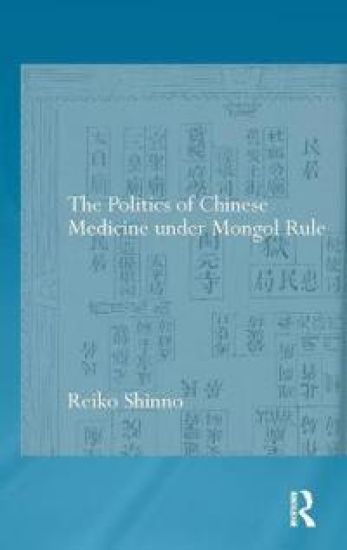
Under the rule of the descendants of Chinggis Khan (1167-1227), China saw the development of a new culture in which medical practice came to be considered a highly respected occupation for elite men. During this period, further major steps were also taken towards the codification of medical knowledge and promotion of physicians’ social status.This book traces the history of the politics, institutions, and culture of medicine of China under Mongol rule, through the eyes of a successful South Chinese official Yuan Jue (1266-1327). As the first comprehensive monograph on history of medicine in China under the Mongols, it argues that this period was a separate moment in Chinese history, when a configuration of power different from that of previous and succeeding periods created its own medical culture. The Politics of Chinese Medicine under Mongol Rule emphasizes the impact of the political and institutional changes caused by the Mongols and their collaborators on the social and cultural history of medicine, which culminated in the medical theory of Zhu Zhenheng (1282–1358), still influential in East Asian medicine. Using a variety of Chinese-language sources including gazetteers, legal texts, biographies, poems, and medical texts, it analyses the roles of the Mongols and West and Central Asians as cultural brokers and also as unifiers of China. Further, it views North and South Chinese elites as agents of historical change rather than as victims of Mongol oppression.Underlining the complexity of the history of China under the Mongols and the significance of time and geography for the study of this history, this book will be of great interest to students and scholars of Chinese medical history, Chinese social and cultural history, and medieval global history.
The Politics of Chinese Medicine Under Mongol Rule
Under the rule of the descendants of Chinggis Khan (1167-1227), China saw the development of a new culture in which medical practice came to be considered a highly respected occupation for elite men. During this period, further major steps were also taken towards the codification of medical knowledge and promotion of physicians’ social status.This book traces the history of the politics, institutions, and culture of medicine of China under Mongol rule, through the eyes of a successful South Chinese official Yuan Jue (1266-1327). As the first comprehensive monograph on history of medicine in China under the Mongols, it argues that this period was a separate moment in Chinese history, when a configuration of power different from that of previous and succeeding periods created its own medical culture. The Politics of Chinese Medicine under Mongol Rule emphasizes the impact of the political and institutional changes caused by the Mongols and their collaborators on the social and cultural history of medicine, which culminated in the medical theory of Zhu Zhenheng (1282–1358), still influential in East Asian medicine. Using a variety of Chinese-language sources including gazetteers, legal texts, biographies, poems, and medical texts, it analyses the roles of the Mongols and West and Central Asians as cultural brokers and also as unifiers of China. Further, it views North and South Chinese elites as agents of historical change rather than as victims of Mongol oppression.Underlining the complexity of the history of China under the Mongols and the significance of time and geography for the study of this history, this book will be of great interest to students and scholars of Chinese medical history, Chinese social and cultural history, and medieval global history.
Belonging in Translation

Belonging in Translation

Reiko Shindo

Bristol University Press
2019
sidottu
This is the first book to investigate how migrants and migrant rights activists work together to generate new forms of citizenship identities through the use of language. Shindo's book is an original take on citizenship and community from the perspective of translation, and an alluring amalgamation of theory and detailed empirical analysis based on ethnographic case studies of Japan.
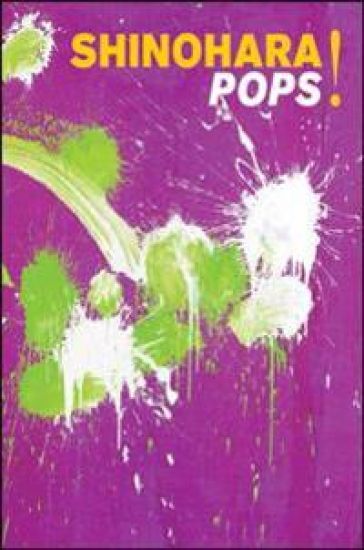
Shinohara Pops!

Shinohara Pops!

Hiroko Ikegami; Reiko Tomii

Samuel Dorsky Museum of Art
2012
pokkari
Surveys the fifty-year career of the avant-garde artist Ushio Shinohara.This catalogue, accompanying the exhibition of the same title at the Samuel Dorsky Museum of Art at SUNY New Paltz (August 29 through December 16, 2012), examines the fifty-year career of Ushio Shinohara, an indispensable player in the field of global contemporary history. Born in Japan in 1932, Shinohara was an enfant terrible of the Tokyo avant-garde art scene in the late 1950s with his "action art." During the 1960s, he went on to invent such signature series as Boxing Painting, Imitation Art, and Oiran. After his move to New York in 1969, he continued with his versatile image-making endeavor, with Motorcycle Sculpture and drawings of street scenes, among other series. Taken together, this volume narrates a story of the inventive, imaginative, and skillful image-maker that is Ushio Shinohara.
Reiki, Médecine Mystique de Mikao Usui: Tome 6. Reiki Et Shintô, Les Kototamas
Mise jour de d cembre 2018. Le texte a t presque int gralement r crit, le style revu et les informations enrichies de nouveaux commentaires et explications. Le prix du format Kindle a t revu la baisse jusque fin janvier 2019 pour permettre aux lecteurs de mettre jour leurs connaissances. Mikao Usui avait t un missionnaire du renouveau du Shint , rig en institution par son cousin l'empereur Meiji. Le Reiki est t-il alors issu du culte shinto ste, r form sur l' re Meiji ? Apr s une enqu te sur le site de Kurama-yama o le Reiki fut r v l , Pascal Kolber Treffainguy a men l'investigation plus au coeur des cercles et des arcanes secr tes de la religion la plus myst rieuse du Japon. Ses conclusions sont redoutables: cet ouvrage salutaire "d fonce" le Reiki new- ge et ses pr tendus "Kototamas," qui n'ont rien de Shint mais ont t invent s l'origine par les cercles nationalistes racistes proches du pouvoir imp rial apr s la seconde guerre mondiale. Ces faux Kototamas - car il en existe de vrais - furent repris comme la plupart des idioties de la th osophie par les ma tres de Reiki occidentaux pour fabriquer de nouveaux enseignements et des stages payants. Cet ouvrage de recherche, d'analyse et de d nonciation est donc d cri par ces ma tres de Reiki new- ge, qui y sont mis au pilori, tant sur leurs sources que leurs croyances fallacieuses. Cette nouvelle dition a t enrichie de 100 pages sur Morihei Tanaka (inventeur du Reishi) et les influences des cercles occultistes anglo-saxons du n o-Shint dans le Reiki new- ge. Les accusations de Pascal Treffainguy sont document es et fond es, mais vont a contrario du sens commun et de l' criture de l'histoire par les vainqueurs anglo-saxons de 1945. D capant et instructif.
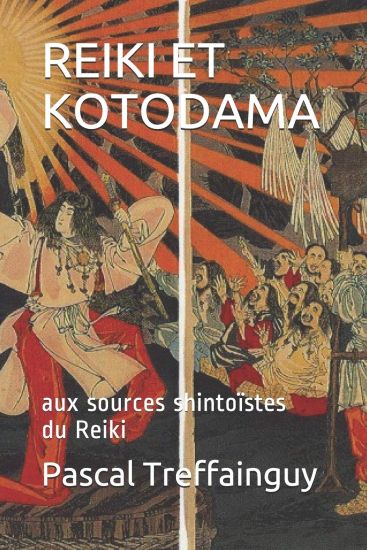
Reiki Et Kotodama: Aux Sources Shintoïstes Du Reiki

Reiki Et Kotodama: Aux Sources Shintoïstes Du Reiki

Pascal Kolber Treffainguy

Independently Published
2018
nidottu
Mikao Usui avait t un missionnaire du renouveau du Shint , rig en institution par son cousin l'empereur Meiji. Le Reiki est t-il alors issu du culte shinto ste, r form sur l' re Meiji ? Apr s une enqu te sur le site de Kurama-yama o le Reiki fut r v l , Pascal Kolber Treffainguy a men l'investigation plus au coeur des cercles et des arcanes secr tes de la religion la plus myst rieuse du Japon. Ses conclusions sont redoutables: cet ouvrage salutaire "d fonce" le Reiki new- ge et ses pr tendus "Kototamas," qui n'ont rien de Shint mais ont t invent s l'origine par les cercles nationalistes racistes proches du pouvoir imp rial apr s la seconde guerre mondiale. Ces faux Kototamas - car il en existe de vrais - furent repris comme la plupart des idioties de la th osophie par les ma tres de Reiki occidentaux pour fabriquer de nouveaux enseignements et des stages payants. Cet ouvrage de recherche, d'analyse et de d nonciation est donc d cri par ces ma tres de Reiki new- ge, qui y sont mis au pilori, tant sur leurs sources que leurs croyances fallacieuses. Cette nouvelle dition a t enrichie de 100 pages sur Morihei Tanaka (inventeur du Reishi) et les influences des cercles occultistes anglo-saxons du n o-Shint dans le Reiki new- ge. Les accusations de Pascal Treffainguy sont document es et fond es, mais vont a contrario du sens commun et de l' criture de l'histoire par les vainqueurs anglo-saxons de 1945. D capant et instructif. Edition sp ciale revue et corrig e avec addentum de reprise du Tome 6 de Reiki, m decine mystique de Mikao Usui.
Reiki- its History, Principles & Techniques

Reiki- its History, Principles & Techniques

Shannon Dennis

Lulu Press Inc
2014
nidottu
Shannon Dennis Celebrity Psychic and Reiki Master, takes you on a journey learning about the fascinating history of reiki and its techniques and practices on humans and animals. Static FM has called this a new book a breath of fresh air on an ancient artform, so why not have a look for yourself today and learn about the great art of Reiki!
Reiko's Team

Reiko's Team

Megan Borgert-Spaniol

Lerner Publications (Tm)
2022
nidottu
Are you a good teammate? Do you try your best? Do you follow rules and play fair? Explore these and other ways to be a good sport with these fun books Reiko is the goalie for her soccer team. By being a good teammate, she helps her team score Pairs with the nonfiction title Being a Good Teammate.
Reiko's Team

Reiko's Team

Megan Borgert-Spaniol

Lerner Publications (Tm)
2022
sidottu
Are you a good teammate? Do you try your best? Do you follow rules and play fair? Explore these and other ways to be a good sport with these fun books Reiko is the goalie for her soccer team. By being a good teammate, she helps her team score Pairs with the nonfiction title Being a Good Teammate.
El Equipo de Reiko (Reiko's Team)

El Equipo de Reiko (Reiko's Team)

Megan Borgert-Spaniol

Ediciones Lerner
2022
nidottu
Reiko es la portera de su equipo de f tbol. Como es una buena compa era de equipo, ayuda a su equipo a anotar Este libro se combina con el t tulo de no ficci n Compa erismo de equipo.Reiko is the goalie for her soccer team. By being a good teammate, she helps her team score This Spanish book pairs with the nonfiction title Compa erismo de equipo.
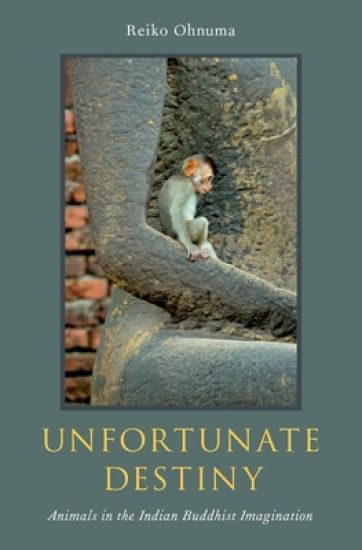
Unfortunate Destiny

Unfortunate Destiny

Reiko Ohnuma

Oxford University Press Inc
2017
sidottu
Unfortunate Destiny focuses on the roles played by nonhuman animals within the imaginative thought-world of Indian Buddhism, as reflected in pre-modern South Asian Buddhist literature. These roles are multifaceted, diverse, and often contradictory: In Buddhist doctrine and cosmology, the animal rebirth is a most "unfortunate destiny" (durgati), won through negative karma and characterized by a lack of intelligence, moral agency, and spiritual potential. In stories about the Buddha's previous lives, on the other hand, we find highly anthropomorphized animals who are wise, virtuous, endowed with human speech, and often critical of the moral shortcomings of humankind. In the life-story of the Buddha, certain animal characters serve as "doubles" of the Buddha, illuminating his nature through identification, contrast or parallelism with an animal "other." Relations between human beings and animals likewise range all the way from support, friendship, and near-equality to rampant exploitation, cruelty, and abuse. Perhaps the only commonality among these various strands of thought is a persistent impulse to use animals to clarify the nature of humanity itself--whether through similarity, contrast, or counterpoint. Buddhism is a profoundly human-centered religious tradition, yet it relies upon a dexterous use of the animal other to help clarify the human self. This book seeks to make sense of this process through a wide-ranging-exploration of animal imagery, animal discourse, and specific animal characters in South Asian Buddhist texts.
Ties That Bind

Ties That Bind

Reiko Ohnuma

Oxford University Press Inc
2012
sidottu
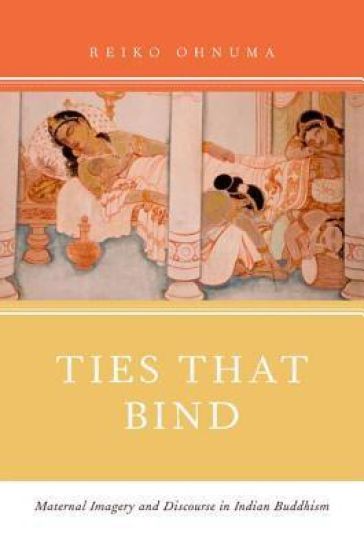
Reiko Ohnuma offers a wide-ranging exploration of maternal imagery and discourse in pre-modern South Asian Buddhism, drawing on textual sources preserved in Pali and Sanskrit. She demonstrates that Buddhism in India had a complex and ambivalent relationship with mothers and motherhood-symbolically, affectively, and institutionally. Symbolically, motherhood was a double-edged sword, sometimes extolled as the most appropriate symbol for buddhahood itself, and sometimes denigrated as the most paradigmatic manifestation possible of attachment and suffering. On an affective level, too, motherhood was viewed with the same ambivalence: in Buddhist literature, warm feelings of love and gratitude for the mother's nurturance and care frequently mingle with submerged feelings of hostility and resentment for the unbreakable obligations thus created, and positive images of self-sacrificing mothers are counterbalanced by horrific depictions of mothers who kill and devour. Institutionally, the formal definition of the Buddhist renunciant as one who has severed all familial ties seems to co-exist uneasily with an abundance of historical evidence demonstrating monks' and nuns' continuing concern for their mothers, as well as other familial entanglements. Ohnuma's study provides critical insight into Buddhist depictions of maternal love and maternal grief, the role played by the Buddha's own mothers, Maya and Mahaprajapati, the use of pregnancy and gestation as metaphors for the attainment of enlightenment, the use of breastfeeding as a metaphor for the compassionate deeds of buddhas and bodhisattvas, and the relationship between Buddhism and motherhood as it actually existed in day-to-day life.
Ties That Bind

Ties That Bind

Reiko Ohnuma

Oxford University Press Inc
2012
nidottu
Reiko Ohnuma offers a wide-ranging exploration of maternal imagery and discourse in pre-modern South Asian Buddhism, drawing on textual sources preserved in Pali and Sanskrit. She demonstrates that Buddhism in India had a complex and ambivalent relationship with mothers and motherhood-symbolically, affectively, and institutionally. Symbolically, motherhood was a double-edged sword, sometimes extolled as the most appropriate symbol for buddhahood itself, and sometimes denigrated as the most paradigmatic manifestation possible of attachment and suffering. On an affective level, too, motherhood was viewed with the same ambivalence: in Buddhist literature, warm feelings of love and gratitude for the mother's nurturance and care frequently mingle with submerged feelings of hostility and resentment for the unbreakable obligations thus created, and positive images of self-sacrificing mothers are counterbalanced by horrific depictions of mothers who kill and devour. Institutionally, the formal definition of the Buddhist renunciant as one who has severed all familial ties seems to co-exist uneasily with an abundance of historical evidence demonstrating monks' and nuns' continuing concern for their mothers, as well as other familial entanglements. Ohnuma's study provides critical insight into Buddhist depictions of maternal love and maternal grief, the role played by the Buddha's own mothers, Maya and Mahaprajapati, the use of pregnancy and gestation as metaphors for the attainment of enlightenment, the use of breastfeeding as a metaphor for the compassionate deeds of buddhas and bodhisattvas, and the relationship between Buddhism and motherhood as it actually existed in day-to-day life.
Head, Eyes, Flesh, Blood

Head, Eyes, Flesh, Blood

Reiko Ohnuma

Columbia University Press
2006
sidottu
Head, Eyes, Flesh, and Blood is the first comprehensive study of a central narrative theme in premodern South Asian Buddhist literature: the Buddha's bodily self-sacrifice during his previous lives as a bodhisattva. Conducting close readings of stories from Sanskrit, Pali, Chinese, and Tibetan literature written between the third century BCE and the late medieval period, Reiko Ohnuma argues that this theme has had a major impact on the development of Buddhist philosophy and culture. Whether he takes the form of king, prince, ascetic, elephant, hare, serpent, or god, the bodhisattva repeatedly gives his body or parts of his flesh to others. He leaps into fires, drowns himself in the ocean, rips out his tusks, gouges out his eyes, and lets mosquitoes drink from his blood, always out of selflessness and compassion and to achieve the highest state of Buddhahood. Ohnuma places these stories into a discrete subgenre of South Asian Buddhist literature and approaches them like case studies, analyzing their plots, characterizations, and rhetoric. She then relates the theme of the Buddha's bodily self-sacrifice to major conceptual discourses in the history of Buddhism and South Asian religions, such as the categories of the gift, the body (both ordinary and extraordinary), kingship, sacrifice, ritual offering, and death. Head, Eyes, Flesh, and Blood reveals a very sophisticated and influential perception of the body in South Asian Buddhist literature and highlights the way in which these stories have provided an important cultural resource for Buddhists. Combined with her rich and careful translations of classic texts, Ohnuma introduces a whole new understanding of a vital concept in Buddhists studies.
Radicalism in the Wilderness

Radicalism in the Wilderness

Reiko Tomii

MIT Press
2018
pokkari
Innovative artists in 1960s Japan who made art in the "wilderness"-away from Tokyo, outside traditional norms, and with little institutional support-with global resonances.1960s Japan was one of the world's major frontiers of vanguard art. As Japanese artists developed diverse practices parallel to, and sometimes antecedent to, their Western counterparts, they found themselves in a new reality of "international contemporaneity" (kokusaiteki dojisei). In this book Reiko Tomii examines three key figures in Japanese art of the 1960s who made radical and inventive art in the "wilderness"-away from Tokyo, outside traditional norms, and with little institutional support.These practitioners are the conceptualist Matsuzawa Yutaka, known for the principle of "vanishing of matter" and the practice of "meditative visualization" (kannen); The Play, a collective of "Happeners"; and the local collective GUN (Group Ultra Niigata). The innovative work of these artists included a visionary exhibition in Central Japan of "formless emissions" organized by Matsuzwa; the launching of a huge fiberglass egg-"an image of liberation"-from the southernmost tip of Japan's main island by The Play; and gorgeous color field abstractions painted by GUN on accumulating snow on the riverbeds of the Shinano River. Pioneers in conceptualism, performance art, land art, mail art, and political art, these artists delved into the local and achieved global relevance. Making "connections" and finding "resonances" between these three practitioners and artists elsewhere, Tomii links their local practices to the global narrative and illuminates the fundamentally "similar yet dissimilar" characteristics of their work. In her reading, Japan becomes a paradigmatic site of world art history, on the periphery but asserting its place through hard-won international contemporaneity.
NUNO

NUNO

Reiko Sudo

Thames Hudson Ltd
2021
sidottu
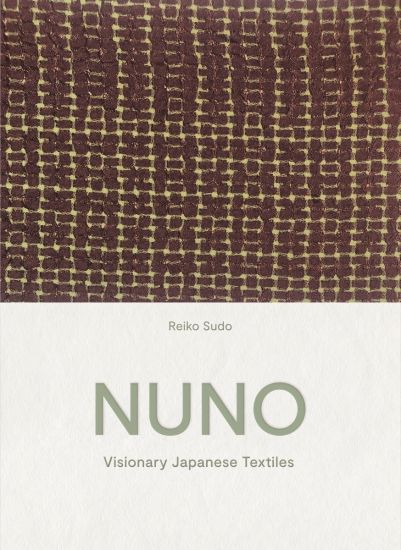
Named with a simple word meaning ‘cloth’, NUNO is one of Japan’s most important textile-design companies. Founded in 1984 by the legendary Junichi Arai and the company’s current director, Reiko Sudo, it is recognized as one of the world’s most innovative textile producers. Known for weaving together tradition and cutting-edge technology, NUNO designers are inspired by the past, present and future, integrating unexpected elements, such as paper or feathers or aluminium, with industrial methods, such as spatter-plating and chemical etching. All NUNO textiles – more than 2,500 have been created – are produced in Japan and are usually the handiwork of an individual craftsperson. Each bolt of cloth has a story to tell. Though their textiles appear regularly in books, textile exhibitions and museum collections, a comprehensive NUNO monograph has not existed - until now. Featuring the most outstanding, influential or experimental fabrics, the book is organized into seven chapters, each based on a theme deriving from the onomatopoeic coupling in Japanese that defines a family of fabrics. For example, ‘Shima Shima’, meaning ‘striped’, presents striped designs ranging from bold and contrasting like zebra to subtly variegated like a tabby cat. Based on interviews, archival research and factory visits, the texts are illustrated with specially commissioned photos and drawings. Interspersed are essays by a wide range of contributors, from writer Haruki Murakami and architect Toyo Ito to curator Anna Jackson. Bringing all the threads together in a beautifully designed package, NUNO is a document of exceptional beauty and a rare glimpse into the essence of Japanese design. With 610 illustrations in colour
Hyperbolic Boundary Value Problems

Hyperbolic Boundary Value Problems

Reiko Sakamoto

Cambridge University Press
2009
pokkari
Boundary value problems are of central importance and interest not only to mathematicians but also to physicists and engineers who need to solve differential equations which govern the behaviour of physical systems. In this book, Professor Sakamoto introduces the general theory of the existence and uniqueness of solutions to the wave equation. The reader is assumed to have some familiarity with Lebesgue integration and complex function theory but other than that the book is essentially self-contained. It is therefore suited to senior undergraduates and graduates in mathematics and the mathematical sciences but can be read with profit by professionals in those subjects.