Kirjojen hintavertailu. Mukana 11 244 527 kirjaa ja 12 kauppaa.

Kirjahaku

Etsi kirjoja tekijän nimen, kirjan nimen tai ISBN:n perusteella.

1000 tulosta hakusanalla Reiko Yoshihara

Ai No Kusabi The Space Between Volume 1: Stranger (Yaoi Novel)
In the future, on a distant star lives a new society. Ruled by a computer system named Jupiter, men are divided into classes based on their hair color. The Blondies, genetically altered by Jupiter, are the highest class and occupy the capital city of Tanagura. Those with black hair, Mongrels, are forced to live in the slums, Ceres. Iason, the leader of the Blondies, encounters Riki, a mongrel, in the streets of Ceres one night and sets out to own him.

Ai no Kusabi The Space Between Volume 4: Suggestion (Yaoi Novel)
Released from Iason's curse, Riki is spending his days idly in the slums when he's drawn into a trap — is it a secret plot of uninvited visitor Kirie, or could it also be a cruel way to force Riki to choose between the body of his old roommate Guy and his own pride? Riki revives the memories of his three years of lust and masochism with Iason. Is freedom just an illusion?
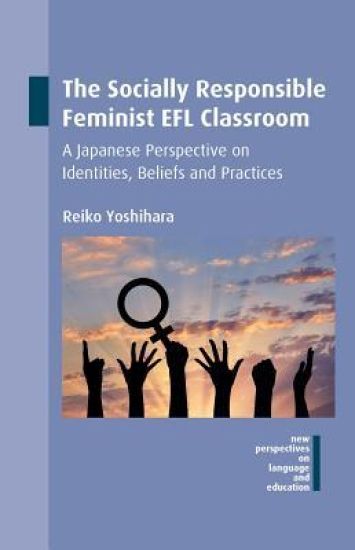
The Socially Responsible Feminist EFL Classroom

The Socially Responsible Feminist EFL Classroom

Reiko Yoshihara

Multilingual Matters
2017
sidottu
This book explores the realities of feminist EFL teachers’ lives through interviews and classroom observations with eight EFL teachers at Japanese universities. The data contained in the book broaden our understanding of feminist teaching in the language classroom while also providing suggestions for practice. The book examines not only how the teachers’ feminist identities influence their pedagogical beliefs and practices but also how the teachers actually practice feminist teaching in their classrooms. The tensions, dilemmas and pleasures of feminist teaching converge in this book, which attempts to shed light on a question that is often asked in either ESL or EFL teaching contexts: is teaching about gender-related topics (including controversial sociopolitical topics) in the language classroom education or indoctrination?
Reiko's Team

Reiko's Team

Megan Borgert-Spaniol

Lerner Publications (Tm)
2022
nidottu
Are you a good teammate? Do you try your best? Do you follow rules and play fair? Explore these and other ways to be a good sport with these fun books Reiko is the goalie for her soccer team. By being a good teammate, she helps her team score Pairs with the nonfiction title Being a Good Teammate.
Reiko's Team

Reiko's Team

Megan Borgert-Spaniol

Lerner Publications (Tm)
2022
sidottu
Are you a good teammate? Do you try your best? Do you follow rules and play fair? Explore these and other ways to be a good sport with these fun books Reiko is the goalie for her soccer team. By being a good teammate, she helps her team score Pairs with the nonfiction title Being a Good Teammate.
El Equipo de Reiko (Reiko's Team)

El Equipo de Reiko (Reiko's Team)

Megan Borgert-Spaniol

Ediciones Lerner
2022
nidottu
Reiko es la portera de su equipo de f tbol. Como es una buena compa era de equipo, ayuda a su equipo a anotar Este libro se combina con el t tulo de no ficci n Compa erismo de equipo.Reiko is the goalie for her soccer team. By being a good teammate, she helps her team score This Spanish book pairs with the nonfiction title Compa erismo de equipo.
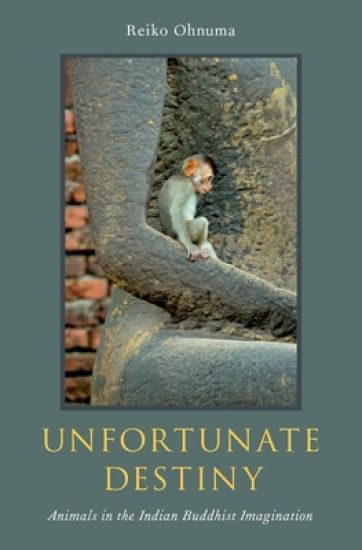
Unfortunate Destiny

Unfortunate Destiny

Reiko Ohnuma

Oxford University Press Inc
2017
sidottu
Unfortunate Destiny focuses on the roles played by nonhuman animals within the imaginative thought-world of Indian Buddhism, as reflected in pre-modern South Asian Buddhist literature. These roles are multifaceted, diverse, and often contradictory: In Buddhist doctrine and cosmology, the animal rebirth is a most "unfortunate destiny" (durgati), won through negative karma and characterized by a lack of intelligence, moral agency, and spiritual potential. In stories about the Buddha's previous lives, on the other hand, we find highly anthropomorphized animals who are wise, virtuous, endowed with human speech, and often critical of the moral shortcomings of humankind. In the life-story of the Buddha, certain animal characters serve as "doubles" of the Buddha, illuminating his nature through identification, contrast or parallelism with an animal "other." Relations between human beings and animals likewise range all the way from support, friendship, and near-equality to rampant exploitation, cruelty, and abuse. Perhaps the only commonality among these various strands of thought is a persistent impulse to use animals to clarify the nature of humanity itself--whether through similarity, contrast, or counterpoint. Buddhism is a profoundly human-centered religious tradition, yet it relies upon a dexterous use of the animal other to help clarify the human self. This book seeks to make sense of this process through a wide-ranging-exploration of animal imagery, animal discourse, and specific animal characters in South Asian Buddhist texts.
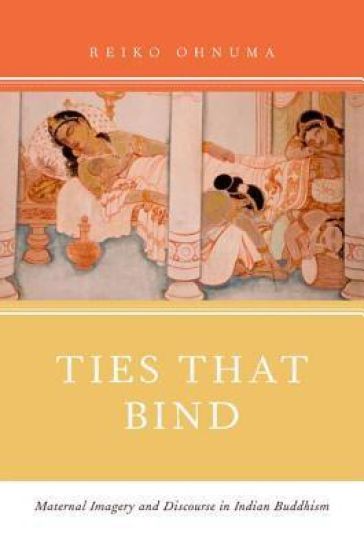
Ties That Bind

Ties That Bind

Reiko Ohnuma

Oxford University Press Inc
2012
sidottu
Reiko Ohnuma offers a wide-ranging exploration of maternal imagery and discourse in pre-modern South Asian Buddhism, drawing on textual sources preserved in Pali and Sanskrit. She demonstrates that Buddhism in India had a complex and ambivalent relationship with mothers and motherhood-symbolically, affectively, and institutionally. Symbolically, motherhood was a double-edged sword, sometimes extolled as the most appropriate symbol for buddhahood itself, and sometimes denigrated as the most paradigmatic manifestation possible of attachment and suffering. On an affective level, too, motherhood was viewed with the same ambivalence: in Buddhist literature, warm feelings of love and gratitude for the mother's nurturance and care frequently mingle with submerged feelings of hostility and resentment for the unbreakable obligations thus created, and positive images of self-sacrificing mothers are counterbalanced by horrific depictions of mothers who kill and devour. Institutionally, the formal definition of the Buddhist renunciant as one who has severed all familial ties seems to co-exist uneasily with an abundance of historical evidence demonstrating monks' and nuns' continuing concern for their mothers, as well as other familial entanglements. Ohnuma's study provides critical insight into Buddhist depictions of maternal love and maternal grief, the role played by the Buddha's own mothers, Maya and Mahaprajapati, the use of pregnancy and gestation as metaphors for the attainment of enlightenment, the use of breastfeeding as a metaphor for the compassionate deeds of buddhas and bodhisattvas, and the relationship between Buddhism and motherhood as it actually existed in day-to-day life.
Ties That Bind

Ties That Bind

Reiko Ohnuma

Oxford University Press Inc
2012
nidottu
Reiko Ohnuma offers a wide-ranging exploration of maternal imagery and discourse in pre-modern South Asian Buddhism, drawing on textual sources preserved in Pali and Sanskrit. She demonstrates that Buddhism in India had a complex and ambivalent relationship with mothers and motherhood-symbolically, affectively, and institutionally. Symbolically, motherhood was a double-edged sword, sometimes extolled as the most appropriate symbol for buddhahood itself, and sometimes denigrated as the most paradigmatic manifestation possible of attachment and suffering. On an affective level, too, motherhood was viewed with the same ambivalence: in Buddhist literature, warm feelings of love and gratitude for the mother's nurturance and care frequently mingle with submerged feelings of hostility and resentment for the unbreakable obligations thus created, and positive images of self-sacrificing mothers are counterbalanced by horrific depictions of mothers who kill and devour. Institutionally, the formal definition of the Buddhist renunciant as one who has severed all familial ties seems to co-exist uneasily with an abundance of historical evidence demonstrating monks' and nuns' continuing concern for their mothers, as well as other familial entanglements. Ohnuma's study provides critical insight into Buddhist depictions of maternal love and maternal grief, the role played by the Buddha's own mothers, Maya and Mahaprajapati, the use of pregnancy and gestation as metaphors for the attainment of enlightenment, the use of breastfeeding as a metaphor for the compassionate deeds of buddhas and bodhisattvas, and the relationship between Buddhism and motherhood as it actually existed in day-to-day life.
Head, Eyes, Flesh, Blood

Head, Eyes, Flesh, Blood

Reiko Ohnuma

Columbia University Press
2006
sidottu
Head, Eyes, Flesh, and Blood is the first comprehensive study of a central narrative theme in premodern South Asian Buddhist literature: the Buddha's bodily self-sacrifice during his previous lives as a bodhisattva. Conducting close readings of stories from Sanskrit, Pali, Chinese, and Tibetan literature written between the third century BCE and the late medieval period, Reiko Ohnuma argues that this theme has had a major impact on the development of Buddhist philosophy and culture. Whether he takes the form of king, prince, ascetic, elephant, hare, serpent, or god, the bodhisattva repeatedly gives his body or parts of his flesh to others. He leaps into fires, drowns himself in the ocean, rips out his tusks, gouges out his eyes, and lets mosquitoes drink from his blood, always out of selflessness and compassion and to achieve the highest state of Buddhahood. Ohnuma places these stories into a discrete subgenre of South Asian Buddhist literature and approaches them like case studies, analyzing their plots, characterizations, and rhetoric. She then relates the theme of the Buddha's bodily self-sacrifice to major conceptual discourses in the history of Buddhism and South Asian religions, such as the categories of the gift, the body (both ordinary and extraordinary), kingship, sacrifice, ritual offering, and death. Head, Eyes, Flesh, and Blood reveals a very sophisticated and influential perception of the body in South Asian Buddhist literature and highlights the way in which these stories have provided an important cultural resource for Buddhists. Combined with her rich and careful translations of classic texts, Ohnuma introduces a whole new understanding of a vital concept in Buddhists studies.
Radicalism in the Wilderness

Radicalism in the Wilderness

Reiko Tomii

MIT Press
2018
pokkari
Innovative artists in 1960s Japan who made art in the "wilderness"-away from Tokyo, outside traditional norms, and with little institutional support-with global resonances.1960s Japan was one of the world's major frontiers of vanguard art. As Japanese artists developed diverse practices parallel to, and sometimes antecedent to, their Western counterparts, they found themselves in a new reality of "international contemporaneity" (kokusaiteki dojisei). In this book Reiko Tomii examines three key figures in Japanese art of the 1960s who made radical and inventive art in the "wilderness"-away from Tokyo, outside traditional norms, and with little institutional support.These practitioners are the conceptualist Matsuzawa Yutaka, known for the principle of "vanishing of matter" and the practice of "meditative visualization" (kannen); The Play, a collective of "Happeners"; and the local collective GUN (Group Ultra Niigata). The innovative work of these artists included a visionary exhibition in Central Japan of "formless emissions" organized by Matsuzwa; the launching of a huge fiberglass egg-"an image of liberation"-from the southernmost tip of Japan's main island by The Play; and gorgeous color field abstractions painted by GUN on accumulating snow on the riverbeds of the Shinano River. Pioneers in conceptualism, performance art, land art, mail art, and political art, these artists delved into the local and achieved global relevance. Making "connections" and finding "resonances" between these three practitioners and artists elsewhere, Tomii links their local practices to the global narrative and illuminates the fundamentally "similar yet dissimilar" characteristics of their work. In her reading, Japan becomes a paradigmatic site of world art history, on the periphery but asserting its place through hard-won international contemporaneity.
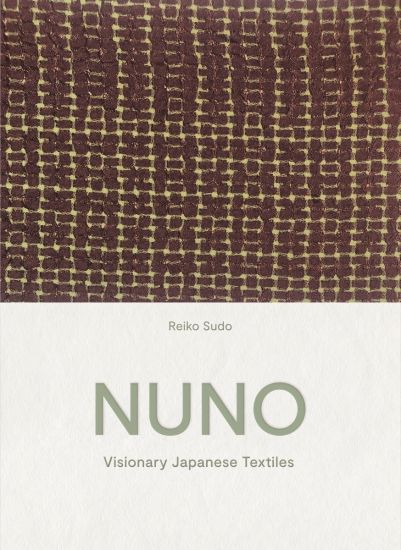
NUNO

NUNO

Reiko Sudo

Thames Hudson Ltd
2021
sidottu
Named with a simple word meaning ‘cloth’, NUNO is one of Japan’s most important textile-design companies. Founded in 1984 by the legendary Junichi Arai and the company’s current director, Reiko Sudo, it is recognized as one of the world’s most innovative textile producers. Known for weaving together tradition and cutting-edge technology, NUNO designers are inspired by the past, present and future, integrating unexpected elements, such as paper or feathers or aluminium, with industrial methods, such as spatter-plating and chemical etching. All NUNO textiles – more than 2,500 have been created – are produced in Japan and are usually the handiwork of an individual craftsperson. Each bolt of cloth has a story to tell. Though their textiles appear regularly in books, textile exhibitions and museum collections, a comprehensive NUNO monograph has not existed - until now. Featuring the most outstanding, influential or experimental fabrics, the book is organized into seven chapters, each based on a theme deriving from the onomatopoeic coupling in Japanese that defines a family of fabrics. For example, ‘Shima Shima’, meaning ‘striped’, presents striped designs ranging from bold and contrasting like zebra to subtly variegated like a tabby cat. Based on interviews, archival research and factory visits, the texts are illustrated with specially commissioned photos and drawings. Interspersed are essays by a wide range of contributors, from writer Haruki Murakami and architect Toyo Ito to curator Anna Jackson. Bringing all the threads together in a beautifully designed package, NUNO is a document of exceptional beauty and a rare glimpse into the essence of Japanese design. With 610 illustrations in colour
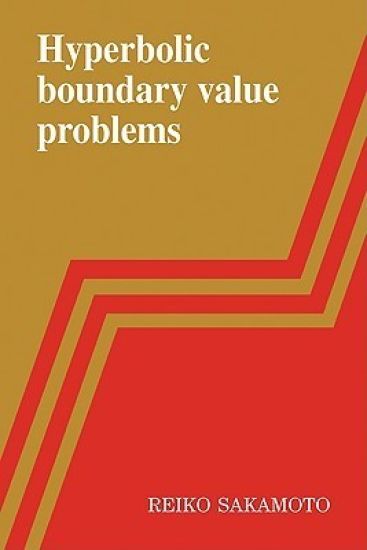
Hyperbolic Boundary Value Problems

Hyperbolic Boundary Value Problems

Reiko Sakamoto

Cambridge University Press
2009
pokkari
Boundary value problems are of central importance and interest not only to mathematicians but also to physicists and engineers who need to solve differential equations which govern the behaviour of physical systems. In this book, Professor Sakamoto introduces the general theory of the existence and uniqueness of solutions to the wave equation. The reader is assumed to have some familiarity with Lebesgue integration and complex function theory but other than that the book is essentially self-contained. It is therefore suited to senior undergraduates and graduates in mathematics and the mathematical sciences but can be read with profit by professionals in those subjects.
Representing Shakespearean Tragedy

Representing Shakespearean Tragedy

Reiko Oya

Cambridge University Press
2007
sidottu
Reiko Oya explores theatrical expressions of Shakespearean tragedy in Georgian London and the relations between the representative players of the time - David Garrick, John Philip Kemble and his sister Sarah Siddons, and Edmund Kean - and their close circle of friends. The book begins by analysing the tragic emotion that Garrick conveyed through his performance of King Lear, and the responses to it from such critics as Samuel Johnson and Elizabeth Montagu. The second chapter examines the concept of sublimity in Kemble and Siddons' interpretations of Macbeth. The final chapter studies the disparity between the literary and the theatrical Hamlet in Kean's impersonation and William Hazlitt's response to it. With subjects ranging from Shakespearean promptbooks to paintings and the poetics of Romanticism, the book offers great insights into the exchange of ideas and inspirations among the cultural luminaries who surrounded the London stage.
Patchwork Quilted Bags

Patchwork Quilted Bags

Reiko Washizawa

Tuttle Publishing
2016
nidottu
Patchwork Quilted Bags helps you create unique bags that put a little charm into your wardrobe.Full-sized quilting patterns and step-by-step instructions for 19 different projects, along with techniques for assembling the perfect patch, make this quilting book ideal for novice and practiced crafters alike. Projects range in size from large totes to small pouches in a zakka vein. With Patchwork Quilted Bags you can make: A bird-themed travel bag An elegant lace-rimmed bucket bag A colorful clasp purse A round bag/basket A fold-away eco bag A baby bag with bottle "cozy" Adorable animal-themed totes A Union-Jack themed pouch And more!This colorful and user-friendly quilting book shows you lots of creative ways to use every type of patch from squares to yoyos, and every kind of print from florals to newsprint. Pages showcasing different patchwork quilts add inspiration for mixing traditional and contemporary forms. It's the perfect way to have fun with fabric and make a practical work of art.