Kirjojen hintavertailu. Mukana 11 342 296 kirjaa ja 12 kauppaa.

Kirjahaku

Etsi kirjoja tekijän nimen, kirjan nimen tai ISBN:n perusteella.

1000 tulosta hakusanalla Reinhard Keiser

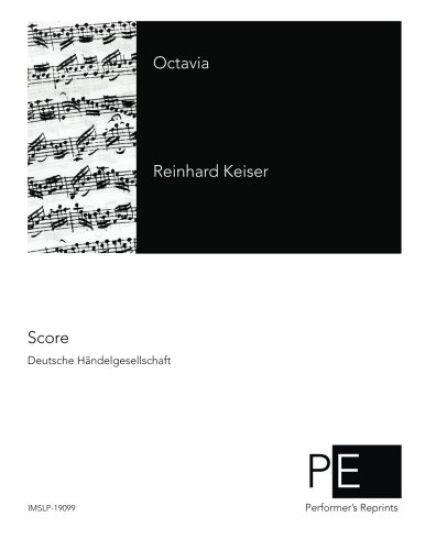
Octavia

Octavia

Reinhard Keiser

Createspace Independent Publishing Platform
2014
nidottu
Title: Octavia Composer: Reinhard Keiser Original Publisher: Deutsche H ndelgesellschaft The complete score to Octavia, as originally published as part of the Deutsche H ndelgesellschaft, Band S 6, in 1902. Performer's Reprints are produced in conjunction with the International Music Score Library Project. These are out of print or historical editions, which we clean, straighten, touch up, and digitally reprint. Due to the age of original documents, you may find occasional blemishes, damage, or skewing of print. While we do extensive cleaning and editing to improve the image quality, some items are not able to be repaired. A portion of each book sold is donated to small performing arts organizations to create jobs for performers and to encourage audience growth.
VOM KAISERREICH ZUM DRITTEN REICH und der Weg der deutschen Hanseforschung
Am Beispiel der Hanseforschung und des Hansischen Geschichtsvereins wird herausgearbeitet, wie offizi se Historiografie im 19. und 20. Jahrhundert immer im Dienst des jeweiligen staatlichen Regimes stand. Beamtetes akademisches Bildungsb rgertum lieferte nationalistische Vaterlandsideologien, nordisch-arischen Rassismus, Judenfeindlichkeit und aggressive v lkische Geopolitik. Die nationalsozialistische Ideologie der faschistischen Bewegung entstammte ebenfalls der Feder rechtskonservativer Aktivisten vor allem des Alldeutschen Verbandes. Intellektuelles Kultur- und Bildungsb rgergertum bereitete zwei Weltkriege weltanschaulich mit vor und beteiligte sich als Propagandisten f r berhebliches Deutschtum und deutschen Kolonialismus und Imperialismus. Bis heute ist es noch kaum gelungen, mit den gef hrlichen staatlichen und ideologischen Traditionen der deutschen Klassengesellschaft zu brechen, da die Aufarbeitung der Geschichte immer in den H nden einer Geschichtswissenschaft lag, die selber Teil des historischen Problems war.
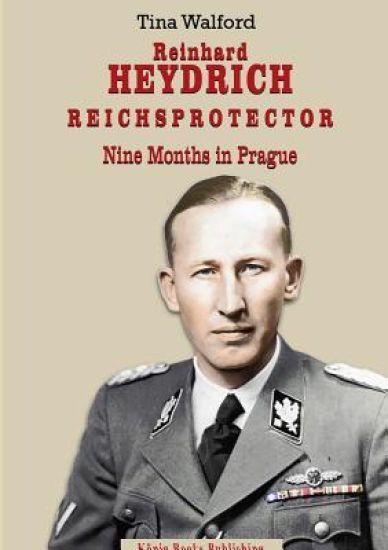
Reinhard Heydrich Nine Months Riechsprotector
Since his assassination in June 1942, the former Reich Protector, Chief of the Secret State Police and Security Service has been responsible for every outrage. In the so-called war crimes trials, the defendants blamed him for everything and everything. The man could not fight back. The author has made extensive trips to the sites of Heydrich's activities for this brilliantly written biography. She spoke to surviving contemporary witnesses in Prague and Germany, conducted historical fieldwork and has viewed and interpreted hitherto unpublished British secret documents as well as private records of Heydrich. Due to her extensive research, she draws a completely new picture of this mysterious man.English journalists in their literary works are often said to have a pronounced narrative talent combined with a striking profession. This biography is an eloquent example of brilliant historiography without ifs and buts.
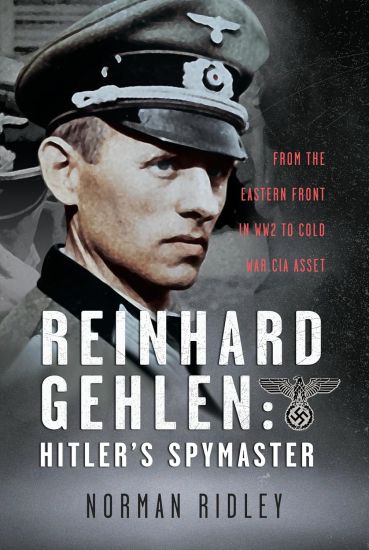
Reinhard Gehlen: Hitler’s Spymaster

Reinhard Gehlen: Hitler’s Spymaster

Norman Ridley

PEN SWORD BOOKS LTD
2025
sidottu
Eleven years after Reinhard Gehlen, the head of Adolf Hitler’s Eastern Front military intelligence unit, emerged from hiding to hand himself over to US forces, he had, with the help of the American CIA, created a legend for himself as founder and first president of the West German Secret Service. In this role he employed many of the same Wehrmacht and SS officers he had served with during the Second World War. All through the steady progression of his career before and during the Second World War, Gehlen had been far too industrious and committed to court the limelight. Then after the defeat of Germany, when he transferred his allegiance to the CIA and later became head of the Bundesnachrichtendienst, he became a man whom Hugh Trevor Roper’s described as someone who ‘always moved in the shadows’. For some, the German intelligence network that Gehlen had controlled since 1942, was part of an unbroken tradition going back to the days of Bismarck. For a great many in Gehlen’s organisation the Cold War was merely an extension of an anti-Soviet campaign that had begun on 22 June 1941, when Hitler launched Operation Barbarossa. After the war, Gehlen had emerged unscathed from Hitler’s bunker and no war crimes charges were ever brought against him. His name, and those of 350 of his Wehrmacht command, were redacted from the official lists of German prisoners of war. Gehlen protected and employed men like Heinrich Schmitz who had been part of Einsatzgruppe A, the murder squad that massacred so many, including communist functionaries and Jewish women, men and children, in the Baltic States. Though Gehlen had remained loyal to Hitler right to the end, once state authority collapsed he wasted little time in making contact with the Americans and offered to place his vast intelligence resources at their disposal in the new fight against Soviet communism. While German generals Heinz Guderian and Franz Halder placed great store by Gehlen’s reports on the tactical level, Hitler called them ‘defeatist’ and gave them barely a glance when making his disastrous strategic decisions. Allen Dulles, head of the CIA, did not repeat Hitler’s mistake, but Gehlen deeply resented the way that his reports to Dulles were mishandled. It became Gehlen’s ambition initially to head up a completely independent West German foreign intelligence service. However, it was not until 1951 that talks to establish a West German intelligence service at federal level began. In the immediate post-war years, Gehlen tirelessly made his case to defend the harbouring of former Wehrmacht and SS personnel in his organisation and battled to prove his worth to the Americans. This book looks at Gehlen’s life from his early career in the chaos of Weimar, through his elevation to General Staff intelligence officer on the Russian Front. It describes how he survived the defeat of the Third Reich and offered himself to the Americans as a foil against the Soviet Union in the Cold War. In doing so it closely examines Gehlen’s record to separate fact from his self-serving fictions.