
Kirjahaku
Etsi kirjoja tekijän nimen, kirjan nimen tai ISBN:n perusteella.
1000 tulosta hakusanalla Rene F Tyo



Conocer al Esp ritu Santo y darle el lugar de honra que se merece en nuestras vidas es clave El presente material, no pretende ser un tratado teol gico o exeg tico de la persona del Esp ritu de Dios, sino m s bien la experiencia de una persona que ha caminado con Jes s por casi cuatro d cadas. En el presente dirige uno de los ministerios hispanos m s pujantes en Los ngeles, California. Adem s de su preparaci n teol gica, el autor es un desesperado buscador de la presencia de Dios y de Avivamiento. Su anhelo es desarrollar un ministerio b blico, saludable y sobrenatural. Su pasi n como ministro del evangelio es dejar una huella para la presente y futura generaci n, tomado de la mano de Su Mejor Amigo: El Mejor Amigo de Jes s de Nazaret: El Esp ritu Santo. Ren F. Molina y Hanelory son los Pastores Principales y fundadores de Restauraci n-Los ngeles. Han desarrollado su ministerio pastoral por treinta y un a o al frente de esta pujante congregaci n. El Pastor Ren F. Molina es graduado del Seminario Teol gico "Fuller" de Pasadena, California de una Maestr a en Divinidades con un nfasis en Ministerios Multiculturales. Actualmente est obteniendo su Doctorado en Ministerio con una especializaci n en Neumatolog a en la Global University de Springfield, Missouri. Tambi n es miembro de LA RED (La Red de Pastores y L deres del Sur de California) una entidad No Lucrativa que aboga por la aprobaci n de una reforma migratoria comprensible y justa para nuestra comunidad sin documentos migratorios en regla. Los pastores Molina son padres de tres hijos: Eby, Marcy y Ren Josu , y tres nietos: Peniel Rose, April Lory y Enoch Uriah.

Konzerninternes Marketingkonzept für die IT-Abteilung der SFS Gruppe
Rene F. Pilz
AV Akademikerverlag
2017
nidottu

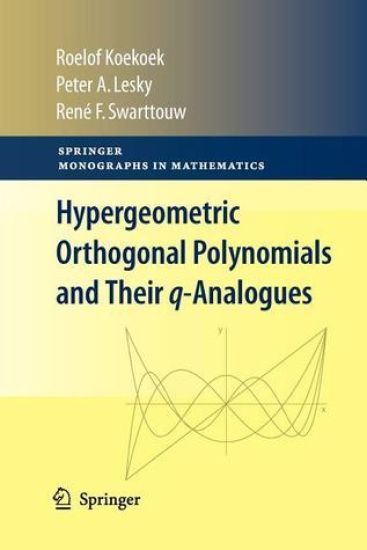
Hypergeometric Orthogonal Polynomials and Their q-Analogues
Roelof Koekoek; Tom H. Koornwinder; Peter A. Lesky; René F. Swarttouw
Springer-Verlag Berlin and Heidelberg GmbH Co. K
2010
sidottu
The present book is about the Askey scheme and the q-Askey scheme, which are graphically displayed right before chapter 9 and chapter 14, respectively. The fa- lies of orthogonal polynomials in these two schemes generalize the classical orth- onal polynomials (Jacobi, Laguerre and Hermite polynomials) and they have pr- erties similar to them. In fact, they have properties so similar that I am inclined (f- lowing Andrews & Askey [34]) to call all families in the (q-)Askey scheme classical orthogonal polynomials, and to call the Jacobi, Laguerre and Hermite polynomials very classical orthogonal polynomials. These very classical orthogonal polynomials are good friends of mine since - most the beginning of my mathematical career. When I was a fresh PhD student at the Mathematical Centre (now CWI) in Amsterdam, Dick Askey spent a sabbatical there during the academic year 1969–1970. He lectured to us in a very stimulating wayabouthypergeometricfunctionsandclassicalorthogonalpolynomials. Evenb- ter, he gave us problems to solve which might be worth a PhD. He also pointed out to us that there was more than just Jacobi, Laguerre and Hermite polynomials, for instance Hahn polynomials, and that it was one of the merits of the Higher Transc- dental Functions (Bateman project) that it included some newer stuff like the Hahn polynomials (see [198, §10. 23]).
Hypergeometric Orthogonal Polynomials and Their q-Analogues
Roelof Koekoek; Tom H. Koornwinder; Peter A. Lesky; René F. Swarttouw
Springer-Verlag Berlin and Heidelberg GmbH Co. K
2012
nidottu
The present book is about the Askey scheme and the q-Askey scheme, which are graphically displayed right before chapter 9 and chapter 14, respectively. The fa- lies of orthogonal polynomials in these two schemes generalize the classical orth- onal polynomials (Jacobi, Laguerre and Hermite polynomials) and they have pr- erties similar to them. In fact, they have properties so similar that I am inclined (f- lowing Andrews & Askey [34]) to call all families in the (q-)Askey scheme classical orthogonal polynomials, and to call the Jacobi, Laguerre and Hermite polynomials very classical orthogonal polynomials. These very classical orthogonal polynomials are good friends of mine since - most the beginning of my mathematical career. When I was a fresh PhD student at the Mathematical Centre (now CWI) in Amsterdam, Dick Askey spent a sabbatical there during the academic year 1969–1970. He lectured to us in a very stimulating wayabouthypergeometricfunctionsandclassicalorthogonalpolynomials. Evenb- ter, he gave us problems to solve which might be worth a PhD. He also pointed out to us that there was more than just Jacobi, Laguerre and Hermite polynomials, for instance Hahn polynomials, and that it was one of the merits of the Higher Transc- dental Functions (Bateman project) that it included some newer stuff like the Hahn polynomials (see [198, §10. 23]).
Schmid, F: Rene Descartes Und Seine Reform Der Philosophie (
Franz Xaver Schmid
KESSINGER PUBLISHING, LLC
2010
nidottu
While You Are Expecting
F Rene Van de Carr; Marc Lehrer; Robert Hall
Humanics Publishing Group
1996
pokkari
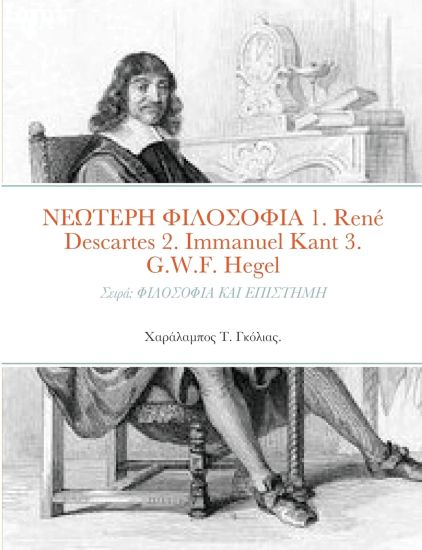
??O???? F???S?F?? 1. René Descartes (1596 - 1650) 2. Immanuel Kant (1724 - 1804) 3. G.W.F. Hegel (1770 - 1831)
Lulu.com
2022
pokkari
PHILOSOPHY AND SCIENCE DESCRIPTION OF THE BOOK SERIES From the depths of the centuries, when man acquired an evolutionarily sufficient brain, the most developed brain of all other animals, in order to acquire self-consciousness, at one point he wondered: "Why do I exist? Why do I live? Why should I be born? Why should I die? " These questions remain unanswered to this day. There is no scientific answer from the rational animal "human", which, as we now know for sure with scientific knowledge, evolved from the Australopithecus. In 1924, British anthropologist Raymond Dart discovered a 2.8- to 3.8-million-year-old skull in an East African quarry. He named his find the Australopithecus because it was found in the southern regions (Austral) of East Africa. However, the study of other fossils found in various parts of Africa (such as Australopithecus bosei) showed that the Australopithecus is one of the direct ancestors of humans, as based on its characteristics it is placed in Humans, the family of Humans in which belongs to man. The only thing we can say with absolute certainty, that is, with sensory knowledge, is that life is an experience. However, religion, metaphysics, literature and fiction, with only the imagination, provide answers and solutions to the above problems and offer man expectations, hopes, life after death, paradise, hell, for god, devil, angels, soul, etc. each of them, in its own version. These, unfortunately, present the claim as knowledge, that is, as scientific knowledge unique to man. In this series of books, in general, the question flows what is philosophy, what is science and whether philosophy should be scientific, that is, to seek knowledge, truths, exclusively with the scientific method and the specialized scientific instruments, the scientific observation, experiment and calculation devices. In this series of books the question arises whether the only source of knowledge, truth, experience of life for man is the sensual, sensory, empirical scientific method.

Chateaubriand, F: Essai sur la littérature anglaise
François-René De Chateaubriand
Antigonos Verlag
2024
nidottu