

Kirjahaku
Etsi kirjoja tekijän nimen, kirjan nimen tai ISBN:n perusteella.
321 tulosta hakusanalla Reno Lottmann




A psychotic kidnapper with a gun. A blindfolded ride to a ruthless drug dealer's compound. Torture. A slow death. These were the things that were waiting for me in the parkign lot while I worked the evening shift of what was sure to be my last day on earth. Then, he came in for dinner.He had a loud Harley-Davidson, a dry sense of humor, a contagious laugh, and seven friends. All he wanted was an enchilada dinner. But. He was my only hope. So, I handed him his meal, gestured to the parking lot, and told him my story. As he sauntered toward the parking lot no differently than he would have walked into a bar, I wondered just who this man could be. Finding the answer to that question wasn't as easy as a person might think. But it was the best ride of my life. ATAND-ALONE, HEA, NO CHEATING, NO ABUSE

When Pittsburgh socialite Laura Corey rolled into Reno, Nevada, in 1905 for a six-month stay, her goal was a divorce from the president of U.S. Steel. Her visit also provided a provocative glimpse into the city's future.With its rugged landscape and rough-edged culture, Reno had little to offer early twentieth-century visitors besides the gambling and prostitution that had remained unregulated since Nevada's silver-mining heyday. But the possibility of easy divorce attracted national media attention, East Coast notables, and Hollywood stars, and soon the 'Reno Cure' was all the rage. Almost overnight, Reno was on the map.Alicia Barber traces the transformation of Reno's reputation from backward railroad town to the nationally known 'Sin Central' - as Garrison Keillor observed, a place where you could see things that you wouldn't want to see in your own hometown. Chronicling the city's changing fortunes from the days of the Comstock Lode, she describes how city leaders came to embrace an identity as 'The Biggest Little City in the World' and transform their town into a lively tourist mecca.Focusing on the evolution of urban reputation, Barber carefully distinguishes between the image that a city's promoters hope to manufacture and the impression that outsiders actually have. Interweaving aspects of urban identity, she shows how sense of place, promoted image, and civic reputation intermingled and influenced each other - and how they in turn shaped the urban environment.Quickie divorces notwithstanding, Reno's primary growth engine was gambling; modern casinos came to dominate the downtown landscape. When mainstream America balked, Reno countered by advertising 'tax freedom' and natural splendor to attract new residents. But by the mid-seventies, unchecked growth and competition from Las Vegas had initiated a downslide that persisted until a carefully crafted series of special events and the rise of recreational tourism began to attract new breeds of tourists.Barber's engaging story portrays Reno as more than a second-string Las Vegas, having pioneered most of the attractions - gaming and prizefighting, divorces and weddings - that made the larger city famous. As Reno continues to remold itself to weather the shifting winds of tourism and growth, Barber's book provides a cautionary tale for other cities hoping to ride the latest consumer trends.
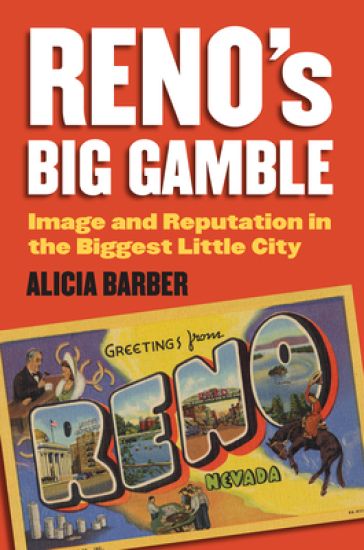
When Pittsburgh socialite Laura Corey rolled into Reno, Nevada, in 1905 for a six-month stay, her goal was a divorce from the president of U.S. Steel. Her visit also provided a provocative glimpse into the city’s future.With its rugged landscape and rough-edged culture, Reno had little to offer early twentieth-century visitors besides the gambling and prostitution that had remained unregulated since Nevada’s silver-mining heyday. But the possibility of easy divorce attracted national media attention, East Coast notables, and Hollywood stars, and soon the “Reno Cure” was all the rage. Almost overnight, Reno was on the map. Alicia Barber traces the transformation of Reno’s reputation from backward railroad town to the nationally known “Sin Central”—as Garrison Keillor observed, a place where you could see things that you wouldn’t want to see in your own hometown. Chronicling the city’s changing fortunes from the days of the Comstock Lode, she describes how city leaders came to embrace an identity as “The Biggest Little City in the World” and transform their town into a lively tourist mecca.Focusing on the evolution of urban reputation, Barber carefully distinguishes between the image that a city’s promoters hope to manufacture and the impression that outsiders actually have. Interweaving aspects of urban identity, she shows how sense of place, promoted image, and civic reputation intermingled and influenced each other—and how they in turn shaped the urban environment.Quickie divorces notwithstanding, Reno’s primary growth engine was gambling; modern casinos came to dominate the downtown landscape. When mainstream America balked, Reno countered by advertising “tax freedom” and natural splendor to attract new residents. But by the mid-seventies, unchecked growth and competition from Las Vegas had initiated a downslide that persisted until a carefully crafted series of special events and the rise of recreational tourism began to attract new breeds of tourists.Barber’s engaging story portrays Reno as more than a second-string Las Vegas, having pioneered most of the attractions—gaming and prizefighting, divorces and weddings—that made the larger city famous. As Reno continues to remold itself to weather the shifting winds of tourism and growth, Barber’s book provides a cautionary tale for other cities hoping to ride the latest consumer trends.
“The inquiry quickly developed into a broad investigation of the manner in which the battle was fought, and competent historians and students consider the record of its proceedings to be the chief and most important repository of authentic detailed information on the subject. The original official record, some 1,300 pages in length, was held in the confidential files of the Judge Advocate General’s Office until 1941, when it was turned over to the National Archives. In 1951 a verbatim edition of the official record, limited to 125 copies, was published by me. This volume is an abstract of that record.” The search for a scapegoat began almost immediately after news of the disaster at the Little Big Horn reached the press and public in the early summer of 1876. Custer’s partisans accused Captain Frederick W. Benteen, the senior captain, and Marcus A. Reno, the regiment’s second in command, of cowardice in their failure to go to Custer’s aid. Benteen was largely cleared in the public mind, but Reno was not. In
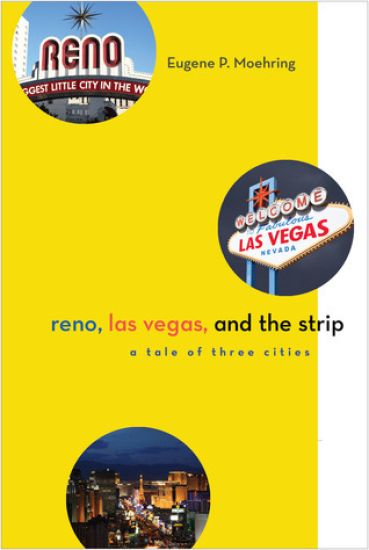
Eugene P. Moehring analyses the development of Reno and Las Vegas since 1945 with special emphasis on the years after 1970. Major factors that shaped the development of both cities were the growth of corporate gaming and megaresorts and increased personal leisure and affluence. Moehring provides an engaging, informative, and readable history of the divergent paths that Reno and Las Vegas took over the past forty years. Reno, the nation’s gambling mecca in the 1950s, led the way, developing the successful tourist economy that Las Vegas later embraced. Through the 1970s the two cities resembled each other greatly, but Las Vegas grew to achieve global significance, while Reno slowly declined, searching for new industries to power its future. Moehring shows that the development of the Las Vegas Strip was crucial to southern Nevada’s success.The casinos, hotels, and entertainments of the Strip, and the workers they supported, formed a new urban centre ringed by offices, residences, shopping, and a major university. In effect, it became a third metropolis, governed by county commissioners, larger than Reno and Las Vegas combined. Moehring brings the story of the three cities to the present day, examining lessons learned from the Great Recession and the efforts under way in all three metropolises to diversify their economies. Moehring makes an important contribution with the only current study of Nevada’s cities, focusing on urban development issues rather than social history or the gaming industry. As the service economy continues to grow, not only in Nevada but throughout the United States, Moehring’s work has many implications for urban studies and particularly the study of urban development in other metropolitan areas.

My grandfather, Edward Austin Reno was the son of Edward Munn Reno, Dean of American Magicians, a pioneer in the entertainment field of Illusions. Edward Austin Reno took his big top tent theater along the Circuit Chautauqua and rural Redpath route. His daughter, my mother, gave birth to me while they entertained a week in each town offering stage plays, comedy routines and of course, Ed Reno's magic act. Reno's Funmakers had a history in show business. It was what they did. It was all they knew. It was a life they loved with all their hearts. The Great Depression coupled with WW2 finally brought the family off the road. They always planned to return once the war ended. Like so many plans we make ourselves, theirs didn't materialize. I grew up in the midst of their disappointment, thus the book. My career took a different path. First college, majoring in business, chemistry and art. (my medium being oils). Followed by management positions and later, with a partner, forming my own manufacturing company called Pilot Industrial Battery. After selling the company I consulted to the battery industry until retiring here in Florida. I'v always been interested in writing.But, mostly as a guest columnist in newspapers and technical articles. Reno's Funmakers is my first novel. My second is currently being worked on.

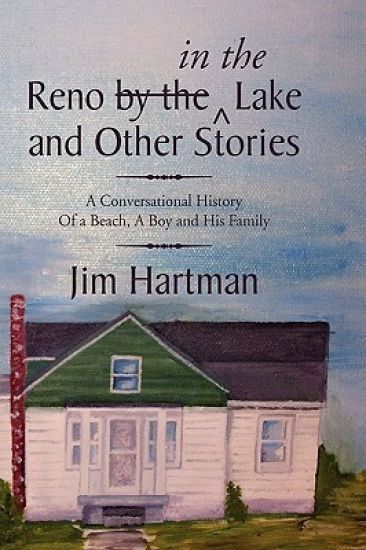
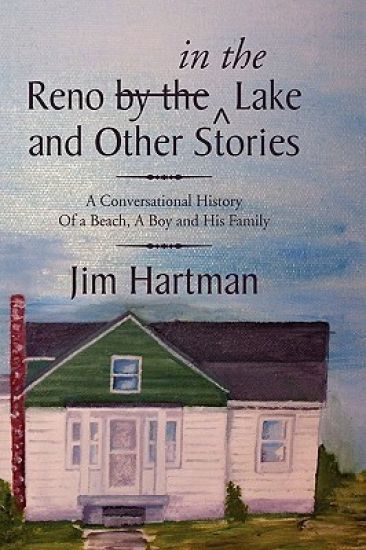

Reno: A River Runs Through It & A Train Too!
Rabboni Makar
Createspace Independent Publishing Platform
2002
nidottu
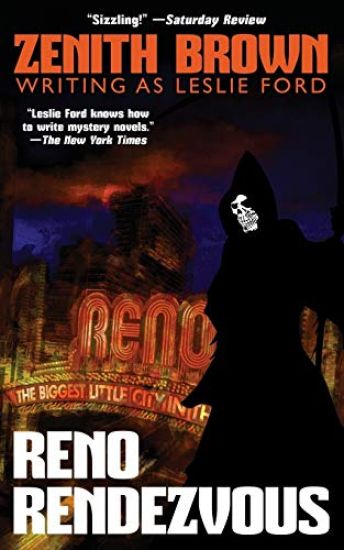
A frightened girl keeps a fatal appointment in a deadly desert hideaway. Judy was very beautiful, very much in love and very much married to the wrong man. A speedy divorce seemed the only solution to everybody's problems, but little did she imagine that a flying visit to Reno would turn into a terrifying case of murder -- with the shadow of a noose dangerously close to her own lovely neck. "Leslie Ford knows how to write mystery novels." -- The New York Times