
Kirjahaku
Etsi kirjoja tekijän nimen, kirjan nimen tai ISBN:n perusteella.
1000 tulosta hakusanalla Rev. Fr. Joseph K. Bill V.C.
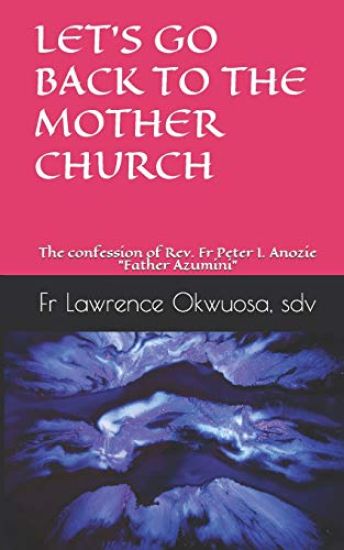
Let's Go Back to the Mother Church: The confession of Rev. Fr Peter I. Anozie "Father Azumini"
Lawrence Okwuosa Sdv
Independently Published
2019
nidottu
This very touching real life story of Fr Peter Anozia is a clarion call to all the Roman Catholic Priests especially those engaged in the prayer ministries to ever remember their roots and to be ever ready to bow down before the ever active magisterium of the Church. His Holiness Pope St. John XXIII (Cardinal Angelo Roncalli) had declared the Church Mater et Magister (Mother and Teacher); and so she remains. In this Jubilee Year of Mercy that same Mother eagerly awaits and beckons on all her deviating children to come back home and access her inexhaustible ocean of divine mercy. This touching testimony is a must read for every Christian more so for the Roman Catholic Christian.
Life of Venerable Father Eudes, Tr. From the Fr. by Rev. Father Collins
Jean Eudes
Hutson Street Press
2025
sidottu

Life of Venerable Father Eudes, Tr. From the Fr. by Rev. Father Collins
Jean Eudes
Hutson Street Press
2025
pokkari
One of the Wonders of the Age or, The Life and Times of Rev. Johnson Olive, Wake County, North Carolina: Written By Himself, At the Solicitation of Fr
H. C. Olive; Rev Johnson Olive
Createspace Independent Publishing Platform
2015
nidottu
NEIGHBORS, STRANGERS AND EVERYONE ELSE is a unique book and collection of insightful and inspiring words on topics of co-existence from Rev. Fr. John-Brian Paprock. Fr. John-Brian is an Orthodox priest serving a multi-ethnic mission parish in Madison, Wisconsin. He is the founder of Interfaith Awareness Week, since 1998, and has been active in local ecumenical and interfaith activities since 1988. He has received several awards for his community and volunteer efforts over the years, including Middleton's "Good Neighbor Award" in 2008.
On the Sanctification of Priests According to the Needs of Our Times
Rev. Fr. Reginald Garrigou-Lagrange
Dolorosa Press
2013
pokkari
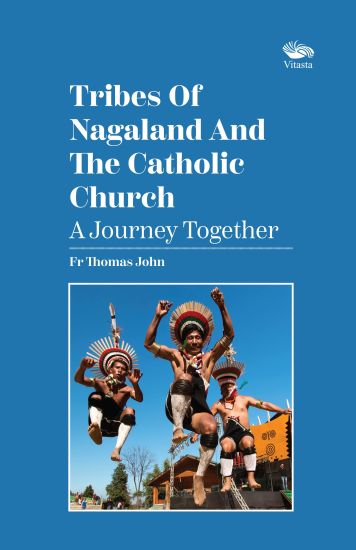
Tribes Of Nagaland And The Catholic Church: A Journey Together
Rev. Fr Thomas John
Vitasta Publishing Pvt.Ltd
2022
nidottu
Ako Na Uche: (Mmanu Eji Eri Okwu Vol 2) Igbo Proverbs
Rev Fr Dr F. O. F. Onwudufor
Independently Published
2019
nidottu
Saint Bonaventure
Rev Fr Laurence Costelloe
Createspace Independent Publishing Platform
2015
nidottu
The life of Saint Bonaventure, the "Seraphic Doctor," is now appropriately presented to the public as the first of the Franciscan lives in this "Series of the Lives of the Friar Saints". Till the days of this "Second Founder of the Franciscan Order," the simplicity of our Holy Father St. Francis had been the salient feature of his institute: no successful effort had hitherto been made to organize the growing Order unto the full measure of its efficiency. Saint Bonaventure (1221 - 15 July 1274), born Giovanni di Fidanza, was an Italian medieval Franciscan, scholastic theologian and philosopher. The seventh Minister General of the Order of Friars Minor, he was also Cardinal Bishop of Albano. He was canonised on 14 April 1482 by Pope Sixtus IV and declared a Doctor of the Church in the year 1588 by Pope Sixtus V. He is known as the "Seraphic Doctor" (Latin: Doctor Seraphicus). Many writings believed in the Middle Ages to be his are now collected under the name Pseudo-Bonaventure. He was born at Bagnorea in Umbria, not far from Viterbo, then part of the Papal States. Almost nothing is known of his childhood, other than the names of his parents, Giovanni di Fidanza and Maria di Ritella. He entered the Franciscan Order in 1243 and studied at the University of Paris, possibly under Alexander of Hales, and certainly under Alexander's successor, John of Rochelle. In 1253 he held the Franciscan chair at Paris. A dispute between seculars and mendicants delayed his reception as Master until 1257, where his degree was taken in company with Thomas Aquinas. Three years earlier his fame had earned him the position of lecturer on The Four Books of Sentences-a book of theology written by Peter Lombard in the twelfth century-and in 1255 he received the degree of master, the medieval equivalent of doctor. After having successfully defended his order against the reproaches of the anti-mendicant party, he was elected Minister General of the Franciscan Order. On 24 November 1265, he was selected for the post of Archbishop of York; however, he was never consecrated and resigned the appointment in October 1266. During his tenure, the General Chapter of Narbonne, held in 1260, promulgated a decree prohibiting the publication of any work out of the order without permission from the higher superiors. This prohibition has induced modern writers to pass severe judgment upon Roger Bacon's superiors being envious of Bacon's abilities. However, the prohibition enjoined on Bacon was a general one, which extended to the whole order. Its promulgation was not directed against him, but rather against Gerard of Borgo San Donnino. Gerard had published in 1254 without permission a heretical work, Introductorius in Evangelium ternum (An Introduction to the Eternal Gospel). Thereupon the General Chapter of Narbonne promulgated the above-mentioned decree, identical with the "constitutio gravis in contrarium" Bacon speaks of. The above-mentioned prohibition was rescinded in Roger's favour unexpectedly in 1266. Bonaventure's coat of arms of Cardinal Bishop of Albano Bonaventure was instrumental in procuring the election of Pope Gregory X, who rewarded him with the title of Cardinal Bishop of Albano, and insisted on his presence at the great Second Council of Lyon in 1274. There, after his significant contributions led to a union of the Greek and Latin churches, Bonaventure died suddenly and in suspicious circumstances. The 1913 edition of the Catholic Encyclopedia has citations that suggest he was poisoned, but no mention is made of this in the 2003 second edition of the New Catholic Encyclopedia. The only extant relic of the saint is the arm and hand with which he wrote his Commentary on the Sentences, which is now conserved at Bagnoregio, in the parish church of St. Nicholas
Christology in Christian-Muslim Dialogue
Rev Fr Dr Robert Afayori
novum publishing gmbh
2020
nidottu
Mmanu E Ji Eri Okwu: (igbo Proverbs)
Rev Fr F. O. F. Fidelis Onwudufor
Rex Charles and Patrick Ltd.
2015
nidottu
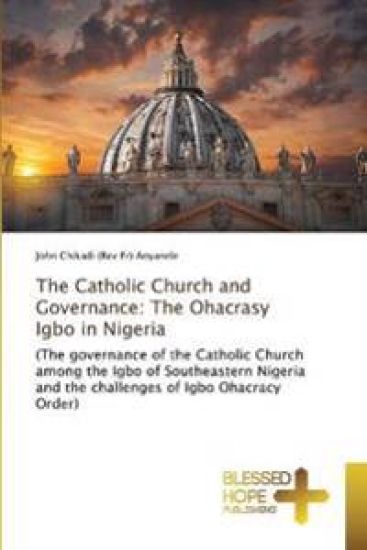
The Catholic Church and Governance
John Chikadi (Rev Fr) Anyanele
Blessed Hope Publishing
2021
pokkari
More than half a century ago, the Vatican II ecumenical Council took place to redefine the influence of the Roman Catholic Church in the modern world. Ecumenical as the Council is known; the Vatican II theology re-established the Church anew as to be relevant in the contemporary world thereby opening doors for lay participation in the Catholic Church governance. Despite the Council and its leaning towards lay participation in the universal Catholic Church, the Catholic communities in the Igbo Ohacracy of the South-eastern Nigeria and the larger Nigerian communities continues to battle towards the determination and realization of the roles or duties of the laity in their Catholic Church communities. A Church identified to be communal, consultative; and collegial in its ecclesiological understanding applies the image of a Family of God's People envisions participatory Church which the Vatican II had proposed. This is yet to be fully achieved especially among the Igbo Ohacracy people.