Kirjojen hintavertailu. Mukana 11 244 527 kirjaa ja 12 kauppaa.

Kirjahaku

Etsi kirjoja tekijän nimen, kirjan nimen tai ISBN:n perusteella.

1000 tulosta hakusanalla Richard Alexander Panter

Genesis: Predator

Genesis: Predator

Richard Alexander Panter

Independently Published
2019
nidottu
Introduction Stardate: 2374-08-24. We have so far, once again still have a lot of enemies out here. That is dodging nearly all those Waring races of Aliens, including the Lycanion's Predator class warships, which were sent to destroy us, or capture us. Now we have made some new friends, and we have acquired upgrades, to the Sumara's defensive capabilities. We are wanted as outlaws, by the Lycanion Empire, for saving innocent lives, who would have suffered a horrible ending to their lives, at the hands of the Lycanions. The Grogans and the Lycanions, had a bounty on us for an astronomical amount of credits, for the capture of our stealth and laser technology. We are once again forced to keep moving through this Universe, with only the Warship Sumara to get us all home; so has to be with our families, once more. I was originally assigned to the Warship Sumara, because they wanted a Commander who would uphold the peace, and to carry that peace to other worlds, where no human has ever gone before. Someone who could deal with the diplomacy, and the Communications, of Alien races. Presently we are running in stealth at Warp ten, still looking to find a faster way home. It will still take us at warp ten, well over 171 years, to reach the Andromeda Galaxy. We had to find a faster way home, and we were determined to get home. Maybe the answers were out here, for us to find. Once again, my name is Commander Richard Alexander, and these are my Journals, aboard the Warship Sumara.
Genesis: The New World

Genesis: The New World

Richard Alexander Panter

Independently Published
2019
nidottu
Stardate: 2375-02-05. We have crossed back into our own Universe once again, only to find that I had created a Ripple in time, which virtually changed our universe as well. I knew that there would be repercussions from changing the past, and because I gave the Lamorians advanced technology, the Lycanions stole that tech, and then entered our Universe, in order to conquer it, over a hundred years ago. We had found a way to repair the Timeline, by reentering the Argonnian universe, then travelling back a hundred years to change the past, as to alter the future once again. When we arrived, we found that a forth wave of Lycanion ships, hundreds of them came to destroy the Lamorian Homeworld; and steal their tech, just shortly after we had left the first time. The second time we had stopped that wave, thanks to our newest member Karma. We corrected the Timeline, to see if our future would return to the way it was, again. We are currently running in stealth, and heading for earth, at Warp ten. I was originally assigned to the Warship Sumara, because they wanted a Commander who would uphold the peace, and to carry that peace to other Worlds, where no human has ever gone before. Someone who could deal with the diplomacy, and the Communications, of Alien races. Once again, my name is Commander Richard Alexander, and these are my Journals, aboard the Warship Sumara.
Genesis: Outlaws

Genesis: Outlaws

Richard Alexander Panter

Independently Published
2019
nidottu
Introduction Stardate: 2374-01-23. We have so far, made a lot of enemies out here. In an unknown territory. That is dodging nearly all the Waring races of Aliens, within the Argonnian universe. Along the way, we have made some new friends, and we have met a race of beings, that have the technology, as superior as our own; but have not the forces to fight back, only to protect its own. Because of the bounty on our heads, we are forced to keep moving, through this Universe, with only the Warship Sumara, to get us all home once more. That being said, I could only hope, as with the rest of my crew. that it would be in our own lifetime, so we can be with our families. We were now being hunted by what is called the Predator, a Warship of the Lycanions. It had the superiority, of our technology, in which had nearly destroyed the Sumara. I know now that there is something far more dangerous out here, and we needed help. I was originally assigned to the Warship Sumara, because they wanted a Commander who would uphold the peace, and to carry that peace to other worlds, where no human has ever gone before. Someone who could deal with the diplomacy, and the communications, of Alien races. Presently we are running in stealth at warp ten, through more of the Grogan known Galaxies. We had to find a faster way home, and that would not be so easy, out here within the Argonnian Universe, for we are now wanted, as Outlaws. Once again, my name is Commander Richard Alexander, and these are my Journals, aboard the Warship Sumara.

Genesis: The Terranian Legend

Genesis: The Terranian Legend

Richard Alexander Panter

Independently Published
2019
nidottu
Stardate: 2376-10-06, log entry 4672. We are still on course for earth, this mission was over, and we had seen the Koranians, a race of Barbaric Cannibalistic Savagery, and what they could do if they ever reached our Universe. We as well stopped along the way, at Anarn, the Homeworld of the Anokian Empire. Once again the good people of Anarn, celebrated the return of the one in which we had saved on Ogla II, called Princess Wanana. She was saved, with two more Sentient beings. One of them was a young Lamorian female. The second was new to all of us, and the Thugolian slave master that owned her like property, had cut her tongue out, to silence her. The question I would be asking, was why? They called her a Terranian, the last of her kind. I hope when she awakes, and we have repaired her a new tongue, she would tell us her story. I am hoping to learn more about this stranger, before reaching earth. I was originally assigned to the Warship Sumara, because the Targonions, an Advanced Alien race wanted a Human Commander, who would uphold the peace, where no human has ever gone before. Someone who could deal with the diplomacy, and the Communications, of Alien races that we would find out here among the cosmos, well beyond the expanse. My name is Commander Richard Alexander, and these are my Journals, I wish to share of my time aboard the Warship Sumara.
Genesis: The Timeless Continuum

Genesis: The Timeless Continuum

Richard Alexander Panter

Independently Published
2019
nidottu
Introduction Stardate: 2377-01-17, Log entry 4730........ We are resting on the surface of a star, while regenerating the shields and weapons, on the Sumara. I was using the time to make a decision, about the Corillions. We have seen the Koranians, a race of Barbaric Cannibalistic Savages, and what they could do if they ever reached our Universe. So my mission was clearly understood, has to find the origin of this unholy war. The Corillions were the forefathers of the Koranians. With that understanding I needed to erase the Corillion Empire from existence. What I needed to do is get a Stardate, before all of this carnage had happened, and why they changed. But first I was going to find out more about the ones we had just rescued, for they may hold the map to where we are going, and the key to ending a Million year War. Maybe even locating the Homeworld of the Corillion Empire, wherever it may be. My Science Officer Lamora was telling me that the isotonic electron tachyon wave that has been following us over the last few years, is still out there following us, just like a blimp on the horizon. I was originally assigned to the Warship Sumara, because they wanted a Commander who would uphold the peace, and to carry that peace to other Worlds, where no human has ever gone before. Someone who could deal with the diplomacy, and the Communications, of Alien races, far beyond our own Universe. Once again, my name is Commander Richard Alexander, and these are my final Journals, during my time that I commanded, the Warship Sumara.
Nostradamus: A.T.T.W.S. A Time Traveling War Ship

Nostradamus: A.T.T.W.S. A Time Traveling War Ship

Richard Alexander Panter

Independently Published
2019
nidottu
Introduction Stardate: 2838-03-27........ 461 years after the finding of a planet called Anarn, which was located in the Anarium system, within the Borun Galaxy, inside of the Argonnian Universe. By a Warship called the Sumara, earth's first interplanetary Warship that had ever been built, to keep the peace between three Universes. My name is Commander Lamora Alexander. My friends who know me, will call me Lamora from time to time. I was assigned to the Nostradamus for a five year mission, because they wanted a Commander who would uphold the peace within these three realms. Someone who could deal with the communications, between many known, and unknown races of Aliens. Humanoids, Vermilions, Corillion parasites, Koranian pirates, and the Shadows. Centuries ago it would take us five years to cross the expanse from one galaxy to another. Now it takes us a day to cross the expanse, between two Universes. You see the design's that they called the engineering sheets for a Quantinaptic Warship, they called the Nostradamus. The sketches were sent to the military back in 2019, to a place they called area 51. They sat on the construction of this ship, for nearly a thousand years. I was taught that a young genius of that time period, by the name of Dr. Richard Panter, Who some claimed, built a Time machine, well he was never found, or seen from again. My crew, to who I was to rendezvous with this afternoon, will be going on its Maiden voyage. I had never been to the Argonnian Universe, this would be my first Command. Commander Lamora Alexander Stardate: 2838-03-27
The Amaran Hum: T.T.W.S-0109

The Amaran Hum: T.T.W.S-0109

Richard Alexander Panter

Independently Published
2018
nidottu
Stardate 2431-07-14. Just over two weeks ago, we arrived home on earth, with celebrations of our arrival back to our own time. My journey had really just begun, and after we had arrived back on earth, I had noticed that the Trogans, and the Alorians, Herodians, Nomadians had become part of, the once known, United System of Planets. It was now called, "The United System of Galaxies, for Galactic Peace." The mission of altercation, that I had been on, was successful. Now I was being called to stand in front of the board of twelve to be introduced to them, and for a briefing on my next mission. I was heading down to the transport hubs, to be transported over to the Great Hall of Peace, within the city of New Ottontario. The air smelled fresh as the morning dew. The galaxies were at peace now with one another. The Klags, Wampars, Grogans, Dragmars, Centurions, and the Malsickorians, an evil empire of destruction, Slavery, and cannibalism. They were all destroyed over a million years ago by the legendary Time travelling Warship, called the Amaran Hum. My name is Commander George Alexander, I was to finish the work that my Grandfather had first started, which was to end the reign of Savagery, Cannibalism, and Slavery, out here among the stars, forever. Bringing Justice, and Peace to the Cosmos, where there was none. My name is, Commander George Alexander, and these are my final, Journals.
The Amaran Hum: T.T.W.S.- 0110

The Amaran Hum: T.T.W.S.- 0110

Richard Alexander Panter

Independently Published
2018
nidottu
Stardate 2433-07-01. Just over a year ago, we arrived home on earth, with celebrations once again, of our arrival back to our own time. After we had arrived back on earth, with Jenny and Joshua, the wife and son of the infamous Traveller himself, and a member on the board of twelve. I wonder how he managed to have that position, on the board of twelve, and most likely the one who planted the seed, so we could survive what was waiting in the Vastness of space for us. "The United System of Galaxies, for Galactic Peace." Was more than just a name but hope, that the future is ours to hold on too. The mission of altercation, that I had been on, was successful. Now I was being called to stand in front of the board of Twelve, once again, for a briefing on my next mission. I was now, heading down to the transport hubs, to be transported over to the Great Hall of Peace, within the city of New Ottontario. My name is Commander George Alexander, I was to finish the work that my Grandfather had first started, which was to end the reign of Savagery, Cannibalism, and Slavery, out here among the stars, forever, bringing Justice and Peace to the Cosmos, where there was none. Another story, and the final conclusion to this Saga, that has taken over a Million years in its creation, and its conviction for a better future for all. Join me on my final voyage, as the Commander of the Greatest Time Travelling Warship ever to be created, called the Amaran Hum.
Shadows: The Autobiography of a Grandmaster the First 18 Years, and Beyond
After two weeks a young man answered the Advertisement. My mother set up an interview to meet with him, and to see his Credentials, before he could begin teaching. He was a young teacher of a Shaolin Kung fu, from the Hunan province, in China. His name was Simon Chow. He was here on a seven year student visa, with the University of Ottawa. He said he would be more than happy to teach, the young men Self-defense, Kung fu, only. And so every Tuesday night for an hour, and every Saturday morning, he would teach us self-defense, to any Cadets that were interested. I remember our uniforms, which Simon had ordered for the Air cadets. They came straight from china, and were all handmade.
The Way of All Flesh By: Samuel Butler: and By: R. A. Streatfeild (Richard Alexander Streatfeild (22 June 1866 - 6 February 1919)) was an Engli
Richard Alexander Streatfeild (22 June 1866 - 6 February 1919) was an English musicologist and critic. His career was spent at the British Museum, although not in its music department. His publications included books on opera, Handel and modern music. He had literary interests, and arranged for posthumous publication of his friend Samuel Butler's The Way of All Flesh.... Samuel Butler (4 December 1835 - 18 June 1902) was the iconoclastic English author of the Utopian satirical novel Erewhon (1872) and the semi-autobiographical Bildungsroman The Way of All Flesh, published posthumously in 1903. Both have remained in print ever since. In other studies he examined Christian orthodoxy, evolutionary thought, and Italian art, and made prose translations of the Iliad and Odyssey that are still consulted today. He was also an artist. CAREER: After Cambridge he went to live in a low-income parish in London 1858-59 as preparation for his ordination into the Anglican clergy; there he discovered that baptism made no apparent difference to the morals and behaviour of his peers and began questioning his faith. This experience would later serve as inspiration for his work The Fair Haven. Correspondence with his father about the issue failed to set his mind at peace, inciting instead his father's wrath. As a result, he emigrated in September 1859, on the ship Roman Emperor to New Zealand. Butler went there like many early British settlers of privileged origins, to put as much distance as possible between himself and his family. He wrote of his arrival and life as a sheep farmer on Mesopotamia Station in A First Year in Canterbury Settlement (1863), and made a handsome profit when he sold his farm, but the chief achievement of his time there was the drafts and source material for much of his masterpiece Erewhon. Erewhon revealed Butler's long interest in Darwin's theories of biological evolution. In 1863, four years after Darwin published On the Origin of Species, the editor of a New Zealand newspaper, The Press, published a letter captioned "Darwin among the Machines." Written by Butler but signed Cellarius (q.v., ) it compares human evolution to machine evolution, prophesying that machines would eventually replace man in the supremacy of the earth: "In the course of ages we shall find ourselves the inferior race." The letter raises many of the themes now debated by proponents of the technological singularity, i. e. that computers evolve much faster than humans and that we are racing towards an unknowable future through explosive technological change. Butler also spent much time criticising Darwin, partly because Butler (himself a man living in the shadow of a previous Samuel Butler) believed that Darwin had not sufficiently acknowledged his grandfather Erasmus Darwin's contribution to the origins of his theory. Butler returned to England in 1864, settling in rooms in Clifford's Inn (near Fleet Street), where he lived for the rest of his life. In 1872, the Utopian novel Erewhon appeared anonymously, causing some speculation as to the identity of the author. When Butler revealed himself, Erewhon made him a well-known figure, more because of this speculation than for its literary merits, which have been undisputed..................
The Biology of Moral Systems

The Biology of Moral Systems

Richard Alexander

TAYLOR FRANCIS INC
1987
sidottu
Despite wide acceptance that the attributes of living creatures have appeared through a cumulative evolutionary process guided chiefly by natural selection, many human activities have seemed analytically inaccessible through such an approach. Prominent evolutionary biologists, for example, have described morality as contrary to the direction of biological evolution, and moral philosophers rarely regard evolution as relevant to their discussions.The Biology of Moral Systems adopts the position that moral questions arise out of conflicts of interest, and that moral systems are ways of using confluences of interest at lower levels of social organization to deal with conflicts of interest at higher levels. Moral systems are described as systems of indirect reciprocity: humans gain and lose socially and reproductively not only by direct transactions, but also by the reputations they gain from the everyday flow of social interactions.The author develops a general theory of human interests, using senescence and effort theory from biology, to help analyze the patterning of human lifetimes. He argues that the ultimate interests of humans are reproductive, and that the concept of morality has arisen within groups because of its contribution to unity in the context, ultimately, of success in intergroup competition. He contends that morality is not easily relatable to universals, and he carries this argument into a discussion of what he calls the greatest of all moral problems, the nuclear arms race."Crammed with sage observations on moral dilemmas and many reasons why an understanding of evolution based on natural selection will advance thinking in finding practical solutions to our most difficult social problems." û Annals of the American Academy of Political and Social Sciences Richard D. Alexander is Donald Ward Tinkle Professor of Evolutionary Biology, Department of Biology, and Curator of Insects, Museum of Zoology, University of Michigan. A recipient of numerous awards, Dr. Alexander is the author of Darwinism and Human Affairs.
The Biology of Moral Systems

The Biology of Moral Systems

Richard Alexander

AldineTransaction
1987
nidottu
Despite wide acceptance that the attributes of living creatures have appeared through a cumulative evolutionary process guided chiefly by natural selection, many human activities have seemed analytically inaccessible through such an approach. Prominent evolutionary biologists, for example, have described morality as contrary to the direction of biological evolution, and moral philosophers rarely regard evolution as relevant to their discussions.The Biology of Moral Systems adopts the position that moral questions arise out of conflicts of interest, and that moral systems are ways of using confluences of interest at lower levels of social organization to deal with conflicts of interest at higher levels. Moral systems are described as systems of indirect reciprocity: humans gain and lose socially and reproductively not only by direct transactions, but also by the reputations they gain from the everyday flow of social interactions.The author develops a general theory of human interests, using senescence and effort theory from biology, to help analyze the patterning of human lifetimes. He argues that the ultimate interests of humans are reproductive, and that the concept of morality has arisen within groups because of its contribution to unity in the context, ultimately, of success in intergroup competition. He contends that morality is not easily relatable to universals, and he carries this argument into a discussion of what he calls the greatest of all moral problems, the nuclear arms race."Crammed with sage observations on moral dilemmas and many reasons why an understanding of evolution based on natural selection will advance thinking in finding practical solutions to our most difficult social problems." û Annals of the American Academy of Political and Social Sciences Richard D. Alexander is Donald Ward Tinkle Professor of Evolutionary Biology, Department of Biology, and Curator of Insects, Museum of Zoology, University of Michigan. A recipient of numerous awards, Dr. Alexander is the author of Darwinism and Human Affairs.
Framing Discourse on the Environment

Framing Discourse on the Environment

Richard Alexander

Routledge
2011
nidottu
In this study, Richard Alexander presents a series of original and empirically based case studies of the language and discourse involved in the discussion of environmental and ecological issues. Relying upon a variety of different text types and genres – including company websites, advertisements, press articles, speeches and lectures – Alexander interrogates how, in the media, press, corporate and activist circles, language is employed to argue for and propagate selected positions on the growing ecological crisis. For example, he asks: How are ecological and environmental concerns articulated in texts? What do we learn about ecological ‘problems’ through texts from differing sources? What language features accompany ecological discourse in differing contexts and registers? Attention is especially directed at where this discourse comes into contact with business, economic and political concerns.
Framing Discourse on the Environment

Framing Discourse on the Environment

Richard Alexander

Routledge
2008
sidottu
In this study, Richard Alexander presents a series of original and empirically based case studies of the language and discourse involved in the discussion of environmental and ecological issues. Relying upon a variety of different text types and genres – including company websites, advertisements, press articles, speeches and lectures – Alexander interrogates how in the media, press, corporate and activist circles language is employed to argue for and propagate selected positions on the growing ecological crisis. For example, he asks: How are ecological and environmental concerns articulated in texts? What do we learn about ecological ‘problems’ through texts from differing sources? What language features accompany ecological discourse in differing contexts and registers? Attention is especially directed at where this discourse comes into contact with business, economic and political concerns.
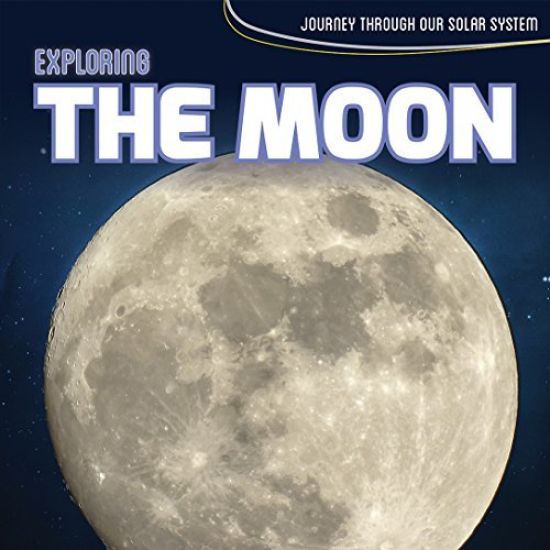
Exploring the Moon

Exploring the Moon

Richard Alexander

Kidhaven Publishing
2017
sidottu
Without our moon, Earth would be a very different place. Readers discover fun facts about our closest neighbor, including the way it controls the ocean tides and how long it took astronauts to get there. People have always been captivated by the idea of exploring the moon, and readers will enjoy exploring these interesting facts and stunning pictures, which support important science curriculum topics.