Kirjojen hintavertailu. Mukana 11 244 527 kirjaa ja 12 kauppaa.

Kirjahaku

Etsi kirjoja tekijän nimen, kirjan nimen tai ISBN:n perusteella.

1000 tulosta hakusanalla Richard B. Gunderman

X-Ray Vision

X-Ray Vision

Richard B. Gunderman

Oxford University Press Inc
2013
nidottu
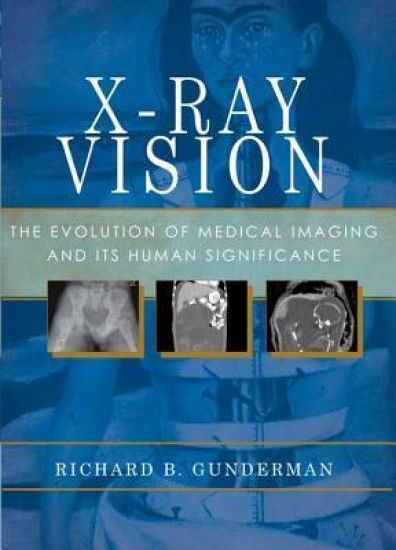
The discovery of the x-ray in 1895 proved to be one of the most transformative breakthroughs in the history of science. It ushered in a new era in medicine, allowing physicians and patients to peer inside the living human body, without the use of a scalpel, to assess health and diagnose diseases. The x-ray opened up the world of the very small, allowing us to determine the structure of the molecules of which we are made. It also revealed the true nature of the largest and oldest objects in the universe, including the universe itself. Today it has spawned amazing new imaging techniques, including ultrasound, CT scanning, MR imaging, and nuclear medicine, which have opened up remarkable new windows on the structure and function of the human body. This book recounts the stories of the remarkable physicians and scientists who developed these new imaging technologies. It tells the stories of real patients whose lives have been touched, transformed, and in many cases saved by medical imaging. And it shines new light on the surprising ways x-rays have transformed our view of ourselves and the world we inhabit. Richly illustrated with both historical images and imaging studies of real patients, X-ray Vision is a feast for the eyes as well as the mind.
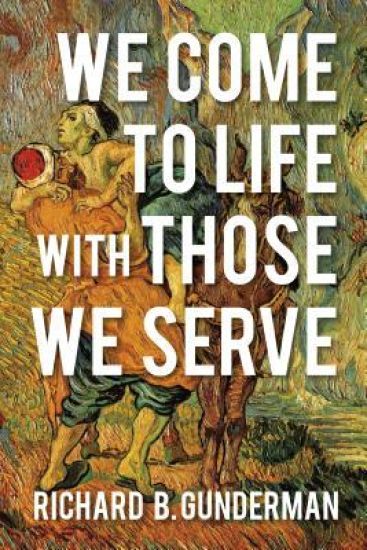
We Come to Life with Those We Serve

We Come to Life with Those We Serve

Richard B. Gunderman

Indiana University Press
2017
sidottu
What is the most meaningful and rewarding path in life? Many assume we enrich ourselves only by accumulating more wealth, power, and fame, or by finding new and greater forms of pleasure. In reality, we are most enriched not in taking from others but in sharing the best we have to offer through a life of service. The legendary, real-life individuals and the famous literary characters in this inspiring book show us the way: Vincent Van Gogh exemplified service through art, Benjamin Franklin dedicated his life to service of community, and the career of coach John Wooden is apt testimony to the rewards of service through education. Gunderman persuasively argues that, far from draining away our vitality, service at its best actually brings us to life.
We Come to Life with Those We Serve

We Come to Life with Those We Serve

Richard B. Gunderman

Indiana University Press
2017
pokkari
What is the most meaningful and rewarding path in life? Many assume we enrich ourselves only by accumulating more wealth, power, and fame, or by finding new and greater forms of pleasure. In reality, we are most enriched not in taking from others but in sharing the best we have to offer through a life of service. The legendary, real-life individuals and the famous literary characters in this inspiring book show us the way: Vincent Van Gogh exemplified service through art, Benjamin Franklin dedicated his life to service of community, and the career of coach John Wooden is apt testimony to the rewards of service through education. Gunderman persuasively argues that, far from draining away our vitality, service at its best actually brings us to life.
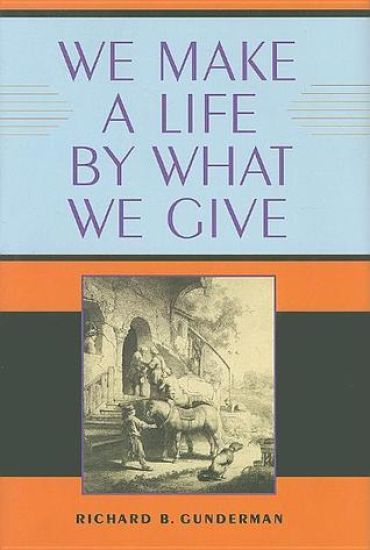
We Make a Life by What We Give

We Make a Life by What We Give

Richard B. Gunderman

Indiana University Press
2009
pokkari
According to an old saying, "We make a living by what we get, but we make a life by what we give." In 22 brief and insightful essays, Richard B. Gunderman shows us that the key to more rewarding giving can be found by looking beyond mere donations of money. Exploring the ethical core of sharing and examining its importance for both those who receive and those who give, here is a book to deepen our understanding of what it means to share.
We Make a Life by What We Give

We Make a Life by What We Give

Richard B. Gunderman

Indiana University Press
2008
sidottu
According to an old saying, "We make a living by what we get, but we make a life by what we give." In 22 brief and insightful essays, Richard B. Gunderman shows us that the key to more rewarding giving can be found by looking beyond mere donations of money. Exploring the ethical core of sharing and examining its importance for both those who receive and those who give, here is a book to deepen our understanding of what it means to share.
Achieving Excellence in Medical Education

Achieving Excellence in Medical Education

Richard B. Gunderman

Springer London Ltd
2011
sidottu
A goldmine of theoretical insights and practical suggestions, Achieving Excellence in Medical Education, Second Edition explores the essential question facing medical educators and learners today: What is our vision of educational excellence, and what can we do to enhance our performance?Among the topics explored within this updated, engaging, informative, and thought-provoking text are:• Education’s position as a priority of medical schools• Seminal educational insights from non-medical educators• Best practices of outstanding educators and learners• Promises and pitfalls of new educational technologies• Key resources for promoting excellence in medical education• Medical education’s role in preparing future leaders• Leadership roles for medical schools in universities and society Reviews of the first edition: "This is an eloquent, quotable, and inspirational book that provides a template for "Achieving Excellence in Medical Education." - Journal of the American Medical Association "Gunderman is an accomplished educator, well known as a thoughtful and provocative teacher. . . I recommend his book to department chairs, clerkship and residency program directors, and education professionals who are shaping the future of medical education." - New England Journal of Medicine
Achieving Excellence in Medical Education

Achieving Excellence in Medical Education

Richard B. Gunderman

Springer London Ltd
2014
nidottu
A goldmine of theoretical insights and practical suggestions, Achieving Excellence in Medical Education, Second Edition explores the essential question facing medical educators and learners today: What is our vision of educational excellence, and what can we do to enhance our performance?Among the topics explored within this updated, engaging, informative, and thought-provoking text are:• Education’s position as a priority of medical schools• Seminal educational insights from non-medical educators• Best practices of outstanding educators and learners• Promises and pitfalls of new educational technologies• Key resources for promoting excellence in medical education• Medical education’s role in preparing future leaders• Leadership roles for medical schools in universities and society Reviews of the first edition: "This is an eloquent, quotable, and inspirational book that provides a template for "Achieving Excellence in Medical Education." - Journal of the American Medical Association "Gunderman is an accomplished educator, well known as a thoughtful and provocative teacher. . . I recommend his book to department chairs, clerkship and residency program directors, and education professionals who are shaping the future of medical education." - New England Journal of Medicine
Essential Radiology

Essential Radiology

Richard B. Gunderman

Thieme Medical Publishers Inc
2014
pokkari
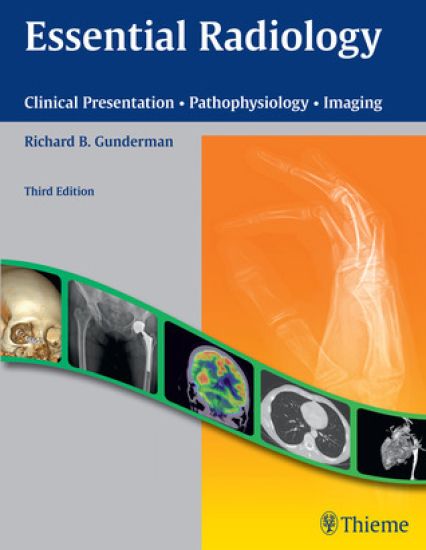
A new third edition of the outstanding introduction to radiologic imaging As an overview to radiology this high quality text from Thieme provides a comprehensive picture of current imaging practice and is suitable for reading by a range of healthcare professionals at undergraduate or post-graduate level. -- RAD Magazine Essential Radiology, Third Edition, is an extensively revised and updated text that provides a highly engaging, integrated overview of the use of radiology in every specialty and subspecialty, covering all imaging modalities and organ systems. It gives medical students in radiology clerkships a solid understanding of how each imaging modality works and how a variety of pathologic conditions appear on different imaging modalities.Key Features: Directly correlates radiologic findings with gross pathologic specimensContains updated discussions of clinical conditions and imaging techniques Includes high-quality imaging that illustrates the appearance of diseases and injuries in radiologic imagesWritten by a master teacher and premier expert on medical education in the U.S.Medical students will find this book indispensable for their radiology coursework and refer to it repeatedly during their training.
Leadership in Healthcare

Leadership in Healthcare

Richard B. Gunderman

Springer London Ltd
2009
nidottu
Leadership in Healthcare opens up the world of leadership studies to all healthcare professionals. Physicians, nurses, and other healthcare professionals spend thousands of hours studying the science and technology of healthcare, and years or even decades putting into practice recent findings in molecular biology, clinical diagnostics, and therapeutics. By contrast, the topic of leadership and the traits of effective leaders tend to receive remarkably little attention. Yet no less vital than an understanding of how to interpret diagnostic tests and design care plans is a grasp of healthcare's organizational side, including the operation of multidisciplinary care teams, academic departments, and hospitals. If patient care, education, research, and professional service are to thrive in years to come, we must do a better job of preparing healthcare professionals to lead effectively. Composed of insightful and thought-provoking essays on the key facets of leadership, this book is designed to meet the needs of several important constituencies, including educators of health professionals who wish to incorporate leadership into their educational programs; health professional organizations seeking to enhance their members' leadership effectiveness, and individual health professionals who wish to embrace leadership in their personal and professional lives. This book represents a vital resource for health professionals who wish to enhance the quality of leadership in health professions education, practice, and professional development. In addition to regularly caring for patients, Richard Gunderman, MD PhD MPH brings to this discussion a wealth of personal experience in professional and organizational leadership.
RadCases Plus Q&a Pediatric Imaging

RadCases Plus Q&a Pediatric Imaging

Richard B. Gunderman; Lisa Delaney

Thieme Medical Publishers Inc
2018
pokkari
Important pediatric radiology cases and board-type Q&A review to help you pass your exam! Pediatric radiology provides an opportunity to care for perhaps the most vulnerable patients of all, from prenatal life through adolescence. Pediatric Imaging, Second Edition by Richard Gunderman and Lisa Delaney features 100 new cases along with two board-type multiple-choice questions for each. A wide spectrum of cases focusing on radiology in children – from basic to advanced – are strategically designed to increase a resident's knowledge and provide robust exam preparation. For maximum ease of self-assessment, each case begins with the clinical presentation on the right-hand page; study that and then turn the page for imaging findings, differential diagnoses with the definitive diagnosis, essential facts, pearls and pitfalls, and more. Key Highlights Multiple images for every case demonstrate how a condition appears in different modalitiesEasy-to-read bulleted formatting and concise, point-by-point presentation of the Essential Facts enables learning and retention of high-yield facts and skill-building in radiologic diagnosisOnline access to additional cases enables residents to arrange study sessions, quickly extract and master information, and prepare for theme-based radiology conferences Thieme's RadCases means cases selected to simulate what you will see on your exams, rounds, and rotations. RadCases helps you to identify the correct differential diagnosis for each case, including the most critical. The series comprehensively covers the following specialties: Breast Imaging · Cardiac Imaging · Emergency Imaging · Gastrointestinal Imaging · Genitourinary Imaging · Head and Neck Imaging · Interventional Radiology · Musculoskeletal Radiology · Neuro Imaging · Nuclear Medicine · Pediatric Imaging · Thoracic Imaging · Ultrasound Imaging This RadCases book comes with a code providing access to additional online cases: 100 in this book plus 250+ more cases and interactive Q&A. Master your cases, pass your exams, and diagnose with confidence: RadCases! This print book includes complimentary access to a digital copy on https://medone.thieme.com. Publisher's Note: Products purchased from Third Party sellers are not guaranteed by the publisher for quality, authenticity, or access to any online entitlements included with the product.
Richard B. Moore, Caribbean Militant in Harlem
"[This] critical edition of a selection of Richard B. Moore's essays closes one more gap in the astonishing history of twentieth-century Afro-American nationalism." —Journal of American History "This first collection of Moore's writings . . . [is] a welcome and important contribution to scholarship concerned with the political and intellectual history of African peoples in general and of African peoples in the Americas, in particular. . . . an inspiration to those who follow after to study and emulate his life and achievement." —Journal of American Ethnic History
Richard B. Cheney and the Rise of the Imperial Vice Presidency

Richard B. Cheney and the Rise of the Imperial Vice Presidency

Bruce P. Montgomery

Praeger Publishers Inc
2009
sidottu
On taking office in 2001, Dick Cheney crowned himself the first imperial vice president in the nation's history, transforming a traditionally inconsequential office into a de facto fourth branch of government. Taking a less journalistic and personal approach to Cheney than previous biographers, this critical new biography shows exactly how Cheney engineered his arrogation of vast executive powers—and the dire consequences his power grab has had and will long continue to have for the office of the vice presidency, the balance of powers, the Constitution, geopolitics, and America's security, strength, and prestige. Taking advantage of the administration's global war on terrorism, a president inexperienced in matters of war and peace, and a Republican Congress that rated party power above institutional prerogatives, Vice President Cheney moved with astonishing speed and energy to assume a dominant role on the national and international stage as the effective president-in-proxy of the United States. Cheney asserted that all constitutional checks and balances and all individual liberties under the Bill of Rights are subservient to the president's powers as commander-in-chief in confronting international terrorism. Although former administrations had made power grabs in the past in times of national crisis, no president-and certainly no vice president-has ever exerted such sweeping claims of executive power on so many fronts in violation of the bedrock principles of the Constitution.
Richard B. Morris and American History in the Twentieth Century
Richard B. Morris, an internationally known early American scholar, was a historian at both City College of New York and Columbia University. Morris' dissertation, Studies in the History of American Law, helped establish American legal history as a field. His Government and Labor in Early America was a landmark publication. He won the Bancroft Prize for his masterpiece, The Peacemakers, in 1966. This biography is based primarily on Morris' extensive papers and the recollections of historians who knew him well. Prominent historians of the twentieth century such as Evarts Greene, Charles M. Andrews, Lawrence Henry Gipson, Perry Miller, Merrill Jensen, Dumas Malone, Julian Boyd, Allan Nevins, and Henry Commager, among others, appear throughout. Subjects discussed include anti-Semitism, the celebrated New American Nation series, and Morris' suspicions about the innocence of Alger Hiss. This book was one of the History New Network's books of the month in July 2005.
Richard B. Russell, Jr., Senator from Georgia

Richard B. Russell, Jr., Senator from Georgia

Gilbert C. Fite

The University of North Carolina Press
2002
nidottu
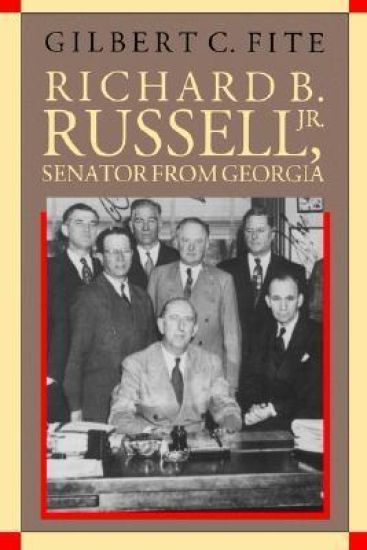
Richard B. Russell, Jr., represented Georgia in the United States Senate from 1933 to 1971, a period of sweeping social change. Russell (1879-1971) was regarded by his fellow senators as the quintessential member of the Senate's establishment, and they dubbed him ""a Senator's Senator"" and ""the Georgia Giant."" So great was his popularity in Congress that Lyndon B. Johnson once said, ""If the membership of the Senate were to cast a secret vote on the man they believed best qualifies to be president of the United States, they would choose Richard Russell."" Gilbert Fite's masterful biography begins with Russell's upbringing in an elite Georgia family. The highly stratified and class-conscious society of his early years would later influence Russell's legislative agenda. In 1920, Russell was elected to the Georgia General Assembly, and in 1931 he became governor of Georgia. He held that office until 1933, when he began his thirty-eight years of service in the U.S. Senate. During Russell's long senatorial career, he was deeply involved in many of the most important episodes of our national life: the New Deal, World War II, the MacArthur investigation, the foreign aid debate, and the Warren Commission inquiry. His greatest contribution, according to Fite, was his fierce determination to maintain a strong national defense during the Cold War; in his sixteen years as chairman of the Armed Services Committee, he emerged as the acknowledged leader in Congress on defense matters. A career-long member of the Senate Appropriations Committee, Russell also became one of the nation's strongest advocates of farm price supports. Under his sponsorship, the Senate enacted legislation establishing the school lunch program and distribution of food to the needy. But Russell never abandoned his dedication to the South's traditional values, and he became the leader of the Southern Bloc that staunchly fought to defeat civil rights legislation and maintain the structures of segregation. Russell's unwillingness to compromise on civil rights, says Fite, meant that his career was ultimately one of regional rather than national leadership.
Richard B. Cheney and the Rise of the Imperial Vice Presidency

Richard B. Cheney and the Rise of the Imperial Vice Presidency

Bruce P. Montgomery

Praeger Publishers Inc
2009
nidottu
On taking office in 2001, Dick Cheney crowned himself the first imperial vice president in the nation's history, transforming a traditionally inconsequential office into a de facto fourth branch of government. Taking a less journalistic and personal approach to Cheney than previous biographers, this critical new biography shows exactly how Cheney engineered his arrogation of vast executive powers—and the dire consequences his power grab has had and will long continue to have for the office of the vice presidency, the balance of powers, the Constitution, geopolitics, and America's security, strength, and prestige.Taking advantage of the administration's global war on terrorism, a president inexperienced in matters of war and peace, and a Republican Congress that rated party power above institutional prerogatives, Vice President Cheney moved with astonishing speed and energy to assume a dominant role on the national and international stage as the effective president-in-proxy of the United States. Cheney asserted that all constitutional checks and balances and all individual liberties under the Bill of Rights are subservient to the president's powers as commander-in-chief in confronting international terrorism. Although former administrations had made power grabs in the past in times of national crisis, no president-and certainly no vice president-has ever exerted such sweeping claims of executive power on so many fronts in violation of the bedrock principles of the Constitution.