Kirjojen hintavertailu. Mukana 11 342 296 kirjaa ja 12 kauppaa.

Kirjahaku

Etsi kirjoja tekijän nimen, kirjan nimen tai ISBN:n perusteella.

1000 tulosta hakusanalla Richard B. Hays

Reading Backwards

Reading Backwards

Richard B. Hays

SPCK Publishing
2015
nidottu
The claim that the events of Jesus' life, death, and resurrection took place ‘according to the Scriptures’ stands at the heart of the New Testament's earliest message. All four canonical Gospels declare that the Torah, Prophets and Psalms mysteriously prefigure Jesus. In this ground-breaking new book, Hays traces the strategies the Gospel writers employ to ‘read backwards’, showing how the Old Testament figuratively discloses the astonishing truth about Jesus' identity.
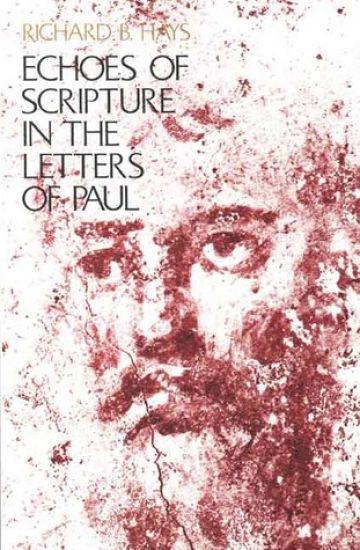
Echoes of Scripture in the Letters of Paul

Echoes of Scripture in the Letters of Paul

Richard B. Hays

Yale University Press
1993
pokkari
A fresh reading of the letters of Paul, bringing to light their literary texture “Hays has without doubt posed the right question at the right time within the horizon of a particularly important problematic. . . . A new beginning for the question concerning the reception of the Old Testament in the New.”—Hans Hübner, Theologische Literaturzeitung Paul’s letters, the earliest writings in the New Testament, are filled with allusions, images, and quotations from the Old Testament, or, as Paul called it, Scripture. In this book, Richard B. Hays investigates Paul’s appropriation of Scripture from a perspective based on literary-critical studies of intertextuality. His uncovering of scriptural echoes in Paul’s language enriches our appreciation of the complex literary texture of Paul’s letters and offers new insights into his message.
First Corinthians

First Corinthians

Richard B. Hays

Westminster/John Knox Press,U.S.
2011
pokkari
Interpretation: A Bible Commentary for Teaching and Preaching is a distinctive resource for those who interpret the Bible in the church. Planned and written specifically for teaching and preaching needs, this critically acclaimed biblical commentary is a major contribution to scholarship and ministry.
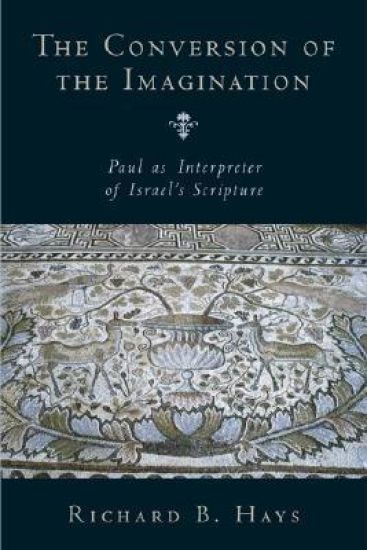
The Conversion of the Imagination

The Conversion of the Imagination

Richard B. Hays

William B Eerdmans Publishing Co
2004
nidottu
The Conversion of the Imagination contains some of the best work on Paul by first-rate New Testament scholar Richard B. Hays. These essays probe Paul's approach to scriptural interpretation, showing how Paul's reading of the Hebrew Scriptures reshaped the theological vision of his churches. Hays's analysis of intertextual echoes in Paul's letters has touched off exciting debate among Pauline scholars and made more recognizable the contours of Paul's thought. These studies contain some of the early work leading up to Hays's seminal Echoes of Scripture in the Letters of Paul and also show how Hays has responded to critics and further developed his thought in the years since. Among the many subjects covered here are Paul's christological application of Psalms, Paul's revisionary interpretation of the Law, and the influence of the Old Testament on Paul's ethical teachings and ecclesiology.
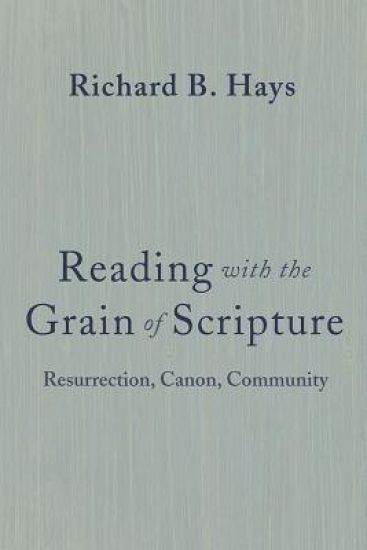
Reading with the Grain of Scripture

Reading with the Grain of Scripture

Richard B. Hays

William B. Eerdmans Publishing Company
2020
sidottu
Christianity Today Book Award in Biblical Studies (2021) "All these essays illustrate, in one way or another, how I have sought to carry out scholarly work as an aspect of discipleship--as a process of faith seeking exegetical clarity." Richard Hays has been a giant in the field of New Testament studies since the 1989 publication of his Echoes of Scripture in the Letters of Paul. His most significant essays of the past twenty-five years are now collected in this volume, representing the full fruition of major themes from his body of work: the importance of narrative as the "glue" that holds the Bible togetherthe figural coherence between the Old and New Testamentsthe centrality of the resurrection of Jesusthe hope for New Creation and God's eschatological transformation of the worldthe importance of standing in trusting humility before the textthe significance of reading Scripture within and for the community of faithReaders will find themselves guided toward Hays's "hermeneutic of trust" rather than the "hermeneutic of suspicion" that has loomed large in recent biblical studies.
First Corinthians

First Corinthians

Richard B. Hays

Westminster/John Knox Press,U.S.
1997
sidottu
Paul's first letter to the Corinthians was addressed originally to a fledgling mission church in Corinth. Paul's absence from the church had allowed serious problems to arise within the Corinthian community, but the problems that he addresses in this letter do not always seem based on explicitly theological ideas. The brilliance of Paul, though, is that he frames the issues in theological terms and reflects on them in the light of the gospel.Interpretation: A Bible Commentary for Teaching and Preaching is a distinctive resource for those who interpret the Bible in the church. Planned and written specifically for teaching and preaching needs, this critically acclaimed biblical commentary is a major contribution to scholarship and ministry.
Reading Backwards

Reading Backwards

Richard B. Hays

Baylor University Press
2016
nidottu
In Reading Backwards Richard B. Hays maps the shocking ways the four Gospel writers interpreted Israel's Scripture to craft their literary witnesses to the Church's one Christ. The Gospels' scriptural imagination discovered inside the long tradition of a resilient Jewish monotheism a novel and revolutionary Christology.Modernity's incredulity toward the Christian faith partly rests upon the characterization of early Christian preaching as a tendentious misreading of the Hebrew Scriptures. Christianity, modernity claims, twisted the Bible they inherited to fit its message about a mythological divine Savior. The Gospels, for many modern critics, are thus more about Christian doctrine in the second and third century than they are about Jesus in the first.Such Christian "misreadings" are not late or politically motivated developments within Christian thought. As Hays demonstrates, the claim that the events of Jesus' life, death, and resurrection took place "according to the Scriptures" stands at the very heart of the New Testament's earliest message. All four canonical Gospels declare that the Torah and the Prophets and the Psalms mysteriously prefigure Jesus. The author of the Fourth Gospel puts the claim succinctly: "If you believed Moses, you would believe me, for he wrote about me" (John 5:46).Hays thus traces the reading strategies the Gospel writers employ to "read backwards" and to discover how the Old Testament figuratively discloses the astonishing paradoxical truth about Jesus' identity. Attention to Jewish and Old Testament roots of the Gospel narratives reveals that each of the four Evangelists, in their diverse portrayals, identify Jesus as the embodiment of the God of Israel. Hays also explores the hermeneutical challenges posed by attempting to follow the Evangelists as readers of Israel's Scripture—can the Evangelists teach us to read backwards along with them and to discern the same mystery they discovered in Israel's story?In Reading Backwards Hays demonstrates that it was Israel's Scripture itself that taught the Gospel writers how to understand Jesus as the embodied presence of God, that this conversion of imagination occurred early in the development of Christian theology, and that the Gospel writers' revisionary figural readings of their Bible stand at the very center of Christianity.
Echoes of Scripture in the Gospels

Echoes of Scripture in the Gospels

Richard B. Hays

Baylor University Press
2017
nidottu
The claim that the events of Jesus' life, death, and resurrection took place ""according to the Scriptures"" stands at the heart of the New Testament's message. All four canonical Gospels declare that the Torah and the Prophets and the Psalms mysteriously prefigure Jesus. The author of the Fourth Gospel states this claim succinctly: in his narrative, Jesus declares, ""If you believed Moses, you would believe me, for he wrote about me"" (John 5:46). Yet modern historical criticism characteristically judges that the New Testament's christological readings of Israel's Scripture misrepresent the original sense of the texts; this judgment forces fundamental questions to be asked: Why do the Gospel writers read the Scriptures in such surprising ways? Are their readings intelligible as coherent or persuasive interpretations of the Scriptures? Does Christian faith require the illegitimate theft of someone else's sacred texts? Echoes of Scripture in the Gospels answers these questions. Richard B. Hays chronicles the dramatically different ways the four Gospel writers interpreted Israel's Scripture and reveals that their readings were as complementary as they were faithful. In this long-awaited sequel to his Echoes of Scripture in the Letters of Paul, Hays highlights the theological consequences of the Gospel writers' distinctive hermeneutical approaches and asks what it might mean for contemporary readers to attempt to read Scripture through the eyes of the Evangelists. In particular, Hays carefully describes the Evangelists' practice of figural reading - an imaginative and retrospective move that creates narrative continuity and wholeness. He shows how each Gospel artfully uses scriptural echoes to re-narrate Israel's story, to assert that Jesus is the embodiment of Israel's God, and to prod the church in its vocation to engage the pagan world. Hays shows how the Evangelists summon readers to a conversion of their imagination. The Evangelists' use of scriptural echo beckons readers to believe the extraordinary: that Jesus was Israel's Messiah, that Jesus is Israel's God, and that contemporary believers are still on mission. The Evangelists, according to Hays, are training our scriptural senses, calling readers to be better scriptural people by being better scriptural poets.
Echoes of Scripture in the Gospels

Echoes of Scripture in the Gospels

Richard B. Hays

Baylor University Press
2018
sidottu
The claim that the events of Jesus' life, death, and resurrection took place ""according to the Scriptures"" stands at the heart of the New Testament's message. All four canonical Gospels declare that the Torah and the Prophets and the Psalms mysteriously prefigure Jesus. The author of the Fourth Gospel states this claim succinctly: in his narrative, Jesus declares, ""If you believed Moses, you would believe me, for he wrote about me"" (John 5:46). Yet modern historical criticism characteristically judges that the New Testament's christological readings of Israel's Scripture misrepresent the original sense of the texts; this judgment forces fundamental questions to be asked: Why do the Gospel writers read the Scriptures in such surprising ways? Are their readings intelligible as coherent or persuasive interpretations of the Scriptures? Does Christian faith require the illegitimate theft of someone else's sacred texts? Echoes of Scripture in the Gospels answers these questions. Richard B. Hays chronicles the dramatically different ways the four Gospel writers interpreted Israel's Scripture and reveals that their readings were as complementary as they were faithful. In this long-awaited sequel to his Echoes of Scripture in the Letters of Paul, Hays highlights the theological consequences of the Gospel writers' distinctive hermeneutical approaches and asks what it might mean for contemporary readers to attempt to read Scripture through the eyes of the Evangelists. In particular, Hays carefully describes the Evangelists' practice of figural reading - an imaginative and retrospective move that creates narrative continuity and wholeness. He shows how each Gospel artfully uses scriptural echoes to re-narrate Israel's story, to assert that Jesus is the embodiment of Israel's God, and to prod the church in its vocation to engage the pagan world. Hays shows how the Evangelists summon readers to a conversion of their imagination. The Evangelists' use of scriptural echo beckons readers to believe the extraordinary: that Jesus was Israel's Messiah, that Jesus is Israel's God, and that contemporary believers are still on mission. The Evangelists, according to Hays, are training our scriptural senses, calling readers to be better scriptural people by being better scriptural poets.
Reading with the Grain of Scripture

Reading with the Grain of Scripture

Richard B. Hays

Baylor University Press
2019
sidottu
Reading with the Grain of Scripture is a collection of Richard Hays' most important essays on biblical interpretation published over the past twenty-five years. The studies gathered here range across the New Testament canon, dealing with the four Gospels, the historical Jesus, the letters of Paul, and the theologies of individual writings of the New Testament, including Acts, Hebrews, and Revelation. Taking a stand against the corrosive hermeneutics of suspicion that has characterized much late modern and postmodern criticism, Hays proposes a reading strategy centered on the resurrection of Jesus and the New Testament's message of hope for God's eschatological transformation of the world. Such an approach seeks to read with, rather than against, the grain of the biblical narratives and to discern the deep figural coherence between the Old Testament and the New. Most importantly, Hays' close readings of the New Testament texts exemplify the practice of reading from a posture of trust, reading with and for the community of faith that these texts have birthed and sustained.
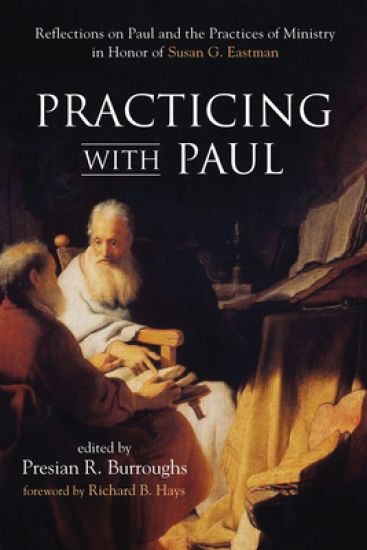
Practicing with Paul

Practicing with Paul

Richard B Hays

Cascade Books
2018
pokkari
Collecting essays from prominent scholars who span the globe and academic disciplines, Practicing with Paul speaks into the life of the church in ways that inspire and edify followers and ministers of Jesus Christ. Each contribution delves into the details and historical contexts of Paul's letters, including the interpretation of those texts throughout church history. Meanwhile, each author interprets those details in relation to Christian practice and suggests implications for contemporary Christian ministry that flow out of this rich interpretive process. By modeling forms of interpretation that are practically-oriented, this book provides inspiration for current and future Christian ministers as they too attempt to incarnate the ways of Christ along with Paul. ""As the title promises, the essays here draw, even compel, the reader into Pauline 'practice, ' that is to say, into engagement with the Pauline gospel as it informs contemporary Christian ministries of transformation, justice, and peace-making. The essays span a distinguished, intergenerational company of authors whose work is informed and enriched by Susan Eastman's extraordinary, generous, and generative gift for showing how careful Pauline exegesis speaks to the most urgent concerns of our times."" --Alexandra Brown, Washington and Lee University Presian R. Burroughs is Assistant Professor of New Testament at United Theological Seminary in Dayton, Ohio. In addition to Pauline scholarship, her research interests include ecological theology.
Practicing with Paul

Practicing with Paul

Richard B Hays

Cascade Books
2018
sidottu
Collecting essays from prominent scholars who span the globe and academic disciplines, Practicing with Paul speaks into the life of the church in ways that inspire and edify followers and ministers of Jesus Christ. Each contribution delves into the details and historical contexts of Paul's letters, including the interpretation of those texts throughout church history. Meanwhile, each author interprets those details in relation to Christian practice and suggests implications for contemporary Christian ministry that flow out of this rich interpretive process. By modeling forms of interpretation that are practically-oriented, this book provides inspiration for current and future Christian ministers as they too attempt to incarnate the ways of Christ along with Paul. ""As the title promises, the essays here draw, even compel, the reader into Pauline 'practice, ' that is to say, into engagement with the Pauline gospel as it informs contemporary Christian ministries of transformation, justice, and peace-making. The essays span a distinguished, intergenerational company of authors whose work is informed and enriched by Susan Eastman's extraordinary, generous, and generative gift for showing how careful Pauline exegesis speaks to the most urgent concerns of our times."" --Alexandra Brown, Washington and Lee University Presian R. Burroughs is Assistant Professor of New Testament at United Theological Seminary in Dayton, Ohio. In addition to Pauline scholarship, her research interests include ecological theology.
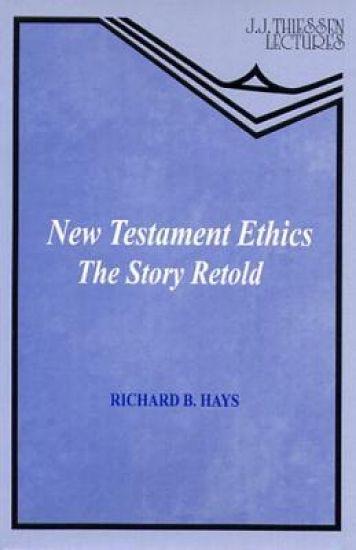
New Testament Ethics

New Testament Ethics

Richard B Hays

Wipf Stock Publishers
2018
pokkari
In these lectures, as in his writings, Hays' passion for getting the story right and his conviction that Christians today are part of that story, become apparent. Our ""getting it right"" has to do not only with intellectual interests and rigour, but with the truthful practices of today's Christians. ""In these lectures, as in his writings, Hays' passion for getting the story right and his conviction that Christians today are part of that story, become apparent. He has taught us that our 'getting it right' has to do not only with intellectual interests and rigour, but with the truthful practices of today's Christians."" --From the Foreword by Harry Huebner, Chair of CMBC Lectureship Committee Richard B. Hays, Professor of New Testament at Duke Divinity School, Durham, North Carolina, since 1991, is an ordained United Methodist minister. He received his B.A. and M.Div. Degrees from Yale University and his Ph.D. from Emory University in Atlanta, where he taught in the Chandler School of Theology. He also taught at Yale Divinity School for ten years. Hays is noted for his work in the field of Pauline theology and New Testament ethics. His books include: The Moral Vision of the New Testament: Community, Cross, New Creation (Harper SanFrancisco, 1996), Echoes of Scripture in the Letters of Paul (Yale University Press, 1989) and First Corinthians (Interpretation commentary series; John Knox Press, 1997).
The Widening of God's Mercy

The Widening of God's Mercy

Christopher B Hays; Richard B Hays

YALE UNIVERSITY PRESS
2024
sidottu
A fresh, deeply biblical account of God’s expanding grace and mercy, tracing how the Bible’s narrative points to the full inclusion of LGBTQ people in Christian communities “A radical new vision . . . and [an] argument that God’s plan was always to include more and more people.”—Scott Detrow, All Things Considered, NPR Discussions of the Bible and human sexuality often focus on a scattered handful of specific passages. But arguments about this same set of verses have reached an impasse, two leading biblical scholars believe; these debates are missing the forest for the trees. In this learned and beautifully written book, Richard and Christopher Hays explore a more expansive way of listening to the overarching story that scripture tells. They remind us of a dynamic and gracious God who is willing to change his mind, consistently broadening his grace to include more and more people. Those who were once outsiders find themselves surprisingly embraced within the people of God, while those who sought to enforce exclusive boundaries are challenged to rethink their understanding of God’s ways. The authors—a father and son—point out ongoing conversations within the Bible in which traditional rules, customs, and theologies are rethought. They argue that God has already gone on ahead of our debates and expanded his grace to people of different sexualities. If the Bible shows us a God who changes his mind, they say, perhaps today’s Christians should do the same. The book begins with the authors’ personal experiences of controversies over sexuality and closes with Richard Hays’s epilogue reflecting on his own change of heart and mind.
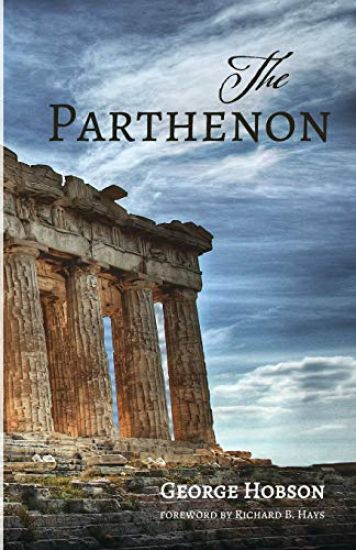
The Parthenon

The Parthenon

George Hobson; Richard B Hays

Resource Publications (CA)
2019
pokkari
The twenty-seven poems in this collection were written over a period of many years. They vary greatly in style and length. The poems in the first two sections are lyrical. Natural beauty evokes wonder and tugs at memory. Creatures dance and sing. There is joy. The last poem in Part II, ""The Generations,"" shifts tone abruptly. There is conflict and loss. In the end, with the dolphins, beauty renews hope. ""The Generations"" is a bridge to the complex narrative poems and dramatic lyrics in Part III. Here the tragic is displayed, but also the divine power that redeems it. Part IV plunges into our modern abyss. The poems are an anguished cry from the heart of the fog enveloping our civilization. The long poem, ""The Fog,"" evokes the plight of lost and lonely individuals tending their private campfires in the night of the world, cut off from transcendence and marooned in the abstract unreality of the digital universe. Part V carries forward this momentum, referencing the genocidal violence of our age, but then moves from darkness and horror up into the light of revelation and peace.
The Parthenon

The Parthenon

George Hobson; Richard B Hays

Resource Publications (CA)
2019
sidottu
The twenty-seven poems in this collection were written over a period of many years. They vary greatly in style and length. The poems in the first two sections are lyrical. Natural beauty evokes wonder and tugs at memory. Creatures dance and sing. There is joy. The last poem in Part II, ""The Generations,"" shifts tone abruptly. There is conflict and loss. In the end, with the dolphins, beauty renews hope. ""The Generations"" is a bridge to the complex narrative poems and dramatic lyrics in Part III. Here the tragic is displayed, but also the divine power that redeems it. Part IV plunges into our modern abyss. The poems are an anguished cry from the heart of the fog enveloping our civilization. The long poem, ""The Fog,"" evokes the plight of lost and lonely individuals tending their private campfires in the night of the world, cut off from transcendence and marooned in the abstract unreality of the digital universe. Part V carries forward this momentum, referencing the genocidal violence of our age, but then moves from darkness and horror up into the light of revelation and peace.
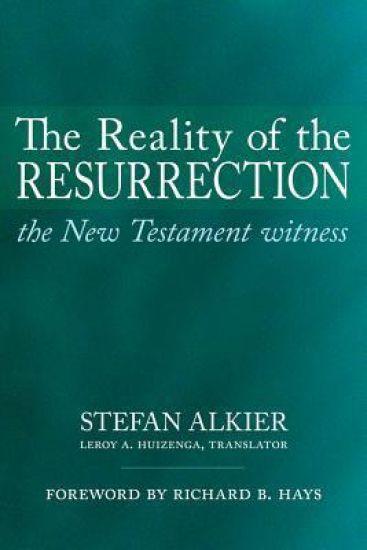
The Reality of the Resurrection

The Reality of the Resurrection

Stefan Alkier; Richard B. Hays

Baylor University Press
2013
nidottu
In The Reality of the Resurrection Stefan Alkier bridges the chasm between history and theology. Through a patient historical, canonical, and hermeneutical study, Alkier demonstrates that the resurrection of Jesus is inextricably bound to the general eschatological resurrection of the dead. Jesus' resurrection is no isolated miracle but is instead the crucial disclosure of the nature of reality, the identity of God, and the destiny of human beings. Interpretation of Jesus' resurrection is thus necessarily and unavoidably both historical and theological.Through a descriptive exegetical survey of New Testament rhetoric, Alkier locates the resurrection of the Crucified One within a distinct narrative world. He then employs the semiotics of C. S. Peirce to develop a creative epistemology that avoids propositional literalism and modernist reductionism. Alkier finally outlines how resurrection impacts Christian praxis.The Reality of the Resurrection witnesses to that which Paul names as of ""first importance""--not only for the early Christian communities but also for the shaping of our communities today.