Kirjojen hintavertailu. Mukana 11 244 527 kirjaa ja 12 kauppaa.

Kirjahaku

Etsi kirjoja tekijän nimen, kirjan nimen tai ISBN:n perusteella.

1000 tulosta hakusanalla Richard Bulliet

The Camel and the Wheel

The Camel and the Wheel

Richard Bulliet

Columbia University Press
1990
pokkari
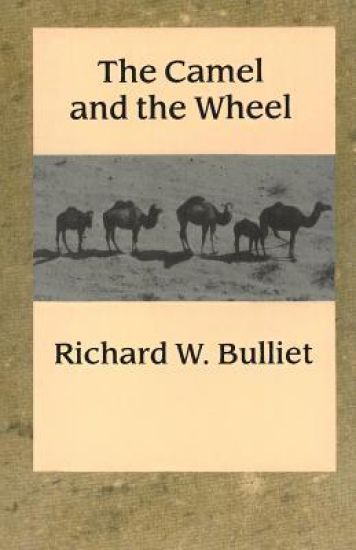
Why, for many centuries, was the wheel abandoned in the Middle East in favor of the camel as a means of transport? This richly illustrated study explains this anomaly. Drawing on archaeology, art, technology, anthropology, linguistics, and camel husbandry, Bulliet explores the implications for the region's economic and social development during the Middle Ages and into modern times.
Islam

Islam

Richard Bulliet

Columbia University Press
1995
sidottu
This concise revisionist account of the historical evolution of Islamic society goes beyond the caliph and the capital. The author abandons the historian's habit of viewing Islamic history "from the centre", that is, focusing on the rise and fall of imperial dynasties. Instead, he derives a more accurate understanding of how and why Islam became - and continues to be - so rooted in the social structure of the vast majority of people who lived far from the political centre and did not see the caliphate as essential in their lives. Focusing his research on Iran, and especially the cities of Isfahan, Gorgan and Nishapur, Bulliet considers: conversion; migration and demographic trends; education and its role in defining cultural norms; and the changing functions and fortunes of cities and urban life.
Islam

Islam

Richard Bulliet

Columbia University Press
1995
pokkari
Bulliet abandons the historian's habit of viewing Islamic history "from the center," that is, focusing on the rise and fall of imperial dynasties. Instead, he derives an understanding of how and why Islam became -- and continues to be -- so rooted in the social structure of the vast majority of people who lived far from the political locus and did not see the caliphate as essential in their lives.
An Arab-Syrian Gentleman and Warrior in the Period of the Crusades
The life of UsA mah ibn-Munqidh epitomized the height of Arab civilization as it flourished in the period of the early Crusades. His memoirs present an uncommon non-European perspective and understanding of the military and cultural contact between East and West, Muslim and Christian. His writing is remarkable for its narrative clarity, its humanity, and its wealth of perceptive details.
An Arab-Syrian Gentleman and Warrior in the Period of the Crusades
The life of UsA mah ibn-Munqidh epitomized the height of Arab civilization as it flourished in the period of the early Crusades. His memoirs present an uncommon non-European perspective and understanding of the military and cultural contact between East and West, Muslim and Christian. His writing is remarkable for its narrative clarity, its humanity, and its wealth of perceptive details.
The Case for Islamo-Christian Civilization

The Case for Islamo-Christian Civilization

Richard Bulliet

Columbia University Press
2004
sidottu
Conventional wisdom maintains that the differences between Islam and Christianity are irreconcilable. Pre-eminent Middle East scholar Richard W. Bulliet disagrees, and in this fresh, provocative book he looks beneath the rhetoric of hatred and misunderstanding to challenge prevailing-and misleading-views of Islamic history and a "clash of civilizations." These sibling societies begin at the same time, go through the same developmental stages, and confront the same internal challenges. Yet as Christianity grows rich and powerful and less central to everyday life, Islam finds success around the globe but falls behind in wealth and power. Modernization in the nineteenth century brings in secular forces that marginalize religion in political and public life. In the Christian world, this simply furthers a process that had already begun. In the Middle East this gives rise to the tyrannical governments that continue to dominate. Bulliet argues that beginning in the 1950s American policymakers misread the Muslim world and, instead of focusing on the growing discontent against the unpopular governments, saw only a forum for liberal, democratic reforms within those governments. By fostering slogans like "clash of civilizations" and "what went wrong," Americans to this day continue to misread the Muslim world and to miss the opportunity to focus on common ground for building lasting peace. This book offers a fresh perspective on U.S.-Muslim relations and provides the intellectual groundwork upon which to help build a peaceful and democratic future in the Muslim world.
The Case for Islamo-Christian Civilization

The Case for Islamo-Christian Civilization

Richard Bulliet

Columbia University Press
2006
pokkari
Conventional wisdom maintains that the differences between Islam and Christianity are irreconcilable. Pre-eminent Middle East scholar Richard W. Bulliet disagrees, and in this fresh, provocative book he looks beneath the rhetoric of hatred and misunderstanding to challenge prevailing-and misleading-views of Islamic history and a "clash of civilizations." These sibling societies begin at the same time, go through the same developmental stages, and confront the same internal challenges. Yet as Christianity grows rich and powerful and less central to everyday life, Islam finds success around the globe but falls behind in wealth and power. Modernization in the nineteenth century brings in secular forces that marginalize religion in political and public life. In the Christian world, this simply furthers a process that had already begun. In the Middle East this gives rise to the tyrannical governments that continue to dominate. Bulliet argues that beginning in the 1950s American policymakers misread the Muslim world and, instead of focusing on the growing discontent against the unpopular governments, saw only a forum for liberal, democratic reforms within those governments. By fostering slogans like "clash of civilizations" and "what went wrong," Americans to this day continue to misread the Muslim world and to miss the opportunity to focus on common ground for building lasting peace. This book offers a fresh perspective on U.S.-Muslim relations and provides the intellectual groundwork upon which to help build a peaceful and democratic future in the Muslim world.
Cotton, Climate, and Camels in Early Islamic Iran

Cotton, Climate, and Camels in Early Islamic Iran

Richard Bulliet

Columbia University Press
2009
sidottu
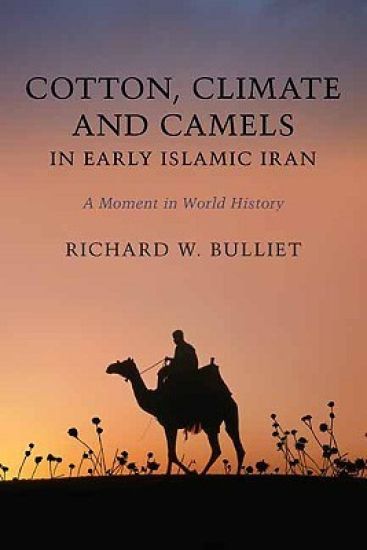
A boom in the production and export of cotton made Iran the richest region of the Islamic caliphate in the ninth and tenth centuries. Yet in the eleventh century, Iran's impressive agricultural economy entered a steep decline, bringing the country's primacy to an end. Richard W. Bulliet advances several provocative theses to explain these hitherto unrecognized historical events. According to Bulliet, the boom in cotton production directly paralleled the spread of Islam, and Iran's agricultural decline stemmed from a significant cooling of the climate that lasted for over a century. The latter phenomenon also prompted Turkish nomadic tribes to enter Iran for the first time, establishing a political dominance that would last for centuries. Substantiating his argument with innovative quantitative research and recent scientific discoveries, Bulliet first establishes the relationship between Iran's cotton industry and Islam and then outlines the evidence for what he terms the "Big Chill." Turning to the story of the Turks, he focuses on the lucrative but temperature-sensitive industry of cross-breeding one-humped and two-humped camels. He concludes that this unusual concatenation of events had a profound and long-lasting impact not just on the history of Iran but on the development of world affairs in general.
Cotton, Climate, and Camels in Early Islamic Iran

Cotton, Climate, and Camels in Early Islamic Iran

Richard Bulliet

Columbia University Press
2011
pokkari
A boom in the production and export of cotton made Iran the richest region of the Islamic caliphate in the ninth and tenth centuries. Yet in the eleventh century, Iran's impressive agricultural economy entered a steep decline, bringing the country's primacy to an end. Richard W. Bulliet advances several provocative theses to explain these hitherto unrecognized historical events. According to Bulliet, the boom in cotton production directly paralleled the spread of Islam, and Iran's agricultural decline stemmed from a significant cooling of the climate that lasted for over a century. The latter phenomenon also prompted Turkish nomadic tribes to enter Iran for the first time, establishing a political dominance that would last for centuries. Substantiating his argument with innovative quantitative research and recent scientific discoveries, Bulliet first establishes the relationship between Iran's cotton industry and Islam and then outlines the evidence for what he terms the "Big Chill." Turning to the story of the Turks, he focuses on the lucrative but temperature-sensitive industry of cross-breeding one-humped and two-humped camels. He concludes that this unusual concatenation of events had a profound and long-lasting impact not just on the history of Iran but on the development of world affairs in general.
The Wheel

The Wheel

Richard Bulliet

Columbia University Press
2016
sidottu
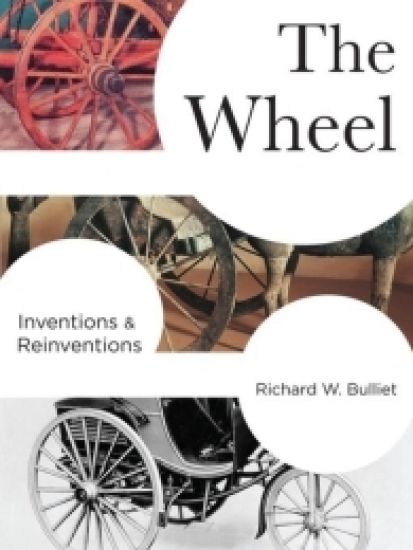
In this book, Richard W. Bulliet focuses on three major phases in the evolution of the wheel and their relationship to the needs and ambitions of human society. He begins in 4000 B.C.E. with the first wheels affixed to axles. He then follows with the innovation of wheels turning independently on their axles and concludes five thousand years later with the caster, a single rotating and pivoting wheel. Bulliet's most interesting finding is that a simple desire to move things from place to place did not drive the wheel's development. If that were the case, the wheel could have been invented at any time almost anywhere in the world. By dividing the history of this technology into three conceptual phases and focusing on the specific men, women, and societies that brought it about, Bulliet expands the social, economic, and political significance of a tool we only partially understand. He underscores the role of gender, combat, and competition in the design and manufacture of wheels, adding vivid imagery to illustrate each stage of their development.
The Earth and Its Peoples

The Earth and Its Peoples

Richard Bulliet; Pamela Crossley; Daniel Headrick; Steven Hirsch; Lyman Johnson; David Northrup

CENGAGE LEARNING, INC
2023
nidottu
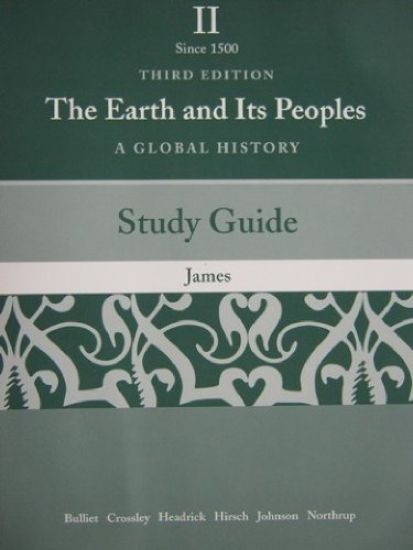
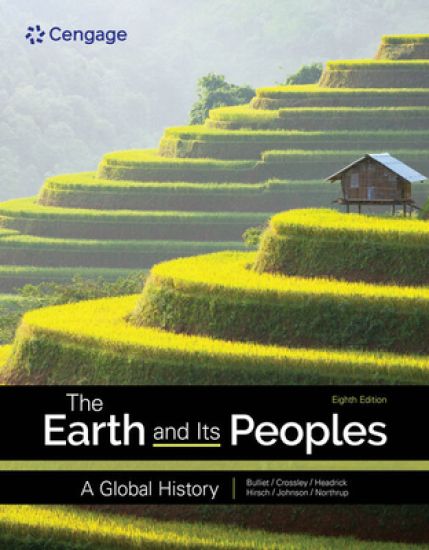
Bulliet/Crossley/Headrick/Hirsch/Johnson/Northrup's THE EARTH AND ITS PEOPLES: A GLOBAL HISTORY, 8th EDITION, presents world history in a balanced, global framework, shifting the focus away from political centers of power and toward the living conditions and activities of ordinary people. This truly global world history book employs a fundamental theme -- the interaction of human beings and the environment -- to compare different times, places and societies. Special emphasis is given to technology (in its broadest sense) and how technological development underlies all human activity. A new feature called "Daily Life" in each chapter is designed to help students see connections between their everyday experiences and the customs and technologies of the past.
The Earth and Its Peoples: A Global History, Volume 1

The Earth and Its Peoples: A Global History, Volume 1

Richard Bulliet; Pamela Crossley; Daniel Headrick; Steven Hirsch; Lyman Johnson; David Northrup

CENGAGE LEARNING, INC
2023
nidottu
Bulliet/Crossley/Headrick/Hirsch/Johnson/Northrup's THE EARTH AND ITS PEOPLES: A GLOBAL HISTORY, 8th EDITION, presents world history in a balanced, global framework, shifting the focus away from political centers of power and toward the living conditions and activities of ordinary people. This truly global world history book employs a fundamental theme -- the interaction of human beings and the environment -- to compare different times, places and societies. Special emphasis is given to technology (in its broadest sense) and how technological development underlies all human activity. A new feature called "Daily Life" in each chapter is designed to help students see connections between their everyday experiences and the customs and technologies of the past.
The Earth and Its Peoples: A Global History, Volume 2

The Earth and Its Peoples: A Global History, Volume 2

Richard Bulliet; Pamela Crossley; Daniel Headrick; Steven Hirsch; Lyman Johnson; David Northrup

CENGAGE LEARNING, INC
2023
nidottu
Bulliet/Crossley/Headrick/Hirsch/Johnson/Northrup's THE EARTH AND ITS PEOPLES: A GLOBAL HISTORY, 8th EDITION, presents world history in a balanced, global framework, shifting the focus away from political centers of power and toward the living conditions and activities of ordinary people. This truly global world history book employs a fundamental theme -- the interaction of human beings and the environment -- to compare different times, places and societies. Special emphasis is given to technology (in its broadest sense) and how technological development underlies all human activity. A new feature called "Daily Life" in each chapter is designed to help students see connections between their everyday experiences and the customs and technologies of the past.
The Earth and Its Peoples, Brief

The Earth and Its Peoples, Brief

Richard Bulliet; Pamela Crossley; Daniel Headrick; Steven Hirsch; Lyman Johnson; David Northrup

Wadsworth Publishing Co Inc
2014
nidottu
Readable and concise, this Brief Edition of THE EARTH AND ITS PEOPLES: A GLOBAL HISTORY provides the essential narrative of world history in an abbreviated format. This global world history book employs fundamental themes of “environment and technology” and “diversity and dominance” to explore patterns of humans” interactions with their surroundings and with each other. The authors” approach reveals how humanity continues to shape and be shaped by our environments and how dominant structures and traditions are balanced and challenged by alternate beliefs.