Kirjojen hintavertailu. Mukana 11 244 527 kirjaa ja 12 kauppaa.

Kirjahaku

Etsi kirjoja tekijän nimen, kirjan nimen tai ISBN:n perusteella.

1000 tulosta hakusanalla Richard Burton

The Richard Burton Diaries

The Richard Burton Diaries

Richard Burton

Yale University Press
2013
pokkari
The irresistible, candid diaries of Richard Burton, published in their entirety“Just great fun, and written out of an engaging, often comical bewilderment: How did a poor Welshman become not only a star, but a player on the world stage that was Elizabeth Taylor’s fame?”—Hilton Als, NewYorker.com “Of real interest is that Burton was almost as good a writer as an actor, read as many as three books a day, haunted bookstores in every city he set foot in, bought countless books on every conceivable subject and evaluated them rather shrewdly. . . . Apt writing abounds.”—John Simon, New York Times Book Review Irresistibly magnetic on stage, mesmerizing in movies, seven times an Academy Award nominee, Richard Burton rose from humble beginnings in Wales to become Hollywood's most highly paid actor and one of England's most admired Shakespearean performers. His epic romance with Elizabeth Taylor, his legendary drinking and story-telling, his dazzling purchases (enormous diamonds, a jet, homes on several continents), and his enormous talent kept him constantly in the public eye. Yet the man behind the celebrity façade carried a surprising burden of insecurity and struggled with the peculiar challenges of a life lived largely in the spotlight. This volume publishes Burton's extensive personal diaries in their entirety for the first time. His writings encompass many years—from 1939, when he was still a teenager, to 1983, the year before his death—and they reveal him in his most private moments, pondering his triumphs and demons, his loves and his heartbreaks. The diary entries appear in their original sequence, with annotations to clarify people, places, books, and events Burton mentions. From these hand-written pages emerges a multi-dimensional man, no mere flashy celebrity. While Burton touched shoulders with shining lights—among them Olivia de Havilland, John Gielgud, Claire Bloom, Laurence Olivier, John Huston, Dylan Thomas, and Edward Albee—he also played the real-life roles of supportive family man, father, husband, and highly intelligent observer. His diaries offer a rare and fresh perspective on his own life and career, and on the glamorous decades of the mid-twentieth century.
Richard Burton

Richard Burton

Tyrone Steverson

Greenwood Press
1992
sidottu
Actor Richard Burton conquered British theater as Hamlet in 1953 at the Old Vic, and, after a series of theatrical triumphs launched a film career that earned him seven Academy Award nominations among other awards and tributes. This bio-bibliography captures the significant events of his multimedia performances in theater, film, television, radio, and recordings as well as the excitement of a tumultuous and rich life off-stage with Elizabeth Taylor.This is a comprehensive reference guide to Burton's international career, including his performances in 28 professional stage productions, 60 films, and many performances for television, radio and recordings. Additional features include a biography and a chronology of the important events of his life, and a comprehensive annotated bibliography that includes a list of magazine and newspaper articles that illustrate and disclose the notable moments of his life.
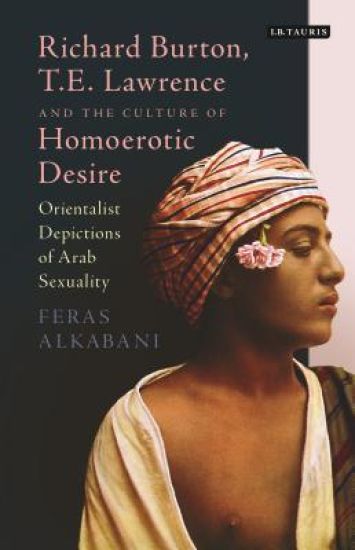
Richard Burton, T.E. Lawrence and the Culture of Homoerotic Desire
In the 19th and early 20th centuries, the Arabic-speaking regions of the Ottoman Empire saw a crucial change in attitudes towards sexuality. Notions of 'respectability', 'propriety' and 'sexual morality' were being transformed in literary and cultural discourses, a shift that was related to the gradual rise in anti-Ottoman Arab nationalism. However, contemporary Orientalists such as Sir Richard Burton and T.E. Lawrence were oblivious to certain aspects of this process of cultural reconfiguration. While accounts of male-love poetry (ghazal al-mudhakkar) were being gradually expurgated from the Arab literary heritage, elaborate narratives of Oriental homoerotic desire distinctively characterise the encounters of both Burton and Lawrence with the Arab East. By comparing their literary and autobiographical accounts of the Arab Orient with contemporary Arabic literature, Feras Alkabani is able to expose this critical disparity in cross-cultural portrayals of sexual morality and homoerotic desire. Alkabani relates the conflicting agendas of contemporary Orientalists and Arab scholars to the shifts in international imperial power relations and the eventual collapse of the Ottoman Empire. His detailed comparative study reveals the significance of homoerotic desire within Orientalist and Arab literary discourses at a time when the meaning and connotations of poetic male-love were undergoing a critical change in Arab culture and literature. It will prove invaluable for those researching Orientalism, nationalism, imperialism and manifestations of homoerotic desire in the fin-de-si cle Middle East.
Richard Burton, T.E. Lawrence and the Culture of Homoerotic Desire
In the 19th and early 20th centuries, the Arabic-speaking regions of the Ottoman Empire saw a crucial change in attitudes towards sexuality. Notions of ‘respectability’, ‘propriety’ and ‘sexual morality’ were being transformed in literary and cultural discourses, a shift that was related to the gradual rise in anti-Ottoman Arab nationalism. However, contemporary Orientalists such as Sir Richard Burton and T.E. Lawrence were oblivious to certain aspects of this process of cultural reconfiguration. While accounts of male-love poetry (ghazal al-mudhakkar) were being gradually expurgated from the Arab literary heritage, elaborate narratives of Oriental homoerotic desire distinctively characterise the encounters of both Burton and Lawrence with the Arab East.By comparing their literary and autobiographical accounts of the Arab Orient with contemporary Arabic literature, Feras Alkabani is able to expose this critical disparity in cross-cultural portrayals of sexual morality and homoerotic desire. Alkabani relates the conflicting agendas of contemporary Orientalists and Arab scholars to the shifts in international imperial power relations and the eventual collapse of the Ottoman Empire. His detailed comparative study reveals the significance of homoerotic desire within Orientalist and Arab literary discourses at a time when the meaning and connotations of poetic male-love were undergoing a critical change in Arab culture and literature. It will prove invaluable for those researching Orientalism, nationalism, imperialism and manifestations of homoerotic desire in the fin-de-siècle Middle East.
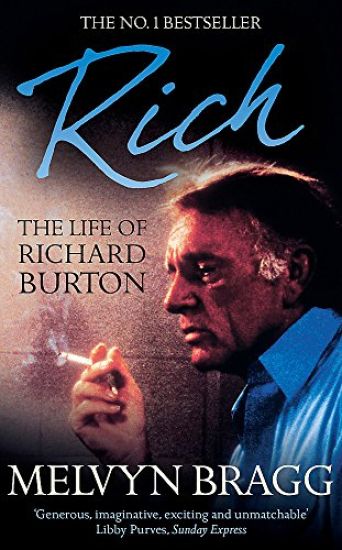
Rich: The Life of Richard Burton

Rich: The Life of Richard Burton

Melvyn Bragg

Hodder Paperback
2010
pokkari
Richard Burton: star. The roaring boy from the Welsh coal valleys who came to sport on the banks of the old Nile, playing great Antony to Elizabeth Taylor's Cleopatra. From the West End to Hollywood, from Camelot to Shakespeare, he drank, dazzled and despaired, playing out his life on the public stage. But there was another, quieter, off-stage Richard Burton, a face hidden from the multitude.Melvyn Bragg, allowed free access to the never-before-revealed Burton private notebooks, and with the cooperation of friends who have never spoken about him before, has brought together the private and public sides for the first time. Rich is the complete Richard Burton: a revelation.
Elizabeth Taylor and Richard Burton: A Romance Made and Broken in Hollywood

Elizabeth Taylor and Richard Burton: A Romance Made and Broken in Hollywood

Charles River

Createspace Independent Publishing Platform
2014
nidottu
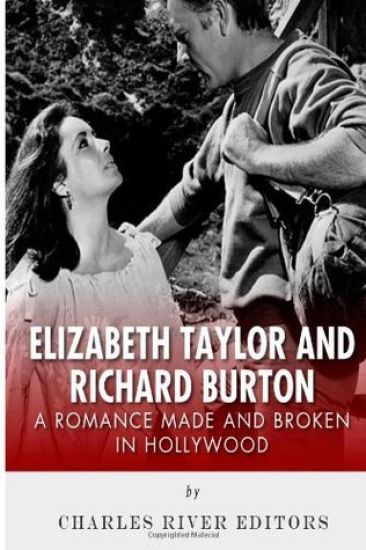
*Includes pictures. *Includes their own quotes about their lives and careers. *Includes a bibliography for further reading. Hollywood is full of cautionary tales for child actors like Judy Garland, Jackie Coogan, and Macaulay Culkin, who all soared to fame in their youth only to suffer family feuds, drug addiction, or other ill effects of becoming famous so early in life. Even those child actors for whom stardom was not traumatic, such as Shirley Temple, had great difficulty succeeding in Hollywood as an adult, with their careers effectively over by the time they reached adulthood. On the other hand, the life of Elizabeth Taylor bears little in common with the paradigm of the troubled child star. After arriving in the United States at the age of 9, Taylor was indoctrinated into the life of the Hollywood studio system shortly after child stars Judy Garland and Mickey Rooney, but while Garland suffered great trauma at the hands of the studio system, Taylor's early experience in Hollywood represented the flip side of the coin. Groomed for a life in Hollywood by her zealous mother, Taylor enjoyed her life in the motion picture industry and reveled in the privileged lifestyle and opportunities she enjoyed by virtue of her profession. Acting supplied her with a lavish lifestyle and, more importantly for her, constant attention. From an early age, Taylor displayed a vociferous love for living in the public eye. In many ways, Taylor enjoyed being in the public spotlight and living the lifestyle of the rich and famous, and her personal life very much resembled a performance suitable for Hollywood. Taylor faced great adversity throughout her life, including being married on eight different occasions to seven different spouses and fighting battles with weight and drug addiction. Still, while many actors grow resentful of public attention, even during her moments of personal struggle Taylor thrived on public attention and enjoyed a mutually adoring relationship with the American public. In the 1960s, the most popular actor in the world was Richard Burton, a hard-drinking Welshman who was nevertheless so professional that he was one of the preeminent stage performers of his day. In fact, he performed Shakespeare so magnificently that he was compared to British legend Laurence Olivier, and that success ultimately led to a film career that earned him 7 Academy Award nominations, as well as BAFTA and Golden Globe awards for Best Actor. Given his accomplishments on the stage and in Hollywood, Burton became one of the world's most recognizable leading men, so it seemed fitting that he engaged in one of Hollywood's most legendary romances with Elizabeth Taylor while on the set of Cleopatra, one of the era's most notorious movies. In fact, his tumultuous relationship with Taylor, which included two marriages, dominated tabloids and remains the one thing most people associate with Burton today, despite the rest of his accomplishments. Burton's high-profile marriage to Taylor helped bring attention, but it also led to more self-destructive behavior, and in a sense it represented the peak of Burton's career. Over the last decade of his life, Burton began appearing in mediocre films, and due to his declining health and constant drunkenness, his performances were mediocre as well, often involving incoherent slurring. The fast life ultimately caught up with him in 1984, when a cerebral hemorrhage killed him at the age of 58. Fittingly, it was the same cause of death that befell his alcoholic father in 1957, just as Burton was at the precipice of Hollywood stardom. This book examines the lives and careers of the famous lovers. Along with pictures and a bibliography, you will learn about Taylor and Burton like never before.
Laurence Olivier and Richard Burton: The Lives and Careers of Britain's Most Famous Shakespearean Actors
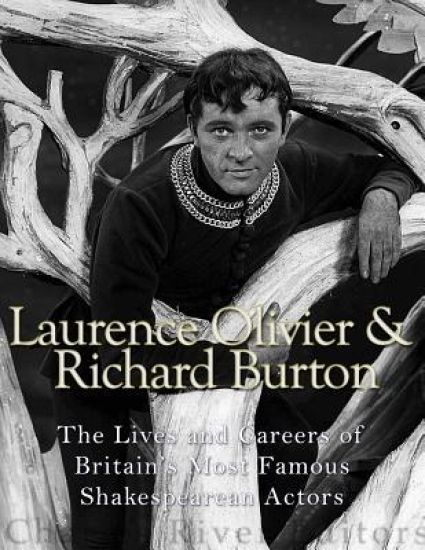
*Includes pictures *Includes the actors' quotes about their lives and careers *Includes online resources and a bibliography for further reading Of all the great actors of the 20th century, none personifies acting royalty more than Laurence Olivier, and some of this is simply due to the fact that he was actually knighted in 1947, along with a lengthy list of other honors that include being named a life peer in 1970 and admission to the Order of Merit in 1984. To speak of The Right Honourable Lord Laurence Olivier is not a figure of speech but rather a fact. Of course, in addition to the literal sense of the term, there is undeniably a manner in which Laurence Olivier qualifies as acting royalty, as it is not for nothing that Spencer Tracy once referred to Olivier as "the greatest actor in the English-speaking world" (Bacall). It is also important to note that Tracy refers to Olivier not as a film or theater actor specifically, because much of Olivier's lofty standing derives from his ability to successfully navigate different mediums like stage, film, and television. The breadth of mediums in which he worked, the various roles he inhabited within them (actor, producer, director), and the formidable time span of his career lend Olivier's career a scope of perhaps unmatched magnitude. Indeed, Laurence Olivier worked for so long and was so successful that few actors receive the level of visibility that he still enjoys, even more than two decades after his death. While his theatrical performances exist only as memories, his cinematic adaptations of several of Shakespeare's most famous plays remain the most canonical even to this day. Hamlet, for example, has been produced for the screen by several famous directors, but his version, released in 1948, is the most well-known and best-received. It is through his films that viewers also gain a full appreciation of his creative style, as Olivier assumed full authorial control (from actor to director to producer) over many of his films, particularly the Shakespearean ones. In this sense, it is appropriate to claim that Laurence Olivier was not only a storied actor but also an artist who worked best when enjoying full authority over his productions. In the 1960s, the most popular actor in the world was Richard Burton, a hard-drinking Welshman who was nevertheless so professional that he was one of the preeminent stage performers of his day. In fact, he performed Shakespeare so magnificently that he was compared to British legend Laurence Olivier, and that success ultimately led to a film career that earned him 7 Academy Award nominations, as well as BAFTA and Golden Globe awards for Best Actor. Given his accomplishments on the stage and in Hollywood, Burton became one of the world's most recognizable leading men, so it seemed fitting that he engaged in one of Hollywood's most legendary romances with Elizabeth Taylor while on the set of Cleopatra, one of the era's most notorious movies. In fact, his tumultuous relationship with Taylor, which included two marriages, dominated tabloids and remains the one thing most people associate with Burton today, despite the rest of his accomplishments. Burton's high-profile marriage to Taylor helped bring attention, but it also led to more self-destructive behavior, and in a sense it represented the peak of Burton's career. Over the last decade of his life, Burton began appearing in mediocre films, and due to his declining health and constant drunkenness, his performances were mediocre as well, often involving incoherent slurring. The fast life ultimately caught up with him in 1984, when a cerebral hemorrhage killed him at the age of 58. Fittingly, it was the same cause of death that befell his alcoholic father in 1957, just as Burton was at the precipice of Hollywood stardom.
New Perspectives on Sir Richard Burton

New Perspectives on Sir Richard Burton

John Wallen

Academica Press
2017
sidottu
New Perspectives on Sir Richard Burton by Dr. John Wallen provides exactly that: a fresh perspective from which to view one of the leading explorers and writers of the Victorian age. Burton has frequently been vilified by postcolonial writers as somehow an archetypal representative of the colonial mentality that reached out to grab an often unknown world with its all-encompassing ""imperial eyes"". On the other hand, hardly any figure of the period has proved so enduringly popular with average readers and enthusiasts of the Victorian age. In this scholarly book, Dr. Wallen seeks to understand this dichotomy, tracing it back to Burton's creation of his own popular myth in his life and writings: a process of self aggrandizement that has been complicated by Edward Said's more recent ambiguity on the figure of Burton in his seminal work Orientalism. In this new and improved second edition of New Perspectives, prominence is given to Burton's own myth making and his little known activities as a member of the secretive Victorian men's club known as the ""Cannibal Club"". A Foreword is provided by Professor Dane Kennedy of George Washington University.
New Perspectives on Sir Richard Burton

New Perspectives on Sir Richard Burton

John Wallen

Academica Press
2016
sidottu
A research monograph on the mid-Victorian rise of Sir Richard Burton, Orientalism and the phenomenon of the Cannibal Club is overdue as, although it has been dealt with superficially many times, there has never been a book length treatment which focuses clearly on the whole arc of its historical development and its relevance to the undercutting of the standard view of the Victorians as almost exclusively prudish and deeply moralistic about sex and pornography. Furthermore, the importance of the Cannibal Club extends beyond the subject of sexuality and into the fields of race and gender. This book length treatment gives the opportunity to examine the ways in which this secretive men’s club both reflected and helped to create some extreme Victorian ideas about race, sex and gender which, although a background theme to the more acceptable moral righteousness of the period, nevertheless has reverberated with powerful emphasis, even down to the present day. The result of this has been to create an ambiguous, but overlapping, secret place where normally “respectable” citizens might indulge their taste for extreme and elitist views in “deviant” but socially permitted ways. This is an interest that grew out of Dr.Wallen's research on Richard Burton who was a prominent member and leading light of the club. The Cannibal Club was founded in 1863 and grew out of the split between monogenists and polygenists in the Ethnological Society which had been formed in London in 1843. The monogenists, following Darwin’s lead, believed that man, in spite of certain differences, constituted a single species and they tended towards liberal politics. The polygenists, on the other hand, believed in a multiple genesis of man and were a strongly conservative group with racist tendencies. The victory of the monogenists in the Ethnological Society led James Hunt and Richard Burton to set up a rival organisation called “The Anthropological Society of London” with polygenist theories and a strong belief in the minute collection of data as a means of proving the differences between races. The Society was a supporter of such pseudo-scientific practices as phrenology and the measurement of skull size and shape with craniometers and other instruments of anatomical measurement. During the American Civil War, the Anthropological Society was a strong supporter of the Confederacy and its pro-slavery policies. An off-shoot of the Anthropological Society was the Cannibal Club which promoted the beliefs of the Society in a more personal and Dionysian way (as with most men’s clubs of the Victorian period, large quantities of alcohol were imbibed during the club’s meetings). The basic idea was that a group of intelligent and intellectually advanced English gentlemen should celebrate their innate superiority over other racial and social groups through the discussion of topics that were normally off-bounds in academic circles. The topics for debate included sex, pornography, religion and race. Prominent members included Hunt, Burton, Swinburne and Monckton Milnes (Lord Houghton) . The style and tenor of the club’s meetings can be gauged by the fact that its symbol was a mace carved to resemble an African head chewing on a thigh bone. Swinburne even wrote a Cannibal Catechism which was thought of as a kind of club anthem.
Elizabeth Taylor and Richard Burton: A Romance Made and Broken in Hollywood

Elizabeth Taylor and Richard Burton: A Romance Made and Broken in Hollywood

Charles River

Createspace Independent Publishing Platform
2017
nidottu
*Includes pictures. *Includes their own quotes about their lives and careers. *Includes a bibliography for further reading. Hollywood is full of cautionary tales for child actors like Judy Garland, Jackie Coogan, and Macaulay Culkin, who all soared to fame in their youth only to suffer family feuds, drug addiction, or other ill effects of becoming famous so early in life. Even those child actors for whom stardom was not traumatic, such as Shirley Temple, had great difficulty succeeding in Hollywood as an adult, with their careers effectively over by the time they reached adulthood. On the other hand, the life of Elizabeth Taylor bears little in common with the paradigm of the troubled child star. After arriving in the United States at the age of 9, Taylor was indoctrinated into the life of the Hollywood studio system shortly after child stars Judy Garland and Mickey Rooney, but while Garland suffered great trauma at the hands of the studio system, Taylor's early experience in Hollywood represented the flip side of the coin. Groomed for a life in Hollywood by her zealous mother, Taylor enjoyed her life in the motion picture industry and reveled in the privileged lifestyle and opportunities she enjoyed by virtue of her profession. Acting supplied her with a lavish lifestyle and, more importantly for her, constant attention. From an early age, Taylor displayed a vociferous love for living in the public eye. In many ways, Taylor enjoyed being in the public spotlight and living the lifestyle of the rich and famous, and her personal life very much resembled a performance suitable for Hollywood. Taylor faced great adversity throughout her life, including being married on eight different occasions to seven different spouses and fighting battles with weight and drug addiction. Still, while many actors grow resentful of public attention, even during her moments of personal struggle Taylor thrived on public attention and enjoyed a mutually adoring relationship with the American public. In the 1960s, the most popular actor in the world was Richard Burton, a hard-drinking Welshman who was nevertheless so professional that he was one of the preeminent stage performers of his day. In fact, he performed Shakespeare so magnificently that he was compared to British legend Laurence Olivier, and that success ultimately led to a film career that earned him 7 Academy Award nominations, as well as BAFTA and Golden Globe awards for Best Actor. Given his accomplishments on the stage and in Hollywood, Burton became one of the world's most recognizable leading men, so it seemed fitting that he engaged in one of Hollywood's most legendary romances with Elizabeth Taylor while on the set of Cleopatra, one of the era's most notorious movies. In fact, his tumultuous relationship with Taylor, which included two marriages, dominated tabloids and remains the one thing most people associate with Burton today, despite the rest of his accomplishments. Burton's high-profile marriage to Taylor helped bring attention, but it also led to more self-destructive behavior, and in a sense it represented the peak of Burton's career. Over the last decade of his life, Burton began appearing in mediocre films, and due to his declining health and constant drunkenness, his performances were mediocre as well, often involving incoherent slurring. The fast life ultimately caught up with him in 1984, when a cerebral hemorrhage killed him at the age of 58. Fittingly, it was the same cause of death that befell his alcoholic father in 1957, just as Burton was at the precipice of Hollywood stardom. This book examines the lives and careers of the famous lovers. Along with pictures and a bibliography, you will learn about Taylor and Burton like never before.