
Kirjahaku
Etsi kirjoja tekijän nimen, kirjan nimen tai ISBN:n perusteella.
1000 tulosta hakusanalla Richard E Cooper

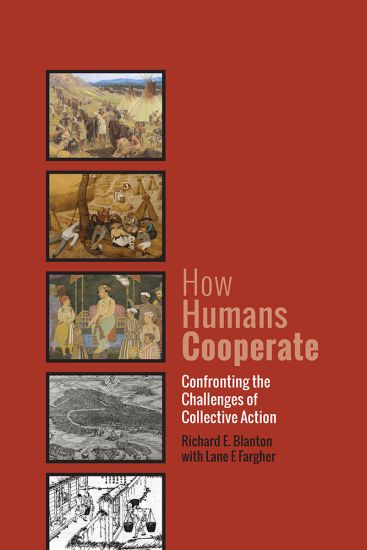
In How Humans Cooperate, Richard E. Blanton and Lane F. Fargher take a new approach to investigating human cooperation, developed from the vantage point of an "anthropological imagination." Drawing on the discipline’s broad and holistic understanding of humans in biological, social, and cultural dimensions and across a wide range of temporal and cultural variation, the authors unite psychological and institutional approaches by demonstrating the interplay of institution building and cognitive abilities of the human brain. Blanton and Fargher develop an approach that is strongly empirical, historically deep, and more synthetic than other research designs, using findings from fields as diverse as neurobiology, primatology, ethnography, history, art history, and archaeology. While much current research on collective action pertains to local-scale cooperation, How Humans Cooperate puts existing theories to the test at larger scales in markets, states, and cities throughout the Old and New Worlds. This innovative book extends collective action theory beyond Western history and into a broadly cross-cultural dimension, places cooperation in the context of large and complex human societies, and demonstrates the interplay of collective action and aspects of human cognitive ability. By extending the scope and content of collective action theory, the authors find a fruitful new path to understanding human cooperation.
Cooperazione sulla gestione dei corsi e sul diritto internazionale
Richard Longendja
Edizioni Sapienza
2023
pokkari
I problemi ecologici e i cambiamenti climatici pongono nuove sfide e obbligano alla cooperazione e all'adattamento ai problemi ambientali. Ci costringe gli Stati a competere tra loro, poich l'"oro blu" diventa una risorsa estremamente ambita, non solo tra gli individui, ma anche tra gli Stati. Il XXI secolo ha visto l'emergere di nuovi tipi di conflitto noti come "conflitti verdi", o conflitti d'uso orizzontali e verticali, generati dalla crescente scarsit di risorse naturali. L'acqua l'esempio pi evidente. A tal fine, la cooperazione tra gli Stati rivieraschi essenziale per evitare i conflitti idrici. Questo libro dimostra che l'acqua un'autentica area di cooperazione che pu promuovere la pace, lo sviluppo socio-economico per il benessere delle popolazioni rivierasche, la gestione sostenibile degli ecosistemi e delle specie che dipendono da questa risorsa, la riduzione della povert e la prevenzione dei conflitti tra gli Stati rivieraschi. Tuttavia, se gestita o utilizzata male, l'acqua pu diventare un catalizzatore di tensioni.
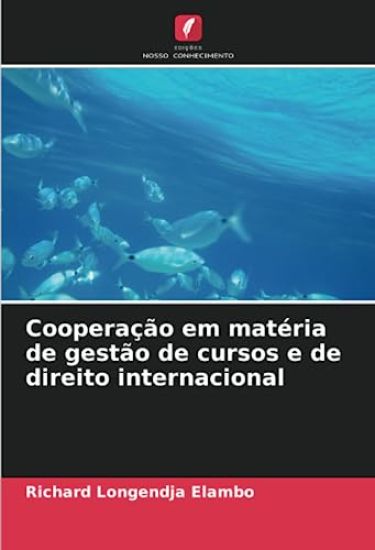
Cooperação em matéria de gestão de cursos e de direito internacional
Richard Longendja
Edicoes Nosso Conhecimento
2023
pokkari
Os problemas ecol gicos, associados s altera es clim ticas, est o a colocar novos desafios e a for ar a coopera o e a adapta o aos problemas ambientais. Este facto est a obrigar os Estados a competirem entre si, uma vez que o "ouro azul" se torna um recurso extremamente cobi ado, n o s entre indiv duos, mas tamb m entre Estados. O s culo XXI assistiu ao aparecimento de novos tipos de conflitos conhecidos como "conflitos verdes" ou conflitos horizontais e verticais de utiliza o, gerados pela crescente escassez de recursos naturais. A gua o exemplo mais evidente. Para o efeito, a coopera o entre os Estados ribeirinhos essencial para evitar os conflitos relacionados com a gua. Este livro mostra que a gua um verdadeiro espa o de coopera o que pode promover a paz, o desenvolvimento socioecon mico para o bem-estar das popula es ribeirinhas, a gest o sustent vel dos ecossistemas e das esp cies que dependem deste recurso, a redu o da pobreza e a preven o de conflitos entre Estados ribeirinhos. No entanto, se for mal gerida ou utilizada, a gua pode tornar-se um catalisador de tens es.

America Faces the Nuclear Age: A Cooper Union Forum
Johnson E. Fairchild; David Landman; Richard F. Humphreys
Literary Licensing, LLC
2012
nidottu
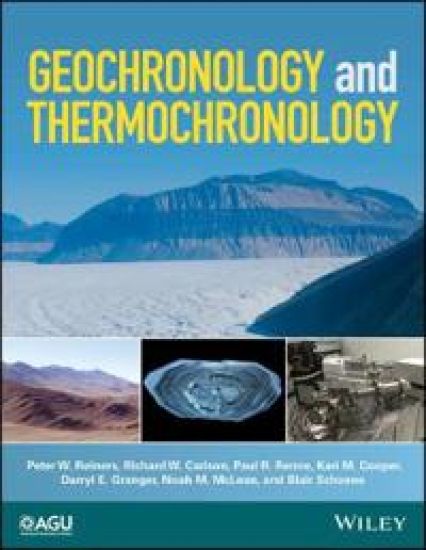
Geochronology and Thermochronology
Peter W. Reiners; Richard W. Carlson; Paul R. Renne; Kari M. Cooper; Darryl E. Granger; Noah M. McLean; Blair Schoene
John Wiley Sons Inc
2018
nidottu
This book is a welcome introduction and reference for users and innovators in geochronology. It provides modern perspectives on the current state-of-the art in most of the principal areas of geochronology and thermochronology, while recognizing that they are changing at a fast pace. It emphasizes fundamentals and systematics, historical perspective, analytical methods, data interpretation, and some applications chosen from the literature. This book complements existing coverage by expanding on those parts of isotope geochemistry that are concerned with dates and rates and insights into Earth and planetary science that come from temporal perspectives. Geochronology and Thermochronology offers chapters covering: Foundations of Radioisotopic Dating; Analytical Methods; Interpretational Approaches: Making Sense of Data; Diffusion and Thermochronologic Interpretations; Rb-Sr, Sm-Nd, Lu-Hf; Re-Os and Pt-Os; U-Th-Pb Geochronology and Thermochronology; The K-Ar and 40Ar/39Ar Systems; Radiation-damage Methods of Geo- and Thermochronology; The (U-Th)/He System; Uranium-series Geochronology; Cosmogenic Nuclides; and Extinct Radionuclide Chronology. Offers a foundation for understanding each of the methods and for illuminating directions that will be important in the near futurePresents the fundamentals, perspectives, and opportunities in modern geochronology in a way that inspires further innovation, creative technique development, and applicationsProvides references to rapidly evolving topics that will enable readers to pursue future developments Geochronology and Thermochronology is designed for graduate and upper-level undergraduate students with a solid background in mathematics, geochemistry, and geology."Geochronology and Thermochronology is an excellent textbook that delivers on the difficult balance between having an appropriate level of detail to be useful for an upper undergraduate to graduate-level class or research reference text without being too esoteric for a more general audience, with content and descriptions that are understandable and enlightening to the non-specialist. I would recommend this textbook for anyone interested in the history, principles, and mechanics of geochronology and thermochronology." --American Mineralogist, 2021Read an interview with the editors to find out more:https://eos.org/editors-vox/the-science-of-dates-and-rates
Geochronology and Thermochronology
Peter W. Reiners; Richard W. Carlson; Paul R. Renne; Kari M. Cooper; Darryl E. Granger; Noah M. McLean; Blair Schoene
John Wiley Sons Inc
2018
sidottu
This book is a welcome introduction and reference for users and innovators in geochronology. It provides modern perspectives on the current state-of-the art in most of the principal areas of geochronology and thermochronology, while recognizing that they are changing at a fast pace. It emphasizes fundamentals and systematics, historical perspective, analytical methods, data interpretation, and some applications chosen from the literature. This book complements existing coverage by expanding on those parts of isotope geochemistry that are concerned with dates and rates and insights into Earth and planetary science that come from temporal perspectives. Geochronology and Thermochronology offers chapters covering: Foundations of Radioisotopic Dating; Analytical Methods; Interpretational Approaches: Making Sense of Data; Diffusion and Thermochronologic Interpretations; Rb-Sr, Sm-Nd, Lu-Hf; Re-Os and Pt-Os; U-Th-Pb Geochronology and Thermochronology; The K-Ar and 40Ar/39Ar Systems; Radiation-damage Methods of Geo- and Thermochronology; The (U-Th)/He System; Uranium-series Geochronology; Cosmogenic Nuclides; and Extinct Radionuclide Chronology. Offers a foundation for understanding each of the methods and for illuminating directions that will be important in the near futurePresents the fundamentals, perspectives, and opportunities in modern geochronology in a way that inspires further innovation, creative technique development, and applicationsProvides references to rapidly evolving topics that will enable readers to pursue future developments Geochronology and Thermochronology is designed for graduate and upper-level undergraduate students with a solid background in mathematics, geochemistry, and geology."Geochronology and Thermochronology is an excellent textbook that delivers on the difficult balance between having an appropriate level of detail to be useful for an upper undergraduate to graduate-level class or research reference text without being too esoteric for a more general audience, with content and descriptions that are understandable and enlightening to the non-specialist. I would recommend this textbook for anyone interested in the history, principles, and mechanics of geochronology and thermochronology." --American Mineralogist, 2021Read an interview with the editors to find out more:https://eos.org/editors-vox/the-science-of-dates-and-rates
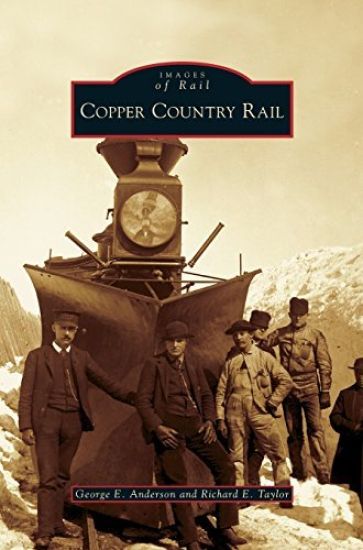
Copper Country Rail
George E Anderson; Richard E Taylor
Arcadia Publishing Library Editions
2008
sidottu
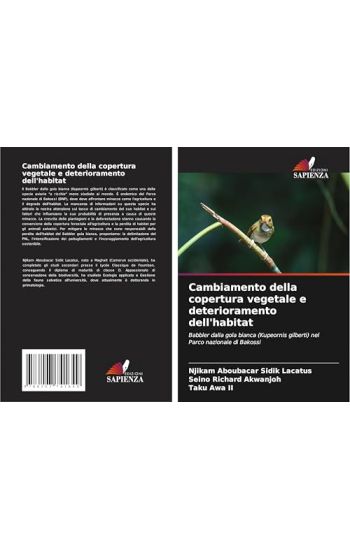
Cambiamento della copertura vegetale e deterioramento dell'habitat
Njikam Aboubacar Sidik Lacatus; Seino Richard Akwanjoh; Taku Awa
Edizioni Sapienza
2024
pokkari
Il Babbler dalla gola bianca (Kupeornis gilberti) classificato come una delle specie aviarie "a rischio" meno studiate al mondo. endemico del Parco nazionale di Bakossi (BNP), dove deve affrontare minacce come l'agricoltura e il degrado dell'habitat. La mancanza di informazioni su questa specie ha attirato la nostra attenzione sul tasso di cambiamento del suo habitat e sui fattori che influenzano la sua probabilit di presenza a causa di queste minacce. La crescita delle piantagioni e la deforestazione stanno causando la conversione della copertura forestale all'agricoltura e la perdita di habitat per gli animali selvatici. Per mitigare le minacce che sono responsabili della perdita dell'habitat del Babbler gola bianca, proponiamo: la delimitazione del PNL, l'intensificazione dei pattugliamenti e l'incoraggiamento dell'agricoltura sostenibile.

In the early 1900s, so-called race filmmakers set out to produce black-oriented pictures to counteract the racist caricatures that had dominated cinema from its inception. Richard E. Norman, a southern-born white filmmaker, was one such pioneer. From humble beginnings as a roving "home talent" filmmaker, recreating photoplays that starred local citizens, Norman would go on to produce high-quality feature-length race pictures. Together with his better-known contemporaries Oscar Micheaux and Noble and George Johnson, Richard E. Norman helped to define early race filmmaking. Making use of unique archival resources, including Norman's personal and professional correspondence, detailed distribution records, and newly discovered original shooting scripts, this book offers a vibrant portrait of race in early cinema.
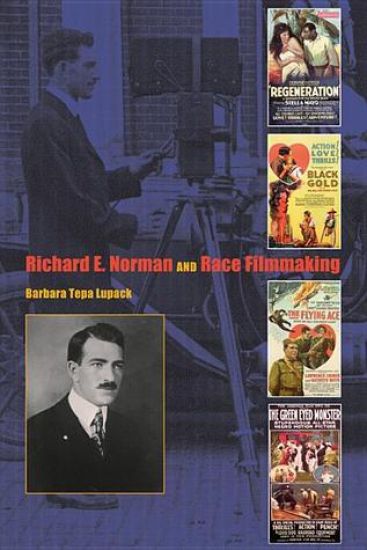
In the early 1900s, so-called race filmmakers set out to produce black-oriented pictures to counteract the racist caricatures that had dominated cinema from its inception. Richard E. Norman, a southern-born white filmmaker, was one such pioneer. From humble beginnings as a roving "home talent" filmmaker, recreating photoplays that starred local citizens, Norman would go on to produce high-quality feature-length race pictures. Together with his better-known contemporaries Oscar Micheaux and Noble and George Johnson, Richard E. Norman helped to define early race filmmaking. Making use of unique archival resources, including Norman's personal and professional correspondence, detailed distribution records, and newly discovered original shooting scripts, this book offers a vibrant portrait of race in early cinema.

Richard E. Flathman
Taylor Francis Ltd
2021
nidottu
Richard E. Flathman is a ground-breaking theorist of key political concepts, a fierce defender of individuality, a close and original reader of Hobbes and an advocate of a willful conception of liberalism. In this volume P E Digeser draws together some of his key works. The collection is framed by an introduction and an interview with Flathman, where he reflects on his contributions. By thinking through and with Wittgenstein’s later philosophy of language, his work clarifies and refines terms that are central to politics and to the tradition of political thought. His work also seeks to cure certain persistent muddles and confusions in our political concepts as well as create and defend a space for the opaque and opalescent features of ourselves. Flathman advances a liberalism that is more open to and celebratory of the idiosyncratic as well as to voices not ordinarily associated with the liberal tradition. The editor has focused on her work in three key areas: The first part focuses on Flathman as a theorist of meaning and presents excepts from his analyses of quality, authority, and rights; The second part focuses on his contributions to understanding the meaning and value of freedom; The final part presents selections that illustrate his conception of liberalism and individuality. Helping to highlight how the innovations in Flathman's thought have shaped the field of political theory, this collection will be of interest to students and scholars.
Richard E. Flathman
Routledge
2016
sidottu
Richard E. Flathman is a ground-breaking theorist of key political concepts, a fierce defender of individuality, a close and original reader of Hobbes and an advocate of a willful conception of liberalism. In this volume P E Digeser draws together some of his key works. The collection is framed by an introduction and an interview with Flathman, where he reflects on his contributions. By thinking through and with Wittgenstein’s later philosophy of language, his work clarifies and refines terms that are central to politics and to the tradition of political thought. His work also seeks to cure certain persistent muddles and confusions in our political concepts as well as create and defend a space for the opaque and opalescent features of ourselves. Flathman advances a liberalism that is more open to and celebratory of the idiosyncratic as well as to voices not ordinarily associated with the liberal tradition. The editor has focused on her work in three key areas: The first part focuses on Flathman as a theorist of meaning and presents excepts from his analyses of quality, authority, and rights; The second part focuses on his contributions to understanding the meaning and value of freedom; The final part presents selections that illustrate his conception of liberalism and individuality.Helping to highlight how the innovations in Flathman's thought have shaped the field of political theory, this collection will be of interest to students and scholars.

Richard E. Byrd: Adventurer to the Poles
Adele Deleeuw; Al Fiorentino
Literary Licensing, LLC
2012
nidottu

Richard E. Spencer, Appellant, V. Lorraine Spencer et al. U.S. Supreme Court Transcript of Record with Supporting Pleadings
Andrew A Vanore; Janet L Covey
Gale Ecco, U.S. Supreme Court Records
2011
pokkari
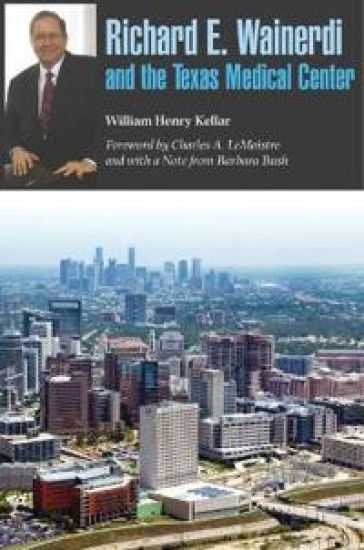
Richard E. Wainerdi and the Texas Medical Center
William Henry Kellar; Charles A. LeMaistre
Texas A M University Press
2017
sidottu
In 2012, Richard E. Wainerdi retired as president and chief executive officer of the Texas Medical Center after almost three decades at the helm. During his tenure, Wainerdi oversaw the expansion of the center into the world’s largest medical complex, hosting more than fifty separate institutions. “I wasn’t playing any of the instruments, but it’s been a privilege being the conductor,” he once said to a newspaper reporter.William Henry Kellar traces Wainerdi’s remarkable life story from a bookish childhood in the Bronx to a bold move west to study petroleum engineering at the University of Oklahoma. Wainerdi went on to earn a master’s degree and a PhD from Penn State University where he immersed himself in nuclear engineering. By the late 1950s, Texas A&M University recruited Wainerdi to found the Nuclear Science Center, where he also served as professor and later associate vice president for academic affairs.In the 1980s, Wainerdi took charge of the Texas Medical Center, embarking on a “second career” that ultimately expanded the center from thirty-one institutions to fifty-three and increased its size threefold. Wainerdi pushed for and ensured a culture of collaboration and cooperation. In doing this, he developed a new nonprofit administrative model that emphasized building consensus, providing vital support services, and connecting member institutions with resources that enabled them to focus on their unique areas of expertise. At a time when Houston was widely known as the “energy capital of the world,” the city also became home to the largest medical complex in the world. Wainerdi’s success was to enable each member of the Texas Medical Center to be an integral part of something bigger and something very special in the development of modern medicine.
THE COLLECTED ESSAYS OF RICHARD E. QUANDT
Richard E. Quandt
Edward Elgar Publishing Ltd
1992
sidottu
Professor Richard Quandt has made a unique contribution to the development of economics in the 20th century. The range and significance of his work has long required a collection of his essays which will allow his contribution to be assessed as a whole.Despite an early interest in microeconomic theory, Richard Quandt has devoted most of his career to econometrics and, in particular, to modal split estimation. More recently his work has focused on the econometrics of disequilibrium models with reference to both free market and planned economies. As well as presenting his many significant articles on microtheory, general econometrics, disequilibrium modelling, financial economics and the economics of planned economies, this collection will have a particular value for all scholars interested in the emergence of the new economies in Eastern Europe, a subject to which Professor Quandt has applied himself in recent years.This fascinating book includes an introduction by Professor Quandt describing his early life in Budapest and the circumstances which led him to study economics in America.

Admiral Richard E. Byrd is a biography written by Alfred Steinberg that delves into the life of the famous American naval officer and explorer. The book covers Byrd's early life, his naval career, and his expeditions to the Arctic and Antarctica. The author provides a detailed account of Byrd's life, including his childhood in Virginia, his education at the United States Naval Academy, and his military service during World War I. The book also explores Byrd's interest in aviation, which led him to become one of the first pilots to fly over the North Pole.The main focus of the book, however, is on Byrd's expeditions to the polar regions. Steinberg provides a vivid description of Byrd's experiences in the harsh and unforgiving environments of the Arctic and Antarctica, including his famous flight over the South Pole in 1929.Throughout the book, Steinberg portrays Byrd as a brave and determined explorer who pushed the boundaries of human endurance in his quest for knowledge and discovery. The author also highlights Byrd's contributions to science and his efforts to promote international cooperation in polar research.Overall, Admiral Richard E. Byrd is a well-researched and engaging biography that provides a fascinating glimpse into the life of one of America's most celebrated explorers.This scarce antiquarian book is a facsimile reprint of the old original and may contain some imperfections such as library marks and notations. Because we believe this work is culturally important, we have made it available as part of our commitment for protecting, preserving, and promoting the world's literature in affordable, high quality, modern editions, that are true to their original work.