Kirjojen hintavertailu. Mukana 11 342 296 kirjaa ja 12 kauppaa.

Kirjahaku

Etsi kirjoja tekijän nimen, kirjan nimen tai ISBN:n perusteella.

1000 tulosta hakusanalla Richard Garnett

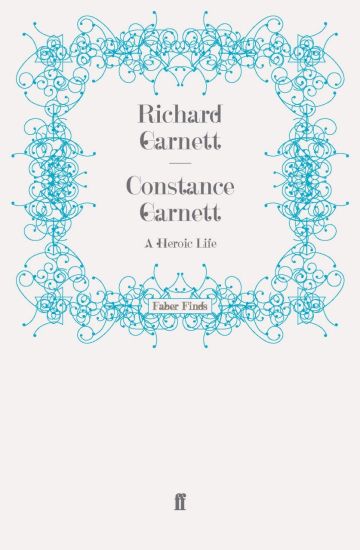
Constance Garnett

Constance Garnett

Richard Garnett

Faber Faber
2008
pokkari
Born in Brighton in 1861, Constance Clara Garnett (née Black) was the sixth of eight children. Educated at Newnham College, Cambridge she studied Latin and Greek, as well as Russian. She married Edward Garnett in 1889 and they had one son, David. It was on a visit to Russia in 1893 that Garnett met Leo Tolstoy and this meeting prompted her to begin translating the Russian literature that she was most passionate about. As a translator of Gogol, Tolstoy, Pushkin, Turgenev, Chekhov and Dostoevsky among others, Constance Garnett translated about 70 Russian works and received great acclaim from writers such as D. H. Lawrence and Joseph Conrad. Her translations had a major effect on readers and were reprinted well into the twentieth century. First published in 1991 and written by her grandson Richard Garnett, Constance Garnett is the biography of an extraordinary woman who, in the late nineteenth and early twentieth centuries, made Russian literature available to the English speaking public. 'When you come to the last page you feel you have travelled through life with a peculiarly British heroine, self-effacing, frugal, honourable, clear-thinking, brave, and above all a worker on a scale that can only be called heroic.' Claire Tomalin, Independent on Sunday
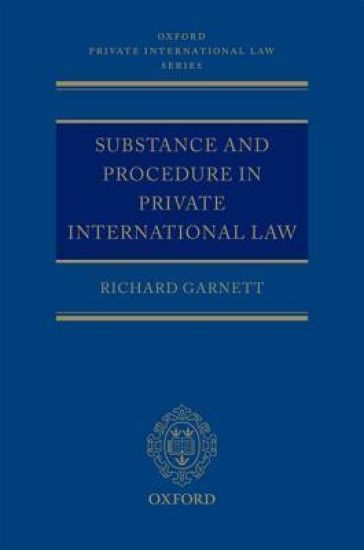
Substance and Procedure in Private International Law

Substance and Procedure in Private International Law

Richard Garnett

Oxford University Press
2012
sidottu
When the law of a foreign country is selected or pleaded by a claimant or defendant, a question arises as to whether the issue pertains to substance, in which case it may be resolved by foreign law, or procedure, in which case it will be governed by the law of forum. This book examines the distinction between substance and procedure questions in private international law, and analyses where and whether each is appropriate. To do so, it examines previous attempts to define the scope of procedure in private international law, considers alternative choice of law methods for referring matters to the law of forum, and examines the influence of the doctrine of characterization on procedure. Substance and Procedure in Private International Law also provides detailed analysis of the decisional law in which the substance-procedure distinction has been employed, creating a clear assessment of its application in various practical situations and providing valuable guidance for practitioners on how the distinction should be applied. The book also considers 'procedural' topics such as service of process and the taking of evidence abroad, in order to show how the application of forum law may further be limited by foreign laws. With a foreword by the Hon Sir Anthony Mason.