In this comprehensive introduction to the work of contemporary French critic Rene Girard, Richard Golsan focuses on Girard's theory of myth and its connections to his broader exploration of the origins of suffering and violence in Western culture. Golsan highlights two of Girard's primary concepts--mimetic desire and the scapegoat--and employs the concepts to illustrate the ways Girardian analysis of violence in biblical, classical, and folk myths has influenced recent work in theology, psychology, literary studies, and anthropology. The book concludes with an interview between Golsan and Girard, who offers his own analysis of the appropriation (and criticism) of his work by a politically and intellectually diverse company of scholars.
In this comprehensive introduction to the work of contemporary French critic Rene Girard, Richard Golsan focuses on Girard's theory of myth and its connections to his broader exploration of the origins of suffering and violence in Western culture. Golsan highlights two of Girard's primary concepts--mimetic desire and the scapegoat--and employs the concepts to illustrate the ways Girardian analysis of violence in biblical, classical, and folk myths has influenced recent work in theology, psychology, literary studies, and anthropology. The book concludes with an interview between Golsan and Girard, who offers his own analysis of the appropriation (and criticism) of his work by a politically and intellectually diverse company of scholars.
The sexual revolution is justly celebrated for the freedoms it brought--birth control, the decriminalization of abortion, the liberalization of divorce, greater equality between the sexes, women's massive entry into the workforce, and more tolerance of homosexuality. But as Pascal Bruckner, one of France's leading writers, argues in this lively and provocative reflection on the contradictions of modern love, our new freedoms have also brought new burdens and rules--without, however, wiping out the old rules, emotions, desires, and arrangements: the couple, marriage, jealousy, the demand for fidelity, the war between constancy and inconstancy. It is no wonder that love, sex, and relationships today are so confusing, so difficult, and so paradoxical. Drawing on history, politics, psychology, literature, pop culture, and current events, this book--a best seller in France--exposes and dissects these paradoxes. With his customary brilliance and wit, Bruckner traces the roots of sexual liberation back to the Enlightenment in order to explain love's supreme paradox, epitomized by the 1960s oxymoron of "free love": the tension between freedom, which separates, and love, which attaches. Ashamed that our sex lives fail to live up to such liberated ideals, we have traded neuroses of repression for neuroses of inadequacy, and we overcompensate: "Our parents lied about their morality," Bruckner writes, but "we lie about our immorality." Mixing irony and optimism, Bruckner argues that, when it comes to love, we should side neither with the revolutionaries nor the reactionaries. Rather, taking love and ourselves as we are, we should realize that love makes no progress and that its messiness, surprises, and paradoxes are not merely the sources of its pain--but also of its pleasure and glory.
In this volume Europe's leading modern historians offer new insights into two totalitarian regimes of the twentieth century that have profoundly affected world history - Nazi Germany and the Stalinist era in the Soviet Union. Until now historians have paid more attention to the similarities between these two regimes than to their differences. "Stalinism and Nazism" explores the difficult relationship between the history and memory of the traumas inflicted by Nazi and Soviet occupation in several Eastern European countries in the twentieth century. The first part of the volume explores the origins, nature, and organization of Hitler's and Stalin's dictatorial power, the manipulation of violence by the state systems, and the comparative power of the dictator's personal will and the encompassing totalitarian system. The second part examines the legacies of the Nazi and Stalinist regimes in Eastern European countries that experienced both."Stalinism and Nazism" features the latest critical perspectives on two of the most influential and deadly political regimes in modern history. Henry Rousso is the author of "The Haunting Past: History, Memory, and Justice in Contemporary France" and "The Vichy Syndrome: History and Memory in France since 1914". Richard J. Golsan is a professor of French at Texas A & M University. He is the author of "Vichy's Afterlife: History and Counterhistory in Postwar France" and the editor of "Fascism's Return: Scandal, Revision, and Ideology" since 1980, both published by the University of Nebraska Press.
Focusing on the political commitments of three French writers who collaborated with the Vichy Regime and Nazi Germany during World War II, and on those of three leading French intellectuals of the 1990s whose misplaced political idealism led them to support xenophobic, authoritarian regimes and dangerous historical revisionisms, Richard J. Golsan reexamines the notion of political commitment or engagement in two difficult periods in modern French history. Discussing the fiction, essays, and journalism of Henry de Montherlant, Jean Giono, and Alphonse de Chateaubriant, Golsan explores the complexity of artistic and intellectual collaboration during the German Occupation. He demonstrates that, in this context, complicity with political evil often derived from "nonpolitical" motives including sexual orientation, antimodern aesthetics, and dangerously skewed religious beliefs. Turning to the post-cold war era of the 1990s, Golsan examines the philosopher Alain Finkielkraut's support for Croatian independence, the "mediologist" Regis Debray's pro-Serb stance during the bombing of Kosovo, and the historian Stephane Courtois's revisionist comparison of Nazi and Communist crimes during the 1997 debate surrounding the publication of The Black Book of Communism. In these three cases, laudable motives-and misguided historical comparisons with Vichy, Nazism, and the Occupation period that marked the political and intellectual discourses of France in the 1990s-resulted, paradoxically, in antidemocratic engagements profoundly at odds with the original motivations behind these intellectuals' commitments. In each of these case studies, political complicity derives from a combination of passions and ideals-whether positive or negative, emotional or intellectual-as well as a desire to make the present conform to a particular and generally skewed vision of the past. The full implications of these involvements are neither fully grasped nor understood by their authors, either through lack of objectivity, rationality, or imagination or through willful ignorance. The results are always unfortunate and often disastrous. Considered together, these six intellectuals serve as sobering reminders that political commitments are never as simple or straightforward as they seem and that admirable motives for political involvement can have dangerous and destructive consequences in historical practice.
One of the distinctive features of the "Vichy Syndrome"—the persistence of the memory of the Vichy regime in French political and cultural life—is that it has been extremely difficult for an authoritative historical discourse to impose itself. Why does Vichy, and all that the name entails, fascinate and even obsess the French, inflecting not only discussions of the past but of the present as well? In Vichy's Afterlife, Richard J. Golsan explores the complexities of some of the most provocative episodes of Vichy's curious persistence in France's national consciousness. He argues that each of these episodes, events, and scandals constitutes a crossroads where history and "counterhistory"—different or competing versions of the past—encounter one another, often with explosive and even destructive consequences.
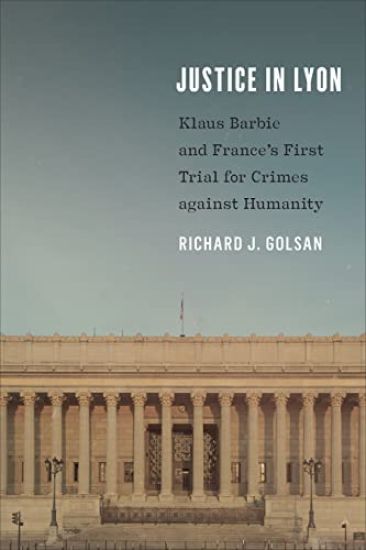
The trial of former SS lieutenant and Gestapo chief Klaus Barbie was France’s first trial for crimes against humanity. Known as the "Butcher of Lyon" during the Nazi occupation of that city from 1942 to 1944, Barbie tortured, deported, and murdered thousands of Jews and Resistance fighters. Following a lengthy investigation and the overcoming of numerous legal and other obstacles, the trial began in 1987 and attracted global attention. Justice in Lyon is the first comprehensive history of the Barbie trial, including the investigation leading up to it, the legal background to the case, and the hurdles the prosecution had to clear in order to bring Barbie to justice. Richard J. Golsan examines the strategies used by the defence, the prosecution, and the lawyers who represented Barbie’s many victims at the trial. The book draws from press coverage, articles, and books about Barbie and the trial published at the time, as well as recently released archival sources and the personal archives of lawyers at the trial. Making the case that, despite the views of its many critics, the Barbie trial was a success in legal, historical, and pedagogical terms, Justice in Lyon details how the trial has had a positive impact on French and international law governing crimes against humanity.
The trial of former SS lieutenant and Gestapo chief Klaus Barbie was France’s first trial for crimes against humanity. Known as the "Butcher of Lyon" during the Nazi occupation of that city from 1942 to 1944, Barbie tortured, deported, and murdered thousands of Jews and Resistance fighters. Following a lengthy investigation and the overcoming of numerous legal and other obstacles, the trial began in 1987 and attracted global attention. Justice in Lyon is the first comprehensive history of the Barbie trial, including the investigation leading up to it, the legal background to the case, and the hurdles the prosecution had to clear in order to bring Barbie to justice. Richard J. Golsan examines the strategies used by the defence, the prosecution, and the lawyers who represented Barbie’s many victims at the trial. The book draws from press coverage, articles, and books about Barbie and the trial published at the time, as well as recently released archival sources and the personal archives of lawyers at the trial. Making the case that, despite the views of its many critics, the Barbie trial was a success in legal, historical, and pedagogical terms, Justice in Lyon details how the trial has had a positive impact on French and international law governing crimes against humanity.
The Vichy Past in France Today: Corruptions of Memory is an interdisciplinary study examining the continuing impact of the memory of Vichy and World War II in French politics, literature, intellectual discourse and debates, and the law. It argues that despite multiple efforts in all of these areas to come to terms with France’s World War II past and to fulfill a “duty to memory” to Vichy’s Jewish victims, the nation is still not reconciled to the so-called “Dark Years,” even seventy years after the Liberation. Indeed the Vichy past “occupies” important recent works of literature, inflects much political discussion and debate, often serving as a metaphor for political (and moral) evil. Its legacies include the passage of problematic laws that dangerously distort and simplify complex historical realities. Chapter I examines the historical and legal legacies of the 1990s trials for crimes against humanity and traces their impact on the so-called “memorial laws” of the new century. Chapter II revisits the 2002 presidential elections in France and the impact of Jean-Marie Le Pen’s first round victory on intellectual and cultural debate. Chapter III explores Alain Badiou’s controversial characterization of Sarkozy’s presidential victory as a return of “Petainism” in The Meaning of Sarkozy. The discussion is cast against the backdrop of Badiou’s “radical” political thought and Sarkozy’s political uses and misuses of the World War II past. Chapter IV examines the controversy surrounding the publication of Jonathan Littell’s The Kindly Ones (2006) and its morally and historically problematic portrayal of an unrepentant Nazi and SS officer. Chapter V discusses Yannick Haenel’s fictional recreation of the Polish resistance hero Jan Karski (The Messenger, 2009) in his novel by that name, and the polemics between the novel’s author and the maker of the classic Holocaust documentary film, Shoah, Claude Lanzmann. The Conclusion first explores the ways in which the memory of Vichy inflects literary and political reflections on the recent terrorist attacks in France. It also examines strategies proposed by French philosophers for moving beyond the “impasse” of Vichy’s memory in France before concluding with a different strategy proposed by the author for the French nation to move beyond the memory of the Dark Years.
The Vichy Past in France Today: Corruptions of Memory is an interdisciplinary study examining the continuing impact of the memory of Vichy and World War II in French politics, literature, intellectual discourse and debates, and the law. It argues that despite multiple efforts in all of these areas to come to terms with France’s World War II past and to fulfill a “duty to memory” to Vichy’s Jewish victims, the nation is still not reconciled to the so-called “Dark Years,” even seventy years after the Liberation. Indeed the Vichy past “occupies” important recent works of literature, inflects much political discussion and debate, often serving as a metaphor for political (and moral) evil. Its legacies include the passage of problematic laws that dangerously distort and simplify complex historical realities. Chapter I examines the historical and legal legacies of the 1990s trials for crimes against humanity and traces their impact on the so-called “memorial laws” of the new century. Chapter II revisits the 2002 presidential elections in France and the impact of Jean-Marie Le Pen’s first round victory on intellectual and cultural debate. Chapter III explores Alain Badiou’s controversial characterization of Sarkozy’s presidential victory as a return of “Petainism” in The Meaning of Sarkozy. The discussion is cast against the backdrop of Badiou’s “radical” political thought and Sarkozy’s political uses and misuses of the World War II past. Chapter IV examines the controversy surrounding the publication of Jonathan Littell’s The Kindly Ones (2006) and its morally and historically problematic portrayal of an unrepentant Nazi and SS officer. Chapter V discusses Yannick Haenel’s fictional recreation of the Polish resistance hero Jan Karski (The Messenger, 2009) in his novel by that name, and the polemics between the novel’s author and the maker of the classic Holocaust documentary film, Shoah, Claude Lanzmann. The Conclusion first explores the ways in which the memory of Vichy inflects literary and political reflections on the recent terrorist attacks in France. It also examines strategies proposed by French philosophers for moving beyond the “impasse” of Vichy’s memory in France before concluding with a different strategy proposed by the author for the French nation to move beyond the memory of the Dark Years.
This is the first book of poetry by Richard Prock-Golan. It deals with misogyny, imbalances of power within the family and society, abuse, the everyday fear of falling apart, love, and more. It's the opening of some long-closed doors, and airing the place out. It's unpretentious. It's honest. AND all of the profits are going to the Joyful Heart Foundation, for victims of sex abuse and domestic violence.
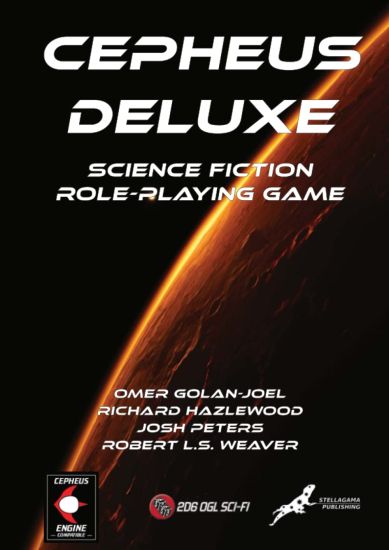
Terra Arisen is a space-opera setting for the Cepheus Deluxe sci-fi RPG rules. Terra Arisen introduces player characters to the immediate aftermath of the Terran Liberation War against the mighty Reticulan Empire and its many thralls. The Terrans forced the Reticulan Empire to sign a humiliating peace treaty and reluctantly accept Terran independence from the Empire. The upstart Terrans, bolstered by their victory against their old masters, are becoming a power to be reckoned with in interstellar affairs. On a backdrop of espionage, maneuvering, and saber-rattling on new interstellar frontiers, bold player characters can leave their marks as heroes or villains of the new United Terran Republic (UTR). This book provides background information, a 16 by 20 hex star-map covering most of the UTR and some alien territory, and write-ups of all 120 major worlds in this area, as well as other materials necessary to run a science fiction roleplaying campaign in the exciting times of the 23rd century. This book contains: History and background material for 23rd century Terra and the larger universe. Corporations, political parties, and illegal groups - both Terran and alien. 4 major alien species and several minor ones - all detailed Rules for generating and playing characters from 5 alien species. 7 alien Careers and 5 Terran ones - from psionic Reticulan Nobles to the heroic Terran Guard Character generation rules and event tables for all included careers. 2 small craft and 5 starships with full game statistics and high-res deck plans. The Terran Quadrant, including 120 detailed worlds and a high-res star map. A detailed adventure chapter with a wide variety of hooks for exciting adventures in Terran and alien space Note that this book provides character generations, biological and cultural background, and flying saucers ( ) for playing Gray Aliens - ready to drop into any Cepheus Deluxe campaign and quite compatible with other 2d6 sci-fi RPGs as well This setting requires the Cepheus Deluxe rules for use.
Starships riding fire across the sky. Heroes and villains exchanging laser fire. Desperate spacers struggling against an alien monstrosity. Vast planetary vistas, flying cities, moonscapes, mad robots, and first encounters. In short: high-action science-fiction adventure that stimulates your sense of wonder. Cepheus Deluxe puts you in the shoes of an adventurer visiting distant stars and encountering the unknown. Whether you are a seasoned player looking for a rules-light game, or a new gamer wanting to experience what science-fiction role-playing games are all about, Cepheus Deluxe opens your way forward. Cepheus Deluxe is a set of rules for playing classic science fiction games. It includes rules on creating characters, resolving actions, fighting other creatures, and engaging in space battles, generating worlds, handling the risks of interstellar speculative trading, exploring new worlds, and many other activities. While rules-light and designed for fast, action-packed play rather than an accurate simulation of reality, Cepheus Deluxe encompasses a wide variety of rules and materials for building a science-fiction universe and playing in it. Cepheus Deluxe draws its inspiration from old-school science-fiction roleplaying games. It shares many similarities with these games. Material from older rules sets and those created with Cepheus Deluxe, the old Cepheus Light, the Cepheus Engine Core, and old-school sci-fi roleplaying games, are easily compatible with only a moderate amount of adjustment. The future awaits Compatible with the Cepheus Engine System Reference Document and other OGL 2D6 Sci Fi games.
In February 1995, Richey Edwards checked out of a London hotel instead of flying to the US with the rest of the Manic Street Preachers. There were a few subsequent sightings but then nothing. His body was never found, and he was declared legally dead in November 2008. Now Richard tells the story of his life – and disappearance – as he might have told it. ‘This moving, tender novel tells the story of a lost boy adrift in a world that he can’t make sense of’ Marie Claire ‘Myers deserves credit not only for adding a third dimension to Edwards, but for trying a fourth, for attempting to document a period of his life that seems destined to remain a mystery’ The Times ‘A sympathetic and sad imagining of the boy who became a reluctant pop idol’ Time Out ‘Harrowing and hauntingly sad’ Mojo