The 18th century was a wealth of knowledge, exploration and rapidly growing technology and expanding record-keeping made possible by advances in the printing press. In its determination to preserve the century of revolution, Gale initiated a revolution of its own: digitization of epic proportions to preserve these invaluable works in the largest archive of its kind. Now for the first time these high-quality digital copies of original 18th century manuscripts are available in print, making them highly accessible to libraries, undergraduate students, and independent scholars.Medical theory and practice of the 1700s developed rapidly, as is evidenced by the extensive collection, which includes descriptions of diseases, their conditions, and treatments. Books on science and technology, agriculture, military technology, natural philosophy, even cookbooks, are all contained here.++++The below data was compiled from various identification fields in the bibliographic record of this title. This data is provided as an additional tool in helping to insure edition identification: ++++British LibraryT060024Lichfield: printed, and sold, by John Jackson, 1786. 84p., plate; 8
Title: The Handbook to Llandudno ... Edited by Richard Greene ... New edition, with considerable additions ... and a map of the district.Publisher: British Library, Historical Print EditionsThe British Library is the national library of the United Kingdom. It is one of the world's largest research libraries holding over 150 million items in all known languages and formats: books, journals, newspapers, sound recordings, patents, maps, stamps, prints and much more. Its collections include around 14 million books, along with substantial additional collections of manuscripts and historical items dating back as far as 300 BC.The GENERAL HISTORICAL collection includes books from the British Library digitised by Microsoft. This varied collection includes material that gives readers a 19th century view of the world. Topics include health, education, economics, agriculture, environment, technology, culture, politics, labour and industry, mining, penal policy, and social order. ++++The below data was compiled from various identification fields in the bibliographic record of this title. This data is provided as an additional tool in helping to insure edition identification: ++++ British Library Catherall, Thomas; Greene, Richard F.S.A.; 1873 vii. 132 p.; 8 . 10347.h.4.(2.)
One of the undisputed masters of English prose in the twentieth century, Graham Greene (1904-91) wrote tens of thousands of personal letters. This substantial volume presents a new and engrossing account of his life constructed out of his own words. Meticulously chosen and engagingly annotated, this selection of Greene's letters - including many to his family and close friends that were unavailable even to his official biographer - gives an entirely new perspective on a life that combined literary achievement, political action, espionage, travel, and romantic entanglement. The letters describe his travels in Mexico, Africa, Malaya, Vietnam, Haiti, Cuba and other trouble spots, where he observed the struggles of victims and victors with a compassionate and truthful eye. The book includes a vast number of unpublished letters to Evelyn Waugh, Auberon Waugh, Anthony Powell, Edith Sitwell, R. K. Narayan, Muriel Spark and other leading writers of the time. Some letters reveal the agonies of his romantic life, especially his relations with his wife, Vivien Greene, and with his mistress Catherine Walston. The sheer range of experience contained in Greene's correspondence defies comparison.
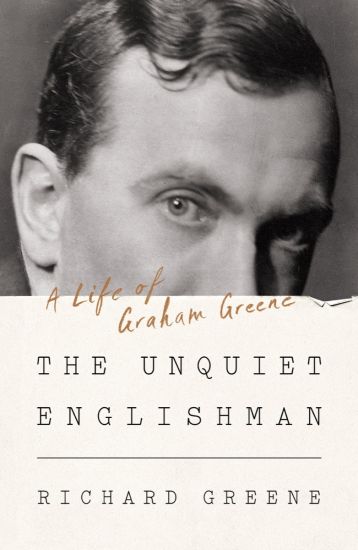
One of the most celebrated British writers of his generation, Graham Greene's own story was as strange and compelling as those he told of Pinkie the Mobster, Harry Lime, or the Whisky Priest. A journalist and MI6 officer, Greene sought out the inner narratives of war and politics across the world; he witnessed the Second World War, the Vietnam War, the Mau Mau Rebellion, the rise of Fidel Castro, and the guerrilla wars of Central America. His classic novels, including The Heart of the Matter and The Quiet American, are only pieces of a career that reads like a primer on the twentieth century itself. The Unquiet Englishman braids the narratives of Greene's extraordinary life. It portrays a man who was traumatized as an adolescent and later suffered a mental illness that brought him to the point of suicide on several occasions; it tells the story of a restless traveler and unfailing advocate for human rights exploring troubled places around the world, a man who struggled to believe in God and yet found himself described as a great Catholic writer; it reveals a private life in which love almost always ended in ruin, alongside a larger story of politicians, battlefields, and spies. Above all, The Unquiet Englishman shows us a brilliant novelist mastering his craft.A work of wit, insight, and compassion, this new biography of Graham Greene, the first undertaken in a generation, responds to the many thousands of pages of letters that have recently come to light and to new memoirs by those who knew him best. It deals sensitively with questions of private life, sex, and mental illness, and sheds new light on one of the foremost modern writers.
One of the most celebrated British writers of his generation, Graham Greene's own story was as strange and compelling as those he told of Pinkie the Mobster, Harry Lime, or the Whisky Priest. A journalist and MI6 officer, Greene sought out the inner narratives of war and politics across the world; he witnessed the Second World War, the Vietnam War, the Mau Mau Rebellion, the rise of Fidel Castro, and the guerrilla wars of Central America. His classic novels, including The Heart of the Matter and The Quiet American, are only pieces of a career that reads like a primer on the twentieth century itself. The Unquiet Englishman braids the narratives of Greene's extraordinary life. It portrays a man who was traumatized as an adolescent and later suffered a mental illness that brought him to the point of suicide on several occasions; it tells the story of a restless traveler and unfailing advocate for human rights exploring troubled places around the world, a man who struggled to believe in God and yet found himself described as a great Catholic writer; it reveals a private life in which love almost always ended in ruin, alongside a larger story of politicians, battlefields, and spies. Above all, The Unquiet Englishman shows us a brilliant novelist mastering his craft.A work of wit, insight, and compassion, this new biography of Graham Greene, the first undertaken in a generation, responds to the many thousands of pages of letters that have recently come to light and to new memoirs by those who knew him best. It deals sensitively with questions of private life, sex, and mental illness, and sheds new light on one of the foremost modern writers.
The 18th century was a wealth of knowledge, exploration and rapidly growing technology and expanding record-keeping made possible by advances in the printing press. In its determination to preserve the century of revolution, Gale initiated a revolution of its own: digitization of epic proportions to preserve these invaluable works in the largest archive of its kind. Now for the first time these high-quality digital copies of original 18th century manuscripts are available in print, making them highly accessible to libraries, undergraduate students, and independent scholars.Delve into what it was like to live during the eighteenth century by reading the first-hand accounts of everyday people, including city dwellers and farmers, businessmen and bankers, artisans and merchants, artists and their patrons, politicians and their constituents. Original texts make the American, French, and Industrial revolutions vividly contemporary.++++The below data was compiled from various identification fields in the bibliographic record of this title. This data is provided as an additional tool in helping to insure edition identification: ++++British LibraryT058720Dedication signed: Richard Greene. The last three leaves contain a list of benefactors. Lichfield?]: Printed at the office in Sadler Street, in the year 1773. Sold by Mr. Morgan in Lichfield, 1773. 4],33, 7]p.; 8
Mary Leapor (1722-1746), a Northamptonshire kitchen maid, produced a substantial body of exceptional poetry which was only published after her early death at the age of twenty-four. This is a timely examination of the work of a poet who has remained almost forgotten for 200 years. Leapor is one of many gifted poets, mainly women and labourers, whose work stands outside the traditional canon of eighteenth-century verse. Richard Greene draws on extensive primary research to present substantial new information about Leapor's life. He discusses her protests against the injustices suffered by women and the poor, her attempts to gain an education, and the influence that illness and the expectation of an early death had upon her writing. Throughout, Leapor is seen in relation to both the mainstream poets of her time and to those whom literary history has considned to obscurity. Mary Leapor: A Study in Eighteenth-Century Women's Poetry thus provides insight not only into the work of a single neglected woman poet, but offers a sometimes surprising perspective on the literary history of the "Ages of Pope and Johnson".
Probably the greatest British novelist of his generation, Graham Greene's own story was as strange and compelling as those he told of Pinkie the Mobster, Harry Lime, or the Whisky Priest. A restless traveller, he was a witness to many of the key events of modern history - including the origins of the Vietnam War, the Mau Mau Rebellion, the betrayal of the double-agent Kim Philby, the rise of Fidel Castro, and the guerrilla wars of Central America.Traumatized as a boy and thought a Judas among his schoolmates, Greene tried Russian Roulette and attempted suicide. He suffered from bipolar illness, which caused havoc in his private life as his marriage failed, and one great love after another suffered shipwreck, until in his later years he found constancy in a decidedly unconventional relationship.Often called a Catholic novelist, his works came to explore the no man's land between belief and unbelief. A journalist, an MI6 officer, and an unfailing advocate for human rights, he sought out the inner narratives of war and politics in dozens of troubled places, and yet he distrusted nations and armies, believing that true loyalty was a matter between individuals.A work of wit, insight, and compassion, this new biography of Graham Greene, the first undertaken in a generation, responds to the many thousands of pages of lost letters that have recently come to light and to new memoirs by those who knew him best. It deals sensitively with questions of private life, sex, and mental illness; it gives a thorough accounting for the politics of the places he wrote about; it investigates his involvement with MI6 and the Cambridge five; above all, it follows the growth of a writer whose works changed the lives of millions.
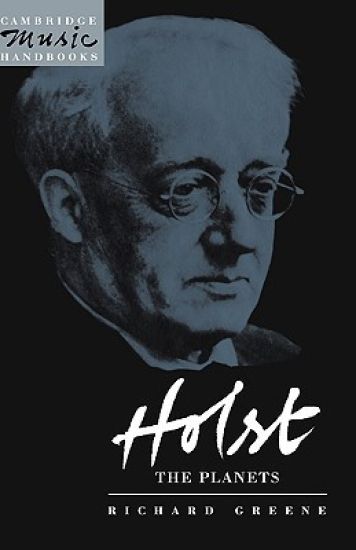
This book is the first comprehensive guide to Holst's popular orchestral suite The Planets. It considers the music in detail and places the work in its historical context, describing the circumstances of its composition and its meteoric rise to popular acclaim. Starting with Holst's particular interest in astrology, Professor Greene explores the plotting of the work's central melodic and harmonic gestures to reveal a profound statement of human character and Holst's own psychological journey toward the mystic state. Using parallels in the verbal arts Greene weaves a fascinating tale of musical communication. An understanding of The Planets is crucial to a full appreciation of Holst's profound late works, and Greene's systematic appraisal provides the first revealing light in this direction.
This book is the first comprehensive guide to Holst’s popular orchestral suite The Planets. It considers the music in detail and places the work in its historical context, describing the circumstances of its composition and its meteoric rise to popular acclaim. Starting with Holst’s particular interest in astrology, Professor Greene explores the plotting of the work’s central melodic and harmonic gestures to reveal a profound statement of human character and Holst’s own psychological journey toward the mystic state. Using parallels in the verbal arts Greene weaves a fascinating tale of musical communication. An understanding of The Planets is crucial to a full appreciation of Holst’s profound late works, and Greene’s systematic appraisal provides the first revealing light in this direction.
A collection of poems describing the exterior world, such as: Orinocos of the Imagination I've never been to the Orinoco and have seen few photos of it, but I feel I know its sinuous lengths, winding between thick jungle walls, flashing silver in the sun, delicate waterfalls threading from cloud-shrouded cliffs, dense foliage adorned with birds of kindergarten colors and jaguars that merge into shadow, the insistent music of bird cry and monkey chatter, dugouts and caimans scoring its sleek waters, those who people its valley gliding nearly naked through twilight forests, dappled by the distant sun. I know these lush landscapes from my dreams.
Richard Greene has been writing poetry intensively since he retired from a 38-year career in international development in the mid-1990s. A lawyer by training, he fell into his development career by accident when, after law school, though planning not to practice law but interested in international affairs, he accepted an unsolicited job offer from the U.S. Agency for International Development. After a few years in Washington (or Foggy Bottom, as the location of the U.S. foreign policy establishment is known), he was assigned as legal advisor to the USAID mission in Laos and there discovered that the development business suited his interests and inclinations very well. Greene wrote poetry beginning in the 8th grade and continued through college where he studied with a Professor, Henry Rago, who later became editor of Poetry magazine, the leading U.S. poetry journal. However, he wrote few poems after law school as he became absorbed in international development, but turned back to poetry as he neared retirement.
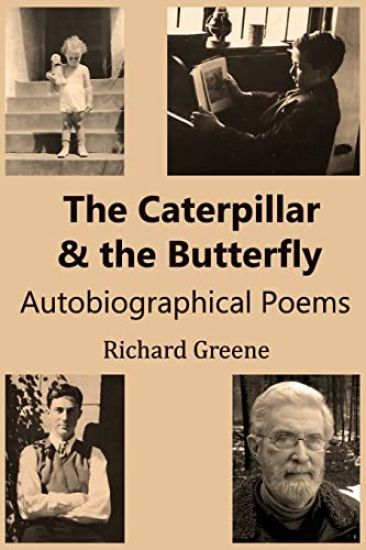
A collection of autobiographical poems by Richard Greene. Richard Greene has been writing poetry intensively since he retired from a 38-year career in international development in the mid-1990s. A lawyer by training, he fell into his development career by accident when, after law school, though planning not to practice law but interested in international affairs, he accepted an unsolicited job offer from the U.S. Agency for International Development. After a few years in Washington (or Foggy Bottom, as the location of the U.S. foreign policy establishment is known), he was assigned as legal advisor to the USAID mission in Laos and there discovered that the development business suited his interests and inclinations very well. Greene wrote poetry beginning in the 8th grade and continued through college where he studied with a Professor, Henry Rago, who later became editor of Poetry magazine, the leading U.S. poetry journal. However, he wrote few poems after law school as he became absorbed in international development, but turned back to poetry as he neared retirement.
Spoilers get folks upset—really upset. One thing that follows from this is that if you pick up a book that’s all about spoilers, it may seriously disturb you. So anyone reading this book—or even dipping into it—does so at their peril. Spoilers have a long history, going back to the time when some Greek theater-goer shouted “That’s Oedipus’s mom!” But spoilers didn’t use to be so intensely despised as they are today. The new, fierce hatred of spoilers is associated with the Golden Age of television and the ubiquity of DVR/Netflix/Hulu, and the like. Today, most people have their own personal “horror story” about the time when they were subject to the most unfair, unjust, outrageous, and unforgivable spoiler. A first definition of spoiler might be revealing any information about a work of fiction (in any form, such as a book, TV show, or movie) to someone who hasn’t encountered it. But this isn’t quite good enough. It wouldn’t be a spoiler to say “The next Star Trek movie will include a Vulcan.” Nor would it be a spoiler to say, “The story of Shawshank Redemption comes from a short story by Stephen King.” There has to be something at least a bit unexpected or unpredictable about the information, and it has to be important to the content of the work. And you could perpetrate a spoiler by divulging information about something other than a work of fiction, for example details of a sports game, to someone who has tivoed the game but not yet watched it. Timing and other matters of context may make the difference between a spoiler and a non-spoiler. It could be a spoiler to say “There’s a Vulcan in the next Star Trek movie” if spoken to someone raised in North Korea and knowing absolutely nothing about Star Trek. It can also be a spoiler to say something about a movie or TV show when it’s new, and not a spoiler when it has been around for some years. This raises the distinction between “personal spoilers” and “impersonal spoilers.” Personal spoilers are spoilers for some particular individual, because of their circumstances. You should never give personal spoilers (such as when someone says that they have never seen a particular movie, even though the plot is common knowledge. You can’t tell them the plot). Sometimes facts other than facts about a story can be spoilers, because they allow people to deduce something about the story. To reveal that a certain actor is not taking part in shooting the next episode may allow someone to jump to conclusions about the story. Spoilers need not be specific; they can be very vague. If you told someone there was a big surprise ending to The Sixth Sense or Fight Club, that might spoil these movies for people who haven’t seen them. You can spoil by mentioning things that are common knowledge, if someone has missed out on that knowledge (“Luke and Darth Vader are related”), but you usually can’t be blamed for this. People have some obligation to keep up. This means that in general you can’t be blamed for spoilers about stories that are old. “Both Romeo and Juliet are dead at the end” could be a spoiler for someone, but you can’t be blamed for it. This is a rule that’s often observed: many publications have regulations forbidding the release of some types of spoilers for a precisely fixed time after a movie release. However, some spoilers never expire, either because the plot twist is so vital or the work is so significant. So, if you’re talking to young kids, you probably should never say “Darth Vader is Luke’s father,” “Norman Bates is Mother,” “Dorothy’s trip to Oz was all a dream,” “All the passengers on the Orient Express collaborated in the murder,” “in The Murder of Roger Akroyd, the narrator did it,” “Soylent Green is people,” “To Serve Man is a cookbook,” and finally, what many consider to be the greatest and worst spoiler of them all, “The Planet of the Apes is really Earth.” Some famous “spoilers” are not true spoilers. It’s not going to spoil Citizen Kane for anyone to say “Rosebud is his sled.” This piece of information is not truly significant. It’s more of a McGuffin than a plot twist. A paradox about spoiling is that people often enjoy a work of fiction such as a Sherlock Holmes story over and over again. They remember the outline of the story, and who did the murder, but this doesn’t stop them re-reading. This demonstrates that the spoilage generated by spoilers is less than we might imagine. It’s bad to spoil, but how bad? People do seem to exaggerate the dreadfulness of spoiling, compared with other examples of inconsiderateness or rudeness. Are there occasions when it’s morally required to spoil? Yes, you might want to dissuade someone from watching or reading something you believed might harm them somehow. Also, you might issue a spoiler in order to save the world from a terrorist attack (Yes, this is a philosophy book, so it has to include at least one totally absurd example). A more doubtful case is deliberate spoiling as a protest, as occurred with Basic Instinct. The book ends with three spoiler lists: the Most Outrageous Spoiler “Horror Stories”; the Greatest Spoilers of All Time; and the Greatest Spoilers in Philosophy.