Kirjojen hintavertailu. Mukana 11 244 527 kirjaa ja 12 kauppaa.

Kirjahaku

Etsi kirjoja tekijän nimen, kirjan nimen tai ISBN:n perusteella.

1000 tulosta hakusanalla Richard H. Thaler

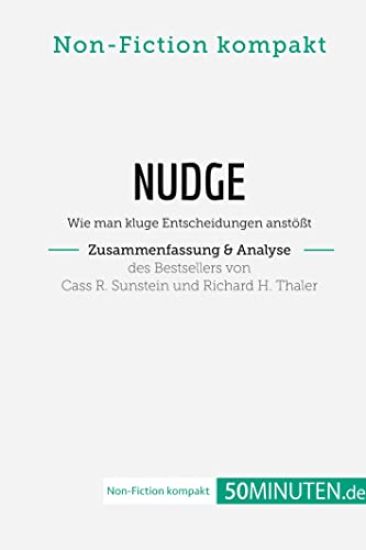
An Analysis of Richard H. Thaler and Cass R. Sunstein's Nudge
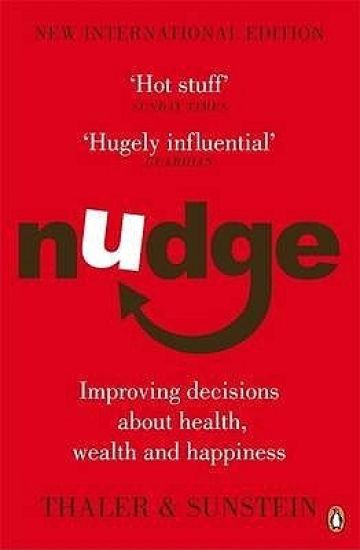
When it was published in 2008, Richard Thaler and Cass Sunstein’s Nudge: Improving Decisions about Health, Wealth, and Happiness quickly became one of the most influential books in modern economics and politics. Within a short time, it had inspired whole government departments in the US and UK, and others as far afield as Singapore. One of the keys to Nudge’s success is Thaler and Sunstein’s ability to create a detailed and persuasive case for their take on economic decision-making. Nudge is not a book packed with original findings or data; instead it is a careful and systematic synthesis of decades of research into behavioral economics. The discipline challenges much conventional economic thought – which works on the basis that, overall, humans make rational decisions – by focusing instead on the ‘irrational’ cognitive biases that affect our decision making. These seemingly in-built biases mean that certain kinds of economic decision-making are predictably irrational. Thaler and Sunstein prove themselves experts at creating persuasive arguments and dealing effectively with counter-arguments. They conclude that if governments understand these cognitive biases, they can ‘nudge’ us into making better decisions for ourselves. Entertaining as well as smart, Nudge shows the full range of reasoning skills that go into making a persuasive argument.
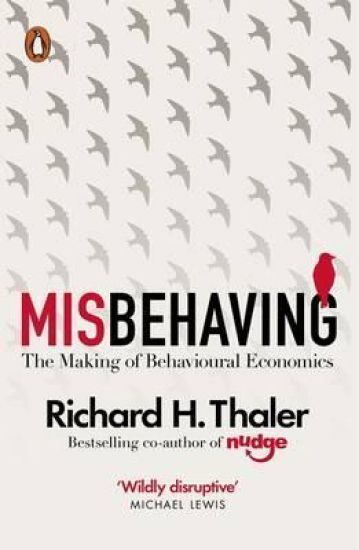
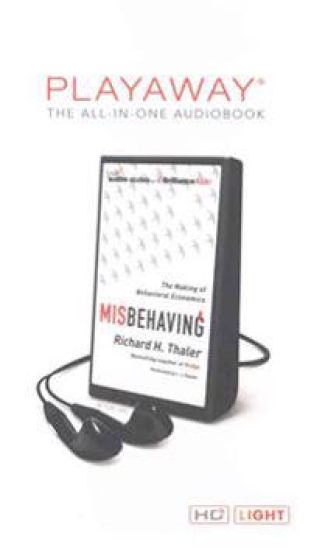
Misbehaving

Misbehaving

Richard H. Thaler

Penguin Books Ltd.
2016
pokkari
When economics meets psychology, the implications for individuals, managers and policy makers are both profound and entertaining. Coupling recent discoveries in human psychology with a practical understanding of incentives and market behaviour, the author enlightens readers about how to make smarter decisions in an increasingly mystifying world.
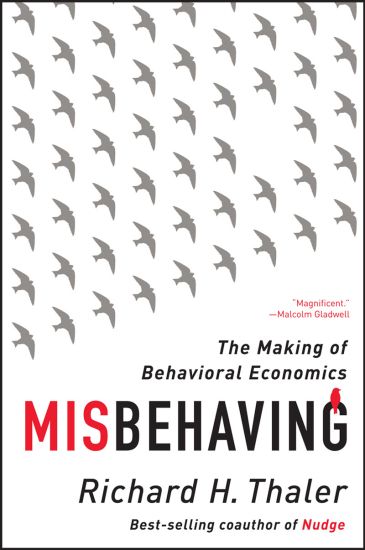
Misbehaving

Misbehaving

Richard H. Thaler

WW Norton Co
2015
sidottu
A founding father of behavioral economics (Chicago Tribune), Richard H. Thaler has spent his career investigating the radical notion that the central agents in the economy are humans error-prone but predictable individuals. Once dismissed by economists as an amusing sideshow, the study of human miscalculations and their effects on markets now drives efforts to make better decisions in our lives, our businesses, and our governments. Misbehaving spans Thaler s decades as a leader in this transformation and reveals how the insights of behavioral economics can help everyone think more intelligently about their time and their money. With relatable examples from everyday life investments, household spending to television game show dilemmas and the NFL draft, Misbehaving offers a present-at-the-creation account of Thaler s battle to upend traditional economic thinking. As readable as Freakonomics, as provocative as Thinking, Fast and Slow, Misbehaving is a singular look into profound human foibles one that will have readers retooling their grocery lists and retirement strategies, and lead managers to rethink every aspect of their business."
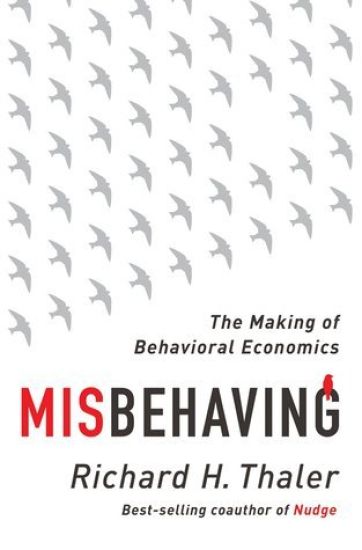
Misbehaving: The Making of Behavioral Economics

Misbehaving: The Making of Behavioral Economics

Richard H. Thaler

W. W. Norton Company
2016
nidottu
Nobel laureate Richard H. Thaler has spent his career studying the radical notion that the central agents in the economy are humans--predictable, error-prone individuals. Misbehaving is his arresting, frequently hilarious account of the struggle to bring an academic discipline back down to earth--and change the way we think about economics, ourselves, and our world.Traditional economics assumes rational actors. Early in his research, Thaler realized these Spock-like automatons were nothing like real people. Whether buying a clock radio, selling basketball tickets, or applying for a mortgage, we all succumb to biases and make decisions that deviate from the standards of rationality assumed by economists. In other words, we misbehave. More importantly, our misbehavior has serious consequences. Dismissed at first by economists as an amusing sideshow, the study of human miscalculations and their effects on markets now drives efforts to make better decisions in our lives, our businesses, and our governments.Coupling recent discoveries in human psychology with a practical understanding of incentives and market behavior, Thaler enlightens readers about how to make smarter decisions in an increasingly mystifying world. He reveals how behavioral economic analysis opens up new ways to look at everything from household finance to assigning faculty offices in a new building, to TV game shows, the NFL draft, and businesses like Uber.Laced with antic stories of Thaler's spirited battles with the bastions of traditional economic thinking, Misbehaving is a singular look into profound human foibles. When economics meets psychology, the implications for individuals, managers, and policy makers are both profound and entertaining.Shortlisted for the Financial Times & McKinsey Business Book of the Year Award
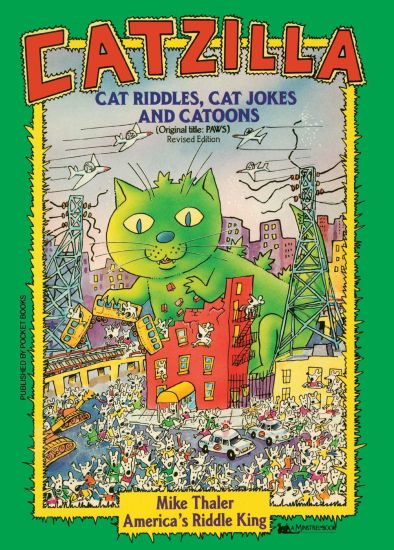
Catzilla: Cat Riddles, Cat Jokes, and Cartoons
America's Riddle King returns with a hilarious and eccentric collection of riddles, jokes, and cartoons about cats of all shapes and sizes. Kids love telling riddles and jokes to their family and friends, and Mike Thaler's latest collection of unique, cat-themed laughs is sure to add to the fun Filled with hilarious and unique feline-themed jokes and riddles, Catzilla will bring countless laughs to every gathering. With new and revised content, this collection of cat riddles, jokes, and cartoons is irresistible.
Misbehaving: The Making of Behavioral Economics
Get ready to change the way you think about economics. Richard H. Thaler has spent his career studying the radical notion that the central agents in the economy are humans?predictable, error-prone individuals. "Misbehaving" is his arresting, frequently hilarious account of the struggle to bring an academic discipline back down to earth?and change the way we think about economics, ourselves, and our world. Traditional economics assumes rational actors. Early in his research, Thaler realized these Spock-like automatons were nothing like real people. Whether buying a clock radio, selling basketball tickets, or applying for a mortgage, we all succumb to biases and make decisions that deviate from the standards of rationality assumed by economists. In other words, we misbehave. More importantly, our misbehavior has serious consequences. Dismissed at first by economists as an amusing sideshow, the study of human miscalculations and their effects on markets now drives efforts to make better decisions in our lives, our businesses, and our governments. Coupling recent discoveries in human psychology with a practical understanding of incentives and market behavior, Thaler enlightens listeners about how to make smarter decisions in an increasingly mystifying world. He reveals how behavioral economic analysis opens up new ways to look at everything from household finance to assigning faculty offices in a new building, to TV game shows, the NFL draft, and businesses like Uber. Laced with antic stories of Thaler s spirited battles with the bastions of traditional economic thinking, "Misbehaving" is a singular look into profound human foibles. When economics meets psychology, the implications for individuals, managers, and policy makers are both profound and entertaining."
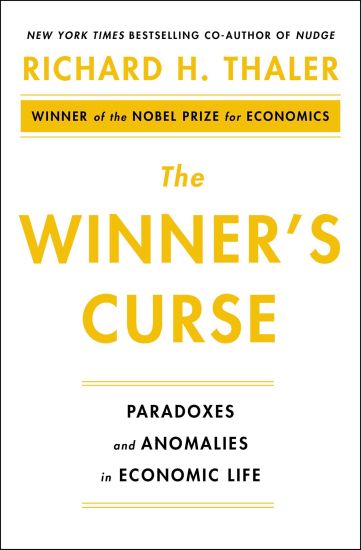
The Winner's Curse

The Winner's Curse

Richard H. Thaler

Simon Schuster
2021
pokkari
Nobel Prize–winning economist Richard H. Thaler challenges traditional economic paradigms and reveals the many paradoxes about human behavior and our transaction-based culture in this “interesting and entertaining” (The Wall Street Journal) work. While the rationale behind economics always seems to be at the forefront of political and institutional life, many economic theories in relation to consumer behavior have not been studied in detail. Here, in The Winner’s Curse, Richard Thaler challenges today’s accepted economic wisdom by revealing many of the anomalies that abound even in simple economic transactions. He presents literate, challenging, and often funny examples of such variances as why the winners at auctions are often the real losers—they pay too much and suffer the “winner’s curse”—why gamblers bet on long shots at the end of a losing day, why shoppers will save on one appliance only to pass up the identical savings on another, and why sports fans who wouldn't pay more than $200 for a Super Bowl ticket wouldn’t sell one they own for less than $400. He also demonstrates that markets do not always operate with the traplike efficiency we impute to them. Thaler argues that recognizing these sometimes counterintuitive facts of economic behavior will compel economists to adopt a more balanced view of human nature, one reflected in Adam Smith’s belief that, despite our selfishness, there is something in our nature that prompts us to enjoy, even promote, the happiness of others.
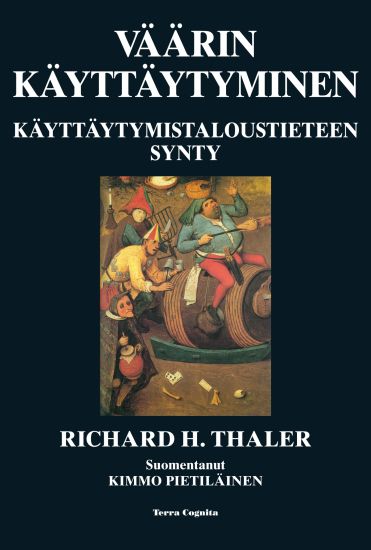
Väärin käyttäytyminen

Väärin käyttäytyminen

Richard H. Thaler

Terra Cognita
2015
nidottu
Väärin käyttäytyminen on Richard H. Thalerin kiehtova ja usein riemastuttava kuvaus hänen pyrkimyksistään palauttaa yliopistotaloustiede maan pinnalle.Tätä tehdessään hän tuli perustaneeksi tieteenalan nimeltään käyttäytymistaloustiede ja muuttaneeksi tapamme ajatella taloutta, itseämme ja maailmaa.Perinteinen taloustiede olettaa, että olemme rationaalisia toimijoita. Jo uransa alussa Thaler oivalsi, ettemme ole tällaisia automaatteja tai robotteja. Perinteisen, järkevyyteen perustuvan taloustieteen vastaisesti sorrumme kaikenlaisiin vinoutumiin emmekä tee järkeviä päätöksiä. Käyttäydymme siis väärin.Ja väärin käyttäytymisellä on seurauksensa. Thalerin tutkimukset osoittavat, että väärillä päätöksillämme on merkittäviä vaikutuksia elämäämme, ja osa niistä on vältettävissä.Tässä teoksessa Thaler yhdistää tutkimuslöydöksiään ja tarinoita otteluistaan perinteisen taloustieteen bastioneita vastaan. Tämä on käyttäytymistaloustieteen synnyn historia.
Nudge

Nudge

Richard H. Thaler; Cass R Sunstein

Penguin Books Ltd.
2009
pokkari
Every day we make decisions: about the things that we buy or the meals we eat; about the investments we make or our children's health and education; even the causes that we champion or the planet itself. This book offers a fresh way of looking at the world for individuals and governments alike.
Nudge

Nudge

Richard H. Thaler; Cass R Sunstein

PENGUIN BOOKS LTD
2022
pokkari
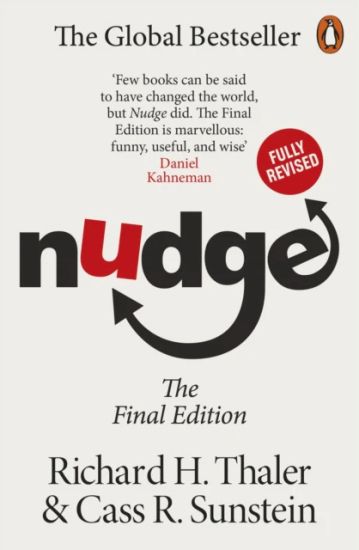
Nudge has transformed the way individuals, companies and governments look at the world - and in the process has become one of the most important books of the twenty-first century. This completely updated edition offers a wealth of new insights for fans and newcomers alike - about COVID-19, diet, personal finance, retirement savings, medical care, organ donation, and climate change.Every day we make decisions: about the things we buy or the meals we eat; about the investments we make and the time we spend; about our health and that of the planet. Unfortunately, we often choose badly.We are all susceptible to biases that can lead us to make bad decisions that make us poorer, less healthy and less happy. And, as Richard Thaler and Cass Sunstein show, no choice is ever presented to us in a neutral way. But by knowing how people think, we can make it easier for them to choose what is best for themselves, for their families and for society. With brilliant insight and wonderful levity, Thaler and Sunstein demonstrate how best to nudge us in the right directions, without ever restricting our freedom of choice.
Nudge: The Final Edition

Nudge: The Final Edition

Richard H. Thaler; Cass R. Sunstein

PENGUIN BOOKS
2021
nidottu
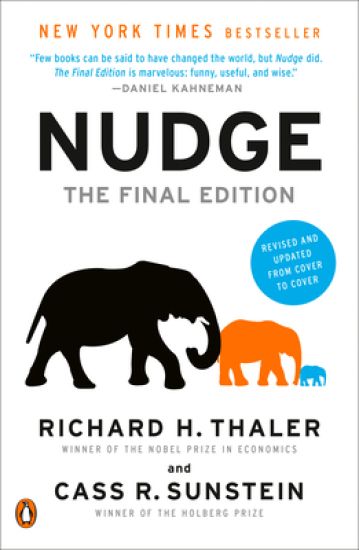
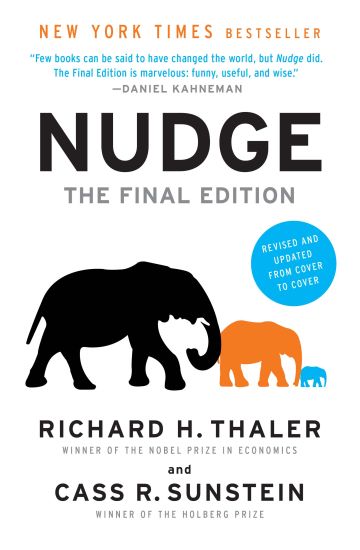
*Once again a New York Times bestseller First the original edition, and now the new Final Edition* An essential new edition―revised and updated from cover to cover―of one of the most important books of the last two decades, by Nobel Prize winner Richard H. Thaler and Cass R. Sunstein More than 2 million copies sold Since the original publication of Nudge more than a decade ago, the title has entered the vocabulary of businesspeople, policy makers, engaged citizens, and consumers everywhere. The book has given rise to more than 400 "nudge units" in governments around the world and countless groups of behavioral scientists in every part of the economy. It has taught us how to use thoughtful "choice architecture"--a concept the authors invented--to help us make better decisions for ourselves, our families, and our society. Now, the authors have rewritten the book from cover to cover, making use of their experiences in and out of government over the past dozen years as well as an explosion of new research in numerous academic disciplines. To commit themselves to never undertaking this daunting task again, they are calling this the "final edition." It offers a wealth of new insights, for both its avowed fans and newcomers to the field, about a wide variety of issues that we face in our daily lives--COVID-19, health, personal finance, retirement savings, credit card debt, home mortgages, medical care, organ donation, climate change, and "sludge" (paperwork and other nuisances we don't want, and that keep us from getting what we do want)--all while honoring one of the cardinal rules of nudging: make it fun
The Winner's Curse

The Winner's Curse

Richard H. Thaler; Alex O. Imas

PENGUIN BOOKS LTD
2025
sidottu
Why do people cooperate with one another when they have no (selfish) motivation to do so? Why do we hold onto possessions of little value? And why is the winner of an auction so often disappointed?In the original 1992 version of The Winner’s Curse, Richard Thaler introduced readers to behavioral economics, challenging the notion of traditional economics that people are selfish, rational optimizers and behave accordingly every time. Three decades later, Thaler has teamed up with economist Alex Imas to provide fresh insights in this fully updated edition. They revisit Thaler's original columns on economic anomalies, some written with collaborators like Daniel Kahneman and Amos Tversky, and explore how these anomalies hold up today.Many anomalies remain, whether in households saving for retirement (or not), professional golfers putting for millions of dollars, or shoppers at large retail chains. In this era of meme stocks and Dogecoin, it is hard to defend the view that financial markets are highly efficient. The good news, however, is that they have gotten funnier.With both readability and rigor, The Winner’s Curse is approachable for anyone with even a cursory understanding of economics, without oversimplifying so that experts cannot read it without cringing. In the final chapter, the authors reflect on the field’s progress and future. Thaler and Imas offer an updated classic even more relevant today to understand the true nature of decision-making in the current economy.
Nudge

Nudge

Richard H. Thaler; Cass R. Sunstein

Yale University Press
2021
sidottu
An updated and refreshed edition of the groundbreaking book that shows how people can be nudged toward decisions that will improve their lives “If you’ve read Nudge and think you fully grasp the concept and its uses, you are mistaken. The new edition significantly deepened my understanding of what nudges are and how they can be employed. It truly is a must-read.”-Robert Cialdini, New York Times bestselling author of Influence “Few books can be said to have changed the world, but Nudge did. The Final Edition is marvelous: funny, useful, and wise.”-Daniel Kahneman, #1 New York Times bestselling author of Thinking, Fast and Slow Since the original publication of Nudge more than a decade ago, the word “nudge” has entered the vocabulary of businesspeople, policymakers, engaged citizens, and consumers everywhere. The book has given rise to more than 200 “nudge units” in governments around the world and countless groups of behavioral scientists in every part of the economy. It has taught us how to use thoughtful “choice architecture”—a concept the authors invented—to help us make better decisions for ourselves, our families, and our society. Now, the authors have rewritten the book from cover to cover, making use of their experiences in and out of government over the past dozen years as well as the explosion of new research in numerous academic disciplines. It offers a wealth of new insights, for both its avowed fans and newcomers to the field, about a wide variety of issues that we face in our daily lives—COVID-19, health, personal finance, retirement savings, credit card debt, home mortgages, medical care, organ donation, climate change, and “sludge” (paperwork and other nuisances that we don’t want and keep us from getting what we do want)—all while honoring one of the cardinal rules of nudging: make it fun!
The Winner's Curse: Behavioral Economics Anomalies, Then and Now

The Winner's Curse: Behavioral Economics Anomalies, Then and Now

Richard H. Thaler; Alex Imas

SIMON SCHUSTER
2025
sidottu
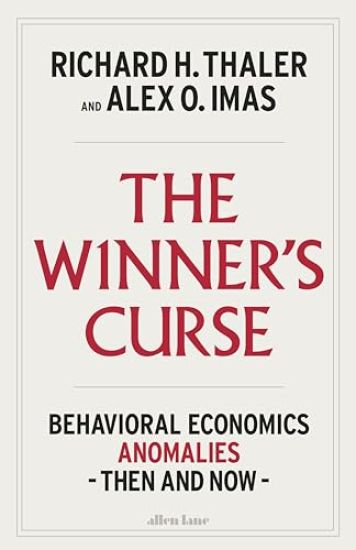
Nobel Prize winner Richard Thaler and rising star economist Alex Imas explore behavioral economics in this fully updated edition of the seminal work The Winner's Curse. Why do people cooperate with one another when they have no (selfish) motivation to do so? Why do we hold onto possessions of little value? And why is the winner of an auction so often disappointed? In the original 1992 version of The Winner's Curse, Richard Thaler introduced readers to behavioral economics, challenging the notion of traditional economics that people are selfish, rational optimizers and behave accordingly every time. Three decades later, Thaler has teamed up with economist Alex Imas to provide fresh insights in this fully updated edition. They revisit Thaler's original columns on economic anomalies, some written with collaborators like Daniel Kahneman and Amos Tversky, and explore how these anomalies hold up today. Many anomalies remain, whether in households saving for retirement (or not), professional golfers putting for millions of dollars, or shoppers at large retail chains. In this era of meme stocks and Dogecoin, it is hard to defend the view that financial markets are highly efficient. The good news, however, is that they have gotten funnier. With both readability and rigor, The Winner's Curse is approachable for anyone with even a cursory understanding of economics, without oversimplifying so that experts cannot read it without cringing. In the final chapter, the authors reflect on the field's progress and future. Thaler and Imas offer an updated classic even more relevant today to understand the true nature of decision-making in today's economy.
Nudge: Un Pequeño Empujón / The Final Decision

Nudge: Un Pequeño Empujón / The Final Decision

Richard H. Thaler; Cass R. Sunstein

Debolsillo
2022
nidottu
El impulso que necesitas para tomar mejores decisiones sobre salud, dinero y felicidad. Una nueva edici n imprescindible --revisada y actualizada de cabo a rabo-- de uno de los libros m s importantes de las ltimas dos d cadas, del premio Nobel Richard H. Thaler y Cass R. Sunstein Desde la publicaci n original de Nudge hace m s de una d cada, el t tulo ha entrado en el vocabulario de empresarios, legisladores, ciudadanos comprometidos y consumidores de todo el mundo. El libro ha dado lugar a m s de 400 "unidades de empuj n" en gobiernos de todo el mundo e innumerables grupos de cient ficos del comportamiento en cada parte de la econom a. Nos ha ense ado c mo usar una "arquitectura de elecci n" reflexiva, un concepto que inventaron los autores, para ayudarnos a tomar mejores decisiones para nosotros, nuestras familias y nuestra sociedad. Ahora, los autores han reescrito el libro de cabo a rabo, haciendo uso de sus experiencias dentro y fuera del gobierno durante los ltimos doce a os, as como una explosi n de nuevas investigaciones en numerosas disciplinas acad micas. Para comprometerse a nunca volver a emprender esta tarea abrumadora, la llaman la "edici n final". Ofrece una gran cantidad de nuevos conocimientos, tanto para sus fan ticos declarados como para los reci n llegados al campo, sobre una amplia variedad de problemas que enfrentamos en nuestra vida diaria: COVID-19, salud, finanzas personales, ahorros para la jubilaci n, deuda de tarjetas de cr dito, vivienda. hipotecas, atenci n m dica, donaci n de rganos, cambio clim tico y "lodo" (papeleo y otras molestias que no queremos y que nos impiden obtener lo que queremos), todo mientras respetamos una de las reglas cardinales de empujar: hacer es divertido ENGLISH DESCRIPTION Since the original publication of Nudge more than a decade ago, the title has entered the vocabulary of businesspeople, policy makers, engaged citizens, and consumers everywhere. The book has given rise to more than 400 "nudge units" in governments around the world and countless groups of behavioral scientists in every part of the economy. It has taught us how to use thoughtful "choice architecture"--a concept the authors invented--to help us make better decisions for ourselves, our families, and our society. Now, the authors have rewritten the book from cover to cover, making use of their experiences in and out of government over the past dozen years as well as an explosion of new research in numerous academic disciplines. To commit themselves to never undertaking this daunting task again, they are calling this the "final edition." It offers a wealth of new insights, for both its avowed fans and newcomers to the field, about a wide variety of issues that we face in our daily lives--COVID-19, health, personal finance, retirement savings, credit card debt, home mortgages, medical care, organ donation, climate change, and "sludge" (paperwork and other nuisances we don't want, and that keep us from getting what we do want)--all while honoring one of the cardinal rules of nudging: make it fun