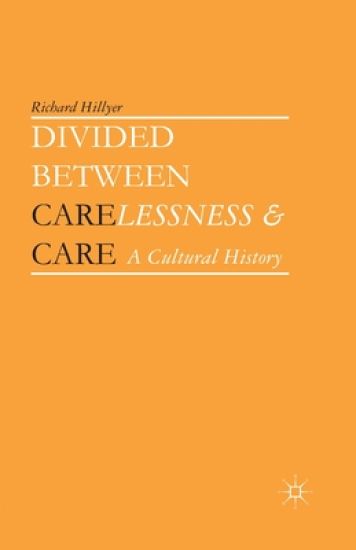
The concept of "care" defines our humanity. Covering topics as diverse as familial care, medical care, artistic care, scientific care, and various other permutations of the term, this book examines the word and concept of "care" from a cultural perspective, tracing its use throughout literature and history.
The concept of "care" defines our humanity. Covering topics as diverse as familial care, medical care, artistic care, scientific care, and various other permutations of the term, this book examines the word and concept of "care" from a cultural perspective, tracing its use throughout literature and history.
Much of the poetry written by W. H. Auden between 1939 and the time of his death consists of syllabic verse, or lines arranged in accordance with a predetermined syllable-count but no fixed number or distribution of stresses. This book presents a comprehensive, in-depth analysis of his many and widely varied syllabics, grouping them primarily by the formal sub-categories to which they belong (as measured by line-length, stanza-type, or some other aspect of their overall design). With this approach the book clarifies the dynamic range and technical inventiveness of Auden’s syllabics. It also shows how his work of compares with that of Robert Bridges and Marianne Moore, two pioneers in the writing of English syllabic whose verse he was familiar with.
Focusing on four poets who because of their distinctive profiles illustrate especially well the opportunities and pitfalls of writing science poetry during the long eighteenth century Four Augustan Science Poets: Abraham Cowley, James Thomson, Henry Brooke, Erasmus Darwin offers numerous close readings that shed light not only on standard versions of the sublime but also on these idiosyncratic variants: the apologetic (Abraham Cowley), the illicit (James Thomson), the perverse (Henry Brooke) and the atheistic (Erasmus Darwin). Recurrent concerns include the similarities and differences among the languages of poetry, science and religion. Of the poets analyzed all but Thomson wrote extensive notes to accompany their lines, permitting further comparison of languages, in this case between the same authors’ poetry and prose.
This book offers case studies from throughout literature to reveal cowardice as a more complex and interesting phenomenon than typically understood. Pushing beyond the straightforward treatment of cowardice in military contexts and others where it is subject to punishment or severe condemnation, Hillyer asks: how do cowards survive in a world generally hostile to them and why do they attract such wide vituperation? Following a lexical and literary overview of cowardice starting with the Oxford English Dictionary to provide a big picture, chapters provide deep dives into specific cowardly character representatives, including Shakespeare's Parolles (All's Well That Ends Well), English poet and politician Edmund Waller, and Joseph Conrad's Hirsch (Nostromo).
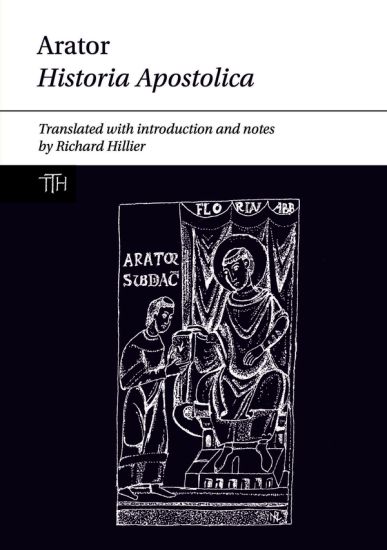
Baptism for the early Christians was a subject of crucial importance, and its symbolism fired the imagination of writers throughout the Christian world. Arator, the Roman sub-deacon who wrote a verse-commentary on the Acts of the Apostles in AD 544, was no exception. The Historia Apostolica is a work of historical importance. Written at a time of crisis, politically and theologically, it is of interest as propaganda for a papacy under threat from Constantinople. But Arator's concentration on baptismal themes offers vital evidence of the transmission of exegetical ideas in late antiquity. This book is the first major work on Arator in English and the first ever to study the Historia Apostolica as biblical commentary. Passages of particular baptismal importance are presented both in the original Latin and in a new translation, and considered in the context of the writings of earlier Christian commentators. In short, this is a wide-ranging study of the popularity and potency of baptismal symbolism in the first six centuries AD.
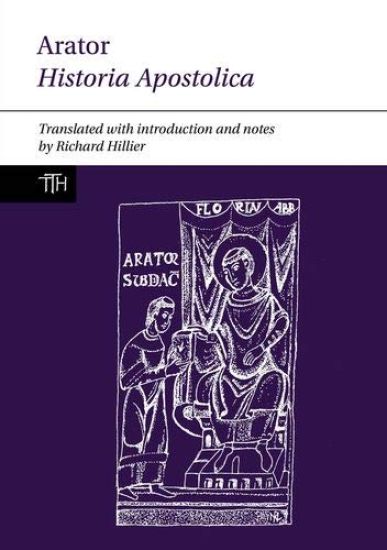
Arator’s Historia Apostolica, published with papal approval and to great acclaim in 544, is an enthralling epic poem which retells the story of the Acts of Apostles, following clearly in the stylistic footsteps of Vergil and Lucan. On the other hand, it is also a detailed commentary on what Arator perceived to be the hidden meaning of the biblical text, divined and revealed through the technique of allegorical interpretation and drawing upon the exegesis of Origen, Ambrose, Augustine, and others. Narrative and commentary alternate throughout the work to enthralling effect, as the apostles Peter and Paul embark on their separate missionary adventures, eventually to be reunited in martyrdom in Nero’s Rome. The translation is preceded by an introduction which begins with a re-evaluation of the sources which detail Arator’s life, in particular taking a fresh look at his relationship with his mentor Ennodius. There follow an examination of the poet’s aims, methods and inspirations and a discussion of his attitudes to heresies both past and present. The introduction ends with a ground-breaking examination of the ‘afterlife’ of Arator’s poem, mapping the extent of his influence, as evident in quotation and allusion, the copying of manuscripts, and inclusion in medieval libraries from the sixth century to the eleventh. Arator’s influence on several later authors, most notably the Venerable Bede, is explored in more detail in a number of appendixes. Arator’s combination of epic verse and mystical commentary was a heady and potent mix and ensured the poem’s popularity, not least among the monks of Anglo-Saxon England and the Carolingian continent.
Arator’s Historia Apostolica, published with papal approval and to great acclaim in 544, is an enthralling epic poem which retells the story of the Acts of Apostles, following clearly in the stylistic footsteps of Vergil and Lucan. On the other hand, it is also a detailed commentary on what Arator perceived to be the hidden meaning of the biblical text, divined and revealed through the technique of allegorical interpretation and drawing upon the exegesis of Origen, Ambrose, Augustine, and others. Narrative and commentary alternate throughout the work to enthralling effect, as the apostles Peter and Paul embark on their separate missionary adventures, eventually to be reunited in martyrdom in Nero’s Rome. The translation is preceded by an introduction which begins with a re-evaluation of the sources which detail Arator’s life, in particular taking a fresh look at his relationship with his mentor Ennodius. There follow an examination of the poet’s aims, methods and inspirations and a discussion of his attitudes to heresies both past and present. The introduction ends with a ground-breaking examination of the ‘afterlife’ of Arator’s poem, mapping the extent of his influence, as evident in quotation and allusion, the copying of manuscripts, and inclusion in medieval libraries from the sixth century to the eleventh. Arator’s influence on several later authors, most notably the Venerable Bede, is explored in more detail in a number of appendixes. Arator’s combination of epic verse and mystical commentary was a heady and potent mix and ensured the poem’s popularity, not least among the monks of Anglo-Saxon England and the Carolingian continent.
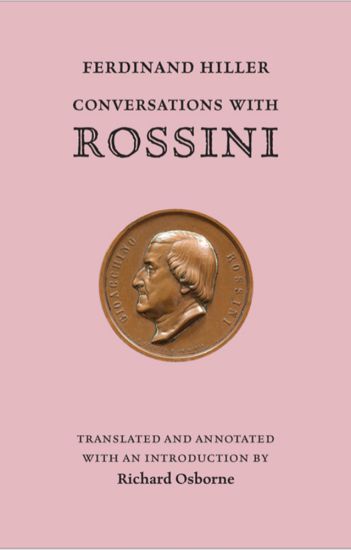
The conversations the 63-year-old Rossini had with Ferdinand Hiller in Trouville in Normandy in September 1855, and the finely drafted impression of Rossini himself with which Hiller prefaces the conversations, will be of exceptional interest to all music lovers. No other single source offers so vivid a sense of Rossini the man and the musician, not to mention the many composers, performers, and people of influence he knew and met. This is the first complete publication of the conversations in English.
In February 1995, Richey Edwards checked out of a London hotel instead of flying to the US with the rest of the Manic Street Preachers. There were a few subsequent sightings but then nothing. His body was never found, and he was declared legally dead in November 2008. Now Richard tells the story of his life – and disappearance – as he might have told it. ‘This moving, tender novel tells the story of a lost boy adrift in a world that he can’t make sense of’ Marie Claire ‘Myers deserves credit not only for adding a third dimension to Edwards, but for trying a fourth, for attempting to document a period of his life that seems destined to remain a mystery’ The Times ‘A sympathetic and sad imagining of the boy who became a reluctant pop idol’ Time Out ‘Harrowing and hauntingly sad’ Mojo
Vers l'automne de 1830, par une soir e froide et pluvieuse, une chaise de poste, qui suivait la route d'Angers Nantes, quitta brusquement le grand chemin pour prendre un sentier enfonc dans les terres. Il faisait une affreuse nuit. Le vent sifflait travers les arbres; les rameaux d pouill s craquaient; les orfraies criaient dans le creux des ch nes. chaque instant, les chevaux, d courag s, refusaient d'avancer; le postillon jurait, et la chaise, battue par la tourmente, mena ait de s'ab mer dans les orni res des sentiers effondr s. Pas une toile ne brillait au ciel, pas une lumi re dans le paysage; des aboiements plaintifs qui se m laient, longs intervalles, aux g missements de la bise, r v laient seuls quelques habitations loign es. Au milieu de cette sc ne d sol e, la voiture tait, l'int rieur, silencieuse comme un tombeau: pas un mouvement, pas un bruit de voix qui trah t au dedans l'inqui tude ou l'impatience; on e t dit le voyage d'un mort gagnant sa demeure derni re. Enfin, au bout de quelques heures, les chevaux galop rent sur un terrain ferme et sonore, entre une double rang e de platanes; le fouet du postillon donna joyeusement la fanfare d'arriv e, et la chaise s'arr ta bient t devant le perron du vieux ch teau de Beaumeillant...
When Richard Ransome is injured in an accident, the beautiful Raleigh Reade comes to his assistance. Forced to marry to keep Raleigh alive, the couple find themselves off on an adventure that tries their faith and their growing love for one another.Richard's security team and their families and friends are drawn into the investigation, attempting to find the culprits and bring them to justice before either Richard or Raleigh are severely injured or dead.Richard and Raleigh fight through to survive, drawing closer to one another as their lives become more entwined. They recognize the power of God in their lives and His protection over them.
Reponse de Son Eminence le cardinal archeveque de Paris (Mgr Richard) aux catholiques qui l'ont consulte sur leur devoir socialDate de l'edition originale: 1891Sujet de l'ouvrage: France (1870-1940, 3e Republique)Ce livre est la reproduction fidele d'une oeuvre publiee avant 1920 et fait partie d'une collection de livres reimprimes a la demande editee par Hachette Livre, dans le cadre d'un partenariat avec la Bibliotheque nationale de France, offrant l'opportunite d'acceder a des ouvrages anciens et souvent rares issus des fonds patrimoniaux de la BnF.Les oeuvres faisant partie de cette collection ont ete numerisees par la BnF et sont presentes sur Gallica, sa bibliotheque numerique.En entreprenant de redonner vie a ces ouvrages au travers d'une collection de livres reimprimes a la demande, nous leur donnons la possibilite de rencontrer un public elargi et participons a la transmission de connaissances et de savoirs parfois difficilement accessibles.Nous avons cherche a concilier la reproduction fidele d'un livre ancien a partir de sa version numerisee avec le souci d'un confort de lecture optimal. Nous esperons que les ouvrages de cette nouvelle collection vous apporteront entiere satisfaction.Pour plus d'informations, rendez-vous sur www.hachettebnf.fr
La Politique des centres denoncee au patriotisme des electeurs, par C.-H. Richard, ...Date de l'edition originale: 1831Ce livre est la reproduction fidele d'une oeuvre publiee avant 1920 et fait partie d'une collection de livres reimprimes a la demande editee par Hachette Livre, dans le cadre d'un partenariat avec la Bibliotheque nationale de France, offrant l'opportunite d'acceder a des ouvrages anciens et souvent rares issus des fonds patrimoniaux de la BnF.Les oeuvres faisant partie de cette collection ont ete numerisees par la BnF et sont presentes sur Gallica, sa bibliotheque numerique.En entreprenant de redonner vie a ces ouvrages au travers d'une collection de livres reimprimes a la demande, nous leur donnons la possibilite de rencontrer un public elargi et participons a la transmission de connaissances et de savoirs parfois difficilement accessibles.Nous avons cherche a concilier la reproduction fidele d'un livre ancien a partir de sa version numerisee avec le souci d'un confort de lecture optimal. Nous esperons que les ouvrages de cette nouvelle collection vous apporteront entiere satisfaction.Pour plus d'informations, rendez-vous sur www.hachettebnf.fr"