
Kirjahaku
Etsi kirjoja tekijän nimen, kirjan nimen tai ISBN:n perusteella.
1000 tulosta hakusanalla Richard J Coleman



Original Sin in the 21st Century begins with a cold, hard fact: Christians, we have a problem No one is listening to us when we talk about original sin. That will change as you follow an exploration of original sin as an enduring truth about human nature. This book is not another exposition of either the history or the doctrine of original sin. Rather, it opens up new avenues of consideration, such as original goodness as a counterweight to original sin, a contemporary interpretation of the Adam-Eve narrative, the new relevancy of Reinhold Niebuhr's recognition that we are not as good as our ideals, and a soul-searching inquiry into whether original sin is too dark or perhaps not dark enough. The twenty-first century is far more than a backdrop. This book invites us to rethink what sin looks like when the world warms, when AI is created in our own image, and when sin thrives on indifference and willful ignorance. The author will quickly convince you this century is both an opportunity and an imperative to rethink original sin for what lies ahead.

Original Sin in the 21st Century begins with a cold, hard fact: Christians, we have a problem No one is listening to us when we talk about original sin. That will change as you follow an exploration of original sin as an enduring truth about human nature. This book is not another exposition of either the history or the doctrine of original sin. Rather, it opens up new avenues of consideration, such as original goodness as a counterweight to original sin, a contemporary interpretation of the Adam-Eve narrative, the new relevancy of Reinhold Niebuhr's recognition that we are not as good as our ideals, and a soul-searching inquiry into whether original sin is too dark or perhaps not dark enough. The twenty-first century is far more than a backdrop. This book invites us to rethink what sin looks like when the world warms, when AI is created in our own image, and when sin thrives on indifference and willful ignorance. The author will quickly convince you this century is both an opportunity and an imperative to rethink original sin for what lies ahead.
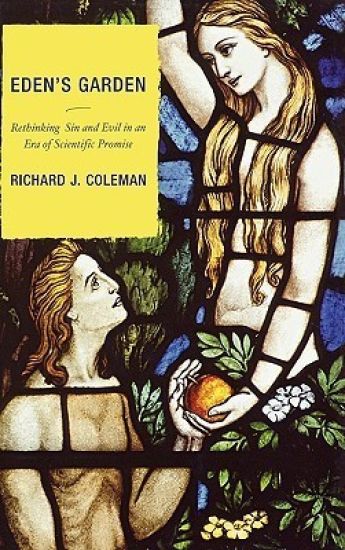
The time is ripe for a robust discussion of human nature. In Eden's Garden: Rethinking Sin and Evil in an Era of Scientific Promise, Richard Coleman examines the notion of sin in a contemporary world that values scientific and nonreligious modes of thought regarding human behavior. This work is not an anti-science polemic, but rather an argument to show how sin and evil can make sense to the nonreligious mind, and how it is valuable to make sense of such phenomena. The author reconceptualizes sin and evil as 'indelible pieces of our evolutionary history' preventing them from being ostracized as 'too religious, without substance, mired in the past.' Coleman redeems theology for what it can offer to the understanding of sin and evil while embracing and respecting what science can offer to further the common good. Examining themes in religion, philosophy, and theology, it is ideal for use in the numerous courses that move across these disciplines.
Citizen Survivors: The Red Book
Richard Denham; M. J. Trow; Maryanne Coleman; Justin Alcala; Kyt Wright; Julia Cowan; Faye Irwin; Samantha Evergreen; Taliesin Trow; Bethan White
BLKDOG Publishing
2021
nidottu

Flood Control in Metropolitan Los Angeles: University of California Publications in Political Science, V6
William Richard Bigger; D. G. Farrelly; J. S. Coleman
Literary Licensing, LLC
2013
sidottu
Flood Control in Metropolitan Los Angeles is a book written by William Richard Bigger and published by the University of California Publications in Political Science. The book provides a comprehensive overview of the flood control system in Los Angeles, California, and examines the various strategies and policies that have been implemented to mitigate the risk of flooding in the region. Bigger explores the historical development of the flood control system in Los Angeles, including the construction of dams, levees, and other infrastructure projects. He also discusses the challenges and controversies that have arisen in the implementation of flood control policies, including issues related to land use, environmental protection, and public safety. The book is a valuable resource for policymakers, urban planners, and anyone interested in the history and development of flood control systems in metropolitan areas.Additional Editor Is Dwaine Marvick.This scarce antiquarian book is a facsimile reprint of the old original and may contain some imperfections such as library marks and notations. Because we believe this work is culturally important, we have made it available as part of our commitment for protecting, preserving, and promoting the world's literature in affordable, high quality, modern editions, that are true to their original work.

Flood Control in Metropolitan Los Angeles: University of California Publications in Political Science, V6
William Richard Bigger; D. G. Farrelly; J. S. Coleman
Literary Licensing, LLC
2013
nidottu
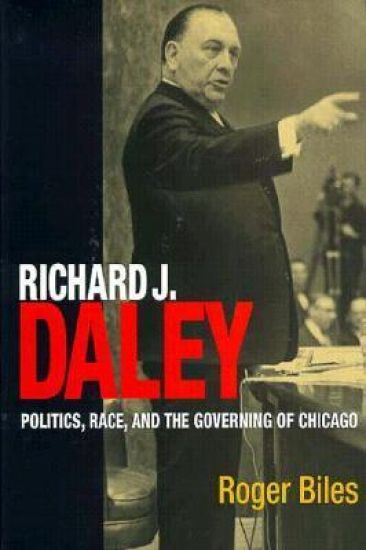
From his first election in 1955 to 1976, Mayor Richard J. Daley dominated Chicago's political landscape. A product of the Irish Catholic working class, Daley never lost touch with his roots as he rose through the Democratic Party machine-whose workings he perfected-to become a powerful and enduring political figure. The story of Daley is also the story of Chicago. Faced with issues confronting many American cities in the twentieth century-civil rights, integration, race riots, fiscal crisis, housing, suburban flight, urban renewal-Daley conducted Chicago's business with a steadfast resolve to withstand the many changes that threatened to engulf his city. Richard J. Daley portrays one of the most prominent American mayors in a balanced perspective and sheds new light on his place in urban history.

From his first election in 1955 to 1976, Mayor Richard J. Daley dominated Chicago's political landscape. A product of the Irish Catholic working class, Daley never lost touch with his roots as he rose through the Democratic Party machine-whose workings he perfected-to become a powerful and enduring political figure. The story of Daley is also the story of Chicago. Faced with issues confronting many American cities in the twentieth century-civil rights, integration, race riots, fiscal crisis, housing, suburban flight, urban renewal-Daley conducted Chicago's business with a steadfast resolve to withstand the many changes that threatened to engulf his city. Richard J. Daley portrays one of the most prominent American mayors in a balanced perspective and sheds new light on his place in urban history.
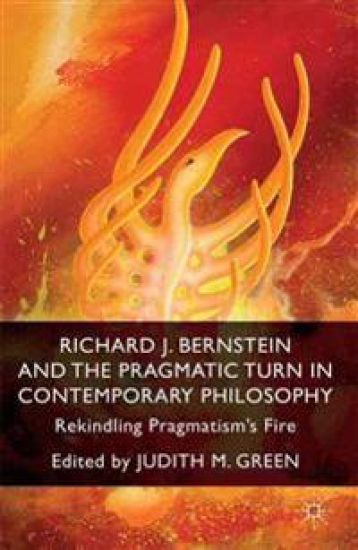
Richard J. Bernstein and the Pragmatist Turn in Contemporary Philosophy
Palgrave Macmillan
2014
sidottu
Richard J. Bernstein, who has played a leading role in "the pragmatist turn" in contemporary philosophy, replies to twelve younger critics in a lively conversation about pragmatism's past, present, and future as a guiding paradigm for philosophy and related fields.
![Handbook for Essex, Suffolk, Norfolk, and Cambridgeshire. [By Richard J. King.] With maps and plans.](/covers/9781241605322.jpg)
Handbook for Essex, Suffolk, Norfolk, and Cambridgeshire. [By Richard J. King.] With maps and plans.
Richard J King
British Library, Historical Print Editions
2011
pokkari
Title: Handbook for Essex, Suffolk, Norfolk, and Cambridgeshire. By Richard J. King.] With maps and plans.Publisher: British Library, Historical Print EditionsThe British Library is the national library of the United Kingdom. It is one of the world's largest research libraries holding over 150 million items in all known languages and formats: books, journals, newspapers, sound recordings, patents, maps, stamps, prints and much more. Its collections include around 14 million books, along with substantial additional collections of manuscripts and historical items dating back as far as 300 BC.The HISTORY OF BRITAIN & IRELAND collection includes books from the British Library digitised by Microsoft. As well as historical works, this collection includes geographies, travelogues, and titles covering periods of competition and cooperation among the people of Great Britain and Ireland. Works also explore the countries' relations with France, Germany, the Low Countries, Denmark, and Scandinavia. ++++The below data was compiled from various identification fields in the bibliographic record of this title. This data is provided as an additional tool in helping to insure edition identification: ++++ British Library King, Richard J.; 1875. lxxvi. 472 p.; 12 . 10353.h.15.

Richard J. Getty, Petitioner, V. Kentucky Bar Association. U.S. Supreme Court Transcript of Record with Supporting Pleadings
Raymond Francis Connell; Leslie G Whitmer
Gale Ecco, U.S. Supreme Court Records
2011
pokkari

Richard J. Dolwig, Petitioner, V. United States. U.S. Supreme Court Transcript of Record with Supporting Pleadings
Godfrey Isaac
Gale, U.S. Supreme Court Records
2011
pokkari

Richard J. Bernstein and the Pragmatist Turn in Contemporary Philosophy
Palgrave Macmillan
2014
nidottu
Richard J. Bernstein, who has played a leading role in "the pragmatist turn" in contemporary philosophy, replies to twelve younger critics in a lively conversation about pragmatism's past, present, and future as a guiding paradigm for philosophy and related fields.
John Brown and His Men; With Some Account of the Roads They Traveled to Reach Harper's Ferry, by Richard J. Hinton.
Richard J Hinton
University of Michigan Library
2011
pokkari

Richard J. Bernstein and the Expansion of American Philosophy
George Yancy
Lexington Books
2016
sidottu
Thinking The Plural: Richard J. Bernstein and the Expansion of American Philosophy is a text devoted to highlighting, scrutinizing, and deploying Bernstein’s philosophical research as it has intersected and impacted American and European philosophy. Collecting essays written explicitly for the volume from former students of Bernstein’s, the book shows the breadth and scope of his work while expanding key insights into new contexts and testing his work against thinkers outside the canon of his own scholarship. In light of urgent contemporary ethical and political problems, the papers collected here show the continuing relevance of Bernstein’s lifelong focus on democracy, dialogue, pragmatism, fallibilism, and pluralism. Bernstein has always contested the supposed Analytic/Continental divide, insisting on the pluralism of philosophical discourses and styles that contribute to genuine debate and save philosophy from stale academicism. This book enacts Bernstein’s pluralistic spirit by crossing traditions and generating new avenues for ongoing research. A central argument of the book is that thinkers of different backgrounds, using diverse, and even clashing methodologies, contribute to the understanding of a given problem, issue, or theme. This argument lies at the heart of Bernstein’s published works and is central to the fallibilistic pragmatism of his pedagogy. This book therefore does not rest on a single answer to a question or a univocal theme, but shows the differentiation of Bernstein’s scholarship through the extension of pluralism into territory Bernstein himself did not enter. The chapters, individually and collectively, demonstrate the force of Bernstein’s pluralism beyond mere commentary on his works. This book will be of interest to many people: 1) scholars, students and others in American philosophy who have worked on or with Richard J. Bernstein or in the tradition of American Pragmatism widely construed, 2) those interested in the intersections between American and European philosophy or between the Analytic and Continental traditions, 3) professional philosophers, philosophy students, and public intellectuals concerned with the application of theory to contemporary ethical and political problems, and 4) those interested in an introduction to the key concepts animating Bernstein’s work and their relationship to the history of philosophy.

Richard J. Bernstein and the Expansion of American Philosophy
George Yancy
Lexington Books
2019
nidottu
Thinking The Plural: Richard J. Bernstein and the Expansion of American Philosophy is a text devoted to highlighting, scrutinizing, and deploying Bernstein’s philosophical research as it has intersected and impacted American and European philosophy. Collecting essays written explicitly for the volume from former students of Bernstein’s, the book shows the breadth and scope of his work while expanding key insights into new contexts and testing his work against thinkers outside the canon of his own scholarship. In light of urgent contemporary ethical and political problems, the papers collected here show the continuing relevance of Bernstein’s lifelong focus on democracy, dialogue, pragmatism, fallibilism, and pluralism. Bernstein has always contested the supposed Analytic/Continental divide, insisting on the pluralism of philosophical discourses and styles that contribute to genuine debate and save philosophy from stale academicism. This book enacts Bernstein’s pluralistic spirit by crossing traditions and generating new avenues for ongoing research. A central argument of the book is that thinkers of different backgrounds, using diverse, and even clashing methodologies, contribute to the understanding of a given problem, issue, or theme. This argument lies at the heart of Bernstein’s published works and is central to the fallibilistic pragmatism of his pedagogy. This book therefore does not rest on a single answer to a question or a univocal theme, but shows the differentiation of Bernstein’s scholarship through the extension of pluralism into territory Bernstein himself did not enter. The chapters, individually and collectively, demonstrate the force of Bernstein’s pluralism beyond mere commentary on his works. This book will be of interest to many people: 1) scholars, students and others in American philosophy who have worked on or with Richard J. Bernstein or in the tradition of American Pragmatism widely construed, 2) those interested in the intersections between American and European philosophy or between the Analytic and Continental traditions, 3) professional philosophers, philosophy students, and public intellectuals concerned with the application of theory to contemporary ethical and political problems, and 4) those interested in an introduction to the key concepts animating Bernstein’s work and their relationship to the history of philosophy.

Budapest: Photography by Richard J Jones
Richard J. Jones
Createspace Independent Publishing Platform
2014
nidottu