Kirjojen hintavertailu. Mukana 11 342 296 kirjaa ja 12 kauppaa.

Kirjahaku

Etsi kirjoja tekijän nimen, kirjan nimen tai ISBN:n perusteella.

1000 tulosta hakusanalla Richard J Goy

Florence

Florence

Richard J Goy

Anatiposi Verlag
2023
pokkari
Reprint of the original, first published in 1857. The publishing house Anatiposi publishes historical books as reprints. Due to their age, these books may have missing pages or inferior quality. Our aim is to preserve these books and make them available to the public so that they do not get lost.
Florence

Florence

Richard J Goy

Anatiposi Verlag
2023
sidottu
Reprint of the original, first published in 1857. The publishing house Anatiposi publishes historical books as reprints. Due to their age, these books may have missing pages or inferior quality. Our aim is to preserve these books and make them available to the public so that they do not get lost.
Florence

Florence

Richard J. Goy

Yale University Press
2015
pokkari
Each year, millions of visitors travel to Florence to admire the architectural marvels of this famous Renaissance city. In this compact yet comprehensive volume, architect and architectural historian Richard J. Goy offers a convenient, accessible guide to the city’s piazzas, palazzos, basilicas, and other architectural points of interest, as well as pertinent historical details regarding Florence’s unique urban environment. Clearly laid out and fully illustrated, this handbook is designed around a series of expertly planned walking tours that encompass not only the city’s most admired architectural sites, but also its lesser-known gems. Maps are tailored to each walking tour and provide additional references and insights, along with introductory chapters on the city’s architectural history, urban design, and building materials and techniques. Featuring a complete bibliography, glossary of key terms, and other useful reference materials, Goy’s guide will appeal both to travelers who desire a greater architectural context and analysis than that offered by a traditional guide and to return visitors looking to rediscover Florence’s most enchanting sites.
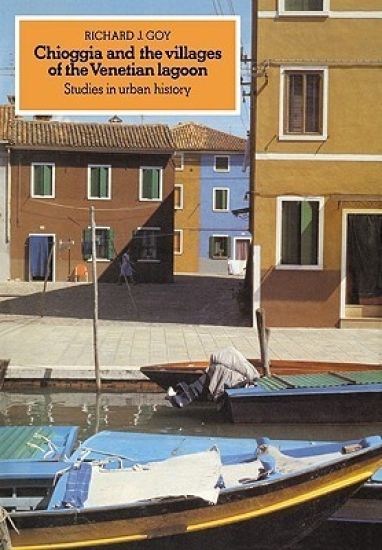
Chioggia and the Villages of the Venetian Lagoon

Chioggia and the Villages of the Venetian Lagoon

Richard J. Goy

Cambridge University Press
2008
pokkari
This 1985 book is the study of the history of a group of villages, and one large town, that lie in the lagoons that surround Venice. Although written by an architect, it is not concerned solely with architecture, but with the whole history of the settlements, their origins, their growth and development, the occupations of their inhabitants, and the reasons for their prosperity or decline over the centuries. The book will interest professional architects and historians, many of whom will be familiar with the history and environment of Venice itself. It will also attract a more general reader, and perhaps lovers of Venice, and engender a desire to explore beyond St Mark's Square and the Rialto markets, to discover or rediscover the lesser riches of these modest but fascinating communities, whose physical environment, like that of Venice itself, has changed very little over the last two hundred years.
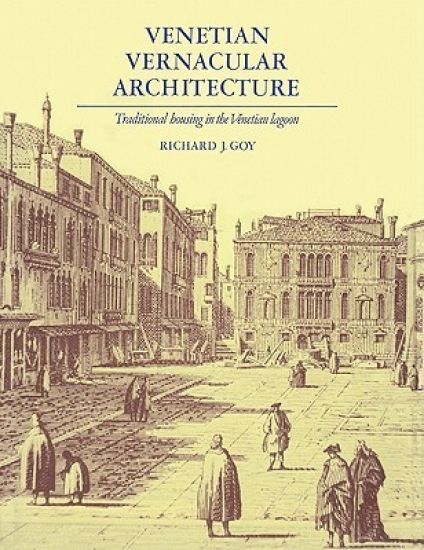
Venetian Vernacular Architecture

Venetian Vernacular Architecture

Richard J. Goy

Cambridge University Press
2011
pokkari
This book is an introduction to the vernacular or 'minor' architecture of the villages of the Venetian lagoon, excluding the historic centre of the city itself. This 1989 study provides an authoritative account of their architectural style and development and a companion volume to Dr Goy's Chioggia and the Villages of the Venetian Lagoon (1985). In a broadly based and fully illustrated discussion, the author aims to show how certain, often palatial, architectural forms found in the Venetian metropolis were modified when transferred to the outlying, 'suburban' communities of the lagoon, which were constructed in far more trying conditions when materials and skilled labour were both in short supply. The book offers an encyclopaedic guide to almost all aspects of the building process, paying particular attention to materials, motifs, decoration and the organisation of labour, and also gives valuable English translations of such primary sources as Sansovino and Palladio.
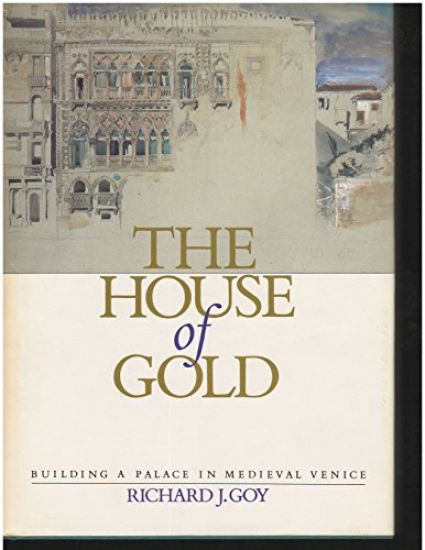
The House of Gold

The House of Gold

Richard J. Goy

Cambridge University Press
2011
pokkari
In 1406 a young Venetian nobleman, Marin Contarini, married into another ancient patrician clan. His wife's family owned an old palace on the Grand Canal. Contarini demolished the old palace and, in 1421, he began to build the Cà d'Oro, his 'House of Gold'. This 1993 book tells the history of the building of the palace over a period of nearly twenty years. After a general introduction to the city of Venice at the beginning of the quattrocento, Dr Goy discusses the background to the building of the palace. There follows a discussion of the building industry in Venice in this flourishing period, and of the functions of the three chief building crafts. In the latter half of the study, the whole building process is recreated in detail; the relationships between Contarini and his craftsmen are analysed, as is the pivotal role of Contarini himself, the architect manqué whose monument this was to become.
Chioggia and the Villages of the Venetian Lagoon

Chioggia and the Villages of the Venetian Lagoon

Richard J. Goy

Cambridge University Press
1985
sidottu
This 1985 book is the study of the history of a group of villages, and one large town, that lie in the lagoons that surround Venice. Although written by an architect, it is not concerned solely with architecture, but with the whole history of the settlements, their origins, their growth and development, the occupations of their inhabitants, and the reasons for their prosperity or decline over the centuries. The book will interest professional architects and historians, many of whom will be familiar with the history and environment of Venice itself. It will also attract a more general reader, and perhaps lovers of Venice, and engender a desire to explore beyond St Mark's Square and the Rialto markets, to discover or rediscover the lesser riches of these modest but fascinating communities, whose physical environment, like that of Venice itself, has changed very little over the last two hundred years.
Richard J. Daley

Richard J. Daley

Roger Biles

Northern Illinois University Press
1995
sidottu
From his first election in 1955 to 1976, Mayor Richard J. Daley dominated Chicago's political landscape. A product of the Irish Catholic working class, Daley never lost touch with his roots as he rose through the Democratic Party machine-whose workings he perfected-to become a powerful and enduring political figure. The story of Daley is also the story of Chicago. Faced with issues confronting many American cities in the twentieth century-civil rights, integration, race riots, fiscal crisis, housing, suburban flight, urban renewal-Daley conducted Chicago's business with a steadfast resolve to withstand the many changes that threatened to engulf his city. Richard J. Daley portrays one of the most prominent American mayors in a balanced perspective and sheds new light on his place in urban history.
Richard J. Daley

Richard J. Daley

Roger Biles

Northern Illinois University Press
1995
pokkari
From his first election in 1955 to 1976, Mayor Richard J. Daley dominated Chicago's political landscape. A product of the Irish Catholic working class, Daley never lost touch with his roots as he rose through the Democratic Party machine-whose workings he perfected-to become a powerful and enduring political figure. The story of Daley is also the story of Chicago. Faced with issues confronting many American cities in the twentieth century-civil rights, integration, race riots, fiscal crisis, housing, suburban flight, urban renewal-Daley conducted Chicago's business with a steadfast resolve to withstand the many changes that threatened to engulf his city. Richard J. Daley portrays one of the most prominent American mayors in a balanced perspective and sheds new light on his place in urban history.
Handbook for Essex, Suffolk, Norfolk, and Cambridgeshire. [By Richard J. King.] With maps and plans.
Title: Handbook for Essex, Suffolk, Norfolk, and Cambridgeshire. By Richard J. King.] With maps and plans.Publisher: British Library, Historical Print EditionsThe British Library is the national library of the United Kingdom. It is one of the world's largest research libraries holding over 150 million items in all known languages and formats: books, journals, newspapers, sound recordings, patents, maps, stamps, prints and much more. Its collections include around 14 million books, along with substantial additional collections of manuscripts and historical items dating back as far as 300 BC.The HISTORY OF BRITAIN & IRELAND collection includes books from the British Library digitised by Microsoft. As well as historical works, this collection includes geographies, travelogues, and titles covering periods of competition and cooperation among the people of Great Britain and Ireland. Works also explore the countries' relations with France, Germany, the Low Countries, Denmark, and Scandinavia. ++++The below data was compiled from various identification fields in the bibliographic record of this title. This data is provided as an additional tool in helping to insure edition identification: ++++ British Library King, Richard J.; 1875. lxxvi. 472 p.; 12 . 10353.h.15.
Richard J. Bernstein and the Expansion of American Philosophy
Thinking The Plural: Richard J. Bernstein and the Expansion of American Philosophy is a text devoted to highlighting, scrutinizing, and deploying Bernstein’s philosophical research as it has intersected and impacted American and European philosophy. Collecting essays written explicitly for the volume from former students of Bernstein’s, the book shows the breadth and scope of his work while expanding key insights into new contexts and testing his work against thinkers outside the canon of his own scholarship. In light of urgent contemporary ethical and political problems, the papers collected here show the continuing relevance of Bernstein’s lifelong focus on democracy, dialogue, pragmatism, fallibilism, and pluralism. Bernstein has always contested the supposed Analytic/Continental divide, insisting on the pluralism of philosophical discourses and styles that contribute to genuine debate and save philosophy from stale academicism. This book enacts Bernstein’s pluralistic spirit by crossing traditions and generating new avenues for ongoing research. A central argument of the book is that thinkers of different backgrounds, using diverse, and even clashing methodologies, contribute to the understanding of a given problem, issue, or theme. This argument lies at the heart of Bernstein’s published works and is central to the fallibilistic pragmatism of his pedagogy. This book therefore does not rest on a single answer to a question or a univocal theme, but shows the differentiation of Bernstein’s scholarship through the extension of pluralism into territory Bernstein himself did not enter. The chapters, individually and collectively, demonstrate the force of Bernstein’s pluralism beyond mere commentary on his works. This book will be of interest to many people: 1) scholars, students and others in American philosophy who have worked on or with Richard J. Bernstein or in the tradition of American Pragmatism widely construed, 2) those interested in the intersections between American and European philosophy or between the Analytic and Continental traditions, 3) professional philosophers, philosophy students, and public intellectuals concerned with the application of theory to contemporary ethical and political problems, and 4) those interested in an introduction to the key concepts animating Bernstein’s work and their relationship to the history of philosophy.
Richard J. Bernstein and the Expansion of American Philosophy
Thinking The Plural: Richard J. Bernstein and the Expansion of American Philosophy is a text devoted to highlighting, scrutinizing, and deploying Bernstein’s philosophical research as it has intersected and impacted American and European philosophy. Collecting essays written explicitly for the volume from former students of Bernstein’s, the book shows the breadth and scope of his work while expanding key insights into new contexts and testing his work against thinkers outside the canon of his own scholarship. In light of urgent contemporary ethical and political problems, the papers collected here show the continuing relevance of Bernstein’s lifelong focus on democracy, dialogue, pragmatism, fallibilism, and pluralism. Bernstein has always contested the supposed Analytic/Continental divide, insisting on the pluralism of philosophical discourses and styles that contribute to genuine debate and save philosophy from stale academicism. This book enacts Bernstein’s pluralistic spirit by crossing traditions and generating new avenues for ongoing research. A central argument of the book is that thinkers of different backgrounds, using diverse, and even clashing methodologies, contribute to the understanding of a given problem, issue, or theme. This argument lies at the heart of Bernstein’s published works and is central to the fallibilistic pragmatism of his pedagogy. This book therefore does not rest on a single answer to a question or a univocal theme, but shows the differentiation of Bernstein’s scholarship through the extension of pluralism into territory Bernstein himself did not enter. The chapters, individually and collectively, demonstrate the force of Bernstein’s pluralism beyond mere commentary on his works. This book will be of interest to many people: 1) scholars, students and others in American philosophy who have worked on or with Richard J. Bernstein or in the tradition of American Pragmatism widely construed, 2) those interested in the intersections between American and European philosophy or between the Analytic and Continental traditions, 3) professional philosophers, philosophy students, and public intellectuals concerned with the application of theory to contemporary ethical and political problems, and 4) those interested in an introduction to the key concepts animating Bernstein’s work and their relationship to the history of philosophy.