Kirjojen hintavertailu. Mukana 11 244 527 kirjaa ja 12 kauppaa.

Kirjahaku

Etsi kirjoja tekijän nimen, kirjan nimen tai ISBN:n perusteella.

1000 tulosta hakusanalla Richard J. Coley

Where is Stephanie Lawrence?: 2nd Edition

Where is Stephanie Lawrence?: 2nd Edition

Richard J. Coley

Createspace Independent Publishing Platform
2017
nidottu
Ryan Clark, an average guy who has his world thrown into a chaotic and dangerous place.On finding a discarded I.D badge of a beautiful girl called Stephanie Lawrence, he decides to try and return it in person in the hope of meeting her. From that moment his life takes an unexpected turn. Discovering the girl is missing he sets out to try and find her. Using only his wits, skills of computer hacking and his determination, he embarks on a potentially life threatening adventure. Will that be enough to find the girl and keep them both alive? Who are the men in the black van? Who is the mysterious man in the hat? and where is Stephanie Lawrence?
Me, Governor?

Me, Governor?

Richard J. Codey

Rutgers University Press
2011
sidottu
And so, a new chapter in the life of Richard J. Codey, an undertaker's son born and bred in the Garden State, began on the night of August 12, 2004--he knew from that point his life would never be the same . . . and it hasn't been. His memoir is a breezy, humorous, perceptive, and candid chronicle of local and state government from a man who lived among political movers and shakers for more than three decades. Codey became governor of New Jersey, succeeding James McGreevey, who resigned following a homosexual affair--a shattering scandal and set of circumstances that were bizarre, even for the home state of the Sopranos. At once a political autobiography, filled with lively, incisive anecdotes that record how Codey restored respectability and set a record for good politics and good government in a state so often tarnished, this is also the story about a man and his family.
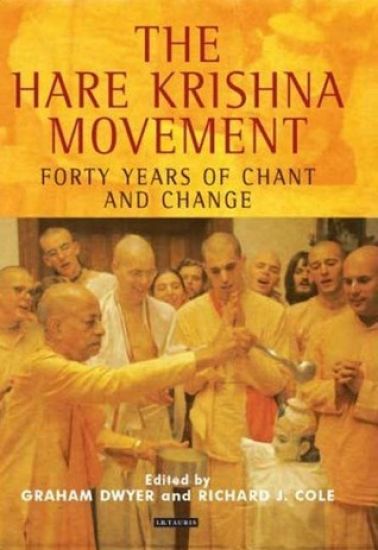
The Hare Krishna Movement

The Hare Krishna Movement

Dwyer Graham; Cole Richard J.

I.B. Tauris
2007
sidottu
The Hare Krishna Movement is popularly associated with groups of chanting, saffron-robed followers, whose colourful appearance on the streets of western cities became increasingly commonplace after the Movement's emergence in 1965. But there is much more to the Krishna phenomenon than simply its bands of singing and dancing adherents. This groundbreaking book focuses for the first time on what is currently taking place inside the Hare Krishna Movement, and examines the changes and developments that have shaped it over the past forty years. The essays offer an unparalleled overview of the International Society for Krishna Consciousness (ISKCON), and explore a wide range of topical issues and themes. These include: the politics and history of the Movement; membership patterns; recruitment strategies; pedagogical and social factors; the importance of dreams and ritual; and ISKCON's articulation of traditional theology in the context of the Movement's evolution. The result is a book that will be essential reading for scholars and students of religion in the modern world, and which explains in full how this fascinating Hindu devotional tradition continues to flourish in the land of its origin - India - as well as in the West.
ENACTing Change

ENACTing Change

Kathleen Cole; Robert W. Glover; Richard J. Meagher; Katharine A. Owens

Brandeis University Press
2025
nidottu
Explains the ENACT model of student civic engagement, empowers instructors to implement it, and shows them how to assess its impact. ENACT: The Educational Network for Active Civic Transformation aims to teach college students about democracy through engagement with the state legislative process. Built on the values of knowledge, cooperation, justice, and integrity, ENACT is a national, intercollegiate nonpartisan network. The program empowers students to be active participants in democratic processes by connecting with policymakers and community organizations, conducting research and analysis, and informing public policy with evidence and expertise. ENACTing Change introduces teachers to the philosophy and practice of the ENACT model—which includes workshops, courses, an online network, as well as pilot projects and other initiatives—while providing detailed guidance on how to incorporate the model into their courses, regardless of discipline or educational settings. The book offers instructors recommendations for developing and teaching courses that engage in state-level policy advocacy with a focus on learning outcomes. ENACTing Change takes instructors through each step of the course design process, from how to build the relationships needed to teach the class to the next steps for students to work in the community after ENACT.
ENACTing Change

ENACTing Change

Kathleen Cole; Robert W. Glover; Richard J. Meagher; Katharine A. Owens

Brandeis University Press
2025
sidottu
Explains the ENACT model of student civic engagement, empowers instructors to implement it, and shows them how to assess its impact. ENACT: The Educational Network for Active Civic Transformation aims to teach college students about democracy through engagement with the state legislative process. Built on the values of knowledge, cooperation, justice, and integrity, ENACT is a national, intercollegiate nonpartisan network. The program empowers students to be active participants in democratic processes by connecting with policymakers and community organizations, conducting research and analysis, and informing public policy with evidence and expertise. ENACTing Change introduces teachers to the philosophy and practice of the ENACT model—which includes workshops, courses, an online network, as well as pilot projects and other initiatives—while providing detailed guidance on how to incorporate the model into their courses, regardless of discipline or educational settings. The book offers instructors recommendations for developing and teaching courses that engage in state-level policy advocacy with a focus on learning outcomes. ENACTing Change takes instructors through each step of the course design process, from how to build the relationships needed to teach the class to the next steps for students to work in the community after ENACT.
Richard J. Daley

Richard J. Daley

Roger Biles

Northern Illinois University Press
1995
sidottu
From his first election in 1955 to 1976, Mayor Richard J. Daley dominated Chicago's political landscape. A product of the Irish Catholic working class, Daley never lost touch with his roots as he rose through the Democratic Party machine-whose workings he perfected-to become a powerful and enduring political figure. The story of Daley is also the story of Chicago. Faced with issues confronting many American cities in the twentieth century-civil rights, integration, race riots, fiscal crisis, housing, suburban flight, urban renewal-Daley conducted Chicago's business with a steadfast resolve to withstand the many changes that threatened to engulf his city. Richard J. Daley portrays one of the most prominent American mayors in a balanced perspective and sheds new light on his place in urban history.
Richard J. Daley

Richard J. Daley

Roger Biles

Northern Illinois University Press
1995
pokkari
From his first election in 1955 to 1976, Mayor Richard J. Daley dominated Chicago's political landscape. A product of the Irish Catholic working class, Daley never lost touch with his roots as he rose through the Democratic Party machine-whose workings he perfected-to become a powerful and enduring political figure. The story of Daley is also the story of Chicago. Faced with issues confronting many American cities in the twentieth century-civil rights, integration, race riots, fiscal crisis, housing, suburban flight, urban renewal-Daley conducted Chicago's business with a steadfast resolve to withstand the many changes that threatened to engulf his city. Richard J. Daley portrays one of the most prominent American mayors in a balanced perspective and sheds new light on his place in urban history.
Handbook for Essex, Suffolk, Norfolk, and Cambridgeshire. [By Richard J. King.] With maps and plans.
Title: Handbook for Essex, Suffolk, Norfolk, and Cambridgeshire. By Richard J. King.] With maps and plans.Publisher: British Library, Historical Print EditionsThe British Library is the national library of the United Kingdom. It is one of the world's largest research libraries holding over 150 million items in all known languages and formats: books, journals, newspapers, sound recordings, patents, maps, stamps, prints and much more. Its collections include around 14 million books, along with substantial additional collections of manuscripts and historical items dating back as far as 300 BC.The HISTORY OF BRITAIN & IRELAND collection includes books from the British Library digitised by Microsoft. As well as historical works, this collection includes geographies, travelogues, and titles covering periods of competition and cooperation among the people of Great Britain and Ireland. Works also explore the countries' relations with France, Germany, the Low Countries, Denmark, and Scandinavia. ++++The below data was compiled from various identification fields in the bibliographic record of this title. This data is provided as an additional tool in helping to insure edition identification: ++++ British Library King, Richard J.; 1875. lxxvi. 472 p.; 12 . 10353.h.15.
Richard J. Bernstein and the Expansion of American Philosophy
Thinking The Plural: Richard J. Bernstein and the Expansion of American Philosophy is a text devoted to highlighting, scrutinizing, and deploying Bernstein’s philosophical research as it has intersected and impacted American and European philosophy. Collecting essays written explicitly for the volume from former students of Bernstein’s, the book shows the breadth and scope of his work while expanding key insights into new contexts and testing his work against thinkers outside the canon of his own scholarship. In light of urgent contemporary ethical and political problems, the papers collected here show the continuing relevance of Bernstein’s lifelong focus on democracy, dialogue, pragmatism, fallibilism, and pluralism. Bernstein has always contested the supposed Analytic/Continental divide, insisting on the pluralism of philosophical discourses and styles that contribute to genuine debate and save philosophy from stale academicism. This book enacts Bernstein’s pluralistic spirit by crossing traditions and generating new avenues for ongoing research. A central argument of the book is that thinkers of different backgrounds, using diverse, and even clashing methodologies, contribute to the understanding of a given problem, issue, or theme. This argument lies at the heart of Bernstein’s published works and is central to the fallibilistic pragmatism of his pedagogy. This book therefore does not rest on a single answer to a question or a univocal theme, but shows the differentiation of Bernstein’s scholarship through the extension of pluralism into territory Bernstein himself did not enter. The chapters, individually and collectively, demonstrate the force of Bernstein’s pluralism beyond mere commentary on his works. This book will be of interest to many people: 1) scholars, students and others in American philosophy who have worked on or with Richard J. Bernstein or in the tradition of American Pragmatism widely construed, 2) those interested in the intersections between American and European philosophy or between the Analytic and Continental traditions, 3) professional philosophers, philosophy students, and public intellectuals concerned with the application of theory to contemporary ethical and political problems, and 4) those interested in an introduction to the key concepts animating Bernstein’s work and their relationship to the history of philosophy.
Richard J. Bernstein and the Expansion of American Philosophy
Thinking The Plural: Richard J. Bernstein and the Expansion of American Philosophy is a text devoted to highlighting, scrutinizing, and deploying Bernstein’s philosophical research as it has intersected and impacted American and European philosophy. Collecting essays written explicitly for the volume from former students of Bernstein’s, the book shows the breadth and scope of his work while expanding key insights into new contexts and testing his work against thinkers outside the canon of his own scholarship. In light of urgent contemporary ethical and political problems, the papers collected here show the continuing relevance of Bernstein’s lifelong focus on democracy, dialogue, pragmatism, fallibilism, and pluralism. Bernstein has always contested the supposed Analytic/Continental divide, insisting on the pluralism of philosophical discourses and styles that contribute to genuine debate and save philosophy from stale academicism. This book enacts Bernstein’s pluralistic spirit by crossing traditions and generating new avenues for ongoing research. A central argument of the book is that thinkers of different backgrounds, using diverse, and even clashing methodologies, contribute to the understanding of a given problem, issue, or theme. This argument lies at the heart of Bernstein’s published works and is central to the fallibilistic pragmatism of his pedagogy. This book therefore does not rest on a single answer to a question or a univocal theme, but shows the differentiation of Bernstein’s scholarship through the extension of pluralism into territory Bernstein himself did not enter. The chapters, individually and collectively, demonstrate the force of Bernstein’s pluralism beyond mere commentary on his works. This book will be of interest to many people: 1) scholars, students and others in American philosophy who have worked on or with Richard J. Bernstein or in the tradition of American Pragmatism widely construed, 2) those interested in the intersections between American and European philosophy or between the Analytic and Continental traditions, 3) professional philosophers, philosophy students, and public intellectuals concerned with the application of theory to contemporary ethical and political problems, and 4) those interested in an introduction to the key concepts animating Bernstein’s work and their relationship to the history of philosophy.