One day I happen to be talking to friend of mine whom I worked with. He said to me, "You appeared to have had a very interesting life," another person said, "You should write your memoirs." That made me start thinking about writing a book of our family Genealogy, which Catherine and I became so involved with after arriving in Illinois in May of 1972. I wanted to show and average man's life, my life, and the times that I lived in. The struggles, dreams, good times, sad times, and love in my life. Also the love that God had given me for the music that is so dear to my heart. And also to show a little of the lives of people who belonged to a different time (19th century). My understanding of the happenings and situations during their times
Cralle, Richard K. (Richard Kenner), 1800-1864 Editor of the works of John C. Calhoun..... John Caldwell Calhoun ( March 18, 1782 - March 31, 1850) was an American statesman and political theorist from South Carolina, and the seventh Vice President of the United States from 1825 to 1832. He is remembered for strongly defending slavery and for advancing the concept of minority rights in politics, which he did in the context of defending white Southern interests from perceived Northern threats. He began his political career as a nationalist, modernizer, and proponent of a strong national government and protective tariffs. By the late 1820s, his views reversed and he became a leading proponent of states' rights, limited government, nullification, and opposition to high tariffs-he saw Northern acceptance of these policies as the only way to keep the South in the Union. His beliefs and warnings heavily influenced the South's secession from the Union in 1860-1861. Calhoun began his political career with election to the House of Representatives in 1810. As a prominent leader of the war hawk faction, Calhoun strongly supported the War of 1812 to defend American honor against British infractions of American independence and neutrality during the Napoleonic Wars. He then served as Secretary of War under President James Monroe, and in this position reorganized and modernized the War Department. Calhoun was a candidate for the presidency in the 1824 election. After failing to gain support, he let his name be put forth as a candidate for vice president. The Electoral College elected Calhoun for vice president by an overwhelming majority. He served under John Quincy Adams and continued under Andrew Jackson, who defeated Adams in the election of 1828. Calhoun had a difficult relationship with Jackson primarily due to the Nullification Crisis and the Petticoat affair. In contrast with his previous nationalism, Calhoun vigorously supported South Carolina's right to nullify federal tariff legislation he believed unfairly favored the North, putting him into conflict with unionists such as Jackson. In 1832, with only a few months remaining in his second term, he resigned as vice president and entered the Senate. He sought the Democratic nomination for the presidency in 1844, but lost to surprise nominee James K. Polk, who went on to become president. Calhoun served as Secretary of State under John Tyler from 1844 to 1845. As Secretary of State, he supported the annexation of Texas as a means to extend the slave power, and helped settle the Oregon boundary dispute with Britain. He then returned to the Senate, where he opposed the Mexican-American War, the Wilmot Proviso, and the Compromise of 1850 before his death in 1850. Calhoun often served as a virtual party-independent who variously aligned as needed with Democrats and Whigs. Later in life, Calhoun became known as the "cast-iron man" for his rigid defense of white Southern beliefs and practices. His concept of republicanism emphasized approval of slavery and minority rights, as particularly embodied by the Southern states-he owned "dozens of slaves in Fort Hill, South Carolina". Calhoun also asserted that slavery, rather than being a "necessary evil", was a "positive good", benefiting both slaves and slave owners.To protect minority rights against majority rule, he called for a concurrent majority whereby the minority could sometimes block proposals that it felt infringed on their liberties. To this end, Calhoun supported states' rights and nullification, through which states could declare null and void federal laws that they viewed as unconstitutional. Calhoun was one of the "Great Triumvirate" or the "Immortal Trio" of Congressional leaders, along with his Congressional colleagues Daniel Webster and Henry Clay. In 1957, a Senate Committee headed by Senator John F. Kennedy selected Calhoun as one of the five greatest United States Senators of all time.....................
Philosopher Blaise Pascal famously insisted that it was better to wager belief in God than to risk eternal damnation. More recently, Richard Kearney has offered a wager of his own—the anatheistic wager, or return to God after the death of God. In this volume, an international group of contributors consider what Kearney's spiritual wager means. They question what is at stake with such a wager and what anatheism demands of the self and of others. The essays explore the dynamics of religious anatheistic performativity, its demarcations and limits, and its motives. A recent interview with Kearney focuses on crucial questions about philosophy, theology, and religious commitment. As a whole, this volume interprets and challenges Kearney's philosophy of religion and its radical impact on contemporary views of God.
A member of the celebrated Magnum agency, Richard Kalvar has spent more than four decades building up a diverse body of work that is characterized by a finely honed sense of observation. Born in Brooklyn, New York, in 1944, he has travelled all over the world, capturing fleeting details and moments of absurdity. His images suggest glimpses into untold stories, reflecting an idiosyncratic approach to the act and practice of photography.
Richard Kilvington was an obscure fourteenth-century philosopher whose Sophismata deal with a series of logic-linguistic conundrums of a sort which featured extensively in philosophical discussions of this period. Originally published in 1990, this was the first ever translation or edition of his work. As well as an introduction to Kilvington's work, the editors provide a detailed commentary. This edition will prove of considerable interest to historians of medieval philosophy who will realise from the evidence presented here that Kilvington deserves to be studied just as seriously as Duns Scotus or William of Ockham.
Richard Kilvington was an obscure fourteenth-century philosopher whose Sophismata deal with a series of logic-linguistic conundrums of a sort which featured extensively in philosophical discussions of this period. This is the first ever translation or edition of his work. As well as an introduction to Kilvington's work, the editors provide a detailed commentary. This edition will prove of considerable interest to historians of medieval philosophy who will realise from the evidence presented here that Kilvington deserves to be studied just as seriously as Duns Scotus or William of Ockham.
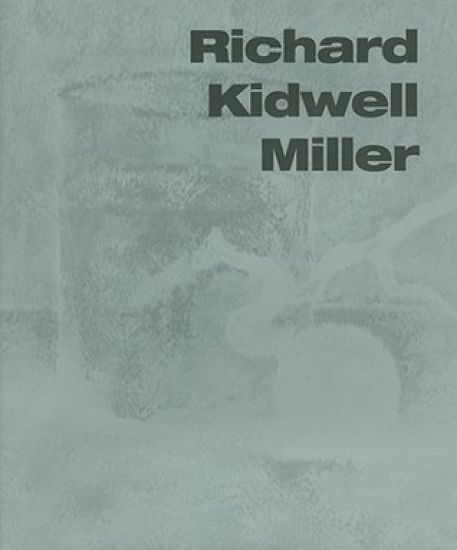
With striking contrasts, bold colors, and powerful textures and lines, Richard Kidwell Miller’s art is abstract, yet integrated and powerful, while sensuous. Born in the coal-mining region of Fairmont, West Virginia during the Great Depression, Miller displayed artistic talent as a young boy, holding his first solo exhibition by the age of sixteen. As his artistic training progressed, his paintings took on an array of subjects and mediums. He explored realism, abstraction, collage, portraiture, still life and constructed works. The scale of his work varied as well, as he produced huge still life compositions that challenge the very nature of the subject and exquisitely layered canvas on canvas and wood on canvas structures that cross the border between traditional painting and relief sculpture.In 2004, Richard Kidwell Miller’s work was displayed at West Virginia University. This lushly illustrated book encompasses that exhibit, as curator John A. Cuthbert narrates Miller’s development as a student, artist, and teacher. With over twenty-five beautifully reproduced paintings, spanning over forty years of artistic development, this collection brings attention to the life and work of a contemporary artist.
This work has been selected by scholars as being culturally important and is part of the knowledge base of civilization as we know it.This work is in the public domain in the United States of America, and possibly other nations. Within the United States, you may freely copy and distribute this work, as no entity (individual or corporate) has a copyright on the body of the work.Scholars believe, and we concur, that this work is important enough to be preserved, reproduced, and made generally available to the public. To ensure a quality reading experience, this work has been proofread and republished using a format that seamlessly blends the original graphical elements with text in an easy-to-read typeface.We appreciate your support of the preservation process, and thank you for being an important part of keeping this knowledge alive and relevant.
Richard Koppe: Kalamazoo Institute Of Arts, No. 6 is a book that showcases the work of American graphic designer Richard Koppe. The book is published by the Kalamazoo Institute of Arts and is the sixth in a series of publications that feature the work of artists who have exhibited at the institute. The book contains a comprehensive collection of Koppe's work, including his iconic poster designs, album covers, book covers, and illustrations. It also includes essays by design experts and art historians that provide insights into Koppe's life, work, and influence on the field of graphic design. Koppe was a prolific designer who worked in the mid-20th century and was known for his bold use of color, typography, and geometric shapes. He designed for clients in various industries, including music, publishing, and advertising. Some of his most famous works include the cover of Miles Davis' album ""Kind of Blue"" and the poster for the 1964 World's Fair in New York City. Overall, Richard Koppe: Kalamazoo Institute Of Arts, No. 6 is a must-have for anyone interested in the history of graphic design and the work of one of its most influential practitioners.This scarce antiquarian book is a facsimile reprint of the old original and may contain some imperfections such as library marks and notations. Because we believe this work is culturally important, we have made it available as part of our commitment for protecting, preserving, and promoting the world's literature in affordable, high quality, modern editions, that are true to their original work.
The 18th century was a wealth of knowledge, exploration and rapidly growing technology and expanding record-keeping made possible by advances in the printing press. In its determination to preserve the century of revolution, Gale initiated a revolution of its own: digitization of epic proportions to preserve these invaluable works in the largest archive of its kind. Now for the first time these high-quality digital copies of original 18th century manuscripts are available in print, making them highly accessible to libraries, undergraduate students, and independent scholars.This collection reveals the history of English common law and Empire law in a vastly changing world of British expansion. Dominating the legal field is the Commentaries of the Law of England by Sir William Blackstone, which first appeared in 1765. Reference works such as almanacs and catalogues continue to educate us by revealing the day-to-day workings of society.++++The below data was compiled from various identification fields in the bibliographic record of this title. This data is provided as an additional tool in helping to insure edition identification: ++++British LibraryT091091Possibly intended to accompany vol.1 of the second edition, published by Elmsly in London, 1794. The errata leaf has 57 lines of print.Dublin: printed by R. E. Mercier and Co. for P. Elmsly, London, 1796. xvii, 1],529, 1]p., tables; 8
The 18th century was a wealth of knowledge, exploration and rapidly growing technology and expanding record-keeping made possible by advances in the printing press. In its determination to preserve the century of revolution, Gale initiated a revolution of its own: digitization of epic proportions to preserve these invaluable works in the largest archive of its kind. Now for the first time these high-quality digital copies of original 18th century manuscripts are available in print, making them highly accessible to libraries, undergraduate students, and independent scholars.Medical theory and practice of the 1700s developed rapidly, as is evidenced by the extensive collection, which includes descriptions of diseases, their conditions, and treatments. Books on science and technology, agriculture, military technology, natural philosophy, even cookbooks, are all contained here.++++The below data was compiled from various identification fields in the bibliographic record of this title. This data is provided as an additional tool in helping to insure edition identification: ++++British LibraryT091085Possibly issued with a 12-page 'Index to Mr. Kirwan's Mineralogy'.London: printed for P. Elmsly, 1784. 2], xviii,412p.; 8
The 18th century was a wealth of knowledge, exploration and rapidly growing technology and expanding record-keeping made possible by advances in the printing press. In its determination to preserve the century of revolution, Gale initiated a revolution of its own: digitization of epic proportions to preserve these invaluable works in the largest archive of its kind. Now for the first time these high-quality digital copies of original 18th century manuscripts are available in print, making them highly accessible to libraries, undergraduate students, and independent scholars.Medical theory and practice of the 1700s developed rapidly, as is evidenced by the extensive collection, which includes descriptions of diseases, their conditions, and treatments. Books on science and technology, agriculture, military technology, natural philosophy, even cookbooks, are all contained here.++++The below data was compiled from various identification fields in the bibliographic record of this title. This data is provided as an additional tool in helping to insure edition identification: ++++British LibraryT080578Dublin: George Bonham, printer to the Royal Irish Academy, 1799. 137, 1]p., table; 4
The 18th century was a wealth of knowledge, exploration and rapidly growing technology and expanding record-keeping made possible by advances in the printing press. In its determination to preserve the century of revolution, Gale initiated a revolution of its own: digitization of epic proportions to preserve these invaluable works in the largest archive of its kind. Now for the first time these high-quality digital copies of original 18th century manuscripts are available in print, making them highly accessible to libraries, undergraduate students, and independent scholars.Delve into what it was like to live during the eighteenth century by reading the first-hand accounts of everyday people, including city dwellers and farmers, businessmen and bankers, artisans and merchants, artists and their patrons, politicians and their constituents. Original texts make the American, French, and Industrial revolutions vividly contemporary.++++The below data was compiled from various identification fields in the bibliographic record of this title. This data is provided as an additional tool in helping to insure edition identification: ++++British LibraryT124053A reissue of the first edition of 1745, entitled 'Campaigns of King William and Queen Anne', with a cancel titlepage and the addition of a preface leaf.London: printed for J. Millan, 1747. iv, 2],140p., plates: maps; 8