Kirjojen hintavertailu. Mukana 11 244 527 kirjaa ja 12 kauppaa.

Kirjahaku

Etsi kirjoja tekijän nimen, kirjan nimen tai ISBN:n perusteella.

1000 tulosta hakusanalla Richard K. Morris

John P.Holland, 1841-1914

John P.Holland, 1841-1914

Richard K. Morris

University of South Carolina Press
1998
nidottu
A classic of maritime history updated with new information, John P. Holland, 1841–1914 is the sole full-length biography of the man whose technological innovations led to the launching of the first modern submarine in May 1897. While David Bushnell may be considered the father of the submarine, Holland devised the technical improvements that enabled a craft to operate equally effectively whether submerged or surfaced, and it was his design that the U.S. Navy purchased in 1900. Richard Knowles Morris draws on diaries and papers left by his grandfather, a longtime friend of Holland and an superintending engineer of the Holland Torpedo Boat Company (later Electric Boat), to trace the inventor's eventful life. Morris recounts Holland's early years, his frustration in dealing with the Fenians and the U.S. Navy, and his company's negotiations with Japan, Great Britain, and Russia for Holland boats. Of particular interest is the selection of photographs that offer an enlightening pictorial of early submarine history.
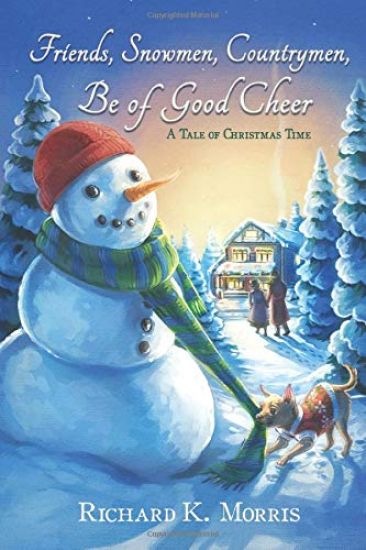
Friends, Snowmen, Countrymen, Be of Good Cheer: A Tale of Christmas Time
Charles Dickens meets The Greatest Generation in a charming Christmas story in the tradition of classic American screwball comedy.With a multitude of memorable characters, a sense of place as deep as the knee-high snow, and a heartwarming story filled with laughter, action, and romance, get ready to enjoy Friends, Snowmen, Countrymen, Be of Good Cheer.Taking place in a snowy midwestern town on Christmas Eve and Christmas day, Friends, Snowman, Countrymen, Be of Good Cheer takes you back to December 1940, when much of the world is at war, while in the United States, citizens celebrate what will be their last Christmas of peace for five years.If you want a story that will transport you to a Christmas without too much hustle and bustle, and fill you with a sense of the good cheer of family, friends and neighbors, you will want to spend time in the pages of Friend, Snowmen, Countrymen, Be of Good Cheer. A tale of Christmas Time.Without giving away any spoilers, the plot starts as visiting Arizonian Phil Wellbright tries to do a good deed by building a snowman for the little girl next door on Christmas Eve. Poor Phil thinks the little girl is terribly sick, that her mother has been in an accident, and that her father has abandoned them. So earnest is his intention to do something to bring cheer to the child, that Phil's friend Frankie decides to help build not just one snowman, but a whole snow-family What happens next is pure comic delight as the boys pursue their mission with admirable and zany determination. The beautiful, full color cover artwork and inside sketches are by the wonderful illustrator Anne Zimanski. http: //www.annezimanski.com/Besides the Snow-family, there are plenty of other Christmas and wintertime staples to add to your pleasure. Snowball fights, Christmas cookies, Christmas carols and ice skating to name just a few. With Petey the faithful dog, and a perky Chihuahua named Regalo plus a host of friends and neighbors, Friends, Snowmen, Countrymen, Be of Good Cheer, is a Christmas story you will want to read yourself, and to give to the loved ones on your list.Order your copies of Friends, Snowmen Countrymen, Be of Good Cheer. A tale of Christmas Time by Richard K. Morris for Christmas giving and enjoyment today at http: //amazon.com/author/morris
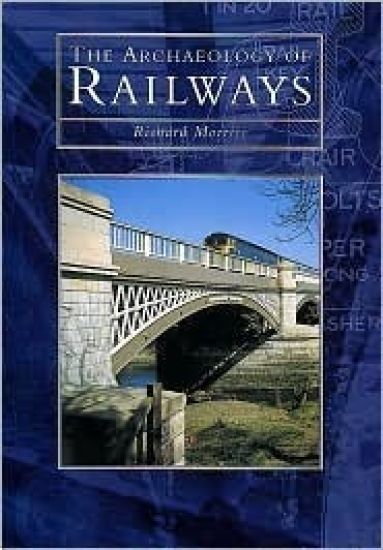
The Archaeology of Railways

The Archaeology of Railways

Richard K. Morriss

NPI Media Group
1999
sidottu
From waggon-ways to the channel tunnel, and from horse-drawn passenger traffic to electrification, this book examines every aspect of the railways'' history. It includes all types of railways and the history of the tracks and railway buildings.'
The Archaeology of Railways

The Archaeology of Railways

Richard K. Morriss

NPI Media Group
2003
nidottu
From wagon-ways to the channel tunnel, and from horse-drawn passenger traffic to electrification, this book examines every aspect of railway history. It includes all types of railways and the history of the tracks and railway buildings.
Centennial Year Number

Centennial Year Number

James K. Feibleman; Paul G. Morrison; Andrew J. Reck; Harold N. Lee; Edward G. Ballard; Richard L. Barber; Carl H. Hamburg; Robert C. Whittemore

Kluwer Academic Publishers
1959
nidottu
The year 1959 has been called The Centennial Year in view of the anniversary of the publication of The Origin of SPecies and the centenary of the births of many who later contributed much to the philosophy of the recent past, such as Samuel Alexander, Henri Bergson, John Dewey and Edmund Husser!' The essays in the present volume which are on subjects germane to any of the anniversaries celebrated this year have been placed first in the present volume. CENTENNIAL YEAR NUMBER DARWIN AND SCIENTIFIC METHOD JAMES K. FEIBLEMAN The knowledge of methodology, which is acquired by means of formal education in the various disciplines, is usually com­ municated in abstract form. Harmony and counterpoint in musical composition, the axiomatic method of mathematics, the established laws in physics or in chemistry, the principles of mathematics - all these are taught abstractly. It is only when we come to the method of discovery in experimental science that we find abstract communication failing. The most recent as well as the greatest successes of the experimental sciences have been those scored in modern times, but we know as yet of no abstract way to teach the scientific method. The astonishing pedagogical fact is that this method has never been abstracted and set forth in a fashion which would permit of its easy acquisition. Here is an astonishing oversight indeed, for which the very difficulty of the topic may itself be responsible.
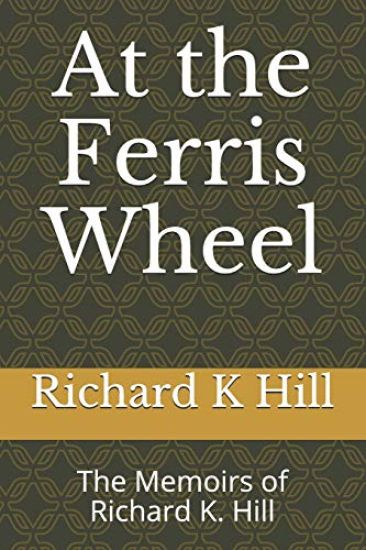
At the Ferris Wheel: The Memoirs of Richard K. Hill

At the Ferris Wheel: The Memoirs of Richard K. Hill

Richard K. Hill

Independently Published
2018
nidottu
One day I happen to be talking to friend of mine whom I worked with. He said to me, "You appeared to have had a very interesting life," another person said, "You should write your memoirs." That made me start thinking about writing a book of our family Genealogy, which Catherine and I became so involved with after arriving in Illinois in May of 1972. I wanted to show and average man's life, my life, and the times that I lived in. The struggles, dreams, good times, sad times, and love in my life. Also the love that God had given me for the music that is so dear to my heart. And also to show a little of the lives of people who belonged to a different time (19th century). My understanding of the happenings and situations during their times
A disquisition on government. (Politics and government): By: John C. Calhoun, edited By: Richard K. Cralle (1800-1864).
Cralle, Richard K. (Richard Kenner), 1800-1864 Editor of the works of John C. Calhoun..... John Caldwell Calhoun ( March 18, 1782 - March 31, 1850) was an American statesman and political theorist from South Carolina, and the seventh Vice President of the United States from 1825 to 1832. He is remembered for strongly defending slavery and for advancing the concept of minority rights in politics, which he did in the context of defending white Southern interests from perceived Northern threats. He began his political career as a nationalist, modernizer, and proponent of a strong national government and protective tariffs. By the late 1820s, his views reversed and he became a leading proponent of states' rights, limited government, nullification, and opposition to high tariffs-he saw Northern acceptance of these policies as the only way to keep the South in the Union. His beliefs and warnings heavily influenced the South's secession from the Union in 1860-1861. Calhoun began his political career with election to the House of Representatives in 1810. As a prominent leader of the war hawk faction, Calhoun strongly supported the War of 1812 to defend American honor against British infractions of American independence and neutrality during the Napoleonic Wars. He then served as Secretary of War under President James Monroe, and in this position reorganized and modernized the War Department. Calhoun was a candidate for the presidency in the 1824 election. After failing to gain support, he let his name be put forth as a candidate for vice president. The Electoral College elected Calhoun for vice president by an overwhelming majority. He served under John Quincy Adams and continued under Andrew Jackson, who defeated Adams in the election of 1828. Calhoun had a difficult relationship with Jackson primarily due to the Nullification Crisis and the Petticoat affair. In contrast with his previous nationalism, Calhoun vigorously supported South Carolina's right to nullify federal tariff legislation he believed unfairly favored the North, putting him into conflict with unionists such as Jackson. In 1832, with only a few months remaining in his second term, he resigned as vice president and entered the Senate. He sought the Democratic nomination for the presidency in 1844, but lost to surprise nominee James K. Polk, who went on to become president. Calhoun served as Secretary of State under John Tyler from 1844 to 1845. As Secretary of State, he supported the annexation of Texas as a means to extend the slave power, and helped settle the Oregon boundary dispute with Britain. He then returned to the Senate, where he opposed the Mexican-American War, the Wilmot Proviso, and the Compromise of 1850 before his death in 1850. Calhoun often served as a virtual party-independent who variously aligned as needed with Democrats and Whigs. Later in life, Calhoun became known as the "cast-iron man" for his rigid defense of white Southern beliefs and practices. His concept of republicanism emphasized approval of slavery and minority rights, as particularly embodied by the Southern states-he owned "dozens of slaves in Fort Hill, South Carolina". Calhoun also asserted that slavery, rather than being a "necessary evil", was a "positive good", benefiting both slaves and slave owners.To protect minority rights against majority rule, he called for a concurrent majority whereby the minority could sometimes block proposals that it felt infringed on their liberties. To this end, Calhoun supported states' rights and nullification, through which states could declare null and void federal laws that they viewed as unconstitutional. Calhoun was one of the "Great Triumvirate" or the "Immortal Trio" of Congressional leaders, along with his Congressional colleagues Daniel Webster and Henry Clay. In 1957, a Senate Committee headed by Senator John F. Kennedy selected Calhoun as one of the five greatest United States Senators of all time.....................
A disquisition on government. By: John C. Calhoun and edited By: Richard K. Cralle

A disquisition on government. By: John C. Calhoun and edited By: Richard K. Cralle

John C. Calhoun

Createspace Independent Publishing Platform
2017
nidottu
John Caldwell Calhoun March 18, 1782 - March 31, 1850) was an American statesman and political theorist from South Carolina, and the seventh Vice President of the United States from 1825 to 1832. He is remembered for strongly defending slavery and for advancing the concept of minority rights in politics, which he did in the context of defending white Southern interests from perceived Northern threats. He began his political career as a nationalist, modernizer, and proponent of a strong national government and protective tariffs. By the late 1820s, his views reversed and he became a leading proponent of states' rights, limited government, nullification, and opposition to high tariffs-he saw Northern acceptance of these policies as the only way to keep the South in the Union. His beliefs and warnings heavily influenced the South's secession from the Union in 1860-1861.
Life in Pieces

Life in Pieces

Richard K. (Author) Baer

Ebury Publishing
2008
pokkari
Although it would take time and deep, hard-won trust before any of Karen's alternated personalities presented themselves in her psychiatrist's office, over the next five years Baer would encounter seventeen distinct personalities, all of whom had been living inside Karen since she was a young child, shielding her from an otherwise unbearable life.