Kirjojen hintavertailu. Mukana 11 244 527 kirjaa ja 12 kauppaa.

Kirjahaku

Etsi kirjoja tekijän nimen, kirjan nimen tai ISBN:n perusteella.

1000 tulosta hakusanalla Richard L. Taylor

Ad Lib: A Sojourn Impromptu

Ad Lib: A Sojourn Impromptu

Richard L. Taylor

Full Quark Press, LLC
2018
nidottu
This journal records a make-it-up-as-you-go-along trip to Europe in the spring of 2017. From a "tramp steamer" crossing of the Mediterranean to a pickpocket heist in Naples, adventure abounds. Hotel reservations were made for the first night only. After that, Europe was our oyster.From the engineering triumph of Gustave Eiffel to the organic design interpretation of Antoni Gaudi to the limitless genius of Michelangelo, artistic virtuosi still sets the tone of enlightenment in Europe.
15 Of The 16 Dumbest Things I Have Ever Done In an Airplane and Why!
Antoine de Saint-Exup ry, the famed French author of The Little Prince is oft quoted - "All men dream, but not equally.""Not equally" doesn't mean that one person's dream is superior to another's. It simply suggests that we all dream within the boundaries of our individual intellect and appetites.In some geopolitical societies, deviation from the norm is scorned upon. In others it is lauded. Where do you lie on this issue?15 of the 16 offers the reader the opportunity to be your own unbiased judge, i.e., to either scorn or laud a handful of unusual circumstances as you see fit.Consequently, if this book reveals to you a little bit more about where you lie in life's challenging game of "dealer's choice," then it will satisfy a little something extra in each your and my individual ambitions.
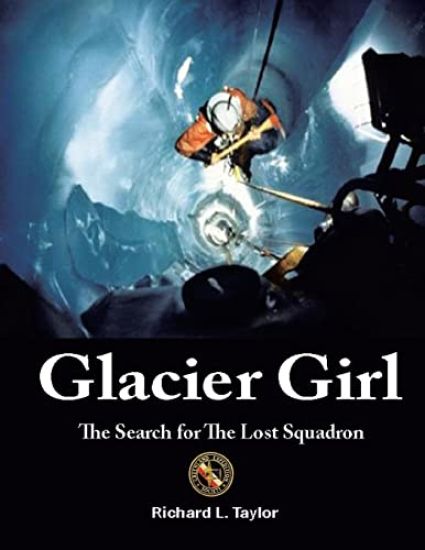
Glacier Girl

Glacier Girl

Richard L Taylor

Iuniverse
2022
pokkari
Glacier Girl: The Quest-The Prize is a memoir based on the journals of seven expeditions co-led by Richard Taylor and Pat Epps. Taylor's journals cover eleven years of the search and retrieval of the P-38 Lightning, later called Glacier Girl. On her way to war in 1942, she and seven other planes in their squadron ran out of gas and crash-landed on the Greenland ice cap. After a two-week wait, all of the pilots and crew were rescued-no one left behind. They then went back to war, and the eight planes were abandoned. Eventually, they became known as the Lost Squadron. Thirty-nine years later, in 1981, Pat and Richard heard about this aviation event and formed the Greenland Expedition Society (GES). They teamed up with a couple of other pilots and headed north to find the planes. Their ambitious plan was to put fresh gas in the tanks, attach skis, and fly as many of the fighters as they could back to the States. What greater way to store airplanes than in a giant deep freeze? As it turned out, the planes turned out to be difficult to find. The first four expeditions to the ice cap ended were conspicuous mission failures. In situ lessons in Arctic survival are not offered without startlingly high payments of personal sacrifice. On the upside, some thrilling and harrowing stories of Mother Nature exercising her unlimited fury are shared. The ice cap adage of "shovel or die" takes on new meaning. It was not until the fifth expedition, using ground-penetrating radar of a discrete frequency, that the planes were finally located. At a glacial rate they had moved more than a mile from their original location. But that wasn't the big problem. The bad news was that they were now encased in solid-blue ice, 260 feet deep in the bowels of the glacier. To melt a shaft through the ice and down to the planes, the GES, invented and built a system they called the thermal meltdown generator (TMG). In its first field application, at seventy feet deep in the glacier, the melt head lost directional control (gravity) and started heading horizontally. Henceforth, the future TMGs were affectionately called gophers. In 1990, the team returned to the glacier with a new gopher, melted a four-foot diameter shaft down to the B-17 bomber Big Stoop. They then descended down the ice shaft, melted out a hangar area around the bomber and salvaged an array of historical aviation paraphernalia-machine guns, throttle quadrants, instruments, the upper gun turret, and so on. The near impossible was accomplished. In 1992, now a little more seasoned, and with a few garlands of hard-earned achievement, they returned again with a new super gopher. Their sights were now set on retrieving at least one complete Lockheed, P-38 Lightning fighter plane. The mission started with melting five ice-shafts, closely in a row. The webs between the holes were then melted out to create a four-foot-by-twenty-foot slot in the glacier-260 feet deep. This was the right-sized opening through which they could lift large wings and fuselage sections to the surface. The airplane was then carefully deconstructed, hauled to the surface, and then delivered to the States for reassembly. It took ten years and two million dollars to put the plane back into flying condition. They called her Glacier Girl. The renovation was performed by Roy Shoffner, a GES partner in the seventh expedition. In 2002, Glacier Girl flew again and was featured in the one-hour History Channel presentation The Hunt for the Lost Squadron. Glacier Girl now flies and is the feature star attraction in airshows all over the country. Citius, altius, fortius.
Glacier Girl

Glacier Girl

Richard L Taylor

Iuniverse
2022
sidottu
Glacier Girl: The Quest-The Prize is a memoir based on the journals of seven expeditions co-led by Richard Taylor and Pat Epps. Taylor's journals cover eleven years of the search and retrieval of the P-38 Lightning, later called Glacier Girl. On her way to war in 1942, she and seven other planes in their squadron ran out of gas and crash-landed on the Greenland ice cap. After a two-week wait, all of the pilots and crew were rescued-no one left behind. They then went back to war, and the eight planes were abandoned. Eventually, they became known as the Lost Squadron. Thirty-nine years later, in 1981, Pat and Richard heard about this aviation event and formed the Greenland Expedition Society (GES). They teamed up with a couple of other pilots and headed north to find the planes. Their ambitious plan was to put fresh gas in the tanks, attach skis, and fly as many of the fighters as they could back to the States. What greater way to store airplanes than in a giant deep freeze? As it turned out, the planes turned out to be difficult to find. The first four expeditions to the ice cap ended were conspicuous mission failures. In situ lessons in Arctic survival are not offered without startlingly high payments of personal sacrifice. On the upside, some thrilling and harrowing stories of Mother Nature exercising her unlimited fury are shared. The ice cap adage of "shovel or die" takes on new meaning. It was not until the fifth expedition, using ground-penetrating radar of a discrete frequency, that the planes were finally located. At a glacial rate they had moved more than a mile from their original location. But that wasn't the big problem. The bad news was that they were now encased in solid-blue ice, 260 feet deep in the bowels of the glacier. To melt a shaft through the ice and down to the planes, the GES, invented and built a system they called the thermal meltdown generator (TMG). In its first field application, at seventy feet deep in the glacier, the melt head lost directional control (gravity) and started heading horizontally. Henceforth, the future TMGs were affectionately called gophers. In 1990, the team returned to the glacier with a new gopher, melted a four-foot diameter shaft down to the B-17 bomber Big Stoop. They then descended down the ice shaft, melted out a hangar area around the bomber and salvaged an array of historical aviation paraphernalia-machine guns, throttle quadrants, instruments, the upper gun turret, and so on. The near impossible was accomplished. In 1992, now a little more seasoned, and with a few garlands of hard-earned achievement, they returned again with a new super gopher. Their sights were now set on retrieving at least one complete Lockheed, P-38 Lightning fighter plane. The mission started with melting five ice-shafts, closely in a row. The webs between the holes were then melted out to create a four-foot-by-twenty-foot slot in the glacier-260 feet deep. This was the right-sized opening through which they could lift large wings and fuselage sections to the surface. The airplane was then carefully deconstructed, hauled to the surface, and then delivered to the States for reassembly. It took ten years and two million dollars to put the plane back into flying condition. They called her Glacier Girl. The renovation was performed by Roy Shoffner, a GES partner in the seventh expedition. In 2002, Glacier Girl flew again and was featured in the one-hour History Channel presentation The Hunt for the Lost Squadron. Glacier Girl now flies and is the feature star attraction in airshows all over the country. Citius, altius, fortius.

Managed Care and The Treatment of Chronic Illness

Managed Care and The Treatment of Chronic Illness

Jon Brian Christianson; David J. Knutson; Richard L. Hamer; Ruth A. Taylor; David J. Abelson; Aylin Altan Riedel

SAGE Publications Inc
2001
sidottu
With the wave of a burgeoning population of elderly patients cresting on the horizon, what do we know now from existing research and literature about managed care systems for patients who are chronically ill? What directions does existing research point toward today; is the available research comprehensive or cursory; and what changes will be required to address successfully this treatment aspect of health care? The purpose of this book is to examine critically and summarize the research on managed care treatment of the chronically ill, to expose what is not yet known in this health care field, and to reveal the outcomes of existing treatment methods. How are those with chronic illness treated in these facilities? How can these patients' treatment be improved given available statistics? How can MCOs be altered to address a problem that may become an issue of epidemic proportions in health care tomorrow? Managed Care and the Treatment of Chronic Illness is a unique presentation of available research in the treatment and outcome of care for the chronically ill patients in managed care settings. Chronic illnesses require frequent and specialized treatment for patients – anathema to the short-term and cost-effective objectives of MCOs. Professor Christianson, aided by five expert collaborators, addresses MCO strengths and issues in treating these patients, looks at research results comparing treatment in MCOs versus fee-for-service medicine, and considers the various management techniques and programs to deliver care to enrollees with chronic conditions. Finally the authors critically address the anticipation of the future for this growing population and research: the changes in the MCO environment this population will demand for successful care and the suggested directions for future research. They consider the use of administrative and medical records data by MCOs in benchmarking, assessment, and characterization of high-risk patients. The author concludes with a section on member-wide interventions and the effectiveness of targeted initiatives in treating the specific chronic diseases of asthma, diabetes, cardiovascular disease, arthritis, and congestive heart failure. For anyone interested in the effectiveness of managed care operations, the challenges of treatment of chronic illness, or future health management for the elderly population, this book is a one-of-a-kind examination in its field. Managed Care and the Treatment of Chronic Illness will be a stepping stone for health service researchers, policy analysts and policymakers, managed care administrators, and educators in the fields of medicine, epidemiology, economics, and sociology.
Challenges for America in the Middle East

Challenges for America in the Middle East

Richard W. (Wallace) Mansbach; Kirsten L. Taylor

CQ Press
2016
nidottu
Challenges for America in the Middle East offers a comprehensive and contemporary analysis of the foreign policy challenges the United States faces in the Middle East. It takes a close look at the critical policy dilemmas posed by radical Islam, the Arab Spring, the Shia Crescent, and Israel­–Palestine relations. Authors Richard W. Mansbach and Kirsten L. Taylor examine the issues from a historical perspective and in the context of the current state of affairs, and analyze options for future action. Throughout the text, they emphasize the interplay of foreign and domestic issues in the United States and overseas, and show how that interplay shapes American policy towards the region.
Dark Minds

Dark Minds

B. A. Morton; Emma Pullar; Louise Jensen; Tara Lyons; Richard T. Burke; Betsy Reavley; Tony R. Cox; S.E. Lynes; Ross Greenwood; JT Lawrence; Ron Nicholson; Lisa Hall; KA Richardson; A.J. Sendall; Pete Adams; A.S. King; L J Ross; Paul D. Brazill; April Taylor; Joel Hames; Anita Waller; Simon Maltman; Jim Ody; Steve Dunne; Peter Best; Tess Makovesky; Alex Walters; Paul Gitsham; M.A. Comley; Stephen Edger; Nick Jackson; Roz White; David Evans; Lucy V. Hay; Alex Shaw; Jane E. James; Mark L. Fowler; Charlie Flowers; Hannah Haq

Bloodhound Books
2016
pokkari
A collection of short stories from some of your favourite authors. Do you think you know darkness? Think again. Bloodhound Books presents Dark Minds—a collection of stories by authors who have come together to produce an anthology that will lure, tantalise and shock its readers. What took place By the Water? What goes on behind A Stranger’s Eyes? And what is so special about Slow Roast Pork? From master authors such as Lisa Hall, Steven Dunne, Louise Jensen and Anita Waller, readers can expect a one hell of a ride . . . All profits from the sale of this book will be donated to Hospice UK and Sophie’s Appeal. Dark Minds is a collection of 40 crime and thriller short stories from authors including; Louise Jensen, L.J. Ross, Lisa Hall, Steven Dunne, Betsy Reavley, Alex Walters and Anita Waller plus many more. For the complete table of contents, Look Inside.
Sharkpunk

Sharkpunk

Kit Cox; Den Patrick; Al Ewing; David Lee Stone; Jonathan Oliver; Gary McMahon; Andrew Lane; Josh Reynolds; C L Werner; Toby Frost; Robert Spalding; Laurel Sills; Ian Whates; Amy Taylor; Andy Taylor; Richard Salter; Sarah Peploe; Kim Lakin-Smith; David Tallerman; Steven Savile; Jenni Hill; Alec Worley

Snowbooks Ltd
2015
pokkari
Sharks - the ultimate predators, masters of their watery domain, a world that is entirely alien and inhospitable to man. So many aspects of the shark are associated with humankind's most primal fears. The tell-tale dorsal fin slicing through the water, the dead eyed-stare, the gaping jaws full to unforgiving teeth, the remorseless drive to kill and feed...Inspired by such classic pulp movies as Jaws and Deep Blue Sea - as well as such ludicrous delights as Sharknado and Mega Shark vs Giant Octopus - the stories contained within are rip-roaring page-turners and slow-build chillers that celebrate all things savage, pulp and selachian. Covering the whole range of speculative fiction genres, from horror and Steampunk, through to SF and WTF, these are stories with bite! Come on in. The water's fine...
Tailoring Multiphase and Composite Ceramics

Tailoring Multiphase and Composite Ceramics

Richard E. Tressler; Gary L. Messing; Carlo G. Pantano; Robert E. Newnham

Springer-Verlag New York Inc.
2012
nidottu
The proceedings of the Twenty-First University Conference on Ceramic Science held at The Pennsylvania State University, University Park, PA on July 17, 18 and 19, 1985 are compiled in this volume "Tailoring Multiphase and Composite Ceramics". This Conference emphasized the' discussion and analysis of the properties of multiphase ceramic materials in which the microstructure is deliberately tailored for specific applications or properties. Inter­ nationally recognized authorities presented keynote and invited lectures on topics dealing with processing and fabrication of multiphase and com­ posite electroceramics, fiber reinforced composites and high temperature multiphase ceramics. Results of recent research were presented in oral and poster sessions by leading researchers from several countries. This collection of papers represents the state of the art in our understand­ ing of the processing-structure-property interrelationships for these materials which possess unique and useful electrical, magnetic, optical, mechanical and thermal properties as a result of their multiphase nature. We are grateful for the financial support of the National Science Foundation, the Office of Naval Research, the Air Force Office of Scien­ tific Research, and the Defense Advanced Research Projects Agency for this conference. We gratefully acknowledge Prof. Robert Davis' leader­ ship role in steering and expanding this university conference series on ceramic science. We thank Ron Avillion and Linda Rose for their expert assistance in planning and coordinating the meeting. Thanks are due to Ms. Marian Reed, Ms. Judy Bell and Ms.
Cognitive and Intellectual Disabilities

Cognitive and Intellectual Disabilities

Stephen B. Richards; Michael P. Brady; Ronald L. Taylor

Routledge
2014
nidottu
Cognitive and Intellectual Disabilities: Historical Perspectives, Current Practices, and Future Directions provides thorough coverage of the causes and characteristics of cognitive and intellectual disabilities (formerly known as mental retardation) as well as detailed discussions of the validated instructional approaches in the field today. Features include:A companion website that offers students and instructors learning objectives, additional activities, discussion outlines, and practice tests for each chapter of the bookAn up-to-date volume that reflects the terminology and criteria of the DSM-V and is aligned with the current CEC standardsTeaching Applications: presents the strongest coverage available in any introductory text on instructional issues and applications for teaching students with cognitive and intellectual disabilitiesA unique chapter on "Future Issues" that explores the philosophical, social, legal, medical, educational, and personal issues that professionals and people with cognitive and intellectual disabilities faceThis comprehensive and current introductory textbook is ideally suited for introductory or methods courses related to cognitive and intellectual disabilities.
Understanding Intellectual Disabilities

Understanding Intellectual Disabilities

Stephen B. Richards; Michael P. Brady; Ronald L. Taylor

TAYLOR FRANCIS LTD
2024
nidottu
The third edition provides thorough coverage of the causes and characteristics of intellectual disabilities as well as detailed discussions of the validated instructional approaches in the field today. A revised "Future Directions" chapter explores the most recent philosophical, social, legal, medical, educational, and personal issues that professionals and people with intellectual disabilities face. All chapters have been updated with recent developments in research and the newest terminology being used in the field. This comprehensive and current introductory textbook is ideally suited for introductory or methods courses related to intellectual disabilities.