

Kirjahaku
Etsi kirjoja tekijän nimen, kirjan nimen tai ISBN:n perusteella.
1000 tulosta hakusanalla Richard Lowitt
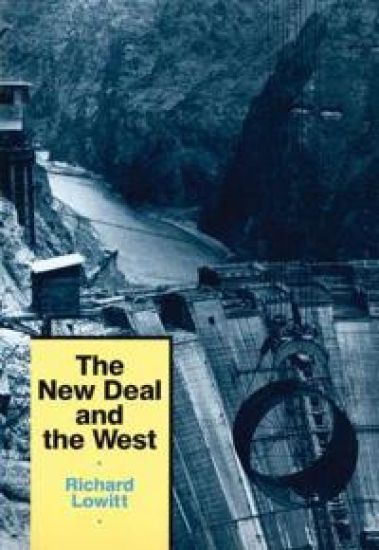
This valuable survey of the impact of New Deal agencies and programs focuses on the Great Plains, the Rocky Mountains and Great Basin, the Pacific Northwest, and California during the period from 1932 to 1940.
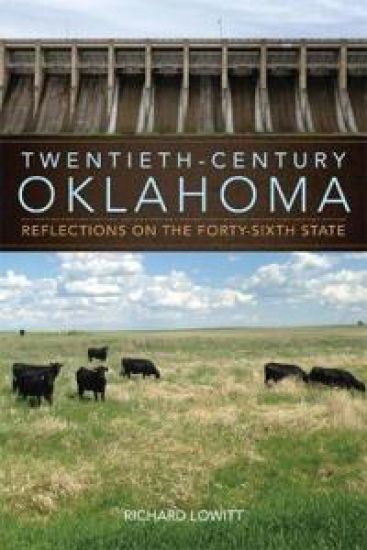
Few writers have written as thoughtfully and extensively on Oklahoma politics and culture as Richard Lowitt. His work of the past six decades moves with ease among historical topics as various as agriculture, health, industry, labor, and the environment, offering an informed and enlightened perspective. Collected for the first time in one volume, Lowitt's articles on post-World War II Oklahoma and notable Oklahomans reveal a remarkable range of the state's political, environmental, agricultural, civil rights, and Native American history in the Cold War era. Nowhere else, for example, is the controversy stirred up by Congressman Mike Synar recounted so well, and Lowitt's analysis of the decades-long battle over grazing rights on federal land clarifies the issues surrounding a topic still in the news today. Likewise, Lowitt's analysis of Oklahoma's farm crisis in the 1970s and '80s extends far beyond the state's borders, illuminating significant and subtle aspects of an artificially engineered agricultural disaster whose consequences are still felt. His probing of the ""enigma of Mike Monroney,"" U.S. senator from Oklahoma during the McCarthy period, yields valuable insights into the political nature of the politician, the state, and the times. Other articles span decades, from the development of the Grand River Dam Authority (1935-1964) to the damming of the Arkansas River to create Kaw Reservoir (1957-1976) and efforts to improve Indian health in Oklahoma (1954-1980). Whether discussing environmental and cultural ecology or plumbing the politics of Fort Sill's entry into the missile age, Lowitt's articles are broad in scope and unsparing in detail. All based on the author's research in the Western History Collections at the University of Oklahoma, these essays form an invaluable historical repository, put into clarifying context by one of Oklahoma's most respected historians.
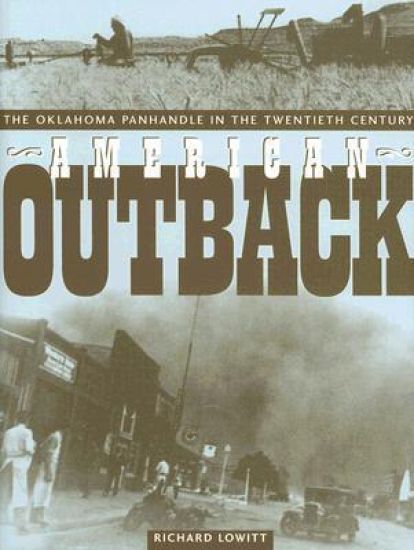
"Examines how inhabitants of the Oklahoma Panhandle throughout the 20th century used the semiarid lands that Kansas, Colorado, and New Mexico did not want, and that Texas, after entering the Union as a slave state, could not have. Focuses particularly onagriculture and production of natural gas and helium"--Provided by publisher.

A Merchant Prince of the Nineteenth Century: William E. Dodge
Richard Lowitt
Literary Licensing, LLC
2012
sidottu
""A Merchant Prince of the Nineteenth Century: William E. Dodge"" is a biography written by Richard Lowitt. The book tells the story of William E. Dodge, a successful businessman and philanthropist who lived in the 1800s. Dodge was a prominent figure in the world of commerce, and his success in the hardware industry made him one of the wealthiest men of his time. The book explores the life of Dodge from his early years, through his rise to prominence in the business world, to his later years as a philanthropist and public figure. It details his business ventures, including his partnership with his father in the hardware business and his involvement in the shipping and railroad industries. The book also delves into Dodge's personal life, including his marriage and family, as well as his involvement in social and political issues of the day. Dodge was a prominent abolitionist and played a key role in the Underground Railroad, helping to smuggle slaves to freedom. He was also involved in various charitable and religious organizations, and his philanthropic efforts helped to establish institutions such as the YMCA and the Metropolitan Museum of Art. Overall, ""A Merchant Prince of the Nineteenth Century: William E. Dodge"" provides a fascinating look at the life of one of America's most successful businessmen and philanthropists, and sheds light on the social and political issues of the time.This scarce antiquarian book is a facsimile reprint of the old original and may contain some imperfections such as library marks and notations. Because we believe this work is culturally important, we have made it available as part of our commitment for protecting, preserving, and promoting the world's literature in affordable, high quality, modern editions, that are true to their original work.

A Merchant Prince of the Nineteenth Century: William E. Dodge
Richard Lowitt
Literary Licensing, LLC
2012
nidottu

George W. Norris, V1: The Making of a Progressive, 1861-1912
Richard Lowitt
Literary Licensing, LLC
2012
sidottu
""George W. Norris, V1: The Making Of A Progressive, 1861-1912"" is a biography written by Richard Lowitt that chronicles the life and political career of George W. Norris, a prominent American politician during the early 20th century. The book covers Norris's early life, including his upbringing in rural Nebraska and his education at the University of Nebraska. It also delves into his early political career as a lawyer and member of the Nebraska legislature.The bulk of the book focuses on Norris's time in the United States House of Representatives, where he became known for his progressive views and advocacy for rural America. The book explores his role in passing important legislation, such as the Rural Credits Act and the Norris-LaGuardia Anti-Injunction Act, as well as his opposition to the Taft administration and the Republican Party's conservative wing.Throughout the book, Lowitt portrays Norris as a principled and determined politician who was not afraid to challenge the status quo. He also examines the personal relationships and political alliances that shaped Norris's career, including his close friendship with fellow progressive Robert La Follette.Overall, ""George W. Norris, V1: The Making Of A Progressive, 1861-1912"" provides a detailed and insightful look at the life and political career of one of the most influential politicians of the early 20th century.In Three Volumes. Volume 1, The Making Of A Progressive 1861-1912; Volume 2, The Persistence Of A Progressive 1913-1933; Volume 3, The Triumph Of A Progressive 1933-1944.This scarce antiquarian book is a facsimile reprint of the old original and may contain some imperfections such as library marks and notations. Because we believe this work is culturally important, we have made it available as part of our commitment for protecting, preserving, and promoting the world's literature in affordable, high quality, modern editions, that are true to their original work.

George W. Norris, V1: The Making of a Progressive, 1861-1912
Richard Lowitt
Literary Licensing, LLC
2012
nidottu
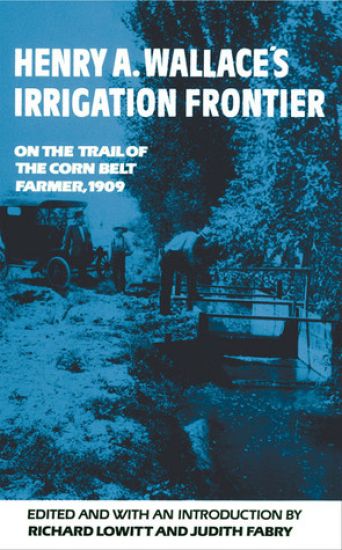
Henry a. Wallace's Irrigation Frontier
Richard Lowitt; Judith Fabry
University of Oklahoma Press
2007
nidottu
When Franklin D. Roosevelt's agriculture secretary and vice-president, Henry A. Wallace, had completed his junior year at Iowa State College in 1909, his family sent him on a western tour ""in search of the Corn Belt farmer."" Young Henry was to report to the family journal, Wallace's Farmer, how former Corn Belt farmers were prospering in the districts newly irrigated under public or private auspices, such as Arizona's Salt River, Idaho's Boise-Payette and Twin Falls, and farms on the Arkansas River near Garden City, Kansas.Wallace's articles, collected and reprinted here for the first time, are lively descriptions of up-and-coming western locales such as Amarillo, Texas; Phoenix, Arizona; the orange groves of southern California; the San Joaquin and Sacramento valleys; and the Greeley District of Colorado. Along the way, the young reporter and agriculturist critiqued dry farming in Cheyenne, Wyoming, and wrestled calves on a Matador Land Company ranch in the Texas panhandle.Henry Wallace made a specialty of down-home conversation with farmers and their wives and of cross-examining the real-estate agents who profited from the government's commitment to sell water rights to the new property owners. He wrote what today we call New History, concentrating on the impact of irrigation on individuals more than technology, law, or institutions.Modern-day readers will prize Wallace's clear, expert analysis of the different environments that he visited and his farmer-conservationist ethic. Social historians will be interested as he explains how the closer proximity of irrigated farms and greater abundance of neighbors would produce prosperous communities with schools, roads, and social institutions better than most that then prevailed in America's rural regions. They will be fascinated to learn how the cooperative aspects of irrigation farming tempered the independence of the immigrants from the Corn Belt.

One Third of a Nation
Lorena Hickok; Richard Lowitt; Maurine H. Beasley
University of Illinois Press
1983
nidottu
Between 1933 and 1935, Lorena Hickok traveled across thirty-two states as a "confidential investigator" for Harry Hopkins, head of FDR's Federal Emergency Relief Administration. Her assignment was to gather information about the day-to-day toll the Depression was exacting on individual citizens. One Third of a Nation is her record, underscored by the eloquent photographs of Dorothea Lange, Walker Evans, and others, of the shocking plight of millions of unemployed and dispossessed Americans.
The Standing Bear Controversy
Valerie Sherer Mathes; Richard Lowitt
University of Illinois Press
2003
sidottu
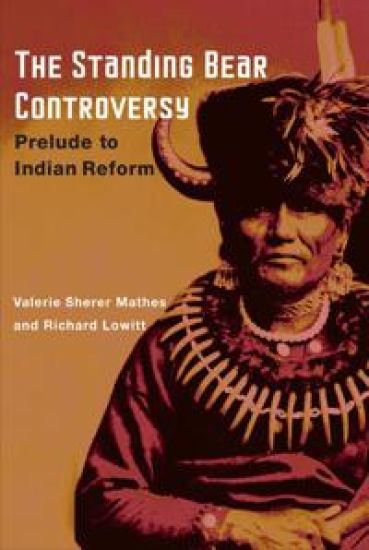
In the spring of 1877 government officials forcibly removed members of the Ponca tribe from their homelands in the southeastern corner of Dakota territory, relocating them in the Indian Territory in Oklahoma. When Ponca Chief Standing Bear attempted to lead a group of his people home he was arrested, detained, and put on trial. In this book Valerie Sherer Mathes and Richard Lowitt examine how the national publicity surrounding the trial of Chief Standing Bear, as well as a speaking tour by the chief and others, brought the plight of his tribe, and of tribespeople across America, to the attention of the general public, serving as a catalyst for the nineteenth-century Indian reform movement. As the authors show, the eventual ramifications of the removal, flight, and trial of Standing Bear were extensive, and included the rise of an organized humanitarian reform movement, significant changes in the administration of Indian affairs, and the passage of the General Allotment Act in 1887. This is the first full-length study of the Standing Bear trial and its consequences, and Mathes and Lowitt draw on a vast array of manuscript, diary, and journalistic sources in order to chronicle the events of 1877, as well as the effect the trial had on broader American popular opinion, on the federal government, and finally on the Native American population as a whole.

In February 1995, Richey Edwards checked out of a London hotel instead of flying to the US with the rest of the Manic Street Preachers. There were a few subsequent sightings but then nothing. His body was never found, and he was declared legally dead in November 2008. Now Richard tells the story of his life – and disappearance – as he might have told it. ‘This moving, tender novel tells the story of a lost boy adrift in a world that he can’t make sense of’ Marie Claire ‘Myers deserves credit not only for adding a third dimension to Edwards, but for trying a fourth, for attempting to document a period of his life that seems destined to remain a mystery’ The Times ‘A sympathetic and sad imagining of the boy who became a reluctant pop idol’ Time Out ‘Harrowing and hauntingly sad’ Mojo






Vers l'automne de 1830, par une soir e froide et pluvieuse, une chaise de poste, qui suivait la route d'Angers Nantes, quitta brusquement le grand chemin pour prendre un sentier enfonc dans les terres. Il faisait une affreuse nuit. Le vent sifflait travers les arbres; les rameaux d pouill s craquaient; les orfraies criaient dans le creux des ch nes. chaque instant, les chevaux, d courag s, refusaient d'avancer; le postillon jurait, et la chaise, battue par la tourmente, mena ait de s'ab mer dans les orni res des sentiers effondr s. Pas une toile ne brillait au ciel, pas une lumi re dans le paysage; des aboiements plaintifs qui se m laient, longs intervalles, aux g missements de la bise, r v laient seuls quelques habitations loign es. Au milieu de cette sc ne d sol e, la voiture tait, l'int rieur, silencieuse comme un tombeau: pas un mouvement, pas un bruit de voix qui trah t au dedans l'inqui tude ou l'impatience; on e t dit le voyage d'un mort gagnant sa demeure derni re. Enfin, au bout de quelques heures, les chevaux galop rent sur un terrain ferme et sonore, entre une double rang e de platanes; le fouet du postillon donna joyeusement la fanfare d'arriv e, et la chaise s'arr ta bient t devant le perron du vieux ch teau de Beaumeillant...

When Richard Ransome is injured in an accident, the beautiful Raleigh Reade comes to his assistance. Forced to marry to keep Raleigh alive, the couple find themselves off on an adventure that tries their faith and their growing love for one another.Richard's security team and their families and friends are drawn into the investigation, attempting to find the culprits and bring them to justice before either Richard or Raleigh are severely injured or dead.Richard and Raleigh fight through to survive, drawing closer to one another as their lives become more entwined. They recognize the power of God in their lives and His protection over them.