

Kirjahaku
Etsi kirjoja tekijän nimen, kirjan nimen tai ISBN:n perusteella.
1000 tulosta hakusanalla Richard Milner Evans


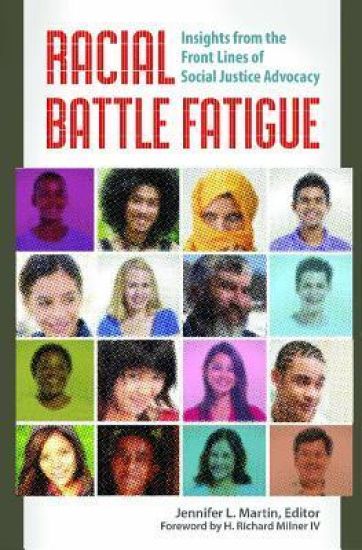
Covering equity issues of sex, race, class, age, sexual orientation, and disability, this work presents creative, nontraditional narratives about performing social justice work, acknowledging the contributions of previous generations, describing current challenges, and appealing to readers to join the struggle toward a better world.Many would like to believe we are living as "post-racial" America, long past the days of discrimination and marginalization of people simply due to their race and minority status. However, editor Jennifer L. Martin and a breadth of expert contributors show that prejudice and discrimination are still very much alive in the United States. Sharing personal stories of challenges, aggressions, retaliations, and finally racial battle fatigue, these activists, practitioners, and scholars explain how they have been attacked—in subtle, shrouded, and sometimes outright ways—simply for whom and what they advocate: social justice.The stories within consist of discussions on the interconnections among equity issues: sex, race, class, age, sexual orientation, and disability. Furthermore, the work relates current events such as the banning of ethnic studies in Arizona and the shooting of Trayvon Martin to the battle for social justice. Other topics addressed include the ongoing problems of white supremacist beliefs, the challenges of teaching about the racist thinking that permeates our media and popular culture, and the harms of aggressions faced by minorities and those possessing multiple minority status. The unique narratives presented in this single-volume work combine the various approaches to answering questions about not only the necessity of fighting for social justice but also the impact of the struggle on its champions.


This alphabetically arranged reference, an immensely entertaining browser's delight, offers a dazzling overview of the life and thought of Charles Darwin and his incredibly wide sphere of influence. Authoritative and abundantly illustrated, it illuminates the ways in which ideas of evolutionary biology have leapt the boundaries of science to influence philosophy, law, religion, literature, cinema, art, and popular culture."Darwin's Universe", a thoroughly revised and updated successor to Richard Milner's acclaimed "Encyclopedia of Evolution", contains more than a hundred new essays, including entries on animal behavior (Alex the parrot, Kanzi the bonobo, and Digit the gorilla), on women in science (Mary Anning and Rosalind Franklin), and on the latest finds of human fossils. A veritable museum of natural history, it also contains many original discoveries brought to light by Milner's historical sleuthing. Packed with hundreds of rare illustrations, including many new ones, this Darwin Bicentennial edition will appeal to a wide audience of readers.

"In conclusion, I have nothing but praise for this book. The production values are top-notch and I am so pleased that Milner both took his time to write this book, and was able to see it through to completion together with Matternes." — The Inquisitive Biologist The first career-spanning volume on Jay Matternes (b. 1933), whose scientific rigor and artistic skill set a new standard in natural history illustration. Millions have grown up inspired by Jay Matternes’ murals of extinct mammals at the Smithsonian’s National Museum of Natural History and the American Museum of Natural History. Others have savoured his depictions of human origins in such prestigious publications as Science, National Geographic, Scientific American, and Natural History. Matternes’ art has also graced popular books by such trailblazing wildlife scientists as Jane Goodall, Dian Fossey, and Louis Leakey. Now, for the first time, the entire scope of Matternes’ achievement is revealed in this full-colour retrospective, prepared with the artist’s full cooperation and featuring many works never before published. Here are his depictions of living species, whose anatomical accuracy and vivid detail owe much to Matternes’ lifelong devotion to painting from nature: the wildlife of Africa, the birds of America, chimpanzees and gorillas, and more. Here, too, is his paleoart, meticulously reconstructed from the fossil evidence and ranging from dinosaurs, through the rise of mammals, to our hominid ancestors — including Matternes’ groundbreaking reconstruction of the 4.4-million-year-old hominin Ardipithecus, on which he laboured in secrecy for more than a decade. The highly readable text includes, among other special features, selections from the artist’s 20-year correspondence with the late Dian Fossey. Jay Matternes: Paleoartist and Wildlife Painter will be an essential volume not only for aspiring illustrators and paleoartists, but for anyone with an interest in the natural world and how we visualise it.

Black Players: The Secret World Of Black Pimps
Richard Milner; Christina Milner
King Flex Ent
2010
nidottu

Hermes Experiment, The: A Personal Story
Richard Milner; Erhard Steffens
World Scientific Publishing Co Pte Ltd
2021
sidottu
This book describes the story of how a collaboration of several hundred physicists from Europe and North America formed in 1988 to design, construct, install, commission and operate, for the years 1995-2007 the technically innovative HERMES experiment at the DESY laboratory in Hamburg, Germany to study the spin structure of the fundamental structure of matter. The authors begin by introducing the fascinating world of subatomic physics and relate their personal story of how the HERMES experiment came about. Guided by the exciting idea to use a new type of target internal to an electron storage ring, the HERMES collaboration was born to realize this innovative experimental approach at the new HERA accelerator at DESY. The book describes the technical design of HERMES; the successful effort to secure the necessary funds to construct the experiment in different countries; the fabrication of the different components by the different HERMES institutes; and the story of the installation and commissioning of HERMES in the East Hall of HERA in the hot summer of 1995. Until 2007, when the operation of HERA ceased, the collider ran typically about 9 months per year continuously, during which HERMES data taking shifts were manned to ensure that data of the highest quality were acquired. The book describes the HERMES scientific results, their considerable impact, how HERMES shaped an entire generation of young people into scientific leaders, and ends with a description of the twenty-first century picture of the proton that has subsequently been developed.The authors played a leading role within the HERMES collaboration. They describe, using non-technical language, the various phases of the thirteen years of running, the social life in such an international collaboration, and their personal reminiscences over several decades.
Designing Qualitative Research to Do No Harm
H. Richard Milner IV; Tyrone C. Howard
TEACHERS' COLLEGE PRESS
2026
nidottu
This book is for everyone who cares about how people, communities, and institutions are treated through research processes, and what we learn from research that impacts them. This accessible book helps researchers avoid unintentional harm to research participants, communities, institutions, and organizations. The book assists researchers in building knowledge, attitudes, dispositions, skills, and practices to co-construct knowledge with people and communities to inform policies and practices. Grounded in research and theory, the book focuses on three essential qualitative research methods: interviewing, observation, and document analyses. Readers are invited to employ ethical, compassionate, and rigorous practices committed to harm prevention, particularly important in today’s declining democracy. The authors explore how to collect evidence, build and substantiate knowledge, and disseminate it in ways that honor, protect, and work in partnership with research participants and communities to improve human conditions. While early career and veteran researchers will find the book useful, so should parents, activists, policymakers, and anyone who cares about the health and wellbeing of people who participate in research and what we learn from it. Book Features: Introduces a set of four commitments to “Do No Harm in Research” for readers to adopt and adapt to their own context and content. Written in an accessible tone and structure that is suitable for readers across different disciplines such as education, sociology, psychology, human development, health sciences, political science, ethnic studies, history, and social work. Offers real-life scenarios to help readers think about how they would approach aspects of their work differently by applying Do No Harm commitments in their own research planning and practices. Moves beyond philosophical debates and paradigm wars about the importance of qualitative research over other research traditions to focus on cultivating research practices and outcomes for equity and inclusion.

Designing Qualitative Research to Do No Harm
H. Richard Milner IV; Tyrone C. Howard
TEACHERS' COLLEGE PRESS
2026
sidottu
This book is for everyone who cares about how people, communities, and institutions are treated through research processes, and what we learn from research that impacts them. This accessible book helps researchers avoid unintentional harm to research participants, communities, institutions, and organizations. The book assists researchers in building knowledge, attitudes, dispositions, skills, and practices to co-construct knowledge with people and communities to inform policies and practices. Grounded in research and theory, the book focuses on three essential qualitative research methods: interviewing, observation, and document analyses. Readers are invited to employ ethical, compassionate, and rigorous practices committed to harm prevention, particularly important in today’s declining democracy. The authors explore how to collect evidence, build and substantiate knowledge, and disseminate it in ways that honor, protect, and work in partnership with research participants and communities to improve human conditions. While early career and veteran researchers will find the book useful, so should parents, activists, policymakers, and anyone who cares about the health and wellbeing of people who participate in research and what we learn from it. Book Features: Introduces a set of four commitments to “Do No Harm in Research” for readers to adopt and adapt to their own context and content. Written in an accessible tone and structure that is suitable for readers across different disciplines such as education, sociology, psychology, human development, health sciences, political science, ethnic studies, history, and social work. Offers real-life scenarios to help readers think about how they would approach aspects of their work differently by applying Do No Harm commitments in their own research planning and practices. Moves beyond philosophical debates and paradigm wars about the importance of qualitative research over other research traditions to focus on cultivating research practices and outcomes for equity and inclusion.
Race neutral leadership is not an option. Education leaders are on the frontline in the fight for racial justice and must co-construct practices to disrupt storylines, policies, and practices that perpetuate opportunity gaps. Drawing from established research and the wisdom of teachers, young people, parents, community members, policy advocates, and school leaders, The Race Card is a guide for frontline leaders at every level to confront and disrupt racism. Designed to engage leaders in candid conversations about race and racism, this book provides a road map for building anti-racist leadership capacity in today’s turbulent political environment. Features include Eight interrelated tenets of Frontline LeadershipStrategies for supporting faculty, staff, students, and the broader community in practices centering racial justice and equityGuidance for dismantling the lies and beliefs that perpetuate inequitiesDesign principles and strategies to cultivate opportunity-rich and robust curriculum, instruction, relationships, and assessment The frontline isn’t always a comfortable place, but it’s where education leaders are needed right now. Lead the fight for truth in your school community and help change history—by putting our nation back on the path to racial justice.
"These Kids Are Out of Control"
H. Richard Milner; Heather B. (Bossert) Cunningham; Lori Delale-O'Connor; Erika Gold Kestenberg
Corwin Press Inc
2018
nidottu
This is a practical, research based guide to rethinking classroom management that effectively serves the needs of diverse learners including children of color, English learners, and children from low-income households. It focuses on promising alternatives to traditional disciplinary practices including restorative justice.
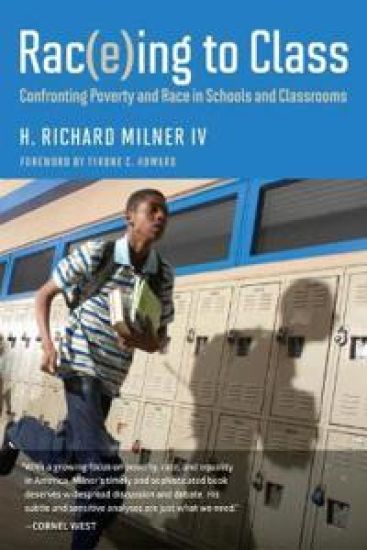
Rac(e)ing to Class
H. Richard Milner IV; Tyrone C. Howard
Harvard Educational Publishing Group
2015
nidottu
In this incisive and practical book, H. Richard Milner IV provides educators with a crucial understanding of how to teach students of color who live in poverty. Milner looks carefully at the circumstances of these students’ lives and describes how those circumstances profoundly affect their experiences within schools and classrooms. In a series of detailed chapters, Milner proposes effective practices—at the district and school levels, and in individual classrooms—for school leaders and teachers who are committed to creating the best educational opportunities for these students.Building on established literature, new research, and a number of revelatory case studies, Milner casts essential light on the experiences of students and their families living in poverty, while pointing to educational strategies that are shaped with these students’ unique circumstances in mind. Milner’s astute and nuanced account will fundamentally change how school leaders and teachers think about race and poverty—and how they can best serve these students in their schools and classrooms.

Start Where You Are, but Don't Stay There
H. Richard Milner IV; Gloria Ladson-Billings
Harvard Educational Publishing Group
2020
nidottu
In the thoroughly revised second edition of Start Where You Are, But Don't Stay There, H. Richard Milner IV addresses the knowledge and insights required on the part of teachers and school leaders to serve students of color. Milner focuses on a crucial issue in teacher training and professional education: the need to prepare teachers for the racially diverse student populations in their classrooms. The book, anchored in real world experiences, centers on case studies that exemplify the challenges, pitfalls, and opportunities facing teachers in diverse classrooms. The case studies- of teachers in urban and suburban settings- are presented amid current discussions about race and teaching. In addition, the second edition includes a new chapter dedicated to opportunity gaps in education and an expanded discussion of how Opportunity Centered Teaching can address these gaps.Start Where You Are, But Don't Stay There strives to help educators in the fight for social justice, equity, inclusion, and transformation for all students. It is a book urgently needed in today's increasingly diverse classrooms.

Start Where You Are, But Don't Stay There
H. Richard Milner; Gloria Ladson-Billings
Harvard Educational Publishing Group
2020
sidottu
In the thoroughly revised second edition of Start Where You Are, But Don't Stay There, H. Richard Milner IV addresses the knowledge and insights required on the part of teachers and school leaders to serve students of color. Milner focuses on a crucial issue in teacher training and professional education: the need to prepare teachers for the racially diverse student populations in their classrooms. The book, anchored in real world experiences, centers on case studies that exemplify the challenges, pitfalls, and opportunities facing teachers in diverse classrooms. The case studies- of teachers in urban and suburban settings- are presented amid current discussions about race and teaching. In addition, the second edition includes a new chapter dedicated to opportunity gaps in education and an expanded discussion of how Opportunity Centered Teaching can address these gaps.Start Where You Are, But Don't Stay There strives to help educators in the fight for social justice, equity, inclusion, and transformation for all students. It is a book urgently needed in today's increasingly diverse classrooms.
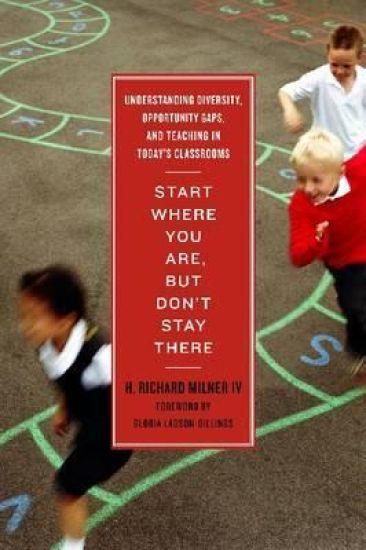
Start Where You Are, But Don’t Stay There
H. Richard Milner IV; Gloria Ladson-Billings
Harvard Educational Publishing Group
2010
nidottu
Start Where You Are, But Don’t Stay There addresses a crucial issue in teacher training and professional education: the need to prepare pre-service and in-service teachers for the racially diverse student populations in their classrooms. A down-to-earth book, it aims to help practitioners develop insights and skills for successfully educating diverse student bodies. The book centers on case studies that exemplify the challenges, pitfalls, and opportunities facing teachers in diverse classrooms. These case studies—of white and African American teachers working (and preparing to work) in urban and suburban settings—are presented amid more general discussions about race and teaching in contemporary schools. Informing these discussions and the cases themselves is their persistent attention to opportunity gaps that need to be fully grasped by teachers who aim to understand and promote the success of students of greatly varying backgrounds.
Racial Opportunity Cost
Terah Venzant Chambers; H. Richard Milner
Harvard Educational Publishing Group
2022
nidottu
Racial Opportunity Cost turns critical attention to the specific challenges faced by high-achieving students of color and gives educators a framework for recognizing and addressing these issues. Terah T. Venzant Chambers roots her discussion in the concept of racial opportunity cost, using a term borrowed from economics to refer to the obstacles faced and tradeoffs made by Black and Latinx students on the path to academic success.Gathering first-hand accounts from students, practitioners, and researchers, Chambers underscores a set of experiences common to academically successful students from racially minoritized backgrounds, especially those who attend predominantly white schools. These individual testimonies collectively show how, despite their successes, high-achieving students of color regularly encounter educational racism. As their experiences reveal, their academic progress may also be impeded by secondary stressors such as peer and cultural isolation and struggles with racial identity. These personal accounts illustrate the many ways in which the negative effects of racial opportunity cost extend from K–12 education into postsecondary academics and beyond.In this clarifying work, Chambers identifies the factors, such as school culture, intersectionality, and community acceptance that can increase or lessen racial opportunity cost across educational environments. She considers how the individual challenges that high-achieving and high-ability students of color confront reflect larger systemic problems. Chambers’ framework will help educators proactively cultivate change in their classrooms and schools so that they may lower racial opportunity cost and improve student experiences.
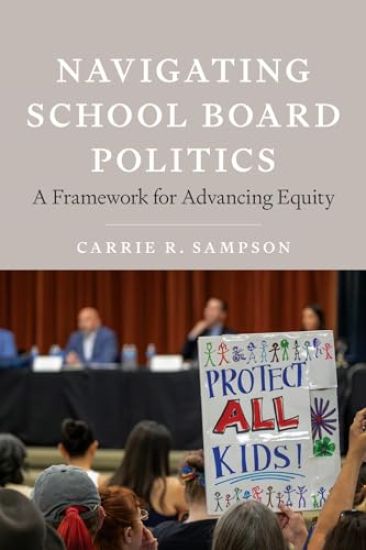
Navigating School Board Politics
Carrie Sampson; H. Richard Milner
Harvard Educational Publishing Group
2024
nidottu
A visionary overview of the political role of publicly elected school boards and a proactive take on the work they can accomplish toward social justice In Navigating School Board Politics, Carrie R. Sampson examines the political power of the US education system’s publicly elected school boards, the reality of how they apply that power, and the resounding impact of their governance. The work makes the case that school boards, as both the direct link between local communities and school districts, and the political conduits between school districts and state and federal policymakers, can be driving forces to diminish inequities in public education. Sampson begins with a historical overview of the role of school boards in the United States. She shows that, despite the recent ideological deadlocks publicized as “school board wars,” board members can accomplish vital work as advocates for their communities: forming effective coalitions with superintendents, administrators, and community leaders; scrutinizing budgets that represent millions of dollars of public investment; and maintaining a deep understanding of local issues. The work highlights the School Board Governance for Equity framework, an evidence-based set of principles that current and prospective board members can adopt to advance social justice in their districts. Through case studies, Sampson demonstrates that equity-focused school board governance requires a collective effort: just as elected board members must maintain awareness of structural inequities and provide representation for marginalized community members, community members must speak up at board meetings and vote for both equity-focused candidates and equitable policies and practices.

The Last Human
Esteban Sarmiento; G. J. Sawyer; Donald C. Johanson; Meave Leakey; Richard Milner
Yale University Press
2006
sidottu
Creates three-dimensional scientific reconstructions for twenty-two species of extinct humans, providing information for each one on its emergence, chronology, geographic range, classification, physiology, environment, habitat, cultural achievements, coexisting species, and possible reasons for extinction.