Kirjojen hintavertailu. Mukana 11 342 296 kirjaa ja 12 kauppaa.

Kirjahaku

Etsi kirjoja tekijän nimen, kirjan nimen tai ISBN:n perusteella.

1000 tulosta hakusanalla Richard Vernon Smith

An Investigation of Various Types of Electrical Distribution Systems for Warships.
This work has been selected by scholars as being culturally important and is part of the knowledge base of civilization as we know it.This work is in the public domain in the United States of America, and possibly other nations. Within the United States, you may freely copy and distribute this work, as no entity (individual or corporate) has a copyright on the body of the work.Scholars believe, and we concur, that this work is important enough to be preserved, reproduced, and made generally available to the public. To ensure a quality reading experience, this work has been proofread and republished using a format that seamlessly blends the original graphical elements with text in an easy-to-read typeface.We appreciate your support of the preservation process, and thank you for being an important part of keeping this knowledge alive and relevant.
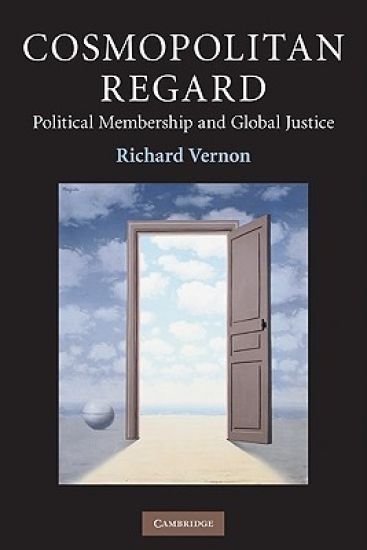
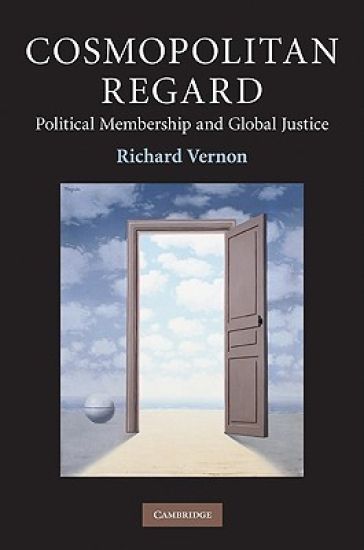
Cosmopolitan Regard

Cosmopolitan Regard

Richard Vernon

Cambridge University Press
2010
nidottu
Cosmopolitan theory suggests that we should shift our moral attention from the local to the global. Richard Vernon argues, however, that if we adopt cosmopolitan beliefs about justice we must re-examine our beliefs about political obligation. Far from undermining the demands of citizenship, cosmopolitanism implies more demanding political obligations than theories of the state have traditionally recognized. Using examples including humanitarian intervention, international criminal law, and international political economy, Vernon suggests we have a responsibility not to enhance risks facing other societies and to assist them when their own risk-taking has failed. The central arguments in Cosmopolitan Regard are that what we owe to other societies rests on the same basis as what we owe to our own, and that a theory of cosmopolitanism must connect the responsibilities of citizens beyond their own borders with their obligations to one another.
Cosmopolitan Regard

Cosmopolitan Regard

Richard Vernon

Cambridge University Press
2010
sidottu
Cosmopolitan theory suggests that we should shift our moral attention from the local to the global. Richard Vernon argues, however, that if we adopt cosmopolitan beliefs about justice we must re-examine our beliefs about political obligation. Far from undermining the demands of citizenship, cosmopolitanism implies more demanding political obligations than theories of the state have traditionally recognized. Using examples including humanitarian intervention, international criminal law, and international political economy, Vernon suggests we have a responsibility not to enhance risks facing other societies and to assist them when their own risk-taking has failed. The central arguments in Cosmopolitan Regard are that what we owe to other societies rests on the same basis as what we owe to our own, and that a theory of cosmopolitanism must connect the responsibilities of citizens beyond their own borders with their obligations to one another.
The Career of Toleration

The Career of Toleration

Richard Vernon

McGill-Queen's University Press
1997
sidottu
The Career of Toleration considers the Locke-Proast controversy from the standpoint of political theory, examining Locke's and Proast's texts and tracing their relationship to later discussions of toleration. Vernon reconstructs the grounds of the dispute, drawing attention to the long-term importance of the arguments and evaluating their relative strength. He then examines issues of toleration in later contexts, specifically James Fitzjames Stephen's critique of John Stuart Mill, the perfectionist alternative to contractualist liberalism, and the view that the traditional attachment to toleration must, by the force of its own arguments, move from liberalism to a defence of a much stronger form of democracy. Arguing that Locke's and Proast's exchange marks a turning point in the intellectual history that has helped to structure the terms of modern political debate, Vernon presents a solid case for thinking that the exchange between Locke and Proast is as important for the twentieth century as it was for the seventeenth.
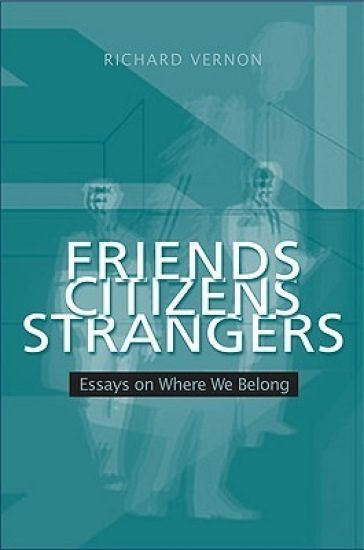
Friends, Citizens, Strangers

Friends, Citizens, Strangers

Richard Vernon

University of Toronto Press
2005
sidottu
All human relationships are not created equal; attachments between close associates ('friends'), compatriots ('citizens'), and humans ('strangers') vary greatly in terms of their character and importance. From a critical standpoint, though, which type of attachment should take priority? Are we morally obliged to think of ourselves first and foremost as members of the human race, or should we prioritize our allegiance to a particular nation, or our personal friendships above our humanity?In Friends, Citizens, Strangers, Richard Vernon considers these questions, and addresses the implications of various answers. Vernon grounds his investigation in the work of Locke, Wollstonecraft, George Eliot, and J.S. Mill in England, and Rousseau, Comte, Proudhon, and Bergson in France. He explores what these thinkers have to say about the theme in question, and in turn what that theme reveals about basic issues in their own work. Vernon also turns to contemporary thought to explore the issue: the idea of a 'crime against humanity' as an assertion of the moral standing of strangers, the idea of moral partialism, the claim that compatriots inherit historical obligations, and the 'associativist' view that obligations are of two distinct kinds, partial and universal. Finally, drawing on both the historical and contemporary sources discussed, Friends, Citizen, Strangers proposes a solution: a moderate form of cosmopolitanism that finds a place for multiple levels of attachment and association. This work will prove useful not only to scholars of the authors discussed, but also to those interested in ethics and political theory more broadly.
Political Morality

Political Morality

Richard Vernon

Continuum International Publishing Group Ltd.
2001
sidottu
Although liberal democratic polities have an important place in contemporary politics, their justification is contentious. Liberalism and democracy are commonly thought to be inconsistent, or at least in tension with one another; and the reality of liberal democracy is perceived as falling far short of the ideal. In Political Morality, Richard Vernon sets out to show that liberal democracy can make sense as a single political conception, rather than a trade-off between two different values. He also argues that in conceiving of liberal democracy as proposed, other problems inherent in liberalism and in democracy are eased; liberal democracy is not exposed to the same objections as liberalism and it can avoid some of the paradoxes that are said to plague democratic theory. The book also points to some of the ways in which polities currently termed 'liberal democracies' fall clearly short of the values that might legitimize them.
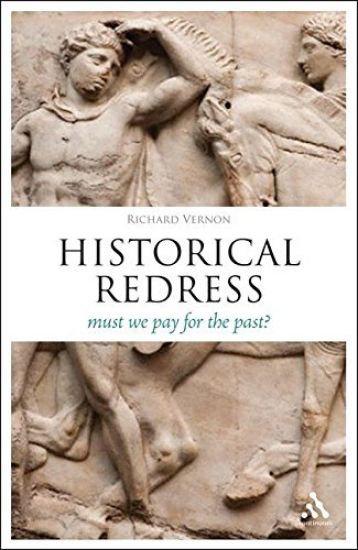
Historical Redress

Historical Redress

Richard Vernon

Continuum Publishing Corporation
2012
nidottu
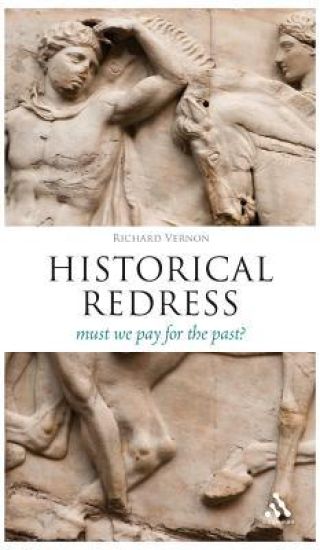
This title provides an introduction to the philosophical implications of the recent surge of political and ethical interest in historical redress. Should the British Museum return the Elgin Marbles to Greece? Should settler societies in North America and Australasia compensate the aboriginal people whom they dispossessed? Should Israel have accepted Germany's compensation for Nazi extermination policies? The last twenty years have seen a remarkable surge of political and ethical interest in historical redress - that is, the righting of old wrongs. In this fascinating book, Richard Vernon argues that whatever the kind of redress that's at issue, and whether the wrong is large or small, an important philosophical issue arises. Exploring recent and high profile cases, Vernon focuses on the issue of responsibility. Responsibility isn't something inherited, like property or one's DNA. How, then, can it fall to one generation to make good the wrongs done by another? The book addresses all the main issues and arguments relating to justice, memory, apology and citizenship, and concludes by arguing for a forward-looking approach that focuses on the right of future generations to live just lives. "Think Now" is a new series of books which examines central contemporary social and political issues from a philosophical perspective. These books aim to be accessible, rather than overly technical, bringing philosophical rigour to modern questions which matter the most to us. Provocative yet engaging, the authors take a stand on political and cultural themes of interest to any intelligent reader.
Historical Redress

Historical Redress

Richard Vernon

Continuum Publishing Corporation
2012
sidottu
This title provides an introduction to the philosophical implications of the recent surge of political and ethical interest in historical redress. Should the British Museum return the Elgin Marbles to Greece? Should settler societies in North America and Australasia compensate the aboriginal people whom they dispossessed? Should Israel have accepted Germany's compensation for Nazi extermination policies? The last twenty years have seen a remarkable surge of political and ethical interest in historical redress - that is, the righting of old wrongs. In this fascinating book, Richard Vernon argues that whatever the kind of redress that's at issue, and whether the wrong is large or small, an important philosophical issue arises. Exploring recent and high profile cases, Vernon focuses on the issue of responsibility. Responsibility isn't something inherited, like property or one's DNA. How, then, can it fall to one generation to make good the wrongs done by another? The book addresses all the main issues and arguments relating to justice, memory, apology and citizenship, and concludes by arguing for a forward-looking approach that focuses on the right of future generations to live just lives. "Think Now" is a new series of books which examines central contemporary social and political issues from a philosophical perspective. These books aim to be accessible, rather than overly technical, bringing philosophical rigour to modern questions which matter the most to us. Provocative yet engaging, the authors take a stand on political and cultural themes of interest to any intelligent reader.
Justice Back and Forth

Justice Back and Forth

Richard Vernon

University of Toronto Press
2016
sidottu
Ideas of justice have traditionally focused on what individuals owe to one another and have drawn our attention to what is considered fair – what one of us owes to another is justly matched by what the other owes to them. However, what does justice require us to do for past and future generations? In Justice Back and Forth, award-winning author Richard Vernon explores the possibility of justice in cases where time makes reciprocity impossible. This “temporal justice” is examined in ten controversial cases including the duty to return historical artifacts, the ethics and politics of parenting, the punishment of historical offences, the right to procreate, and the imposition of constitutions on future citizens. By deftly weaving together discussions on historical redress and justice for future generations, Vernon reveals that these two opposing topics can in fact be used to illuminate each other. In doing so, he concludes that reciprocity can be adapted to serve intergenerational cases.
Commitment and Change

Commitment and Change

Richard Vernon

University of Toronto Press
1978
pokkari
This analysis of Georges Sorel's ideas on revolution and the original translations of some of his little-known writings on this theme offer a critical reassessment of Sorel's place in modern political thought. By turns conservative pessimist, social democrat, revolutionary syndicalist, and reactionary, Sorel is a perplexing figure. He has long been regarded as one of a generation of intellectuals who abandoned reason for violence, theoretical reflection for practical commitment. But according to Sorel -- as the title of his most notorious book makes clear -- the task of the theoretician is to reflect on violence. He maintained that reflection discloses the limited and deficient character of practical thought, but he also recognized that the springs of action escape the grasp of the reflective theorist. It was this distinctness of theory and practice that Soreal attempted to come to terms with in his thinking on revolution. If revolution is a violent action, it is also a process of structural change which the actors themselves do not comprehend. This theme enables the reader to grasp a significant degree of continuity among some of Sorel's bewilderingly diverse positions. Moreover, it accounts for much of his critique of Marxism and his sceptical reflects on Marxian notions of history, class, consciousness, and party. Placed in the context of modern revolutionary thinking, Sorel is an eccentric figure but not an irrelevant one, for his approach points to some of the difficulties in the idea of revolution that were largely overlooked by the 'New Left.'
Citizenship and Order

Citizenship and Order

Richard Vernon

UNIVERSITY OF TORONTO PRESS
1986
pokkari
The citizen, a figure capable of self-government is both the political and the personal sense, is a central and enduring theme of political thought. The role of the citizen in the modern state was question raised persistently by French political theorists from Rousseau on, as they sought new principles of legitimacy to replace those of the ancient regime. Richard Vernon’s studies in this volume examine a series of moments in French political thought when the possibility and meaning of citizenship were called into question. Vernon considers the view held by Rousseau and later Durkheim that citizenship was sustained immediately by moral principles, a view that was criticized by others who refused any such identification of political and moral order. Vernon shows how this refusal governs, in different ways, the political thinking of theorists as diverse as Maistre, Proudhon, Tocqueville, Comte, Sorel, and Bergson. He explains why the idea of citizenship in its political sense was exposed to so many objections, objections that may in turn suggest a new approach to the topic of political legitimacy. Citizenship may once have been legitimated by ideas of moral, religious or cosmic order, but in a modern context it is the civic process itself that must exercise a legitimating function. Once, citizenship rested upon order; now, suggests Vernon, we may have to realize that order depends upon citizen.
The Harvest of a Quiet Eye

The Harvest of a Quiet Eye

John Richard Vernon

ALPHA EDITION
2022
pokkari
The Harvest of a Quiet Eye: Leisure Thoughts for Busy Lives has been regarded as significant work throughout human history, and in order to ensure that this work is never lost, we have taken steps to ensure its preservation by republishing this book in a contemporary format for both current and future generations. This entire book has been retyped, redesigned, and reformatted. Since these books are not made from scanned copies, the text is readable and clear.
Patriotism

Patriotism

Charles Jones; Richard Vernon

Polity Press
2018
sidottu
From flag-waving to the singing of national anthems, the practices and symbols ofpatriotism are inescapable, and modern politics is increasingly full of appeals topatriotic fervour. But if no-one chooses where they were born, and our ethicalobligations transcend national boundaries, then does patriotism make any sense? Doesit encourage an uncritical attachment to the status quo, or is it a crucial way ofunderstanding and applying our freedoms and moral duties? In this engaging book, Charles Jones and Richard Vernon guide us through thesequestions with razor-sharp clarity. They examine the different ways patriotism has beendefended and explained, from a republican attachment to free and democraticinstitutions to an ethical and historical fabric that makes our entire moral life andidentity possible. They outline its relationship to a range of other key concepts, such asnationalism and cosmopolitanism, and skilfully analyse the issues surroundingpartiality to country and whether we should prioritise the welfare of our compatriotsover outsiders. This concise and lucid volume will be essential for both students and general readerswishing to understand the contemporary resonance and historical development ofpatriotism, and how it intersects with debates about global justice, cosmopolitanismand nationalism.
Patriotism

Patriotism

Charles Jones; Richard Vernon

Polity Press
2018
nidottu
From flag-waving to the singing of national anthems, the practices and symbols ofpatriotism are inescapable, and modern politics is increasingly full of appeals topatriotic fervour. But if no-one chooses where they were born, and our ethicalobligations transcend national boundaries, then does patriotism make any sense? Doesit encourage an uncritical attachment to the status quo, or is it a crucial way ofunderstanding and applying our freedoms and moral duties? In this engaging book, Charles Jones and Richard Vernon guide us through thesequestions with razor-sharp clarity. They examine the different ways patriotism has beendefended and explained, from a republican attachment to free and democraticinstitutions to an ethical and historical fabric that makes our entire moral life andidentity possible. They outline its relationship to a range of other key concepts, such asnationalism and cosmopolitanism, and skilfully analyse the issues surroundingpartiality to country and whether we should prioritise the welfare of our compatriotsover outsiders. This concise and lucid volume will be essential for both students and general readerswishing to understand the contemporary resonance and historical development ofpatriotism, and how it intersects with debates about global justice, cosmopolitanismand nationalism.