Kirjojen hintavertailu. Mukana 11 244 527 kirjaa ja 12 kauppaa.

Kirjahaku

Etsi kirjoja tekijän nimen, kirjan nimen tai ISBN:n perusteella.

1000 tulosta hakusanalla Richard Wagner

Richard Wagner

Richard Wagner

Borchmeyer Dieter

Clarendon Press
1991
sidottu
Richard Wagner has come to be seen as the quintessential artist of the nineteenth century, whose work embraces all the arts of the period. Dieter Borchmeyer here provides the first systematic and comprehensive account of Wagner's aesthetic theory, examining his hitherto neglected prose writings and his ideas on music drama from the various standpoints of literature, the linking of ideas, and the sociology of art. The pre-eminent importance for Wagner of classical Greek art and mythology emerges with particular clarity, while his links with the great figures and forms of world theatre - Shakespeare, the commedia dell'arte, the popular theatre, and the puppet theatre - are traced in detail. The influence on Wagner of the historical and social novel is also discussed. The author provides the first comprehensive analysis of Cosima Wagner's Diaries, and throws unexpected sidelights on Wagner's relationship with Nietzsche, in particular his important contribution to Nietzsche's The Birth of Tragedy. Central to the present study are Wagner's music dramas from Die Feen to Parsifal. These are examined in their literary, ideological, and socio-political contexts (including the problem of anti-Semitism). First published in German in 1982, this book has become established as a standard work of Wagner scholarship, and now appears for the first time in English in a completely revised edition incorporating a number of new chapters on the music dramas.
Richard Wagner

Richard Wagner

Martin Geck

University of Chicago Press
2013
sidottu
Best known for the challenging four-opera cycle The Ring of the Nibelung, Richard Wagner (1813-83) was a conductor, librettist, theater director, and essayist, in addition to being the composer of some of the most enduring operatic works in history, such as The Flying Dutchman, Tannhauser, and Tristan and Isolde. Though his influence on the development of European music is indisputable, Wagner was also quite outspoken on the politics and culture of his time. To befit such a dynamic figure, acclaimed biographer Martin Geck offers here a Wagner biography unlike any other, one that strikes a unique balance between the technical musical aspects of Wagner's compositions and his overarching understanding of aesthetics. There are few, if any, scholars today who know more about Wagner and his legacy than Geck, who builds upon his extensive research and considerable knowledge as one of the editors of the Complete Works and the Complete Letters to offer a distinctive appraisal of the composer and his operas. Geck explores key ideas in Wagner's life and works, while always keeping the music in the foreground. This year will mark the bicentennial of Wagner's birth, and there is no better testament to the composer's enduring influence than this fresh, vivid, and authoritative work. Richard Wagner: A Life in Music is a landmark study of one of music's most important figures, offering something new to opera enthusiasts, Wagnerians, and anti-Wagnerians alike.
Richard Wagner

Richard Wagner

Michael Saffle

Routledge
2010
sidottu
Richard Wagner: A Research and Information Guide is an annotated bibliography concerning both the nature of primary sources related to the composer and the scope and significance of the secondary sources which deal with him, his compositions, and his influence as a composer and performer.
Richard Wagner

Richard Wagner

Barry Millington

Thames Hudson Ltd
2012
sidottu
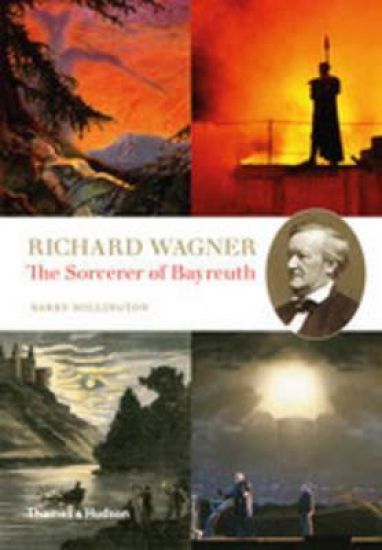
Richard Wagner is one of the influential and also the polarizing composers in the history of music. Over the course of his long career, he produced a stream of spellbinding works that challenged musical convention through their experimentation, paving the way for modernism. This title offers an overview of Wagners life, work and times.
Richard Wagner: My Life

Richard Wagner: My Life

Richard Wagner

Cambridge University Press
1987
pokkari
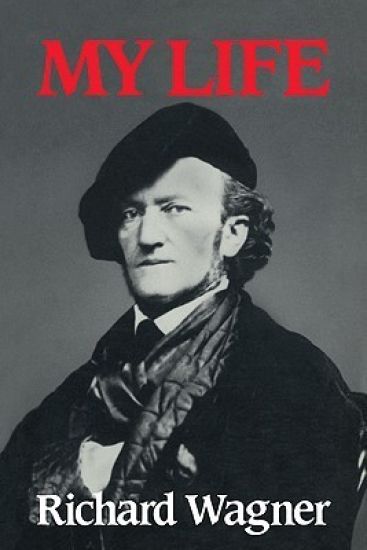
This reprint is of the first English paperback edition of Richard Wagner's autobiography. This is a primary document of enormous importance for all Wagner enthusiasts, being virtually the sole source of information of the composer's childhood and youth. Written for Wagner's second wife, Cosima, and his patron, King Ludwig II, the autobiography runs from the composer's birth up to the eve of his fifty-first birthday in 1864. Given the intended readership and the circumstances of its composition it is hardly surprising that Wagner should either omit or distort facts from time to time: he does not linger over previous affairs, he portrays his relationship with his first wife, Minna, as a good deal more distant than it really was and he plays down his involvement in the Dresden uprising of 1849. Despite all this, the book presents a panoramic view of Wagner's times and contemporaries and offers a unique perspective on the operas themselves. This translation is of the complete edition published in Munich in 1963 and based on the manuscript in the Wagner Archives in Bayreuth. Wagner's slips of memory are noted, as are references to obscure names and events.
Richard Wagner

Richard Wagner

John Louis DiGaetani

McFarland Co Inc
2014
pokkari
This is a new biography of the German composer Richard Wagner, 200 years after his birth, re-examining his life in light of new documents and new sensibilities. Since World War II Wagner has often been wrongly associated with Adolf Hitler because Hitler liked Wagner's music and used it in Nazi propaganda. But Wagner died in 1883--fifty years before Hitler's regime. It is time to have a fresh look at Wagner's life without the Nazi associations. His life was a series of abandonments and traumas for the self-destructive but creative genius, as he tried to survive as a freelance composer in the hostile environments of 19th century Germany.
Richard Wagner

Richard Wagner

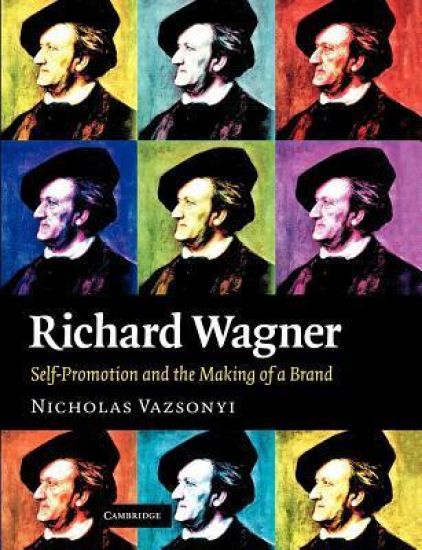
Vazsonyi Nicholas

Cambridge University Press
2012
pokkari
All modern artists have had to market themselves in some way. Richard Wagner may just have done it better than anyone else. In a self-promotional effort that began around 1840 in Paris, and lasted for the remainder of his career, Wagner claimed convincingly that he was the most German composer ever and the true successor of Beethoven. More significantly, he was an opera composer who declared that he was not composing operas. Instead, during the 1850s, he mapped out a new direction, conceiving of works that would break with tradition and be literally 'brand new'. This is the first study to examine the innovative ways in which Wagner made himself a celebrity, promoting himself using every means available: autobiography, journal articles, short stories, newspaper announcements, letters, even his operas themselves. Vazsonyi reveals how Wagner created a niche for his works in the crowded opera market that continues to be unique.
Richard Wagner

Richard Wagner

Francis Hueffer

Cambridge University Press
2009
nidottu
Francis Hueffer (1845-89) was born and studied music in Germany, but moved to London in 1869 to pursue a career as a critic and writer on music. He edited the series 'The Great Musicians' for Novello and Co., was music critic of The Times, wrote libretti for some now-forgotten operas, and was an early advocate and interpreter to the British of Wagner. Between his Richard Wagner and the Music of the Future (1874) and his translation of the correspondence of Wagner and Liszt (1888), he wrote Wagner in his own 'Great Musicians' series in 1881 (two years before the composer's death). The book surveys Wagner's life and his musical writings, and a separate chapter is devoted to each of the operas (except Parsifal, which was not performed until 1882). This is a fascinating contemporary assessment of the standard-bearer of the 'music of the future'.
Richard Wagner

Richard Wagner

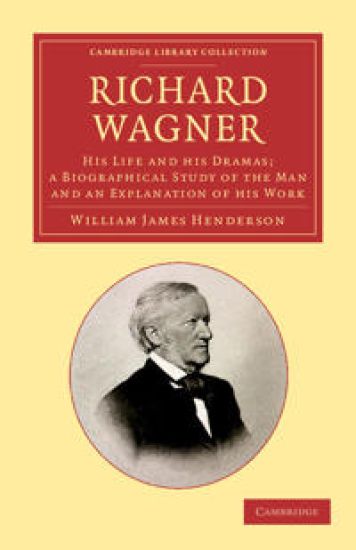
William James Henderson

Cambridge University Press
2013
pokkari
The American music critic and lecturer William James Henderson (1855–1937) wrote for The New York Times and The New York Sun, provided the libretto for Walter Damrosch's opera Cyrano (1913) and authored fiction, poetry, sea stories and a textbook on navigation. He also taught at the New York College of Music and the Institute of Musical Art. Taking up the cause of Wagner with considerable understanding, he published this substantial work in 1902, barely twenty years after the composer's death. It is an illuminating account of Wagner's life and artistic aims, complemented by an insightful analysis of each of his music dramas from Rienzi to Parsifal. Its purpose, states Henderson, 'is to supply Wagner lovers with a single work which shall meet all their needs'. With Ernest Newman's Study of Wagner (1899), also reissued in this series, it reflects the composer's contemporary popularity.
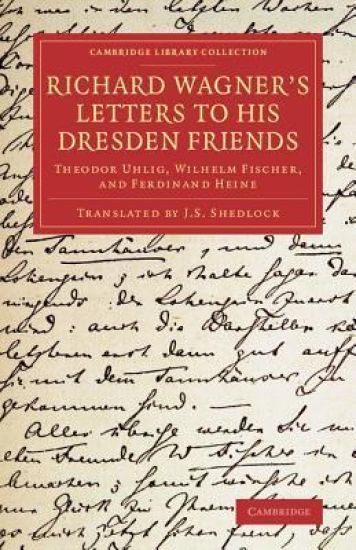
Richard Wagner's Letters to his Dresden Friends

Richard Wagner's Letters to his Dresden Friends

Richard Wagner

Cambridge University Press
2014
pokkari
Richard Wagner (1813–83) grew up in Dresden and served as Kapellmeister to King Frederick Augustus II of Saxony there from 1843 until he was forced to flee the country after the 1849 uprising. His operas Rienzi and Der fliegende Holländer received their first performances at the Dresden Court Theatre. During his time in the city, Wagner became firm friends with the composer and violinist Theodor Uhlig, the stage manager and chorus master Wilhelm Fischer, and the comedian and costume designer Ferdinand Heine. This collection of letters from the composer to his three great friends covers the period 1841–68. First published in 1888, the letters are reissued here in the 1890 English translation by the pianist and Beethoven scholar John South Shedlock (1843–1919). They offer an intimate and compelling insight into Wagner's personal and professional life and his forthright views on many contemporary musicians and public figures.
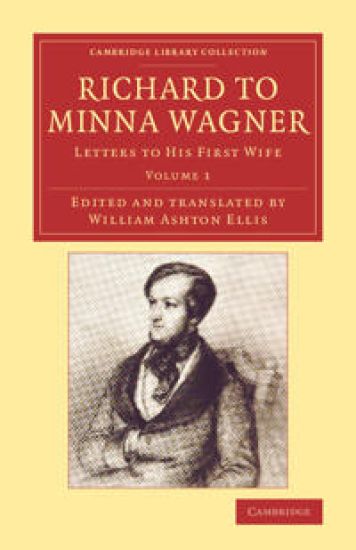
Richard to Minna Wagner

Richard to Minna Wagner

Richard Wagner

Cambridge University Press
2014
pokkari
The German actress Minna Planer (1809–66) was Wagner's first wife. Though it lasted until her death, their marriage, never an easy one, was punctuated by long periods of separation, and during its early years Minna was the main breadwinner. William Ashton Ellis (1852–1919) abandoned his medical career to devote himself to his Wagner studies. Best known for his translations of Wagner's prose works, he published in 1909 this collection of letters from the composer, translated from the originals in Baron Hans von Wolzogen's Richard Wagner an Minna Wagner (1908). Concerned predominantly with domestic and business affairs, many of them complaining at Minna's lack of support, the letters offer an intriguing and intimate view of this larger-than-life composer. Spanning 1842–58, Volume 1 covers the couple's period in Dresden, Wagner's hurried departure after the 1849 uprising, and the years in Zurich culminating in the relationship with Mathilde Wesendonck.
Richard to Minna Wagner

Richard to Minna Wagner

Richard Wagner

Cambridge University Press
2014
pokkari
The German actress Minna Planer (1809–66) was Wagner's first wife. Though it lasted until her death, their marriage, never an easy one, was punctuated by long periods of separation, and during its early years Minna was the main breadwinner. William Ashton Ellis (1852–1919) abandoned his medical career to devote himself to his Wagner studies. Best known for his translations of Wagner's prose works, he published in 1909 this collection of letters from the composer, translated from the originals in Baron Hans von Wolzogen's Richard Wagner an Minna Wagner (1908). Concerned predominantly with domestic and business affairs, many of them complaining at Minna's lack of support, the letters offer an intriguing and intimate view of this larger-than-life composer. Spanning the period 1858–63, Volume 2 covers their uneasy, brief reconciliation in Paris, Wagner's concerns over Minna's failing health, and her return to Dresden in 1862, which marked their final separation.
Richard to Minna Wagner 2 Volume Set

Richard to Minna Wagner 2 Volume Set

Richard Wagner

Cambridge University Press
2014
muu
The German actress Minna Planer (1809–66) was Wagner's first wife. Though it lasted until her death, their marriage, never an easy one, was punctuated by long periods of separation, and during its early years Minna was the main breadwinner. William Ashton Ellis (1852–1919) abandoned his medical career to devote himself to his Wagner studies. Best known for his translations of Wagner's prose works, he published in 1909 this collection of letters from the composer, translated from the originals in Baron Hans von Wolzogen's Richard Wagner an Minna Wagner (1908). Concerned predominantly with domestic and business affairs, many of them complaining at Minna's lack of support, the letters offer an intriguing and intimate view of this larger-than-life composer. Volume 1 covers the period 1842–58, during which the couple lived in Dresden and Zurich. Volume 2 spans the years 1858–63, during which the couple separated but did not divorce.
Letters of Richard Wagner to Emil Heckel

Letters of Richard Wagner to Emil Heckel

Richard Wagner

Cambridge University Press
2014
pokkari
A great admirer of Richard Wagner, the music publisher Emil Heckel (1831–1908) founded the first Wagner Society in Mannheim in 1871. His purpose was to inspire others to help raise the necessary funds for the inaugural Bayreuth Festival. William Ashton Ellis (1852–1919) abandoned his medical career in order to devote himself to his Wagner studies. Best known for his translations of Wagner's prose works, he published in 1899 this English translation of Heckel's memoirs (originally edited by his son Karl), interwoven with letters from Wagner to Heckel, who is described by the composer as his 'energetic friend'. Notwithstanding the stylistic idiosyncrasies of the translation, the work provides a valuable first-hand account of the progress made towards establishing what would become one of the world's most prestigious music festivals. The letters span the years 1871 to 1883.