Kirjojen hintavertailu. Mukana 11 244 527 kirjaa ja 12 kauppaa.

Kirjahaku

Etsi kirjoja tekijän nimen, kirjan nimen tai ISBN:n perusteella.

1000 tulosta hakusanalla Ritchie Robertson

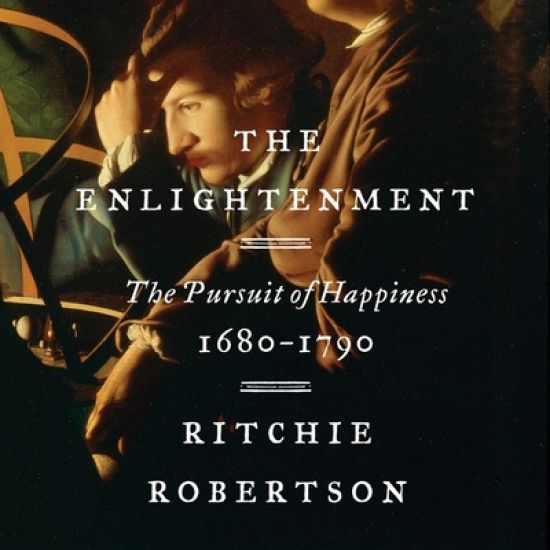
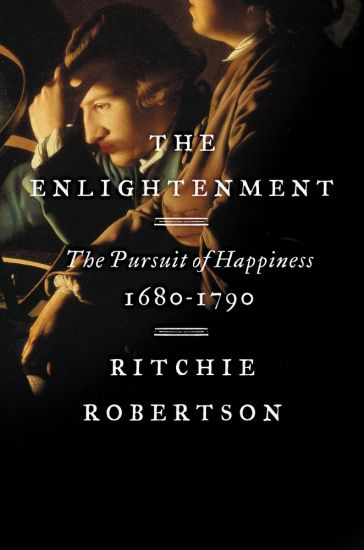
The Enlightenment: The Pursuit of Happiness, 1680-1790
A magisterial history that recasts the Enlightenment as a period not solely consumed with rationale and reason, but rather as a pursuit of practical means to achieve greater human happiness. One of the formative periods of European and world history, the Enlightenment is the fountainhead of modern secular Western values: religious tolerance, freedom of thought, speech and the press, of rationality and evidence-based argument. Yet why, over three hundred years after it began, is the Enlightenment so profoundly misunderstood as controversial, the expression of soulless calculation? The answer may be that, to an extraordinary extent, we have accepted the account of the Enlightenment given by its conservative enemies: that enlightenment necessarily implied hostility to religion or support for an unfettered free market, or that this was "the best of all possible worlds". Ritchie Robertson goes back into the "long eighteenth century," from approximately 1680 to 1790, to reveal what this much-debated period was really about.Robertson returns to the era's original texts to show that above all, the Enlightenment was really about increasing human happiness - in this world rather than the next - by promoting scientific inquiry and reasoned argument. In so doing Robertson chronicles the campaigns mounted by some Enlightened figures against evils like capital punishment, judicial torture, serfdom and witchcraft trials, featuring the experiences of major figures like Voltaire and Diderot alongside ordinary people who lived through this extraordinary moment.In answering the question 'What is Enlightenment' in 1784, Kant famously urged men and women above all to "have the courage to use your own intellect". Robertson shows how the thinkers of the Enlightenment did just that, seeking a well-rounded understanding of humanity in which reason was balanced with emotion and sensibility. Drawing on philosophy, theology, historiography and literature across the major western European languages, The Enlightenment is a master-class in big picture history about the foundational epoch of modern times.
The Enlightenment: The Pursuit of Happiness, 1680-1790
" Mr. Robertson] is a] splendid writer, astoundingly versed in European letters and gifted at vividly sketching the views of the "Enlighteners."... Robertson, armed with a prodigious knowledge of the Enlightenment's literary output, has captured the tone and spirit of this milieu." -- Wall Street JournalNow in paperback, a magisterial history that recasts the Enlightenment as a period not solely consumed with rationale and reason, but rather as a pursuit of practical means to achieve greater human happiness.One of the formative periods of European and world history, the Enlightenment is the fountainhead of modern secular Western values: religious tolerance, freedom of thought, speech and the press, of rationality and evidence-based argument. Yet why, over three hundred years after it began, is the Enlightenment so profoundly misunderstood as controversial, the expression of soulless calculation? The answer may be that, to an extraordinary extent, we have accepted the account of the Enlightenment given by its conservative enemies: that enlightenment necessarily implied hostility to religion or support for an unfettered free market, or that this was "the best of all possible worlds". Ritchie Robertson goes back into the "long eighteenth century," from approximately 1680 to 1790, to reveal what this much-debated period was really about.Robertson returns to the era's original texts to show that above all, the Enlightenment was really about increasing human happiness - in this world rather than the next - by promoting scientific inquiry and reasoned argument. In so doing Robertson chronicles the campaigns mounted by some Enlightened figures against evils like capital punishment, judicial torture, serfdom and witchcraft trials, featuring the experiences of major figures like Voltaire and Diderot alongside ordinary people who lived through this extraordinary moment.In answering the question 'What is Enlightenment' in 1784, Kant famously urged men and women above all to "have the courage to use your own intellect". Robertson shows how the thinkers of the Enlightenment did just that, seeking a well-rounded understanding of humanity in which reason was balanced with emotion and sensibility. Drawing on philosophy, theology, historiography and literature across the major western European languages, The Enlightenment is a master-class in big picture history about the foundational epoch of modern times.
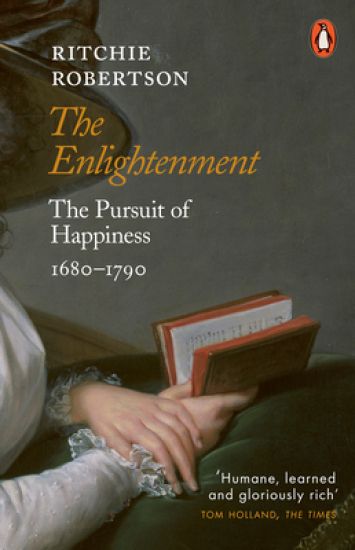
The Enlightenment

The Enlightenment

Ritchie Robertson

Penguin Books Ltd
2022
pokkari
'The best single-volume study of the Enlightenment that we have' Literary ReviewThe Enlightenment is one of the formative periods of Western history, yet more than 300 years after it began, it remains controversial. It is often seen as the fountainhead of modern values such as human rights, religious toleration, freedom of thought, scientific thought as an exemplary form of reasoning, and rationality and evidence-based argument. Others accuse the Enlightenment of putting forward a scientific rationality which ignores the complexity and variety of human beings, propagates shallow atheism, and aims to subjugate nature to so-called technical progress.Answering the question 'what is Enlightenment?' Kant famously urged men and women above all to 'have the courage to use your own understanding'. Robertson shows how the thinkers of the Enlightenment did just that, seeking a rounded understanding of humanity in which reason was balanced with emotion and sensibility. His book goes behind the controversies about the Enlightenment to return to its original texts and to show that above all it sought to increase human happiness in this world by promoting scientific inquiry and reasoned argument. His book overturns many received opinions - for example, that enlightenment necessarily implied hostility to religion (though it did challenge the authority traditionally assumed by the Churches). It is a master-class in 'big picture' history, about one of the foundational epochs of modern times.
Kafka

Kafka

Ritchie Robertson

Oxford University Press
2004
nidottu
'When Gregor Samsa awoke one morning from troubled dreams he found himself transformed in his bed into a monstrous insect ...' So begins Franz Kafka's most famous story Metamorphosis. Franz Kafka (1883-1924) is among the most intriguing and influential writers of the twentieth century. During his lifetime he worked as a civil servant and published only a handful of short stories, the best known being The Transformation. All three of his novels, The Trial, The Castle, and The Man Who Disappeared [America], were published after his death and helped to found Kafka's reputation as a uniquely perceptive interpreter of the twentieth century. Kafka's fiction vividly evokes bizarre situations: a commercial traveller is turned into an insect, a banker is arrested by a mysterious court, a fasting artist starves to death in the name of art, a singing mouse becomes the heroine of her nation. Attending both to Kafka's crisis-ridden life and to the subtleties of his art, Ritchie Robertson shows how his work explores such characteristically modern themes as the place of the body in culture, the power of institutions over people, and the possibility of religion after Nietzsche had proclaimed 'the death of God'. The result is an up-to-date and accessible portrait of a fascinating author which shows us ways to read and make sense of his perplexing and absorbing work. ABOUT THE SERIES: The Very Short Introductions series from Oxford University Press contains hundreds of titles in almost every subject area. These pocket-sized books are the perfect way to get ahead in a new subject quickly. Our expert authors combine facts, analysis, perspective, new ideas, and enthusiasm to make interesting and challenging topics highly readable.
Kafka: Judaism, Politics, and Literature

Kafka: Judaism, Politics, and Literature

Ritchie Robertson

Clarendon Press
1987
nidottu
Kafka wrote Das Urteil, his first major work of literature, in a single night in the autumn of 1912. It was for him a breakthrough, and closely connected with it was the awakening of his interest in Jewish culture. This is a general study of Kafka, which explores the literary and historical context of his writings, and links them with his emergent sense of Jewish identity. What is emphasized throughout is Kafka's concern with contemporary society - his distrust of its secular, humanitarian ideals - and his desire for a new kind of community, based on religion.
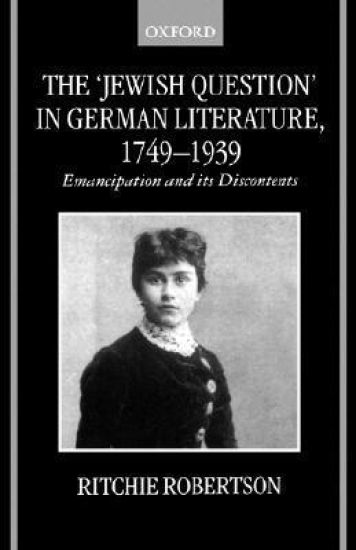
The 'Jewish Question' in German Literature, 1749-1939
The Jewish Question in German Literature, 1749-1939 is an erudite and searching literary study of the uneasy position of the Jews in Germany and Austria from the first pleas for Jewish emancipation during the Enlightenment to the eve of the Holocaust. Trying to avoid hindsight, and drawing on a wide range of literary texts, Ritchie Robertson offers a close examination of attempts to construct a Jewish identity suitable for an increasingly secular world. He examines both literary portrayals of Jews by Gentile writers - whether antisemitic, friendly, or ambivalent - and efforts to reinvent Jewish identities by the Jews themselves, in response to antisemitism culminating in Zionism. No other study by a single author deals with German-Jewish relations so comprehensively and over such a long period of literary history. Robertson's new work will prove stimulating for anyone interested in the modern Jewish experience, as well as for scholars and students of German fiction, prose, and political culture.
The 'Jewish Question' in German Literature, 1749-1939

The 'Jewish Question' in German Literature, 1749-1939

Ritchie Robertson

Oxford University Press
2001
nidottu
The 'Jewish Question' in German Literature, 1749-1939 is an erudite and searching literary study of the uneasy position of the Jews in Germany and Austria from the first pleas for Jewish emancipation during the Enlightenment to the eve of the Holocaust. Trying to avoid hindsight, and drawing on a wide range of literary texts, Ritchie Robertson offers a close examination of attempts to construct a Jewish identity suitable for an increasingly secular world. He examines both literary portrayals of Jews by Gentile writers - whether antisemitic, friendly, or ambivalent - and efforts to reinvent Jewish identities by the Jews themselves, in response to antisemitism culminating in Zionism. No other study by a single author deals with German-Jewish relations so comprehensively and over such a long period of literary history. Robertson's new work will prove stimulating for anyone interested in the modern Jewish experience, as well as for scholars and students of German fiction, prose, and political culture.
Mock-Epic Poetry from Pope to Heine

Mock-Epic Poetry from Pope to Heine

Ritchie Robertson

Oxford University Press
2009
sidottu
This is a study of mock-epic poetry in English, French, and German from the 1720s to the 1840s. While mock-heroic poetry is a parodistic counterpart to serious epic, mock-epic poetry starts by parodying epic but moves on to much wider and richer literary explorations; it relies heavily on intertextual allusion to other works, on narratorial irony, on the sympathetic and sometimes libertine presentation of sexual relatons, and on a range of satirical devices. It includes well-known texts (Pope's Dunciad, Byron's Don Juan, Heine's Atta Troll) and others which are little known (Ratschky's Melchior Striregel, Parny's La Guerre des Dieux). It owes a marked debt to Italian romance epic (especially Ariosto). The study places these texts in the literary context of the decline of serious epic, which helped mock epic to flourish, and of the 'Querelle des Anciens et des Modernes' which questioned the authority of Homer's and Virgil's epics; and it relates their substance to contemporary debates about questions of religion and gender.
Goethe

Goethe

Ritchie Robertson

Oxford University Press
2016
nidottu
In 1878 the Victorian critic Matthew Arnold wrote: 'Goethe is the greatest poet of modern times... because having a very considerable gift for poetry, he was at the same time, in the width, depth, and richness of his criticism of life, by far our greatest modern man.' In this Very Short Introduction Ritchie Robertson covers the life and work of Johann Wolfgang von Goethe (1749-1832): scientist, administrator, artist, art critic and supreme literary writer in a vast variety of genres. Looking at Goethe's poetry, novels and drama pieces, as well as his travel writing, autobiography, and essays on art and aesthetics, Robertson analyses some of the key themes in his works: love, nature, religion and tragedy. Dispelling the misconception of Goethe as a sedate Victorian sage, Robertson shows how much of his art was rooted in turbulent personal conflicts, and draws on recent research to present a complete portrait of the scientific work and political activity which accompanied Goethe's writings. ABOUT THE SERIES: The Very Short Introductions series from Oxford University Press contains hundreds of titles in almost every subject area. These pocket-sized books are the perfect way to get ahead in a new subject quickly. Our expert authors combine facts, analysis, perspective, new ideas, and enthusiasm to make interesting and challenging topics highly readable.
The Enlightenment: The Pursuit of Happiness, 1680-1790
A magisterial history that recasts the Enlightenment as a period not solely consumed with rationale and reason, but rather as a pursuit of practical means to achieve greater human happiness. One of the formative periods of European and world history, the Enlightenment is the fountainhead of modern secular Western values: religious tolerance, freedom of thought, speech and the press, of rationality and evidence-based argument. Yet why, over three hundred years after it began, is the Enlightenment so profoundly misunderstood as controversial, the expression of soulless calculation? The answer may be that, to an extraordinary extent, we have accepted the account of the Enlightenment given by its conservative enemies: that enlightenment necessarily implied hostility to religion or support for an unfettered free market, or that this was "the best of all possible worlds". Ritchie Robertson goes back into the "long eighteenth century," from approximately 1680 to 1790, to reveal what this much-debated period was really about.Robertson returns to the era's original texts to show that above all, the Enlightenment was really about increasing human happiness - in this world rather than the next - by promoting scientific inquiry and reasoned argument. In so doing Robertson chronicles the campaigns mounted by some Enlightened figures against evils like capital punishment, judicial torture, serfdom and witchcraft trials, featuring the experiences of major figures like Voltaire and Diderot alongside ordinary people who lived through this extraordinary moment.In answering the question 'What is Enlightenment' in 1784, Kant famously urged men and women above all to "have the courage to use your own intellect". Robertson shows how the thinkers of the Enlightenment did just that, seeking a well-rounded understanding of humanity in which reason was balanced with emotion and sensibility. Drawing on philosophy, theology, historiography and literature across the major western European languages, The Enlightenment is a master-class in big picture history about the foundational epoch of modern times.
The Enlightenment: The Pursuit of Happiness, 1680-1790

The Enlightenment: The Pursuit of Happiness, 1680-1790

Ritchie Robertson

Harpercollins
2021
mp3 cd-levyllä
A magisterial history that recasts the Enlightenment as a period not solely consumed with rationale and reason, but rather as a pursuit of practical means to achieve greater human happiness. One of the formative periods of European and world history, the Enlightenment is the fountainhead of modern secular Western values: religious tolerance, freedom of thought, speech and the press, of rationality and evidence-based argument. Yet why, over three hundred years after it began, is the Enlightenment so profoundly misunderstood as controversial, the expression of soulless calculation? The answer may be that, to an extraordinary extent, we have accepted the account of the Enlightenment given by its conservative enemies: that enlightenment necessarily implied hostility to religion or support for an unfettered free market, or that this was "the best of all possible worlds". Ritchie Robertson goes back into the "long eighteenth century," from approximately 1680 to 1790, to reveal what this much-debated period was really about.Robertson returns to the era's original texts to show that above all, the Enlightenment was really about increasing human happiness - in this world rather than the next - by promoting scientific inquiry and reasoned argument. In so doing Robertson chronicles the campaigns mounted by some Enlightened figures against evils like capital punishment, judicial torture, serfdom and witchcraft trials, featuring the experiences of major figures like Voltaire and Diderot alongside ordinary people who lived through this extraordinary moment.In answering the question 'What is Enlightenment' in 1784, Kant famously urged men and women above all to "have the courage to use your own intellect". Robertson shows how the thinkers of the Enlightenment did just that, seeking a well-rounded understanding of humanity in which reason was balanced with emotion and sensibility. Drawing on philosophy, theology, historiography and literature across the major western European languages, The Enlightenment is a master-class in big picture history about the foundational epoch of modern times.
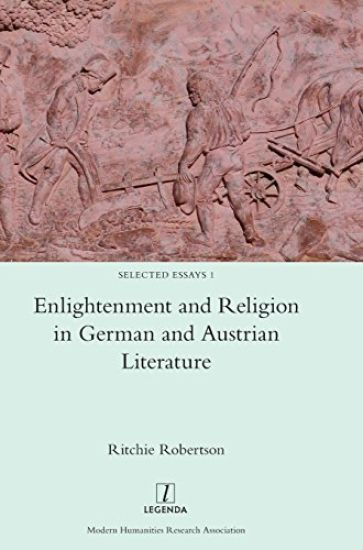
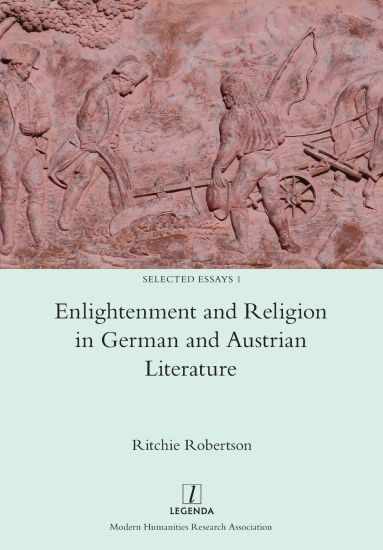
Enlightenment and Religion in German and Austrian Literature
Religion and enlightenment, the twin themes of this volume, always exist in tension. The tensions, affinities, and conflicts between the two, as they play out in German literature from Goethe, Schiller and Kleist down to Kafka and Thomas Mann, are explored in this volume, with one section examining their interplay in the neglected Austrian Enlightenment. Thanks to the historical and textual criticism of the Bible, the 'sea of faith' began its withdrawal sooner in Germany than in England, and this collection traces its retreat, looking especially at Nietzsche's militant opposition to Christianity and at the expression in some modernist writing of a distinctly post-Christian and even post-human outlook.Ritchie Robertson is Taylor Professor of German at the University of Oxford. This book aims to make more widely available some 27 of his essays on the theme of Enlightenment and religion, in both Germany and Austria, which are otherwise widely scattered in journals published over the last twenty years.
Friedrich Nietzsche

Friedrich Nietzsche

Ritchie Robertson

REAKTION BOOKS
2022
nidottu
In this concise yet comprehensive critical biography, Ritchie Robertson examines the work of Friedrich Nietzsche within the context of his life. The book traces Nietzsche’s development from outstanding classical scholar to cultural critic, who measured Imperial Germany by the standards of ancient Greece. It follows him thence to prophet (in the persona of Zarathustra) and savage polemicist against modern liberal values, offering a ‘philosophy of the future’. Robertson argues that Nietzsche’s middle-period writings offer a subtle and searching analysis of his culture, more rewarding than the strident and often-controversial later works. The book also assesses Nietzsche’s claim to be continuing the Enlightenment, and shows that he valued reason, evidence and fact, without which his historical case against Christianity would make no sense.
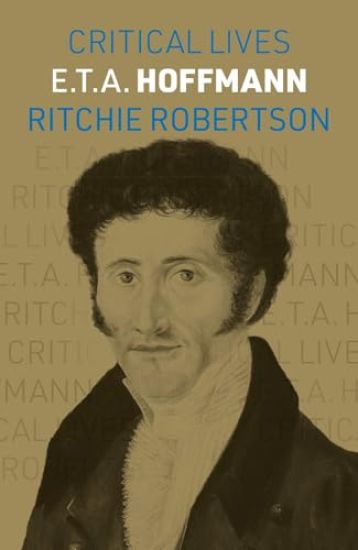
E.T.A. Hoffmann

E.T.A. Hoffmann

Ritchie Robertson

REAKTION BOOKS
2025
nidottu
E.T.A. Hoffmann (1776–1822) is celebrated for his supernatural fiction such as 'The Sandman' as well as his musical achievements, notably the opera Undine. This book offers a concise yet comprehensive introduction to Hoffmann as a Romantic writer, composer and public figure. It follows his life as a lawyer, theatre director and senior judge in Berlin, where he clashed with authorities over their persecution of student radicals. Drawing on Hoffmann’s personal writings and contemporary recollections, it also highlights how historical events like Napoleon’s invasion disrupted his career. By combining his literary and musical contributions, the book presents Hoffmann as a multifaceted artist whose inventiveness, both comic and spine-chilling, remain influential today.
German Political Tragedy

German Political Tragedy

Ritchie Robertson

Legenda
2024
sidottu
German literature from roughly 1750 to 1850 has a tradition of tragic drama unmatched by any other literature in that period. To an extent seldom recognized, this drama engages with political themes. Robertson traces these themes back to the thought of Machiavelli, its reception, and its frequent distortion by subsequent theorists, especially in the early modern concept of 'reason of state' and the nineteenth-century notion of Realpolitik. Writers from the Baroque dramatist Lohenstein via Goethe, Schiller and Kleist, through Nietzsche and Wagner and on down to Brecht and Hochhuth in the twentieth century employ the tragic dilemmas of history or mythology to exemplify the hard political choices we may also have to make in the present. Were the troubling decisions of Cleopatra, Elizabeth I, Wallenstein, and Pope Pius XII genuinely necessary? Were their machiavels and courtiers offering wise counsel, or cynical amorality?Ritchie Robertson retired in 2021 as Schwarz-Taylor Professor of German at the University of Oxford. He is a Fellow of the British Academy. His recent books include the acclaimed intellectual history The Enlightenment: The Pursuit of Happiness, 1680-1790 (Penguin, 2020).
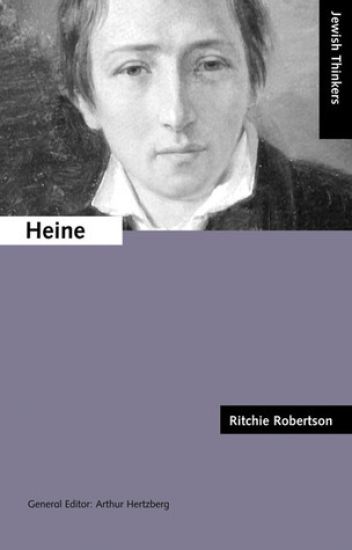
Heine

Heine

Ritchie Robertson

Peter Halban Publishers Ltd
2005
pokkari
Heinrich Heine (1797-1856) is one of Germany's greatest writers of verse and prose. His agile mind and brilliant wit expressed themselves in lyric and satiric verse, travel writing and essays on literature, art, politics and history. He was a great satirist and thinker - but not a philosopher. One of his most perceptive admirers, Friedrich Nietzsche, said of him, 'he possessed that divine malice without which perfection, for me, is unimaginable'. Born into a world changed forever by the French Revolution, Heine grew up in a Düsseldorf that formed part of the Napoleonic Empire. He was always acutely aware of history and politics and engaged with them in all his writings.
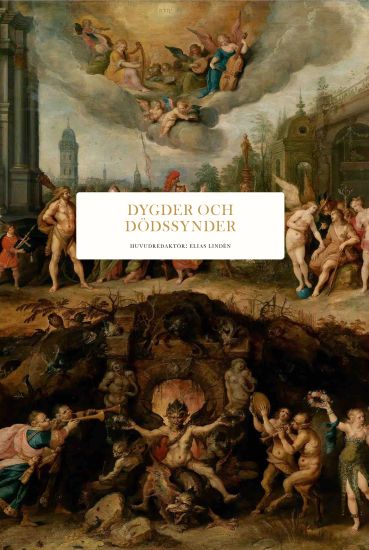
Virtues and Vices

Virtues and Vices

Katarina Barrling; David Butterfield; Pär Cassel; Marie Kawthar Daouda; Torbjörn Elensky; Jessica Frazier; Peter Haldén; Thomas Idergard; Anthony Pagden; Ritchie Robertson; Hans Ruin; Malise Ruthven; Mateusz Strózynski; Fredrik Svenaeus; Sten Widmalm

Bokförlaget Stolpe
2026
sidottu
Vad är en dygd och vad är en synd? Går det att säga om våra handlingar är onda eller goda? Varje epok och kultur har haft sina respektive svar på dessa eviga frågor. I en västerländsk, protestantisk tradition har människokroppen och dess begär exempelvis ansetts vara inneboende onda, men det är ingen självklarhet i andra kulturer. Dygd och synd verkar representera en dualitet som är lika gammal som mänskligheten. Denna antologi utforskar hur uppfattningar om dygder och synder har förändrats genom historien. Essäerna tar avstamp i antikens Grekland och Rom, rör sig över den tidiga kristna perioden från Augustinus till Dante, och fram till sentida tänkare som Friedrich Nietzsche. Skribenterna, såväl svenska som internationella forskare, gör också nedslag i alltifrån det konfucianska Kina och forntida Indien till självhjälpsböcker, transhumanism och AI, samt de mänskliga rättigheternas vara eller icke vara. Boken utkommer även på svenska, Dygder och dödsynder.
Dygder och dödssynder

Dygder och dödssynder

Katarina Barrling; David Butterfield; Pär Cassel; Marie Kawthar Daouda; Torbjörn Elensky; Jessica Frazier; Peter Haldén; Thomas Idergard; Anthony Pagden; Ritchie Robertson; Hans Ruin; Malise Ruthven; Mateusz Strózynski; Fredrik Svenaeus; Sten Widmalm

Bokförlaget Stolpe
2026
sidottu
Vad är en dygd och vad är en synd? Går det att säga om våra handlingar är onda eller goda? Varje epok och kultur har haft sina respektive svar på dessa eviga frågor. I en västerländsk, protestantisk tradition har människokroppen och dess begär exempelvis ansetts vara inneboende onda, men det är ingen självklarhet i andra kulturer. Dygd och synd verkar representera en dualitet som är lika gammal som mänskligheten. Denna antologi utforskar hur uppfattningar om dygder och synder har förändrats genom historien. Essäerna tar avstamp i antikens Grekland och Rom, rör sig över den tidiga kristna perioden från Augustinus till Dante, och fram till sentida tänkare som Friedrich Nietzsche. Skribenterna, såväl svenska som internationella forskare, gör också nedslag i alltifrån det konfucianska Kina och forntida Indien till självhjälpsböcker, transhumanism och AI, samt de mänskliga rättigheternas vara eller icke vara. Boken finns även på engelska.