Kirjojen hintavertailu. Mukana 11 244 527 kirjaa ja 12 kauppaa.

Kirjahaku

Etsi kirjoja tekijän nimen, kirjan nimen tai ISBN:n perusteella.

1000 tulosta hakusanalla Rivers William James

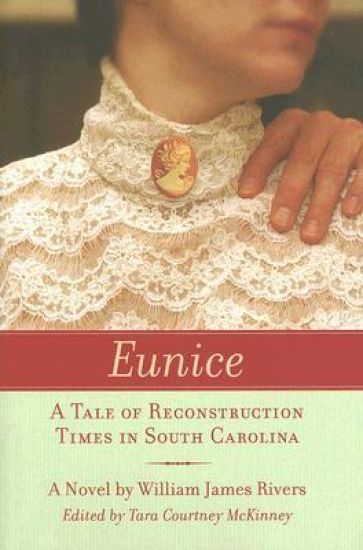
Eunice

Eunice

Rivers William James

University of South Carolina Press
2006
sidottu
Noted nineteenth-century South Carolina historian and novelist, James Williams Rivers penned this lost tale of the Reconstruction era years before the Lost Cause romance became a genre all its own. Published here for the first time, ""Eunice"" combines the historical treasure trove of the author's eyewitness accounts of the Civil War and Reconstruction with his literary plot about a Southern woman choosing love over conventional expectations. ""Eunice"" opens with the burning of Columbia on February 17, 1865, as drawn from Rivers's own firsthand experience of the event. Wade Hampton and his Red Shirts, the Ku Klux Klan, African Americans, and carpetbaggers (corrupt and honourable alike) inhabit River's fictional world. The novel centers on Eunice DeLesline, a Southern belle impoverished by the war and faced with divergent visions of Southern masculinity. Competing for her hand are Willie Barton, a son of the Old South, and Colonel Loyle, a self-made Confederate captain. A carpetbagger's plot to kidnap Eunice drives the action and presents Rivers with ample opportunity to voice his opinions on race, gender, and power in this transitional period in American history. Eunice's dilemma of which suitor to wed serves as metaphor for debate over what kind of Southerner might best lead the region. Eunice sides with her heart and invites a new era of prosperity. In using historical episodes as a framework for his story, Rivers adopts the technique of another South Carolina novelist and historian, William Gilmore Simms. Like his fellow Reconstruction novelists John W. De Forest, Albion Tourgee, and Charles E. Craddock (Mary Murphree), Rivers uses fiction as a means to explore how the nation would or would not reunite following the war. However, he takes a more pointed approach than others in defining what kind of leadership would best serve the postbellum South. Tara Courtney McKinney's introduction sets the story in its proper cultural context and provides valuable biographical information on an important, though overlooked, Southern writer.

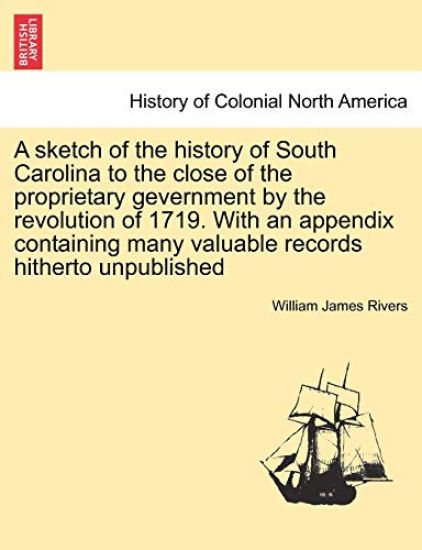
A Sketch of the History of South Carolina to the Close of the Proprietary Gevernment by the Revolution of 1719. with an Appendix Containing Many Valuable Records Hitherto Unpublished
Title: A sketch of the history of South Carolina to the close of the proprietary gevernment by the revolution of 1719. With an appendix containing many valuable records hitherto unpublished.Publisher: British Library, Historical Print EditionsThe British Library is the national library of the United Kingdom. It is one of the world's largest research libraries holding over 150 million items in all known languages and formats: books, journals, newspapers, sound recordings, patents, maps, stamps, prints and much more. Its collections include around 14 million books, along with substantial additional collections of manuscripts and historical items dating back as far as 300 BC.The HISTORY OF COLONIAL NORTH AMERICA collection includes books from the British Library digitised by Microsoft. This collection refers to the European settlements in North America through independence, with emphasis on the history of the thirteen colonies of Britain. Attention is paid to the histories of Jamestown and the early colonial interactions with Native Americans. The contextual framework of this collection highlights 16th century English, Scottish, French, Spanish, and Dutch expansion. ++++The below data was compiled from various identification fields in the bibliographic record of this title. This data is provided as an additional tool in helping to insure edition identification: ++++ British Library Rivers, William James; 1856. 8 . 1324.h.5.
River Keeper: The Life of William James Lunn

River Keeper: The Life of William James Lunn

John Waller Hills

Literary Licensing, LLC
2013
sidottu
River Keeper: The Life of William James Lunn is a biography written by John Waller Hills. The book tells the story of William James Lunn, a legendary river keeper who worked on the chalk streams of southern England in the early 20th century. Lunn was a master of his craft, and his expertise in fly fishing, river management, and conservation made him a revered figure in the angling world. The book covers Lunn's life from his childhood in rural Hampshire to his rise as a river keeper on the River Test, one of the most famous trout streams in the world. The author draws on extensive research and interviews with Lunn's family and colleagues to paint a vivid picture of the man and his world. Through Lunn's story, the book also explores the history of fly fishing and river management in England, as well as the social and cultural changes that shaped the countryside in the early 20th century. River Keeper: The Life of William James Lunn is a tribute to a remarkable man and a bygone era of rural life. It is a must-read for anyone interested in fly fishing, conservation, or the history of the English countryside.This is a new release of the original 1936 edition.This scarce antiquarian book is a facsimile reprint of the old original and may contain some imperfections such as library marks and notations. Because we believe this work is culturally important, we have made it available as part of our commitment for protecting, preserving, and promoting the world's literature in affordable, high quality, modern editions, that are true to their original work.
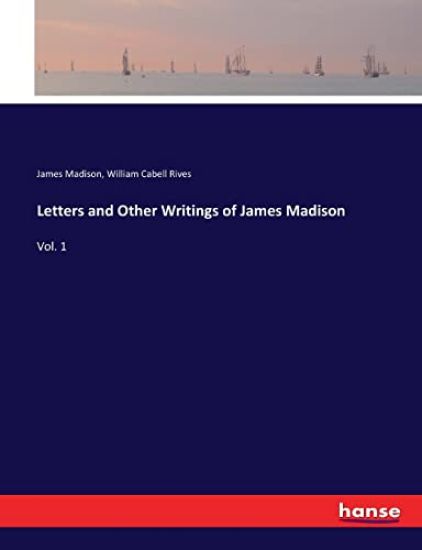
Letters and Other Writings of James Madison

Letters and Other Writings of James Madison

James Madison; William Cabell Rives

Hansebooks
2017
pokkari
Letters and Other Writings of James Madison - Vol. 1 is an unchanged, high-quality reprint of the original edition of 1865. Hansebooks is editor of the literature on different topic areas such as research and science, travel and expeditions, cooking and nutrition, medicine, and other genres. As a publisher we focus on the preservation of historical literature. Many works of historical writers and scientists are available today as antiques only. Hansebooks newly publishes these books and contributes to the preservation of literature which has become rare and historical knowledge for the future.
Information for James Earl of Moray, and William Earl of Fife, Pursuers; Against Alexander Duke of Gordon, and his Curators, and John Gordon of Clunie, and Others, Tacksmen of his Grace's Fishings Upon the River of Spey, Defenders
The 18th century was a wealth of knowledge, exploration and rapidly growing technology and expanding record-keeping made possible by advances in the printing press. In its determination to preserve the century of revolution, Gale initiated a revolution of its own: digitization of epic proportions to preserve these invaluable works in the largest archive of its kind. Now for the first time these high-quality digital copies of original 18th century manuscripts are available in print, making them highly accessible to libraries, undergraduate students, and independent scholars.This collection reveals the history of English common law and Empire law in a vastly changing world of British expansion. Dominating the legal field is the Commentaries of the Law of England by Sir William Blackstone, which first appeared in 1765. Reference works such as almanacs and catalogues continue to educate us by revealing the day-to-day workings of society.++++The below data was compiled from various identification fields in the bibliographic record of this title. This data is provided as an additional tool in helping to insure edition identification: ++++Bodleian Library (Oxford)T219927Dated at head of the drop-head title: March 15th, 1760. Edinburgh, 1760]. 24p.; 4
The James River Tourist

The James River Tourist

William Dallas Chesterman

Hansebooks
2017
pokkari
The James River Tourist - A brief account of historical localities on James river, and sketches of Richmond, Norfolk, and Portsmouth is an unchanged, high-quality reprint of the original edition of 1889. Hansebooks is editor of the literature on different topic areas such as research and science, travel and expeditions, cooking and nutrition, medicine, and other genres. As a publisher we focus on the preservation of historical literature. Many works of historical writers and scientists are available today as antiques only. Hansebooks newly publishes these books and contributes to the preservation of literature which has become rare and historical knowledge for the future.
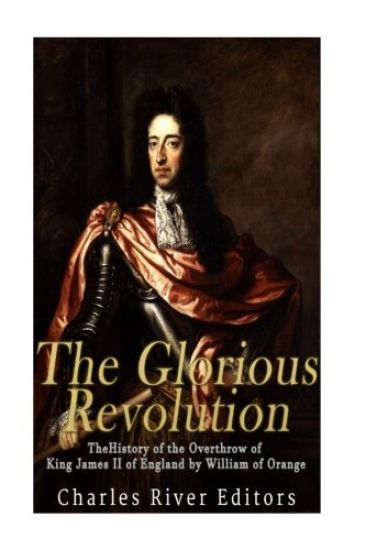
The Glorious Revolution: The History of the Overthrow of King James II of England by William of Orange
*Includes pictures *Includes quotes and accounts from people involved *Includes online resources and a bibliography *Includes a table of contents "We have great reason to believe, we shall be every day in a worse condition than we are, and less able to defend ourselves, and therefore we do earnestly wish we might be so happy as to find a remedy before it be too late for us to contribute to our own deliverance ... the people are so generally dissatisfied with the present conduct of the government, in relation to their religion, liberties and properties (all which have been greatly invaded), and they are in such expectation of their prospects being daily worse, that your Highness may be assured, there are nineteen parts of twenty of the people throughout the kingdom, who are desirous of a change; and who, we believe, would willingly contribute to it, if they had such a protection to countenance their rising, as would secure them from being destroyed. - Excerpt from the invitation by The Seven to William of Orange to become monarch 17th century Europe, particularly its latter years, is often hailed as the beginning of the Enlightenment as nations across the continent experienced a surge in innovation and scientific progress, a period also commonly referred to as the Age of Reason. There was English natural philosopher, Francis Bacon, whose book Novum Organum challenged Aristotelian philosophy and stressed the significance of inductive reasoning. Bacon's ideas, which emphasized observation and the implementation of various premises to form conclusions, was later referenced by famed French mathematician Ren Descartes. The Enlightenment had been awakened by the European Age of Discovery, a transformative era that succeeded the Medieval Years of Yore, but the continent was also a seedbed of insurrection, holy wars, and volatility. People were growing weary of the unpredictable system of monarchy, a post that was inherited only by members of an exclusive bloodline or connection, one that often muted the voices of the people. Time and time again, grossly incompetent and seemingly diabolic rulers had come to power through the rigged regal system. The Glorious Revolution is an intriguing story of a power war exacerbated by ruthless ambition, under-the-table plotting, and the treachery of familial betrayal. In 1678, a sinister scheme to assassinate King Charles II was unearthed, sending the public into a frenzy of mass panic. Fingers were pointed at the Catholics, who had been accused of concocting the elaborate conspiracy, and this very event would intensify the white-hot flames of the Anti-Catholic hysteria that was already running unchecked within the nation. 7 years later, the openly Catholic King James II rose to the throne, and needless to say, the largely Protestant public was anything but pleased. As the people slowly turned against him, the king's daughter, Mary, and her husband, William of Orange, watched across the English Channel from a distance. The people were begging for change in a broken system, and something drastic had to and would be done. The Glorious Revolution: The History of the Overthrow of King James II of England by William of Orange explores the story of an English kingdom in turmoil, and how one king's overly ambitious quest led to his undoing. It also tells the story of how the aspiring monarchs achieved their prize in this "Bloodless Revolution" with a political game of cat and mouse, assisted along the way by secret plotting, persistence, and betrayal in order to forever change the course of history. Along with pictures depicting important people, places, and events, you will learn about the Glorious Revolution like never before.
The Glorious Revolution: The History of the Overthrow of King James II of England by William of Orange
*Includes pictures *Includes quotes and accounts from people involved *Includes online resources and a bibliography *Includes a table of contents "We have great reason to believe, we shall be every day in a worse condition than we are, and less able to defend ourselves, and therefore we do earnestly wish we might be so happy as to find a remedy before it be too late for us to contribute to our own deliverance ... the people are so generally dissatisfied with the present conduct of the government, in relation to their religion, liberties and properties (all which have been greatly invaded), and they are in such expectation of their prospects being daily worse, that your Highness may be assured, there are nineteen parts of twenty of the people throughout the kingdom, who are desirous of a change; and who, we believe, would willingly contribute to it, if they had such a protection to countenance their rising, as would secure them from being destroyed. - Excerpt from the invitation by The Seven to William of Orange to become monarch 17th century Europe, particularly its latter years, is often hailed as the beginning of the Enlightenment as nations across the continent experienced a surge in innovation and scientific progress, a period also commonly referred to as the Age of Reason. There was English natural philosopher, Francis Bacon, whose book Novum Organum challenged Aristotelian philosophy and stressed the significance of inductive reasoning. Bacon's ideas, which emphasized observation and the implementation of various premises to form conclusions, was later referenced by famed French mathematician Ren Descartes. The Enlightenment had been awakened by the European Age of Discovery, a transformative era that succeeded the Medieval Years of Yore, but the continent was also a seedbed of insurrection, holy wars, and volatility. People were growing weary of the unpredictable system of monarchy, a post that was inherited only by members of an exclusive bloodline or connection, one that often muted the voices of the people. Time and time again, grossly incompetent and seemingly diabolic rulers had come to power through the rigged regal system. The Glorious Revolution is an intriguing story of a power war exacerbated by ruthless ambition, under-the-table plotting, and the treachery of familial betrayal. In 1678, a sinister scheme to assassinate King Charles II was unearthed, sending the public into a frenzy of mass panic. Fingers were pointed at the Catholics, who had been accused of concocting the elaborate conspiracy, and this very event would intensify the white-hot flames of the Anti-Catholic hysteria that was already running unchecked within the nation. 7 years later, the openly Catholic King James II rose to the throne, and needless to say, the largely Protestant public was anything but pleased. As the people slowly turned against him, the king's daughter, Mary, and her husband, William of Orange, watched across the English Channel from a distance. The people were begging for change in a broken system, and something drastic had to and would be done. The Glorious Revolution: The History of the Overthrow of King James II of England by William of Orange explores the story of an English kingdom in turmoil, and how one king's overly ambitious quest led to his undoing. It also tells the story of how the aspiring monarchs achieved their prize in this "Bloodless Revolution" with a political game of cat and mouse, assisted along the way by secret plotting, persistence, and betrayal in order to forever change the course of history. Along with pictures depicting important people, places, and events, you will learn about the Glorious Revolution like never before.