Kirjojen hintavertailu. Mukana 12 518 508 kirjaa ja 12 kauppaa.

Kirjahaku

Etsi kirjoja tekijän nimen, kirjan nimen tai ISBN:n perusteella.

1000 tulosta hakusanalla Robert A. Dahl

Robert A. Dahl
This book is devoted to the work of Robert A. Dahl, who passed away in 2014. Dahl was one of the most important American political scientists and normative democratic theorists of the post-war era, and he was also an influential teacher who mentored some of the most significant academics of the next two generations of American political science. As an incredibly productive scholar he had a career that spanned more than half a century, his first book was published in 1950 his last was in 2007 at the age of 92. As a political scientist, he was respected even by those who were critical of his works. This theoretical significance and profound influence is reflected in the collection of chapters in this volume, which reads like a ‘who’s who’ of the contemporary US political science scene. His co-author Bruce Stinebrickner documents the evolution of his and Dahl’s seminal text, Modern Political Analysis and how it became the standard introduction to American political science for nearly fifty years. Katharine MacKinnon’s chapter is of significance for its insights upon Dahl and also represents a succinct statement of a feminist reading and critique of contemporary political science. Steven Lukes contributes a highly concise statement of the difference between one-dimensional and three-dimensional power.This work will be a standard reference work for any researchers or those interested in the work of Robert Dahl, among both established academics and students. This book was originally published as a special issue of the Journal of Political Power.
Robert A. Dahl

Robert A. Dahl

Palle Svensson

Jurist- og økonom-
2011
nidottu
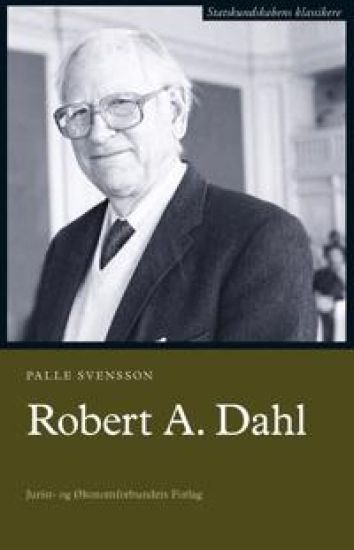
Robert A. Dahl betragtes som demokratiteoretiker, og som vore tids største, omend han aldrig selv har sigtet at ende som dette. Robert a. Dahl opfatter derimod sin akademiske produktion som problemorienteret. Han har således taget fat på en lang række spørgsmål, ofte med både teoretiske, empiriske og moralske aspekter, og han har arbejdet med vidt forskellige metoder for at besvare de spørgsmål, som han har taget op. Robert A. Dahls pragmatiske forhold til forskellige metoder finder markant udtryk i hans tese: "... det spørgsmål, man ønsker at undersøge, bør diktere valget af metode, en metode bør aldrig diktere valget af spørgsmål." Indholdsoversigt Redaktionelt forord ved Peter Nedergaard Kapitel 1. En kort biografi Kapitel 2. Bidrag til statskundskaben Kapitel 3. Teoretisk indflydelse Kapitel 4. Politisk indflydelse og aktualitet Kapitel 5. Udvalgte tekster Litteratur Palle Svensson, Dr.scient.pol., er ansat som professor på Aarhus Universitet på Institut for Statskundskab. Hans forskningsområde er institutionel forandring og demokratisering og han beskæftiger sig med demokratisering på nationalt, internationalt og tværnationalt niveau. Palle Svensson har siden 1993 fungeret som rådgiver for det danske udenrigsministerium om valg og demokratisering i Afrika.
Robert A. Dahl

Robert A. Dahl

VDM Publishing House
2010
nidottu
Observera att förlaget som ger ut denna produkt baserar innehållet i sina produkter på fria källor som Wikipedia. Boken är med stor sannolikhet endast ett utdrag ur dessa informationskällor, alltså inte en vanlig bok i den bemärkelsen.
Robert A. Dahl: an unended quest
This book is devoted to the work of Robert A. Dahl, who passed away in 2014. Dahl was one of the most important American political scientists and normative democratic theorists of the post-war era, and he was also an influential teacher who mentored some of the most significant academics of the next two generations of American political science. As an incredibly productive scholar he had a career that spanned more than half a century, his first book was published in 1950 his last was in 2007 at the age of 92. As a political scientist, he was respected even by those who were critical of his works. This theoretical significance and profound influence is reflected in the collection of chapters in this volume, which reads like a ‘who’s who’ of the contemporary US political science scene. His co-author Bruce Stinebrickner documents the evolution of his and Dahl’s seminal text, Modern Political Analysis and how it became the standard introduction to American political science for nearly fifty years. Katharine MacKinnon’s chapter is of significance for its insights upon Dahl and also represents a succinct statement of a feminist reading and critique of contemporary political science. Steven Lukes contributes a highly concise statement of the difference between one-dimensional and three-dimensional power.This work will be a standard reference work for any researchers or those interested in the work of Robert Dahl, among both established academics and students. This book was originally published as a special issue of the Journal of Political Power.
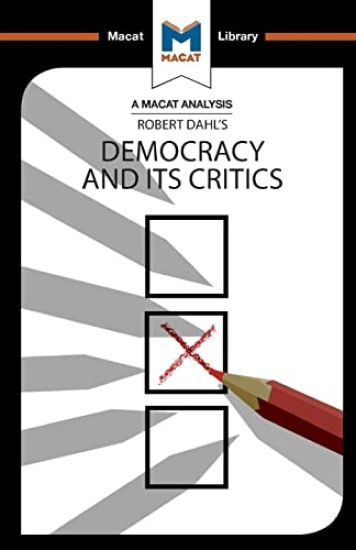
An Analysis of Robert A. Dahl's Democracy and its Critics

An Analysis of Robert A. Dahl's Democracy and its Critics

Astrid Noren Nilsson; Elizabeth Morrow; Riley Quinn

Macat International Limited
2017
nidottu
There are few better examples of analysis – the critical thinking skill of understanding how an argument is built – than Robert Dahl’s Democracy and its Critics. In this work, the American political theorist closely analyzes the democratic political system and then evaluates whether the arguments that are in favor of it are, in fact, rigorous. ¶Dahl sets out to describe democracy’s merits and problems, asking if it really is the worthwhile political system we believe it to be. Knowing that the idea of democracy is now almost universally popular, his detailed analysis leads him to look at a number of regimes that claim to be democratic but do not, in truth, practice democracy. But Dahl is not only interested in uncovering uncomfortable truths. He goes further and creates a set of standards by which we can all decide whether a country really is democratic. Dahl’s analysis of the evidence leads him to conclude that the following criteria must be met for a regime to be considered truly democratic: elected officials control policy-making; there are free and fair elections of officials; everyone must have a right to vote; everyone has the right to run for office; there is freedom of speech; alternative information is available; and people can form free, independent political groups.
An Analysis of Robert A. Dahl's Who Governs? Democracy and Power in an American City

An Analysis of Robert A. Dahl's Who Governs? Democracy and Power in an American City

Astrid Noren Nilsson; Jason Xidias

Macat International Limited
2017
nidottu
American political theorist Robert Dahl’s 1961 work of political theory exhibits deep levels of creative thinking. When Dahl wrote, the American system of liberal democracy was generally considered to be shaped by a small group of powerful individuals who dominate because they are wealthy and influential. But by connecting the evidence in a new way in Who Governs? Dahl argued convincingly against this view.Dahl suggested that power is actually distributed among a number of competing groups, and that each of those groups seeks to influence decisions. He puts forward a definition of political power as the ability to make others do what you want them to, concluding that – while most people do not actively participate in politics and so do not exert a direct influence – power is still fragmented, and citizens do indirectly shape decision-making.Dahl’s novel explanation of the existing evidence emerged from a study of three areas of policy-making in the city of New Haven: political nominations, urban redevelopment, and public education. His research revealed that different people wielded power in each area, and that only the mayor, whose power is checked by those who vote for him, was powerful in all three. These new connections allowed Dahl to arrive at fresh conclusions and convincingly demonstrated that the US operates a pluralist system in which power is divided between different interest groups.
An Analysis of Robert A. Dahl's Who Governs? Democracy and Power in an American City

An Analysis of Robert A. Dahl's Who Governs? Democracy and Power in an American City

Astrid Noren Nilsson; Jason Xidias

Macat International Limited
2017
sidottu
American political theorist Robert Dahl’s 1961 work of political theory exhibits deep levels of creative thinking. When Dahl wrote, the American system of liberal democracy was generally considered to be shaped by a small group of powerful individuals who dominate because they are wealthy and influential. But by connecting the evidence in a new way in Who Governs? Dahl argued convincingly against this view.Dahl suggested that power is actually distributed among a number of competing groups, and that each of those groups seeks to influence decisions. He puts forward a definition of political power as the ability to make others do what you want them to, concluding that – while most people do not actively participate in politics and so do not exert a direct influence – power is still fragmented, and citizens do indirectly shape decision-making.Dahl’s novel explanation of the existing evidence emerged from a study of three areas of policy-making in the city of New Haven: political nominations, urban redevelopment, and public education. His research revealed that different people wielded power in each area, and that only the mayor, whose power is checked by those who vote for him, was powerful in all three. These new connections allowed Dahl to arrive at fresh conclusions and convincingly demonstrated that the US operates a pluralist system in which power is divided between different interest groups.
Die Bundesrepublik als Polyarchie im Sinne Robert A. Dahls
Studienarbeit aus dem Jahr 2009 im Fachbereich Politik - Politische Systeme - Politisches System Deutschlands, Note: 1,0, Katholische Universit t Eichst tt-Ingolstadt, Veranstaltung: Einf hrung in die Politische Systemlehre und Vergleichende Politikwissenschaft, Sprache: Deutsch, Abstract: Im Laufe der Geschichte gab es viele gro e Denker, die sich mit einem ganz speziellen Ph nomen auseinandergesetzt haben: der Demokratie. Zu nennen sind hier u. a. Aristoteles, Joseph A. Schumpeter, Sir Karl Popper und Fritz W. Scharpf. Sie alle versuchten, die Voraussetzungen, Wesensz ge, Wirkungsweisen und/oder Probleme dieser Staatsform herauszuarbeiten und zu erkl ren. Dabei setzten sie in ihren berlegungen unterschiedliche Schwerpunkte, wodurch heute eine recht heterogene Vielfalt solcher Demokratietheorien existiert. Jedoch ist die Thematik noch l ngst nicht vollst ndig ausgereizt (sofern dies berhaupt m glich ist), weshalb sich auch heute noch zahlreiche Forscher mit der Demokratie besch ftigen. Hierbei sei insbesondere auf den amerikanischen Politikwissenschaftler Robert Alan Dahl verwiesen, der mit seinem Konzept der Polyarchie, welches er im Jahre 1971 entwickelte, wohl eine der interessantesten und am meisten beachteten Demokratietheorien berhaupt geschaffen hat. Die nachfolgenden Ausf hrungen besch ftigen sich mit eben dieser Theorie. Ziel ist es, dem Leser einen ersten berblick ber das relativ komplexe Konzept der Polyarchie zu erm glichen. Dazu sollen einleitend einige Informationen zu dessen Sch pfer, Robert Alan Dahl, gegeben werden. Der zweite und der dritte Punkt widmen sich den Fragen, was unter dem Begriff der Polyarchie berhaupt zu verstehen ist und durch welche Merkmale sie konstituiert wird. Abschlie end soll der Versuch unternommen werden, Dahls Modell an einem praktischen Beispiel zu veranschaulichen. Hierzu wird gepr ft, ob die Bundesrepublik Deutschland die zuvor erw hnten Merkmale aufweist und somit eine Polyarchie im Sinne Dahls ist.
A Preface to Democratic Theory, Expanded Edition

A Preface to Democratic Theory, Expanded Edition

Robert A. Dahl

University of Chicago Press
2006
nidottu
Robert Dahl’s Preface helped launch democratic theory fifty years ago as a new area of study in political science, and it remains the standard introduction to the field. Exploring problems that had been left unsolved by traditional thought on democracy, Dahl here examines two influential models—the Madisonian, which represents prevailing American doctrine, and its recurring challenger, populist theory—arguing that they do not accurately portray how modern democracies operate. He then constructs a model more consistent with how contemporary democracies actually function, and, in doing so, develops some original views of popular sovereignty and the American constitutional system. For this fiftieth-anniversary edition, Dahl has written an extensive new afterword that reevaluates Madisonian theory in light of recent research. And in a new foreword, he reflects back on his influential volume and the ways his views have evolved since he wrote it. For any student or scholar of political science, this new material is an essential update on a gold standard in the evolving field of democratic theory. “A Preface to Democratic Theory is well worth the devoted attention of anyone who cares about democracy.”—Political Science Quarterly
Polyarchy

Polyarchy

Robert A. Dahl

Yale University Press
1972
pokkari
"A tightly woven explanation of the conditions under which cultures that do not tolerate political opposition may be transformed into societies that do."—Foreign Affairs "[Dahl's] analysis is lucid, perceptive, and thorough."—Times Literary Supplement Amidst all the emotional uproar about democracy and the widespread talk of revolution comes this clear call to reason—a mind-stretching book that equips the young and the old suddenly to see an ageless problem of society in a new and exciting way. Everything Dahl says can be applied in a fascinating way to the governing of any human enterprise involving more than one person—whether it is a nation-state, a political party, a business firm, or a university.
Dilemmas of Pluralist Democracy

Dilemmas of Pluralist Democracy

Robert A. Dahl

Yale University Press
1983
pokkari
“Continuing his career-long exploration of modern democracy, Dahl addresses a question that has long vexed students of political theory: the place of independent organizations, associations, or special interest groups within the democratic state.”—The Wilson Quarterly“There is probably no greater expert today on the subject of democratic theory than Dahl….His proposal for an ultimate adoption here of a ‘decentralized socialist economy,’ a system primarily of worker ownership and control of economic production, is daring but rational, reflecting his view that economic inequality seems destined to become the major issue here it historically has been in Europe.”—Library Journal“Dahl reaffirms his commitment to pluralist democracy while attempting to come to terms with some of its defects.”—Laura Greyson, Worldview“Anyone who is interested in these issues and who makes the effort the book requires will come away the better for it. And more. He will receive an explanation for our current difficulties that differs considerably from the explanation for our current difficulties that differs considerably from the explanation offered by the Reagan administration, and a prescription for the future which differs fundamentally from the nostrums emanating from the White House.”—Dennis Carrigan, The (Louisville, Kentucky) Courier-Journal
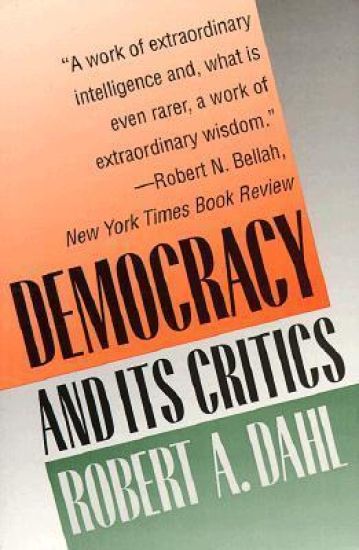
Democracy and Its Critics

Democracy and Its Critics

Robert A. Dahl

Yale University Press
1991
pokkari
In this prize-winning book, one of the most prominent political theorists of our time makes a major statement about what democracy is and why it is important. Robert Dahl examines the most basic assumptions of democratic theory, tests them against the questions raised by its critics, and recasts the theory of democracy into a new and coherent whole. He concludes by discussing the directions in which democracy must move if advanced democratic states are to exist in the future. “When Robert Dahl speaks about democracy, everyone should listen. With Democracy and Its Critics Dahl has produced a work destined to become another classic.”—Lucian W. Pye, American Political Science Review“In this magisterial work [Dahl]… describe[s] what democracy means…; why our own democracy is still deeply flawed; and how we could reform it…. A work of extraordinary intelligence and, what is even rarer, a work of extraordinary wisdom.”—Robert N. Bellah, New York Times Book ReviewRobert A. Dahl, Sterling Professor of Political Science Emeritus at Yale Universtiy, is also the author of Who Governs?, After the Revolution?, Polyarchy, and Dilemmas of Pluralist Democracy, all available from Yale University Press.
How Democratic Is the American Constitution?

How Democratic Is the American Constitution?

Robert A. Dahl

Yale University Press
2003
pokkari
A Washington Post Book World Best Seller “Robert A. Dahl . . . is about as covered in honors as a scholar can be. . . . He knows what he is talking about. And he thinks that the Constitution has something the matter with it.”—Hendrik Hertzberg, New Yorker “A devastating attack on the undemocratic character of the American Constitution.”—Gordon S. Wood, New York Review of Books In this provocative book, one of our most eminent political scientists poses the question, “Why should Americans uphold their constitution?” The vast majority of Americans venerate the Constitution and the democratic principles it embodies, but many also worry that the United States has fallen behind other nations on crucial issues, including economic equality, racial integration, and women’s rights. Robert Dahl explores this vital tension between the Americans’ belief in the legitimacy of their constitution and their belief in the principles of democracy. Dahl starts with the assumption that the legitimacy of the American Constitution derives solely from its utility as an instrument of democratic governance. Dahl demonstrates that, due to the context in which it was conceived, our constitution came to incorporate significant antidemocratic elements. Because the Framers of the Constitution had no relevant example of a democratic political system on which to model the American government, many defining aspects of our political system were implemented as a result of shortsightedness or last-minute compromise. Dahl highlights those elements of the American system that are most unusual and potentially antidemocratic: the federal system, the bicameral legislature, judicial review, presidentialism, and the electoral college system. The political system that emerged from the world’s first great democratic experiment is unique—no other well-established democracy has copied it. How does the American constitutional system function in comparison to other democratic systems? How could our political system be altered to achieve more democratic ends? To what extent did the Framers of the Constitution build features into our political system that militate against significant democratic reform? Refusing to accept the status of the American Constitution as a sacred text, Dahl challenges us all to think critically about the origins of our political system and to consider the opportunities for creating a more democratic society.
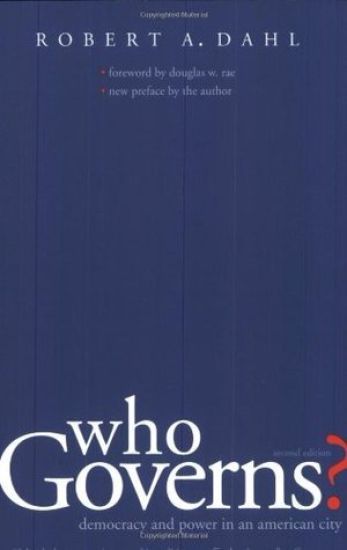
Who Governs?

Who Governs?

Robert A. Dahl

Yale University Press
2005
pokkari
“A major breakthrough in American political science, and a work destined, deservedly, to influence profoundly all future investigation of our politics… masterful, imaginative, and courageous. I recommend it unreservedly to the attention of all students of American politics.”—Willmoore Kendall
On Political Equality

On Political Equality

Robert A. Dahl

Yale University Press
2007
pokkari
Robert A. Dahl, one of the world’s most influential and respected political scientists, has spent a lifetime exploring the institutions and practices of democracy in such landmark books as Who Governs?, On Democracy, and How Democratic Is the American Constitution? Here, Dahl looks at the fundamental issue of equality and how and why governments have fallen short of their democratic ideals. At the center of the book is the question of whether the goal of political equality is so far beyond our human limits that it should be abandoned in favor of more attainable ends, or if there are ways to realistically address and reduce inequities. Though complete equality is unattainable, Dahl argues that strides toward that ideal are both desirable and feasible. He shows the remarkable shift in recent centuries toward democracy and political equality the world over. He explores the growth of democratic institutions, the expansion of citizenship, and the various obstacles that stand in the way of gains in political equality. Dahl also looks at the motives, particularly those of emotion and reason, that play such a crucial role in the struggle for equality. In conclusion, Dahl assesses the contemporary political landscape in the United States. He looks at the likelihood of political inequality increasing, and poses one scenario in which Americans grow more unequal in their influence over their government. The counter scenario foresees a cultural shift in which citizens, rejecting what Dahl calls “competitive consumerism,” invest time and energy in civic action and work to reduce the inequality that now exists among Americans.
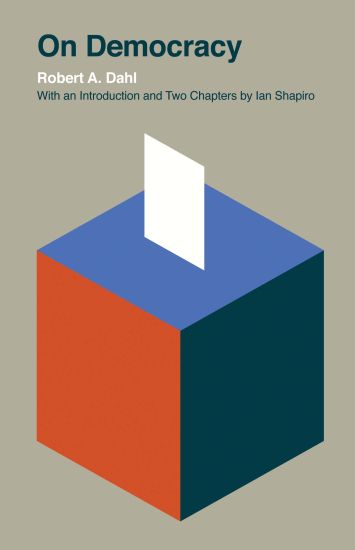
On Democracy

On Democracy

Robert A. Dahl

Yale University Press
2021
pokkari
Written by the preeminent democratic theorist of our time, this book explains the nature, value, and mechanics of democracy. In a new introduction to this Veritas edition, Ian Shapiro considers how Dahl would respond to the ongoing challenges democracy faces in the modern world. “Within the liberal democratic camp there is considerable controversy about exactly how to define democracy. Probably the most influential voice among contemporary political scientists in this debate has been that of Robert Dahl.”—Marc Plattner, New York Times “An excellent introduction for novices, as well as a trusty handbook for experts and political science mavens.”—Publishers Weekly
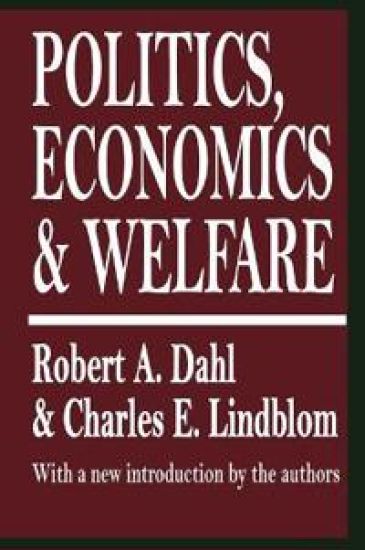
Politics, Economics, and Welfare

Politics, Economics, and Welfare

Robert A. Dahl

Routledge
2017
sidottu
For most of this century, the habit of thinking about politics and economics in terms of grand and simple alternatives has exerted a powerful influence over the minds of those concerned with economic organization. Politics, Economics, and Welfare is a systematic attack on the idea of all-embracing ideological solutions to complex economic problems.