Kirjahaku
Etsi kirjoja tekijän nimen, kirjan nimen tai ISBN:n perusteella.
1000 tulosta hakusanalla Robert A. M. Stern
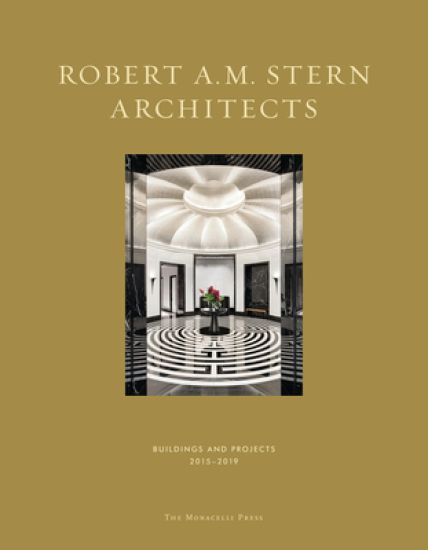
This comprehensive, lavishly illustrated survey of the most recent work of Robert A. M. Stern Architects, arguably the most versatile of the "starchitects," is an essential reference for architecture offices and libraries and an exceptionally handsome volume that will appeal to architecture aficionados. Architect and architectural historian Robert A. M. Stern has garnered prestigious commissions across America and throughout the world, including, most recently, the Museum of the American Revolution in Philadelphia, residential towers in Manhattan, Washington, and Hangzhou, China, and major campus projects for the Kennedy School of Government at Harvard and Tsinghua University in Beijing. Deeply committed to the principle of building in context, Stern has no signature style. Instead his work speaks to the urban fabric that surrounds it, yielding a portfolio that is at once historically sensitive and responsive to contemporary life.
Fascinating profiles of the leading architects of the 1930s during a crucial period in the evolution of modernism Architect, designer, and architectural critic, George Nelson (1908–1986) was a young and impressionable architect when he wrote a series of articles in 1935 and 1936 that eloquently introduced astonishing buildings and fascinating personalities from across the Atlantic to wider American audiences. Building a New Europe presents this important collection of writings together for the first time. The subjects of Nelson’s essays include figures both major (Mies van Der Rohe and Le Corbusier) and minor (Helweg-Moeller and Ivar Tengbom). All of these architects would soon be affected by World War II—they would be put out of work or seek new careers abroad. Nelson’s essays spark fascinating questions about the canon of modernism: how would circumstances in the pre-war years cause some architects to rise and others to fall? Accompanied by a comprehensive introduction and a wide selection of archival photographs, many never before published, this unique study is a significant contribution to the history of modern architecture.Published in association with the Yale University School of Architecture
A thought-provoking, elegantly crafted collection of essays by one of architecture’s most influential figures Among practicing architects today, perhaps only Robert A. M. Stern once contemplated a career as a historian, an interest that has informed both his built work and his writings. Tradition and Invention in Architecture brings together 26 of Stern's essays and conversations from the past five decades. Topics range from modern classicism, American housing, gardens, and New York City to the work of Norman Foster, Louis Kahn, Charles Moore, and Robert Moses. Reminders of Stern's own broad career in architecture are found in his thoughts on his PBS television series Pride of Place, his discussion of the planning of Seaside and Celebration, Florida, and his view on institutional branding through architecture.Known as much for his candor as for his profound knowledge of American architecture, Stern's observations on the architecture of his time are equally valuable. As he writes, "For an architect, writing is one way of reconsidering history while working in the present—always in search of the best from the past and the present, which allows us to invent for the future."
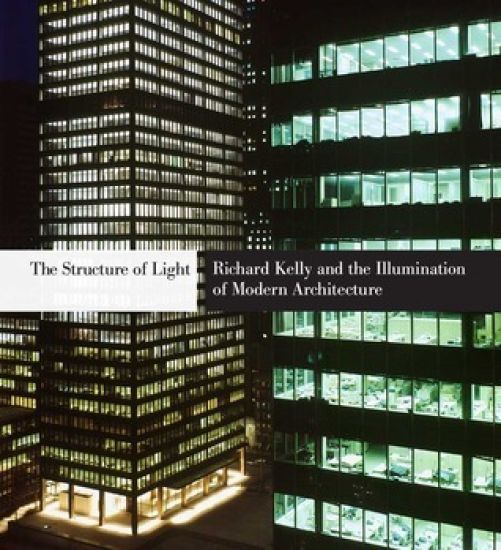
The potential of electric light as a new building “material” was recognized in the 1920s and became a useful design tool by the mid-century. Skillful lighting allowed for theatricality, narrative, and a new emphasis on structure and space. The Structure of Light tells the story of the career of Richard Kelly, the field’s most influential figure. Six historians, architects, and practitioners explore Kelly’s unparalleled influence on modern architecture and his lighting designs for some of the 20th century’s most iconic buildings: Philip Johnson’s Glass House; Louis Kahn’s Kimbell Art Museum; Eero Saarinen’s GM Technical Center; and Mies van der Rohe’s Seagram Building, among many others. This beautifully illustrated history demonstrates the range of applications, building types, and artistic solutions he employed to achieve a “nocturnal modernity” that would render buildings evocatively different at night. The survival of Kelly’s rich correspondence and extensive diaries allows an in-depth look at the triumphs and uncertainties of a young profession in the making. The first book to focus on the contributions of a master in the field of architectural lighting, this fascinating volume celebrates the practice’s significance in modern design. Published in association with the Yale School of Architecture Exhibition Schedule: Yale School of Architecture (08/23/10-10/02/10)
Through more than thirty projects for major colleges and universities across the country and in China, Designs for Learning presents the principles and practices behind academic buildings, libraries, graduate centers, and academic facilities that sensitively integrate into the fabric of each campus. In its forty years, Robert A.M. Stern Architects has honed a contemporary practice that is in close dialogue with the past, making it one of the most admired architectural firms today. Even in its growing global reach and expanding practice areas, the firm maintains a close attention to form, context, local culture, and received tradition, as well as to the demands and needs of the building users. These principles have served the firm particularly well on campuses, where architectural styles and building traditions are often well established. Robert A.M. Stern Architects has created classroom buildings, student centers, athletic facilities, and libraries that respect and expand those traditions. In each case, the firm demonstrates a deep understanding of the American college campus, with its roots in Thomas Jefferson's design for the University of Virginia. In their buildings, "the present, interacting with memories of the past, can create something that can be interesting in the future." Each campus in Designs for Learning is described in detail, with historic photographs and campus plans illustrating its development. Projects by Robert A. M. Stern are placed in their context, providing a complete view of these distinguished places of learning.
The New Residential Colleges at Yale
Robert A.M. Stern; Gideon Fink Shapiro; Paul Goldberger
Monacelli Press
2018
sidottu
Celebrating Yale's first new residential colleges in fifty years, The New Residential Colleges at Yale examines the role of the residential college system and the evolution of Yale's urban campus, presenting an important new chapter in the history of Yale and New Haven The residential college system at Yale, modeled after the academic communities at Oxford and Cambridge, is a cornerstone of Yale undergraduate life, breaking down the larger university into smaller, more closely-knit communities. Eight of the original ten residential colleges at Yale were designed by James Gamble Rogers in the 1930s, establishing Collegiate Gothic as the style with which Yale is most closely identified today. For the two new colleges, Robert A.M. Stern Architects was charged with designing buildings that fit into the residential college system, and in so doing say "Yale," while bringing twenty-first-century standards of communal living and environmental responsibility to college residential life. The two new colleges, housing 450 students each, are conceived as fraternal twins, similar in size but each enjoying its own identity, each incorporating a dining hall, a library, and a house for the head of the college, and each maintaining the traditional organization of entryways that intentionally create more intimate communities of students within the larger whole. The site will play important role in redefining the overall sense of the Yale campus, serving as it does as a lynchpin between districts identified with the humanities and the sciences, and between the university and adjacent neighborhoods. Beyond questions of Yale and New Haven, the book contributes to a wider historical and theoretical conversation about the expression of place, time, and identity through architecture. The design of the new colleges exemplifies the challenges and opportunities involved with practicing traditional architecture as a meditation between past and present in a historically sensitive setting. An extensive archive of original drawings, models, material samples, as well as extensive color photography of the completed buildings, illustrates the story.
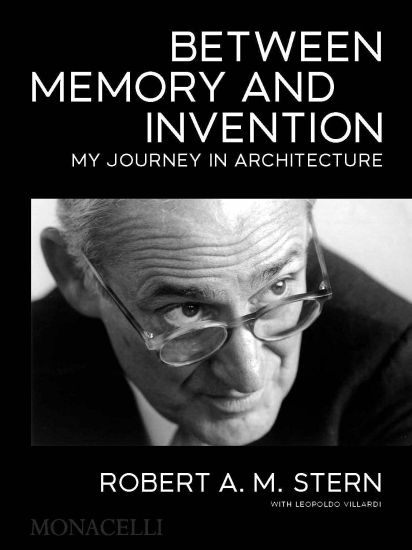
"A capsule history of American architecture since 1960." - Wall Street Journal Architect, historian, and educator Robert A.M. Stern presents a personal and candid assessment of contemporary architecture and his fifty years of practice. Encompassing autobiography, institutional history, and lively, behind-the-scenes anecdotes, Between Memory and Invention surveys the world of architecture from the 1960s to the present, and Stern's critical role in it. By turns thoughtful, critical, and irreverent, this is a highly accessible text replete with personal insights and humor. The author is Robert A.M. Stern, once described by Philip Johnson as "the brightest young man I have ever met in my entire teaching career," and internationally acknowledged as a leader in architecture and architectural scholarship. Deeply committed to the concept that architects must "look to the past to build for the future," Stern is the founding partner of Robert A.M. Stern Architects, the former Dean and current Hoppin Professor of Architecture at the Yale School of Architecture, and the author of more than twenty books and countless essays and commentaries on an extraordinary range of architectural and cultural topics. Chronicling his formative years, architectural education, and half-century of architectural practice, Stern touches on influences that shaped him - his Brooklyn upbringing, family excursions to look at buildings, teachers (Paul Rudolph, the legendary Vincent Scully, and Philip Johnson among them), major projects of the firm (the new town of Celebration, Florida, restoration of Times Square and 42nd Street, George W. Bush Presidential Center), and the many clients, fellow architects, and professional partners that have peopled his extraordinary career. Often proposed as "Mr. New York," Stern has a deep commitment to the city, to recording its past - he is the lead author of the monumental New York series, the definitive history of architecture and urbanism from the late nineteenth century to the present - and shaping its future. Today elegant RAMSA residential towers are rising throughout Manhattan to enrich the skyline in the tradition of the luxurious apartment buildings of the 1920s and 1930s. The text is supported by a lively mix of images drawn from Stern's personal archive, including student work and travel slides, images of architectural precedents and colleagues that have shaped his thinking, and images related to projects he discusses (drawings, plans, and finished photography, architectural team, and clients).
The culmination of Robert A.M. Stern’s monumental history of architecture in New York City and a comprehensive record of building over the last twenty-five years A landmark in architectural publishing, New York 2020 explores the planning and politics of building in New York City during the first decades of the 21st century. This encyclopedic book, as complex and vast as the city itself, references more than 3,000 projects constructed between the year 2000 and the present day. Across 1,500 pages, New York 2020 describes and illustrates the ‘supertalls’ now populating our skyline, lush riverfront parks born from derelict waterfront, iconic cultural destinations, and thousands of smaller, unheralded residential and civic projects that enhance the built environment and the urban fabric. Readers will discover work by leading architects, including Norman Foster, Renzo Piano, Bjarke Ingels, Diller Scofidio + Renfro, Selldorf Architects, Frank Gehry, and Robert A.M. Stern Architects; a dazzling array of museums and institutions, including the High Line, Hudson Yards, the new Whitney Museum, and the expansions of MoMA and Lincoln Center; the rebuilding of the World Trade Center site; and more. The much-anticipated final volume in architect Robert A.M. Stern’s critically acclaimed New York series, which traces the evolution of the city from the Civil War to present day, New York 2020 tells the story of a remarkable period of urban development, architectural experiment, and seismic cultural shifts.
A personal look at the buildings that define Yale University through the eyes of alumni. “The Stones of Yale is a delight—fresh and highly observant. I will be turning to its pages again and again, I have no doubt.”—David McCullough Artist Adam Van Doren wanted to know how Yale University’s buildings made people feel to live and to study in them. He spoke to alumni as diverse as actor Sam Waterston, the writer Christopher Buckley, Yale librarian Judith Schiff, former NFL great Calvin Hill, architect Cesar Pelli, among others, about their experiences and illustrates this book in gorgeous watercolor paintings of the buildings of Yale that interest him most. Rather than an architectural analysis of buildings, Van Doren explores the visceral experience of seeing them and being inside them. This is one-of-a-kind approach that will interest anyone who’s felt the intangible power of a building and a place.
The Architecture of Grosvenor Atterbury
Peter Pennoyer; Anne Walker; Robert A. M. Stern
WW Norton Co
2009
sidottu
In the final decade of the nineteenth century and the early twentieth century, the United States experienced exponential growth and a flourishing economy, and with it, a building boom. Grosvenor Atterbury (1869–1956) produced more than one hundred major projects, including an array of grand mansions, picturesque estates, informal summer cottages, and farm groups. However, it was his role as town planner and civic leader and his work to create model tenements, hospitals, workers’ housing, and town plans for which he is most celebrated. His Forest Hills Gardens, designed in association with the Olmsted Brothers, is lauded as one of the most highly significant community planning projects of its time. As an inventor, Atterbury was responsible for one of the country’s first low-cost, prefabricated concrete construction systems, introducing beauty and inexpensive good design into the lives of the working classes. The Architecture of Grosvenor Atterbury is the first book to showcase the rich and varied repertoire of this prolific architect whose career spanned six decades and whose work affected the course of American architecture, planning, and construction. Illustrated with Jonathan Wallen’s stunning color photographs and over 250 historic drawings, plans, and photographs, it also includes a catalogue raisonné and an employee roster. It is the definitive source on an architect who made an indelible imprint on the American landscape.
* Just the essential information for readers on the go who want to understand architecture. * Covers the highlights of architectural history, from the Great Pyramids to Frank Gehry's Guggenheim museum in Bilbao. * Explains how to look at a building and appreciate it. Explains when a building's a building and when it's art. * Part of Tens includes: Ten Great Architectural Masterpieces, Ten Biggest Architectural and Engineering Failures, Ten of the Most Interesting Architects Working Today-and more.
Practical Intelligence in Everyday Life
Robert J. Sternberg; George B. Forsythe; Jennifer Hedlund; Joseph A. Horvath; Richard K. Wagner; Wendy M. Williams; Scott A. Snook; Elena Grigorenko
Cambridge University Press
2000
sidottu
This book reviews psychological research on practical intelligence and describes its importance in everyday life. The authors reveal the importance of tacit knowledge - what we have learned from our own experience, through action. Although it has been seen as an indispensable element of expertise, intelligence researchers have found it difficult to quantify. The data shows that practical intelligence is psychologically and statistically distinct from academic intelligence, and is distinct as well from personality and styles of thought. The data also indicates that practical intelligence predicts job performance and even aspects of school performance as well as or better than does academic intelligence. This volume thoroughly examines studies of practical intelligence in the United States and in many other parts of the world as well, and for varied occupations, such as management, military leadership, teaching, research, and sales.
Practical Intelligence in Everyday Life
Robert J. Sternberg; George B. Forsythe; Jennifer Hedlund; Joseph A. Horvath; Richard K. Wagner; Wendy M. Williams; Scott A. Snook; Elena Grigorenko
Cambridge University Press
2000
pokkari
This book reviews psychological research on practical intelligence and describes its importance in everyday life. The authors reveal the importance of tacit knowledge - what we have learned from our own experience, through action. Although it has been seen as an indispensable element of expertise, intelligence researchers have found it difficult to quantify. The data shows that practical intelligence is psychologically and statistically distinct from academic intelligence, and is distinct as well from personality and styles of thought. The data also indicates that practical intelligence predicts job performance and even aspects of school performance as well as or better than does academic intelligence. This volume thoroughly examines studies of practical intelligence in the United States and in many other parts of the world as well, and for varied occupations, such as management, military leadership, teaching, research, and sales.
A Memorial to My Father and Mother, William M.M. Beck and Sadie M. Tranter Beck.
Robert A. Talmage Beck
Hassell Street Press
2021
nidottu
This work has been selected by scholars as being culturally important and is part of the knowledge base of civilization as we know it.This work is in the public domain in the United States of America, and possibly other nations. Within the United States, you may freely copy and distribute this work, as no entity (individual or corporate) has a copyright on the body of the work.Scholars believe, and we concur, that this work is important enough to be preserved, reproduced, and made generally available to the public. To ensure a quality reading experience, this work has been proofread and republished using a format that seamlessly blends the original graphical elements with text in an easy-to-read typeface.We appreciate your support of the preservation process, and thank you for being an important part of keeping this knowledge alive and relevant.
Becoming a Christian is a positive decision that rivals any you will make in this life. It affects your eternity and how you will live the rest of your life. The question is: Now that I am a Christian, where do I go from here? This compact book answers some of the necessary questions you need for growth, such as: Who am I as a Christian? What is my inheritance from God? How do I take and use that inheritance daily? Am I secure in Christ? What is my mission as a Christian? What is Christian love? How am I to grow as a Christian? and What is spiritual warfare? Answering these questions is essential for one to develop into the person God desires.
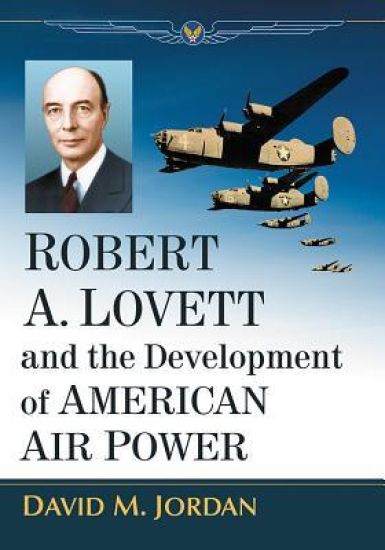
Robert A. Lovett and the Development of American Air Power
David M. Jordan
McFarland Co Inc
2018
pokkari
Robert Lovett grew up in Texas, went to Yale, and earned his wings as a naval air force hero in World War I. He played a key role in the development of the Army Air Force in World War II. His emphasis on strategic bombing was instrumental in defeating Hitler's Germany. During his postwar State Department service, he was influential in initiating the Marshall Plan, the formation of NATO and planning the Berlin Airlift. He served as Truman's Secretary of Defense during the Korean War, was a consultant for his friend Dwight Eisenhower and served John F. Kennedy during the Cuban Missile Crisis. Between tours of duty in Washington, he was an international banker on Wall Street. This first complete biography covers his life and career in detail.
Advice for my Granddaughter: For When I'm Gone
Robert a. Hall
Createspace Independent Publishing Platform
2012
nidottu
Robert A. Nordyke was a lover of poetry, a pioneer in nuclear medicine, a nationally and internationally recognized teacher, and a generous and thoughtful family man. In 1992 he was urged by his family and friends to write about his experiences as a boy growing up in the small California town of Woodland in Sacramento Valley during the post-World War I period and the depression years. This book is a compilation of those adventures, offering scenes from the life of an American boy growing up in the first half of the twentieth century.