Kirjojen hintavertailu. Mukana 11 699 587 kirjaa ja 12 kauppaa.

Kirjahaku

Etsi kirjoja tekijän nimen, kirjan nimen tai ISBN:n perusteella.

1000 tulosta hakusanalla Robert A. Segal

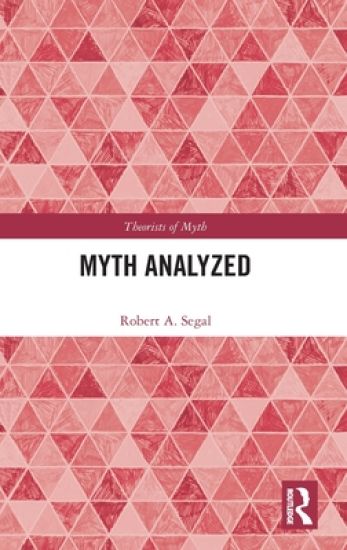
Myth Analyzed

Myth Analyzed

Robert A. Segal

Routledge
2020
sidottu
Comparing and evaluating modern theories of myth, this book offers an overview of explanations of myth from the social sciences and the humanities.This ambitious collection of essays uses the viewpoints of a variety of disciplines - psychology, anthropology, sociology, politics, philosophy, religious studies, and literature. Each discipline advocates a generalization about the origin, the function, and the subject matter of myth. The subject is always not what makes any myth distinct but what makes all myths "myth". The book is divided into five sections, covering topics such as myth and psychoanalysis, hero myths, myth and science, myth and politics, and myth and the physical world. Chapters engage with an array of theorists--among them, Freud, Jung, Campbell, Rank, Winnicott, Tylor, Frazer, Malinowski, Levy-Bruhl, Levi-Strauss, Harrison, and Burkert. The book considers whether myth still plays a role in our lives is one of the issues considered, showing that myths arise anything but spontaneously. They are the result of a specific need, which varies from theory to theory.This is a fascinating survey by a leading voice in the study of myth. As such, it will be of much interest to scholars of myth and how it interacts with Sociology, Anthropology, Politics and Economics.
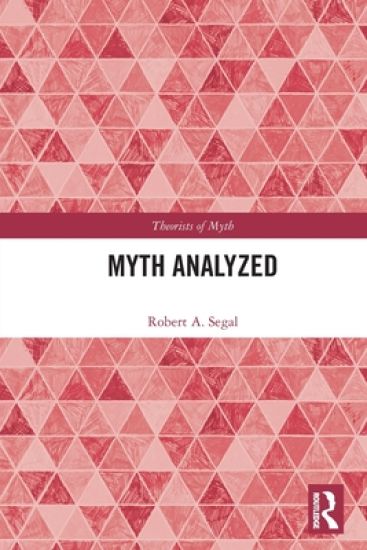
Myth Analyzed

Myth Analyzed

Robert A. Segal

TAYLOR FRANCIS LTD
2022
nidottu
Comparing and evaluating modern theories of myth, this book offers an overview of explanations of myth from the social sciences and the humanities.This ambitious collection of essays uses the viewpoints of a variety of disciplines - psychology, anthropology, sociology, politics, philosophy, religious studies, and literature. Each discipline advocates a generalization about the origin, the function, and the subject matter of myth. The subject is always not what makes any myth distinct but what makes all myths "myth". The book is divided into five sections, covering topics such as myth and psychoanalysis, hero myths, myth and science, myth and politics, and myth and the physical world. Chapters engage with an array of theorists--among them, Freud, Jung, Campbell, Rank, Winnicott, Tylor, Frazer, Malinowski, Levy-Bruhl, Levi-Strauss, Harrison, and Burkert. The book considers whether myth still plays a role in our lives is one of the issues considered, showing that myths arise anything but spontaneously. They are the result of a specific need, which varies from theory to theory.This is a fascinating survey by a leading voice in the study of myth. As such, it will be of much interest to scholars of myth and how it interacts with Sociology, Anthropology, Politics and Economics.
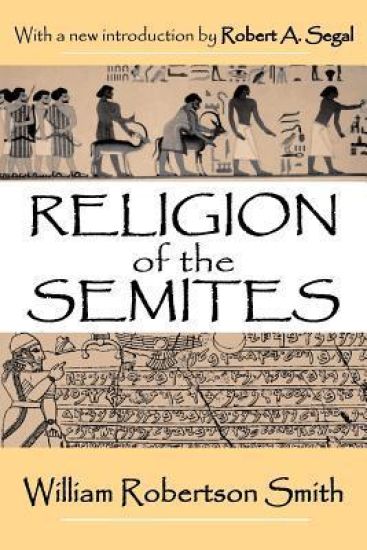
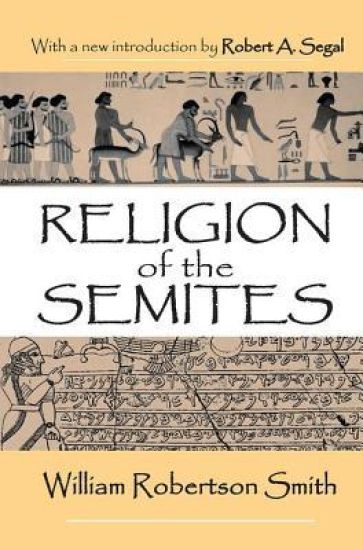
Religion of the Semites

Religion of the Semites

Robert A. Segal

Transaction Publishers
2002
nidottu
Scottish Semiticist and Arabist William Robertson Smith was a celebrated biblical critic, theorist of religion, and theorist of myth. His accomplishments were multiple. Smith's German mentors reconstructed the history of Israelite religion from the Bible itself; Smith ventured outside the Bible to Semitic religion and thereby pioneered the comparative study of religion. Where others viewed religion from the standpoint of the individual, Smith approached religion-at least ancient religion-from the standpoint of the group. He asserted that ancient religion was centrally a matter of practice, not creed, and singlehandedly created the ritualist theory of myth. Since Smith's time, the ritualist theory of myth has found adherents not only in biblical studies but in classics, anthropology, and literature as well.Smith's accomplishments are seen most fully in Religion of the Semites, adapted from a number of public lectures he gave at Aberdeen, and first published in 1889. Smith delivered three courses of lectures over three years. It is this set that is reprinted here. Only recently were the notes for the second and third courses of lectures discovered and published.Religion of the Semites combines extraordinary philological erudition with brilliant theorizing. Among the fundamental emphases of the book are the foci on sacrifice as the key ritual and non-ancient sacrifice as communion with God rather than as penance for sin. Most important is Smith's use of the comparative method: he uses cross-cultural examples from other "primitive peoples" to confirm his reconstruction from Semitic sources.Smith combines pioneering sociology and anthropology with a staunchly Christian faith. For him, Christianity is an expression of divine revelation. For Smith, only continuing revelation can account for the leap from the collective, ritualistic, and materialistic nature of ancient Semitic religion to the individualistic, creedal, and spiritualized nature of Christianity. Lectures on the Religion of the Semites manages to meld social science with theology, and remains a classic work in the social scientific study of religion.
Religion of the Semites

Religion of the Semites

Robert A. Segal

Routledge
2017
sidottu
Scottish Semiticist and Arabist William Robertson Smith was a celebrated biblical critic, theorist of religion, and theorist of myth. His accomplishments were multiple. Smith's German mentors reconstructed the history of Israelite religion from the Bible itself; Smith ventured outside the Bible to Semitic religion and thereby pioneered the comparative study of religion. Where others viewed religion from the standpoint of the individual, Smith approached religion-at least ancient religion-from the standpoint of the group. He asserted that ancient religion was centrally a matter of practice, not creed, and singlehandedly created the ritualist theory of myth. Since Smith's time, the ritualist theory of myth has found adherents not only in biblical studies but in classics, anthropology, and literature as well.Smith's accomplishments are seen most fully in Religion of the Semites, adapted from a number of public lectures he gave at Aberdeen, and first published in 1889. Smith delivered three courses of lectures over three years. It is this set that is reprinted here. Only recently were the notes for the second and third courses of lectures discovered and published.Religion of the Semites combines extraordinary philological erudition with brilliant theorizing. Among the fundamental emphases of the book are the foci on sacrifice as the key ritual and non-ancient sacrifice as communion with God rather than as penance for sin. Most important is Smith's use of the comparative method: he uses cross-cultural examples from other "primitive peoples" to confirm his reconstruction from Semitic sources.Smith combines pioneering sociology and anthropology with a staunchly Christian faith. For him, Christianity is an expression of divine revelation. For Smith, only continuing revelation can account for the leap from the collective, ritualistic, and materialistic nature of ancient Semitic religion to the individualistic, creedal, and spiritualized nature of Christianity. Lectures on the Religion of the Semites manages to meld social science with theology, and remains a classic work in the social scientific study of religion.
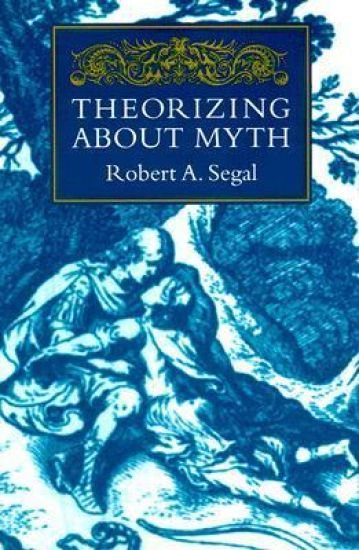
Theorizing About Myth

Theorizing About Myth

Robert A. Segal

University of Massachusetts Press
1999
nidottu
For two hundred years the subject of myth-its origin, function, and significance-has been addressed again and again, first by theologians and philosophers and then by anthropologists, sociologists, and psychologists. From the outset the topic has sparked intense debate, with differing opinions expressed on everything from issues of epistemology and methodology to the meaning of "myth" itself. In this collection of essays, Robert A. Segal surveys the contours of this ongoing discussion, comparing and evaluating the leading theories of myth. Among the theorists discussed are Edward Tylor, William Robertson Smith, James Frazer, Jane Harrison, S. H. Hooke, Mircea Eliade, Rudolf Bultmann, Hans Jonas, Sigmund Freud, C. G. Jung, Joseph Campbell, Claude Lévi-Strauss, and Hans Blumenberg. Author and editor of numerous books and articles in the fields of theories of myth and theories of religion, Segal has developed a reputation as a preeminent proponent of a social-scientific approach to the study of both. The essays in this book represent some of the best of his writing on myth over the past ten years.
Encountering Jung on Mythology

Encountering Jung on Mythology

C. G. Jung; Robert A. Segal

Princeton University Press
1998
pokkari
At least three major questions can be asked of myth: what is its subject matter? what is its origin? and what is its function? Theories of myth may differ on the answers they give to any of these questions, but more basically they may also differ on which of the questions they ask. C. G. Jung's theory is one of the few that purports to answer fully all three questions. This volume collects and organizes the key passages on myth by Jung himself and by some of the most prominent Jungian writers after him: Erich Neumann, Marie-Louise von Franz, and James Hillman. The book synthesizes the discovery of myth as a way of thinking, where it becomes a therapeutic tool providing an entrance to the unconscious. In the first selections, Jung begins to differentiate his theory from Freud's by asserting that there are fantasies and dreams of an "impersonal" nature that cannot be reduced to experiences in a person's past. Jung then asserts that the similarities among myths are the result of the projection of the collective rather than the personal unconscious onto the external world. Finally, he comes to the conclusion that myth originates and functions to satisfy the psychological need for contact with the unconscious--not merely to announce the existence of the unconscious, but to let us experience it.
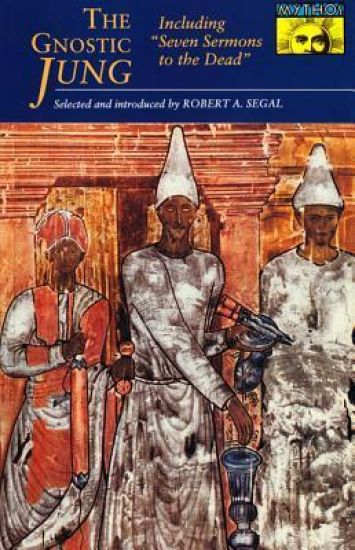
The Gnostic Jung

The Gnostic Jung

C. G. Jung; Robert A. (EDT) Segal

Princeton University Press
1992
pokkari
Gnosticism, together with alchemy, was for C. G. Jung the chief prefiguration of his analytical psychology. Jung did not simply interpret Gnostic texts psychologically but also cited them as confirmation of his psychology. An authority on theories of myth and Gnosticism, Robert Segal has searched the Jungian corpus to bring together in one volume Jung's main discussions of this ancient form of spirituality. Included in this volume are both Jung's sole work devoted entirely to Gnosticism, "Gnostic Symbols of the Self," and his own Gnostic myth, "Seven Sermons to the Dead." The book also contains key essays by two of the best-known writers on Jungian psychology and Gnosticism: Father Victor White and Gilles Quispel, whose "C. G. Jung und die Gnosis" is here translated for the first time. In his extensive introduction Segal discusses Jung's fascination with Gnosticism, the parallel for Jung between ancient Gnostics and modern Jungian patients, the Jungian meaning of Gnostic myths and of the Seven Sermons, Jung's possible misinterpretation of Gnosticism, and the common characterization of Jung himself as a contemporary Gnostic.
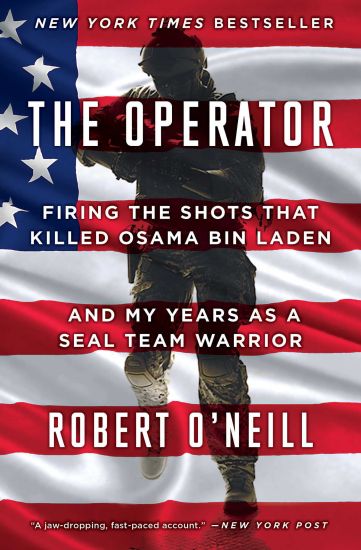
The Operator: Firing the Shots That Killed Osama Bin Laden and My Years as a Seal Team Warrior
This instant New York Times bestseller--"a jaw-dropping, fast-paced account" (New York Post) recounts SEAL Team Operator Robert O'Neill's incredible four-hundred-mission career, including the attempts to rescue "Lone Survivor" Marcus Luttrell and abducted-by-Somali-pirates Captain Richard Phillips, and which culminated in the death of the world's most wanted terrorist--Osama bin Laden. In The Operator, Robert O'Neill describes his idyllic childhood in Butte, Montana; his impulsive decision to join the SEALs; the arduous evaluation and training process; and the even tougher gauntlet he had to run to join the SEALs' most elite unit. After officially becoming a SEAL, O'Neill would spend more than a decade in the most intense counterterror effort in US history. For extended periods, not a night passed without him and his small team recording multiple enemy kills--and though he was lucky enough to survive, several of the SEALs he'd trained with and fought beside never made it home. "Impossible to put down...The Operator is unique, surprising, a kind of counternarrative, and certainly the other half of the story of one of the world's most famous military operations...In the larger sense, this book is about...how to be human while in the very same moment dealing with death, destruction, combat" (Doug Stanton, New York Times bestselling author). O'Neill describes the nonstop action of his deployments in Iraq and Afghanistan, evokes the black humor of years-long combat, brings to vivid life the lethal efficiency of the military's most selective units, and reveals details of the most celebrated terrorist takedown in history. This is "a riveting, unvarnished, and wholly unforgettable portrait of America's most storied commandos at war" (Joby Warrick).
The Operator: Firing the Shots That Killed Osama Bin Laden and My Years as a Seal Team Warrior
This instant New York Times bestseller--"a jaw-dropping, fast-paced account" (New York Post) recounts SEAL Team Operator Robert O'Neill's incredible four-hundred-mission career, including the attempts to rescue "Lone Survivor" Marcus Luttrell and abducted-by-Somali-pirates Captain Richard Phillips, and which culminated in the death of the world's most wanted terrorist--Osama bin Laden. In The Operator, Robert O'Neill describes his idyllic childhood in Butte, Montana; his impulsive decision to join the SEALs; the arduous evaluation and training process; and the even tougher gauntlet he had to run to join the SEALs' most elite unit. After officially becoming a SEAL, O'Neill would spend more than a decade in the most intense counterterror effort in US history. For extended periods, not a night passed without him and his small team recording multiple enemy kills--and though he was lucky enough to survive, several of the SEALs he'd trained with and fought beside never made it home. "Impossible to put down...The Operator is unique, surprising, a kind of counternarrative, and certainly the other half of the story of one of the world's most famous military operations...In the larger sense, this book is about...how to be human while in the very same moment dealing with death, destruction, combat" (Doug Stanton, New York Times bestselling author). O'Neill describes the nonstop action of his deployments in Iraq and Afghanistan, evokes the black humor of years-long combat, brings to vivid life the lethal efficiency of the military's most selective units, and reveals details of the most celebrated terrorist takedown in history. This is "a riveting, unvarnished, and wholly unforgettable portrait of America's most storied commandos at war" (Joby Warrick).
Your Personal History Content Guide

Your Personal History Content Guide

Roberta Segal

Createspace Independent Publishing Platform
2013
nidottu
Writing a personal history is a complex project, and for many, it's hard to know where to begin. This book breaks down this large undertaking, creating categories that covers every aspect of life. Sections examine facts about your life and timeline, memories, experiences, values, and beliefs, and more. The book also serves as a source of ideas on topics to write about, and explains why these topics are important in telling your life story. Users can choose to write about the suggested topics in order, or they can do it in whatever order they like. When all of the sections are done, you will have assembled a very complete personal history that will be a treasure to coming generations of your family.
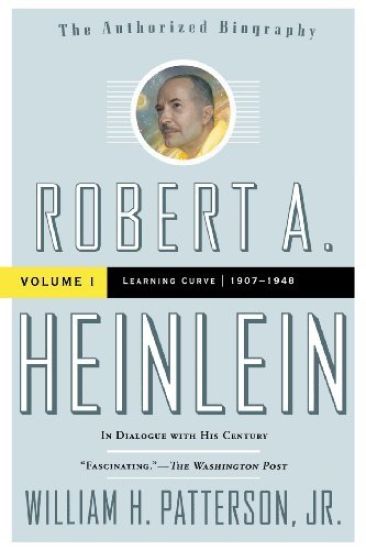
Robert A. Heinlein: In Dialogue with His Century, Volume 1: Learning Curve (1907-1948)
For the first time, the real story of the life of Robert A. Heinlein in the authorized biography Robert A. Heinlein (1907-1988) is generally considered the greatest American SF writer of the 20th century. A famous and bestselling author in later life, he started as a navy man and graduate of Annapolis who was forced to retire because of tuberculosis. A socialist politician in the 1930s, he became one of the sources of Libertarian politics in the USA in his later years. His most famous works include the Future History series (stories and novels collected in The Past Through Tomorrow and continued in later novels), Starship Troopers, Stranger in a Strange Land, and The Moon is a Harsh Mistress. Given his desire for privacy in the later decades of his life, he was both stranger and more interesting than one could ever have known. This is the first of two volumes of a major American biography. This volume is about Robert A. Heinlein's life up to the end of the 1940s and the mid-life crisis that changed him forever.
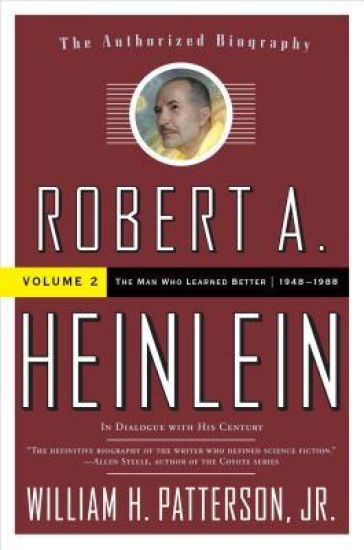
Robert A. Heinlein: In Dialogue with His Century, Volume 2: The Man Who Learned Better (1948-1988)
"Robert A. Heinlein: In Dialogue with his Century: 1948-1988 The Man Who Learned Better" The real-life story of Robert A. Heinlein in the second volume of the authorized biography by William H. Patterson Robert A. Heinlein (1907 1988) is generally considered the greatest American science fiction writer of the twentieth century. His most famous and widely influential works include the Future History series (stories and novels collected in "The Past Through Tomorrow" and continued in later novels), "Starship Troopers," "Stranger in a Strange Land," and "The Moon is a Harsh Mistress" all published in the years covered by this volume. He was a friend of admirals, bestselling writers, and artists; became committed to defending the United States during the Cold War; and was on the advisory committee that helped Ronald Reagan create the Star Wars Strategic Defense Initiative in the 1980s.Heinlein was also devoted to space flight and humanity's future in space, and he was a commanding presence to all around him in his lifetime. Given his desire for privacy in the later decades of his life, the revelations in this biography make for riveting reading."