

Kirjahaku
Etsi kirjoja tekijän nimen, kirjan nimen tai ISBN:n perusteella.
1000 tulosta hakusanalla Robert Andrew Mannle


Robert Andrew Clemenson: Memory Jar Book
Tracy Renee Lee
Createspace Independent Publishing Platform
2015
nidottu
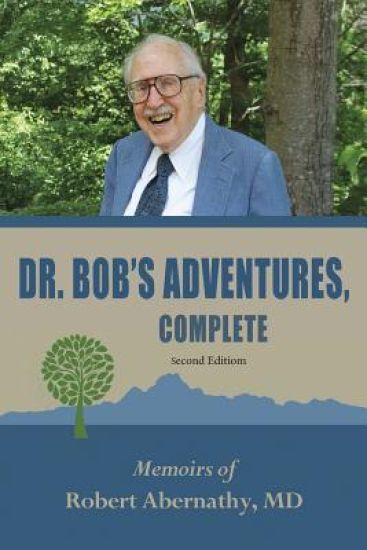
Dr. Bob's Adventures, Complete: Memoirs of Robert Andrew Abernathy, Jr
Robert Andrew Abernathy
Independently Published
2018
nidottu
Dr. Abernathy experienced a life-changing event following a war wound. He became interested in the practice of medicine, served in rural Virginia for 35 years, volunteered as missionary to Kenya for total of one and a half years, devoted the remainder of his olife to service of the poor in Asheville, North Carolina.
This book has been considered by academicians and scholars of great significance and value to literature. This forms a part of the knowledge base for future generations. We have represented this book in the same form as it was first published. Hence any marks seen are left intentionally to preserve its true nature.
![Brotherhood, Fellowship, and Acting Together. Further Practical Reflections in Rhyme. a Sequel to 'new Covenant Ordinances and Order.' [by Robert A. Macfie.]](/covers/9781241165574.jpg)
Brotherhood, Fellowship, and Acting Together. Further Practical Reflections in Rhyme. a Sequel to 'new Covenant Ordinances and Order.' [by Robert A. Macfie.]
Robert Andrew Macfie
British Library, Historical Print Editions
2011
pokkari

Cartesian Psychology and Physical Minds
Robert Andrew Wilson
Cambridge University Press
1997
pokkari
This book offers the first sustained critique of individualism in psychology, a view that has been the subject of debate between philosophers such as Jerry Fodor and Tyler Burge for many years. The author approaches individualism as an issue in the philosophy of science and by discussing issues such as computationalism and the mind’s modularity he opens the subject up for non-philosophers in psychology and computer science. Professor Wilson carefully examines the most influential arguments for individualism and identifies the main metaphysical assumptions underlying them. Since the topic is so central to the philosophy of mind, a discipline generating enormous research and debate at present, the book has implications for a very broad range of philosophical issues including the naturalisation of intentionality, psychophysical supervenience, the nature of mental causation, and the viability of folk psychology.

This book recreates the lost world of the hominid species that lived and flourished for around one million years before, and in some cases after, the evolution of modern humans some 200,000 years ago.
Who is God? The variety of images of God tends to overwhelm us in the present age. Is 'God' a fiction of human construction, or a reality that makes claims upon how we practice 'faith in God'? How does this quest for an understanding of 'God' illumine who 'we' are? God in Postliberal Perspective presents an introduction to the doctrine and concept of God in contemporary philosophy and theology, exploring how some theologians and philosophers dare to speak of God as "real" in our sceptical, pluralistic, and interfaith age. Robert Cathey tours the "house of realism" as constructed by postliberal Christians (David Burrell, William Placher, Bruce Marshall), in conversation with living communities of faith and critical work in philosophy and theology, and develops a distinctive argument about the relation of realism and non-realism in constructing the doctrine of God in postliberal theology. Offering a reading of postliberal theology which is open to critical discussion with other types of theology, philosophy, and faith traditions, this book proposes a model of theological reflection that may be extended to the reality-claims of a wide range of doctrines and concepts.


Ghost Detective: Adventures of a Parapsychologist
Robert Andrew Nichols
Cosmic Pantheon
2011
nidottu
HAUNTED HOUSES HAVE BEEN REPORTED SINCE ANCIENT TIMES. ARE THEY REAL? Parapsychologist Andrew Nichols earned his world-wide reputation as a phantom sleuth routing banshees, breaking curses, exorcising ghosts, and exposing cranks and frauds. In Ghost Detective, he recounts his most chilling and fascinating cases of poltergeists, psychokinesis, and apparitions. These bizarre accounts -never before published- are presented with possible explanations for their occurrence, bringing into focus the latest discoveries in the scientific search for evidence of paranormal activity, and revealing dynamic links between haunting experiences and the human mind. Dr. Andrew Nichols is Director of the American Institute of Parapsychology.
Relations Between Northern and Southern Baptists
Robert Andrew Baker
Hassell Street Press
2021
sidottu
This work has been selected by scholars as being culturally important and is part of the knowledge base of civilization as we know it.This work is in the public domain in the United States of America, and possibly other nations. Within the United States, you may freely copy and distribute this work, as no entity (individual or corporate) has a copyright on the body of the work.Scholars believe, and we concur, that this work is important enough to be preserved, reproduced, and made generally available to the public. To ensure a quality reading experience, this work has been proofread and republished using a format that seamlessly blends the original graphical elements with text in an easy-to-read typeface.We appreciate your support of the preservation process, and thank you for being an important part of keeping this knowledge alive and relevant.
Relations Between Northern and Southern Baptists
Robert Andrew Baker
Hassell Street Press
2021
nidottu
This work has been selected by scholars as being culturally important and is part of the knowledge base of civilization as we know it.This work is in the public domain in the United States of America, and possibly other nations. Within the United States, you may freely copy and distribute this work, as no entity (individual or corporate) has a copyright on the body of the work.Scholars believe, and we concur, that this work is important enough to be preserved, reproduced, and made generally available to the public. To ensure a quality reading experience, this work has been proofread and republished using a format that seamlessly blends the original graphical elements with text in an easy-to-read typeface.We appreciate your support of the preservation process, and thank you for being an important part of keeping this knowledge alive and relevant.


Who is God? The variety of images of God tends to overwhelm us in the present age. Is 'God' a fiction of human construction, or a reality that makes claims upon how we practice 'faith in God'? How does this quest for an understanding of 'God' illumine who 'we' are? God in Postliberal Perspective presents an introduction to the doctrine and concept of God in contemporary philosophy and theology, exploring how some theologians and philosophers dare to speak of God as "real" in our sceptical, pluralistic, and interfaith age. Robert Cathey tours the "house of realism" as constructed by postliberal Christians (David Burrell, William Placher, Bruce Marshall), in conversation with living communities of faith and critical work in philosophy and theology, and develops a distinctive argument about the relation of realism and non-realism in constructing the doctrine of God in postliberal theology. Offering a reading of postliberal theology which is open to critical discussion with other types of theology, philosophy, and faith traditions, this book proposes a model of theological reflection that may be extended to the reality-claims of a wide range of doctrines and concepts.
Military English: English for Tactical and Peacekeeping Operations is a pre-deployment course for Army personnel who are to be sent on multinational peace support operations or on training courses in an English language speaking country, or are to be trained by English-speaking instructors. Your students should already have studied up to a pre-intermediate level Common European Framework A2] before starting the course - that is they should be ready for an Intermediate/ B1 Level course. There are four components to the course: 1: A Coursebook with 200 lesson-units, providing over 200 hours of study materials including vocabulary learning tasks, reading and listening tasks, briefings, role plays and other speaking tasks. 2: A Workbook, which includes a grammar reference and study pages, peacekeeping reading tasks, writing tasks, abbreviations and acronym study pages, patrol report forms etc., consolidation tasks, a mini dictionary, key vocabulary pages, and key tactical verbs. 3: A Teacher's Book (this component) with full instructions on teaching the course, and coursebook and workbook task keys. 4: Downloadable colour pictures, maps, PowerPoint Presentations and audio files, and audio transcripts for use on phones, tablets or computers. These can be freely downloaded and shared with all students. Course Overview: There are three Phases to the Course. Phase One of the course is a series of intertwined threads of General English units, General Military English units and some Specialised Military English units. Phase Two is blocks of units of Specialised Military English, and General English with a Military Application. Phase Three revises and activates the Specialised Military English of Phase One and Two and adds Peacekeeping English. Course Aims: This course is designed to teach soldiers (enlisted men, NCOs and junior officers) how to operate effectively in multinational tactical and peacekeeping operations. By the end of the course the students should be able to do the following in English: Interpersonal Skills: Talk about their families - Talk about their careers - Talk about their homes - Talk about their leisure interests e.g. hobbies, sports, films and music - Socialise e.g. make arrangements to meet - Ask and answer questions - Give personal opinions on topics like personal equipment. Professional Skills: Understand and use common acronyms - Use the NATO/Phonetic Alphabet - Tell the time - Talk about the weather and climate - Talk about their army and unit structure and purpose - Talk about their training - Make radio calls including MEDEVAC/CASEVAC - Understand Tactical Combat Casualty Care - Understand land navigation - Describe rural and urban terrain - Describe people and clothing - Give a short professional briefing supported by visuals - Understand ROE - Describe bases - Understand and describe convoy operations - Understand and describe checkpoint operations - Understand and describe the use of observation posts - Understand and describe patrol operations - Understand and give] orders Patrol Orders, WARNO, OPORD] - Understand the differences between tactical and peacekeeping missions, patrols, ROE, OPs, checkpoints, and convoys - Understand and propose solutions to common survival situations - Understand and propose solutions to common tactical and peacekeeping problems - Write a short report. The course has an open and clear methodology, built in revision tasks and essential practice in the five core area for tactical and peacekeeping operations: understanding briefings and orders, convoy and checkpoint operations, and patrolling. Each Phase has built in tests, and the whole course builds up your students confidence in using Military English, and develops their listening and speaking skills so they can operate effectively in training situations and on missions.
Military English Tactical and Peacekeeping Operations
Robert Andrew Buckmaster
Independently Published
2019
pokkari
Military English: English for Tactical and Peacekeeping Operations is a pre-deployment course for Army personnel who are to be sent on multinational peace support operations or on training courses in an English language speaking country, or are to be trained by English-speaking instructors. Your students should already have studied up to a pre-intermediate level Common European Framework A2] before starting the course - that is they should be ready for an Intermediate/ B1 Level course. There are four components to the course: 1: A Coursebook with 200 lesson-units, providing over 200 hours of study materials including vocabulary learning tasks, reading and listening tasks, briefings, role plays and other speaking tasks. 2: A Workbook (this component), which includes a grammar reference and study pages, peacekeeping reading tasks, writing tasks, abbreviations and acronym study pages, patrol report forms etc., consolidation tasks, a mini dictionary, key vocabulary pages, and key tactical verbs. 3: A Teacher's Book with full instructions on teaching the course, and coursebook and workbook task keys. 4: Downloadable colour pictures, maps, PowerPoint Presentations and audio files, and audio transcripts for use on phones, tablets or computers. These can be freely downloaded and shared with all students. Course Overview: There are three Phases to the Course. Phase One of the course is a series of intertwined threads of General English units, General Military English units and some Specialised Military English units. Phase Two is blocks of units of Specialised Military English, and General English with a Military Application. Phase Three revises and activates the Specialised Military English of Phase One and Two and adds Peacekeeping English. Course Aims: This course is designed to teach soldiers (enlisted men, NCOs and junior officers) how to operate effectively in multinational tactical and peacekeeping operations. By the end of the course the students should be able to do the following in English: Interpersonal Skills: Talk about their families - Talk about their careers - Talk about their homes - Talk about their leisure interests e.g. hobbies, sports, films and music - Socialise e.g. make arrangements to meet - Ask and answer questions - Give personal opinions on topics like personal equipment. Professional Skills: Understand and use common acronyms - Use the NATO/Phonetic Alphabet - Tell the time - Talk about the weather and climate - Talk about their army and unit structure and purpose - Talk about their training - Make radio calls including MEDEVAC/CASEVAC - Understand Tactical Combat Casualty Care - Understand land navigation - Describe rural and urban terrain - Describe people and clothing - Give a short professional briefing supported by visuals - Understand ROE - Describe bases - Understand and describe convoy operations - Understand and describe checkpoint operations - Understand and describe the use of observation posts - Understand and describe patrol operations - Understand and give] orders Patrol Orders, WARNO, OPORD] - Understand the differences between tactical and peacekeeping missions, patrols, ROE, OPs, checkpoints, and convoys - Understand and propose solutions to common survival situations - Understand and propose solutions to common tactical and peacekeeping problems - Write a short report. The course has an open and clear methodology, built in revision tasks and essential practice in the five core area for tactical and peacekeeping operations: understanding briefings and orders, convoy and checkpoint operations, and patrolling. Each Phase has built in tests, and the whole course builds up your students confidence in using Military English, and develops their listening and speaking skills so they can operate effectively in training situations and on missions.
Military English Tactical and Peacekeeping Operations
Robert Andrew Buckmaster
Independently Published
2019
pokkari
Military English: English for Tactical and Peacekeeping Operations is a pre-deployment course for Army personnel who are to be sent on multinational peace support operations or on training courses in an English language speaking country, or are to be trained by English-speaking instructors. Your students should already have studied up to a pre-intermediate level Common European Framework A2] before starting the course - that is they should be ready for an Intermediate/ B1 Level course. There are four components to the course: 1: A Coursebook (this component) with 200 lesson-units, providing over 200 hours of study materials including vocabulary learning tasks, reading and listening tasks, briefings, role plays and other speaking tasks. 2: A Workbook, which includes a grammar reference and study pages, peacekeeping reading tasks, writing tasks, abbreviations and acronym study pages, patrol report forms etc., consolidation tasks, a mini dictionary, key vocabulary pages, and key tactical verbs. 3: A Teacher's Book with full instructions on teaching the course, and coursebook and workbook task keys. 4: Downloadable colour pictures, maps, PowerPoint Presentations and audio files, and audio transcripts for use on phones, tablets or computers. These can be freely downloaded and shared with all students. Course Overview: There are three Phases to the Course. Phase One of the course is a series of intertwined threads of General English units, General Military English units and some Specialised Military English units. Phase Two is blocks of units of Specialised Military English, and General English with a Military Application. Phase Three revises and activates the Specialised Military English of Phase One and Two and adds Peacekeeping English. Course Aims: This course is designed to teach soldiers (enlisted men, NCOs and junior officers) how to operate effectively in multinational tactical and peacekeeping operations. By the end of the course the students should be able to do the following in English: Interpersonal Skills: Talk about their families - Talk about their careers - Talk about their homes - Talk about their leisure interests e.g. hobbies, sports, films and music - Socialise e.g. make arrangements to meet - Ask and answer questions - Give personal opinions on topics like personal equipment. Professional Skills: Understand and use common acronyms - Use the NATO/Phonetic Alphabet - Tell the time - Talk about the weather and climate - Talk about their army and unit structure and purpose - Talk about their training - Make radio calls including MEDEVAC/CASEVAC - Understand Tactical Combat Casualty Care - Understand land navigation - Describe rural and urban terrain - Describe people and clothing - Give a short professional briefing supported by visuals - Understand ROE - Describe bases - Understand and describe convoy operations - Understand and describe checkpoint operations - Understand and describe the use of observation posts - Understand and describe patrol operations - Understand and give] orders Patrol Orders, WARNO, OPORD] - Understand the differences between tactical and peacekeeping missions, patrols, ROE, OPs, checkpoints, and convoys - Understand and propose solutions to common survival situations - Understand and propose solutions to common tactical and peacekeeping problems - Write a short report. The course has an open and clear methodology, built in revision tasks and essential practice in the five core area for tactical and peacekeeping operations: understanding briefings and orders, convoy and checkpoint operations, and patrolling. Each Phase has built in tests, and the whole course builds up your students confidence in using Military English, and develops their listening and speaking skills so they can operate effectively in training situations and on missions.
Over a quarter century of studies have shown that addictions, mental illnesses, and their combinations (dual diagnoses) are pervasive in the general population. Meanwhile, emerging neuroscience is revealing that the neurodevelopmental basis of major mental illness and addiction diseases are tightly interconnected and often unified pathologies of the brain. This science calls into question the profound split between the addiction and mental health fields that define our fragmented research, professional training, and treatment delivery systems—a split that leaves most patients out of reach of adequate professional expertise and evidence-based standards of care. The 2 x 4 Model, as described in this translational textbook of Addiction Psychiatry, is the essential blueprint and operational manual for the fully integrated, expertly staffed, Dual Diagnosis clinic— a clinic that is maximally capable and efficient in treating the full spectrum of addictions, mental illness, and their comorbidities, through integration of psychotherapies and medications, by one team under one roof. Replication of 2 x 4 Model Clinics into a national system would allow widespread access to excellent, transparent standards of Addiction Psychiatry as a decisive measure against mass incarceration and the exploding health care crisis of untreated addictions, all while rebuilding brain health as a core public health, social and economic imperative of modern society.