Kirjojen hintavertailu. Mukana 11 244 527 kirjaa ja 12 kauppaa.

Kirjahaku

Etsi kirjoja tekijän nimen, kirjan nimen tai ISBN:n perusteella.

1000 tulosta hakusanalla Robert B. Pippin

Ein Filmphilosophie-Symposium mit Robert B. Pippin
Filmphilosophie ist ein – im deutschsprachigen Raum noch junges – Spezialthema der Ästhetik. Der Chicagoer Philosoph Robert B. Pippin, ein international anerkannter Interpret Hegels und Nietzsches analysiert in seinen Filmbüchern – Hollywood Western and the American Myth und Fatalism in Film Noir – zwei zentrale Filmgenres und untersucht in seinen neuesten Forschungen das Kino der belgischen Brüder Dardenne. Im vorliegenden Band beschäftigen sich, nach einem Beitrag Pippins zu den Dardennes, zwölf Autorinnen und Autoren aus Europa, den USA und Kanada mit Pippins Filmphilosophie: 1) allgemein mit dem Themenraum „Film und Philosophie“; 2) mit Lektüren des Western, u.a. mit der Darstellung des „American South“ in diesem Genre; 3) mit dem Film Noir, wobei Pippins Analysen mit den Interpretationen von Deleuze und Žižek verglichen werden, und eine der Schlüsselfiguren der Schwarzen Serie, die Femme Fatale, ausführlich fokussiert wird. Das Buch ist der weltweit erste Diskussionsband zur Pippinschen Filmphilosophie und von Interesse für die Disziplinen Philosophie, Amerikanistik, Filmwissenschaft, Cultural und Gender Studies.

Philosophical Engagements with Modernity: The Legacy of Robert B. Pippin
Drawing on the collective expertise of an impressive group of international scholars, this book delivers a comprehensive reckoning of the rich, multivalent legacy of the noted scholar and critic Robert B. Pippin. As presented by the contributors to this edited volume, Pippin's distinctive approach to modern philosophy, politics, art, and culture is seen to establish the definitive scholarly agenda for the next century of philosophical research.
Robert Bresson

Robert Bresson

Robert B. Pippin

THE UNIVERSITY OF CHICAGO PRESS
2026
sidottu
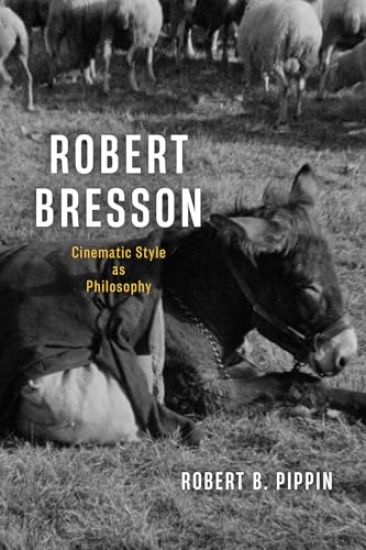
A philosophical engagement with Bresson’s many films, attentive to more than their religiosity. Over a forty-year career, Robert Bresson developed one of the most distinctive cinematic styles in the history of filmmaking. Criticizing conventional movies as “filmed theater,” Bresson proposed instead a way of writing with images, which he called “cinematographs.” Robert B. Pippin argues here for a way of understanding how these stylistic innovations express a range of philosophical commitments, explorations of the possible sources of meaning in late modern life, and the implications of the absence of such sources.
Robert Bresson

Robert Bresson

Robert B. Pippin

THE UNIVERSITY OF CHICAGO PRESS
2026
nidottu
A philosophical engagement with Bresson’s many films, attentive to more than their religiosity. Over a forty-year career, Robert Bresson developed one of the most distinctive cinematic styles in the history of filmmaking. Criticizing conventional movies as “filmed theater,” Bresson proposed instead a way of writing with images, which he called “cinematographs.” Robert B. Pippin argues here for a way of understanding how these stylistic innovations express a range of philosophical commitments, explorations of the possible sources of meaning in late modern life, and the implications of the absence of such sources.
After the Beautiful

After the Beautiful

Robert B. Pippin

University of Chicago Press
2013
sidottu
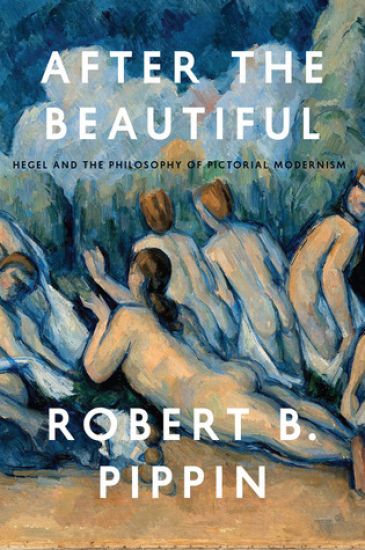
In his Berlin lectures on fine art, Hegel argued that art involves a unique form of aesthetic intelligibility - the expression of a distinct collective self-understanding that develops through historical time. Hegel's approach to art has been influential in a number of different contexts, but in a twist of historical irony Hegel would die just before the most radical artistic revolution in history: modernism. In After the Beautiful, Robert B. Pippin, looking at modernist paintings by artists such as Edouard Manet and Paul Cezanne through Hegel's lens, does what Hegel never had the chance to do. While Hegel could never engage modernist painting, he did have an understanding of modernity, and in it art was "a thing of the past," no longer an important vehicle of self-understanding and no longer an indispensable expression of human meaning. Pippin offers a sophisticated exploration of Hegel's position and shows that, had Hegel known how the social institutions of his day would ultimately fail to achieve his own version of genuine equality-a mutuality of recognition - he would have had to explore a different role for art in modernity. After laying this groundwork, Pippin goes on to illuminate the dimensions of Hegel's aesthetic approach via the works of Manet, drawing on art historians T. J. Clark and Michael Fried, and concludes with a look at Cezanne to explore the relationship between Hegel and the philosopher who would challenge Hegel's account of both modernity and art - Martin Heidegger. Elegantly interweaving philosophy and art history, After the Beautiful is a stunning reassessment of the modernist project and what it means in general for art to have a history. It is a testament, via Hegel, to the distinctive philosophical achievements of modernist art in the unsettled, tumultuous era we have inherited.
Interanimations

Interanimations

Robert B. Pippin

University of Chicago Press
2015
sidottu
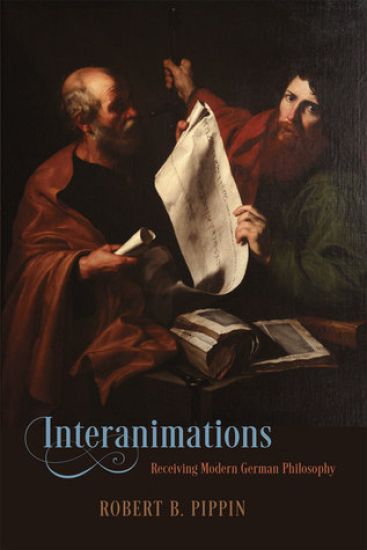
In this latest book, renowned philosopher and scholar Robert B. Pippin offers the thought-provoking argument that the study of historical figures is not only an interpretation and explication of their views, but can be understood as a form of philosophy itself. In doing so, he reconceives philosophical scholarship as a kind of network of philosophical interanimations, one in which major positions in the history of philosophy, when they are themselves properly understood within their own historical context, form philosophy's lingua franca. Examining a number of philosophers to explore the nature of this interanimation, he presents an illuminating assortment of especially thoughtful examples of historical commentary that powerfully enact philosophy. After opening up his territory with an initial discussion of contemporary revisionist readings of Kant's moral theory, Pippin sets his sights on his main objects of interest: Hegel and Nietzsche. Through them, however, he offers what few others could: an astonishing synthesis of an immense and diverse set of thinkers and traditions. Deploying an almost dialogical, conversational approach, he pursues patterns of thought that both shape and, importantly, connect the major traditions: neo-Aristotelian, analytic, continental, and postmodern, bringing the likes of Heidegger, Honneth, MacIntyre, McDowell, Brandom, Strauss, Williams, and Zizek - not to mention Hegel and Nietzsche - into the same philosophical conversation. By means of these case studies, Pippin mounts an impressive argument about a relatively under - discussed issue in professional philosophy - the bearing of work in the history of philosophy on philosophy itself - and thereby argues for the controversial thesis that no strict separation between the domains is defensible.
After the Beautiful

After the Beautiful

Robert B. Pippin

University of Chicago Press
2015
nidottu
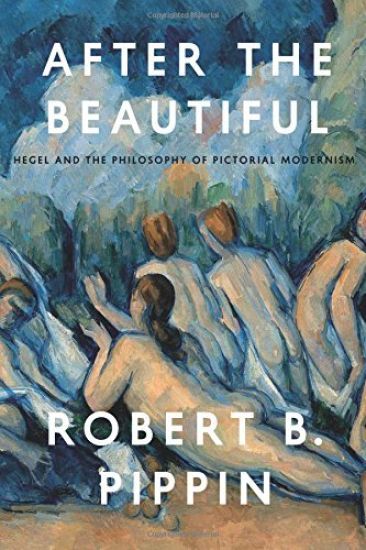
In his Berlin lectures on fine art, Hegel argued that art involves a unique form of aesthetic intelligibility-the expression of a distinct collective self-understanding that develops through historical time. Hegel's approach to art has been influential in a number of different contexts, but in a twist of historical irony Hegel would die just before the most radical artistic revolution in history: modernism. In After the Beautiful, Robert B. Pippin, looking at modernist paintings by artists such as Edouard Manet and Paul Cezanne through Hegel's lens, does what Hegel never had the chance to do. While Hegel could never engage modernist painting, he did have an understanding of modernity, and in it, art-he famously asserted-was "a thing of the past," no longer an important vehicle of self-understanding and no longer an indispensable expression of human meaning. Pippin offers a sophisticated exploration of Hegel's position and its implications. He also shows that had Hegel known how the social institutions of his day would ultimately fail to achieve his own version of genuine equality, a mutuality of recognition, he would have had to explore a different, new role for art in modernity. After laying this groundwork, Pippin goes on to illuminate the dimensions of Hegel's aesthetic approach in the path-breaking works of Manet, the "grandfather of modernism," drawing on art historians T. J. Clark and Michael Fried to do so. He concludes with a look at Cezanne, the "father of modernism," this time as his works illuminate the relationship between Hegel and the philosopher who would challenge Hegel's account of both modernity and art-Martin Heidegger. Elegantly inter-weaving philosophy and art history, After the Beautiful is a stunning reassessment of the modernist project. It gets at the core of the significance of modernism itself and what it means in general for art to have a history. Ultimately, it is a testament, via Hegel, to the distinctive philosophical achievements of modernist art in the unsettled, tumultuous era we have inherited.
Nietzsche, Psychology, and First Philosophy

Nietzsche, Psychology, and First Philosophy

Robert B. Pippin

University of Chicago Press
2010
sidottu
Friedrich Nietzsche is one of the most elusive thinkers in the philosophical tradition. Nonetheless, certain readings of his work have become standard and influential. In this major new interpretation of Nietzsche, Robert B. Pippin challenges various traditional views, taking the philosopher at his word when he says that his writing can best be understood as a kind of psychology. Pippin traces this idea of Nietzsche as a psychologist to his admiration for the French moralists: La Rochefoucauld, Pascal, Stendhal, and especially Montaigne. In distinction from philosophers, Pippin shows, these writers avoided grand metaphysical theories in favor of reflections on life as lived and experienced. Pippin contends that Nietzsche's singular prose was an essential part of his goal of making psychology "the queen of the sciences", and so organizes the book around four of Nietzsche's most important images and metaphors: that truth could be a woman, that a science could be gay, that God could have died, and that an agent is as much one with his act as lightning is with its flash. Expanded from a series of lectures Pippin delivered at the College de France, "Nietzsche, Psychology, and First Philosophy" offers a brilliant, novel, and accessible reading of this seminal thinker.
Nietzsche, Psychology, and First Philosophy

Nietzsche, Psychology, and First Philosophy

Robert B. Pippin

University of Chicago Press
2011
nidottu
Friedrich Nietzsche is one of the most elusive thinkers in the philosophical tradition. Nonetheless, certain readings of his work have become standard and influential. In this major new interpretation of Nietzsche, Robert B. Pippin challenges various traditional views, taking the philosopher at his word when he says that his writing can best be understood as a kind of psychology. Pippin traces this idea of Nietzsche as a psychologist to his admiration for the French moralists: La Rochefoucauld, Pascal, Stendhal, and especially Montaigne. In distinction from philosophers, Pippin shows, these writers avoided grand metaphysical theories in favor of reflections on life as lived and experienced. Pippin contends that Nietzsche's singular prose was an essential part of his goal of making psychology "the queen of the sciences", and so organizes the book around four of Nietzsche's most important images and metaphors: that truth could be a woman, that a science could be gay, that God could have died, and that an agent is as much one with his act as lightning is with its flash. Expanded from a series of lectures Pippin delivered at the College de France, "Nietzsche, Psychology, and First Philosophy" offers a brilliant, novel, and accessible reading of this seminal thinker.
Hegel's Realm of Shadows

Hegel's Realm of Shadows

Robert B. Pippin

University of Chicago Press
2019
nidottu
Hegel frequently claimed that the heart of his entire system was a book widely regarded as among the most difficult in the history of philosophy, The Science of Logic. This is the book that presents his metaphysics, an enterprise that he insists can only be properly understood as a “logic,” or a “science of pure thinking.” Since he also wrote that the proper object of any such logic is pure thinking itself, it has always been unclear in just what sense such a science could be a “metaphysics.” Robert B. Pippin offers here a bold, original interpretation of Hegel’s claim that only now, after Kant’s critical breakthrough in philosophy, can we understand how logic can be a metaphysics. Pippin addresses Hegel’s deep, constant reliance on Aristotle’s conception of metaphysics, the difference between Hegel’s project and modern rationalist metaphysics, and the links between the “logic as metaphysics” claim and modern developments in the philosophy of logic. Pippin goes on to explore many other facets of Hegel’s thought, including the significance for a philosophical logic of the self-conscious character of thought, the dynamism of reason in Kant and Hegel, life as a logical category, and what Hegel might mean by the unity of the idea of the true and the idea of the good in the “Absolute Idea.” The culmination of Pippin’s work on Hegel and German idealism, this is a book that no Hegel scholar or historian of philosophy will want to miss.
Philosophy by Other Means

Philosophy by Other Means

Robert B. Pippin

University of Chicago Press
2021
sidottu
Throughout his career, Robert B. Pippin has examined the relationship between philosophy and the arts. With his writings on film, literature, and visual modernism, he has shown that there are aesthetic objects that cannot be properly understood unless we acknowledge and reflect on the philosophical concerns that are integral to their meaning. His latest book, Philosophy by Other Means, extends this trajectory, offering a collection of essays that present profound considerations of philosophical issues in aesthetics alongside close readings of novels by Henry James, Marcel Proust, and J. M. Coetzee. The arts hold a range of values and ambitions, offering beauty, playfulness, and craftsmanship while deepening our mythologies and enriching the human experience. Some works take on philosophical ambitions, contributing to philosophy in ways that transcend the discipline’s traditional analytic and discursive forms. Pippin’s claim is twofold: criticism properly understood often requires a form of philosophical reflection, and philosophy is impoverished if it is not informed by critical attention to aesthetic objects. In the first part of the book, he examines how philosophers like Kant, Hegel, and Adorno have considered the relationship between art and philosophy. The second part of the book offers an exploration of how individual artworks might be considered forms of philosophical reflection. Pippin demonstrates the importance of practicing philosophical criticism and shows how the arts can provide key insights that are out of reach for philosophy, at least as traditionally understood.
Philosophy by Other Means

Philosophy by Other Means

Robert B. Pippin

University of Chicago Press
2021
nidottu
Throughout his career, Robert B. Pippin has examined the relationship between philosophy and the arts. With his writings on film, literature, and visual modernism, he has shown that there are aesthetic objects that cannot be properly understood unless we acknowledge and reflect on the philosophical concerns that are integral to their meaning. His latest book, Philosophy by Other Means, extends this trajectory, offering a collection of essays that present profound considerations of philosophical issues in aesthetics alongside close readings of novels by Henry James, Marcel Proust, and J. M. Coetzee. The arts hold a range of values and ambitions, offering beauty, playfulness, and craftsmanship while deepening our mythologies and enriching the human experience. Some works take on philosophical ambitions, contributing to philosophy in ways that transcend the discipline’s traditional analytic and discursive forms. Pippin’s claim is twofold: criticism properly understood often requires a form of philosophical reflection, and philosophy is impoverished if it is not informed by critical attention to aesthetic objects. In the first part of the book, he examines how philosophers like Kant, Hegel, and Adorno have considered the relationship between art and philosophy. The second part of the book offers an exploration of how individual artworks might be considered forms of philosophical reflection. Pippin demonstrates the importance of practicing philosophical criticism and shows how the arts can provide key insights that are out of reach for philosophy, at least as traditionally understood.
The Culmination

The Culmination

Robert B. Pippin

THE UNIVERSITY OF CHICAGO PRESS
2024
sidottu
A provocative reassessment of Heidegger’s critique of German Idealism from one of the tradition’s foremost interpreters. Heidegger claimed that Western philosophy ended—failed, even—in the German Idealist tradition. In The Culmination, Robert B. Pippin explores the ramifications of this charge through a masterful survey of Western philosophy, especially Heidegger’s critiques of Hegel and Kant. Pippin argues that Heidegger’s basic concern was to determine sources of meaning for human life, particularly those that had been obscured by Western philosophy’s attention to reason. The Culmination offers a new interpretation of Heidegger, German Idealism, and the fate of Western rationalism.
The Culmination

The Culmination

Robert B. Pippin

THE UNIVERSITY OF CHICAGO PRESS
2025
nidottu
A provocative reassessment of Heidegger’s critique of German Idealism from one of the tradition’s foremost interpreters. Heidegger claimed that Western philosophy ended—failed, even—in the German Idealist tradition. In The Culmination, Robert B. Pippin explores the ramifications of this charge through a masterful survey of Western philosophy, especially Heidegger’s critiques of Hegel and Kant. Pippin argues that Heidegger’s basic concern was to determine sources of meaning for human life, particularly those that had been obscured by Western philosophy’s attention to reason. The Culmination offers a new interpretation of Heidegger, German Idealism, and the fate of Western rationalism.
Hollywood Westerns and American Myth

Hollywood Westerns and American Myth

Robert B. Pippin

Yale University Press
2012
pokkari
In this pathbreaking book one of America’s most distinguished philosophers brilliantly explores the status and authority of law and the nature of political allegiance through close readings of three classic Hollywood Westerns: Howard Hawks’ Red River and John Ford’s The Man Who Shot Liberty Valance and The Searchers. Robert Pippin treats these films as sophisticated mythic accounts of a key moment in American history: its “second founding,” or the western expansion. His central question concerns how these films explore classical problems in political psychology, especially how the virtues of a commercial republic gained some hold on individuals at a time when the heroic and martial virtues were so important. Westerns, Pippin shows, raise central questions about the difference between private violence and revenge and the state’s claim to a legitimate monopoly on violence, and they show how these claims come to be experienced and accepted or rejected. Pippin’s account of the best Hollywood Westerns brings this genre into the center of the tradition of political thought, and his readings raise questions about political psychology and the political passions that have been neglected in contemporary political thought in favor of a limited concern with the question of legitimacy.
Hegel's Idealism

Hegel's Idealism

Robert B. Pippin

Cambridge University Press
1989
pokkari
This is the most important book on Hegel to have appeared in the past ten years. Robert Pippin offers a completely new interpretation of Hegel’s idealism, which focuses on Hegel’s appropriation and development of kant’s theoretical project. Hegel is presented neither as a precritical metaphysician nor as a social theorist, but as a critical philosopher whose disagreements with Kant, especially on the issue of intuitions, enrich the idealist arguments against empiricism, realism and naturalism. In the face of the dismissal of absolute idealism as either unintelligible or implausible, Pippin explains and defends an original account of the philosophical basis for Hegel’s claims about the historical and social nature of selfconsciousness, and so of knowledge itself.
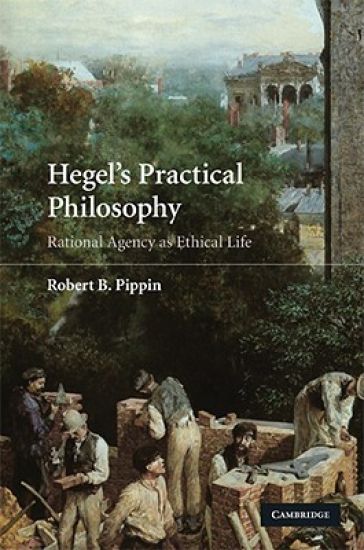
Hegel's Practical Philosophy

Hegel's Practical Philosophy

Robert B. Pippin

Cambridge University Press
2008
sidottu
This fresh and original book argues that the central questions in Hegel's practical philosophy are the central questions in modern accounts of freedom: What is freedom, or what would it be to act freely? Is it possible so to act? And how important is leading a free life? Robert Pippin argues that the core of Hegel's answers is a social theory of agency, the view that agency is not exclusively a matter of the self-relation and self-determination of an individual but requires the right sort of engagement with and recognition by others. Using a detailed analysis of key Hegelian texts, he develops this interpretation to reveal the bearing of Hegel's claims on many contemporary issues, including much-discussed core problems in the liberal democratic tradition. His important study will be valuable for all readers who are interested in Hegel's philosophy and in the modern problems of agency and freedom.
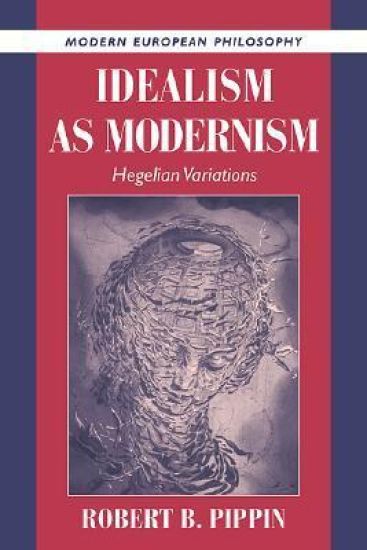
Idealism as Modernism

Idealism as Modernism

Robert B. Pippin

Cambridge University Press
1997
sidottu
‘Modernity’ has come to refer both to a contested historical category and to an even more contested philosophical and civilisational ideal. In this important collection of essays Robert Pippin takes issue with some prominent assessments of what is or is not philosophically at stake in the idea of a modern revolution in Western civilisation, and presents an alternative view. Professor Pippin disputes many traditional characterisations of the distinctiveness of modern philosophy. In their place he defends claims about agency, freedom, ethical life and modernity itself, all of which are central to the German idealist philosophical tradition, and in particular, to the writings of Hegel. Having considered the Hegelian version of these issues the author explores other accounts as found in Habermas, Strauss, Blumenberg, Nietzsche, and Heidegger.
Idealism as Modernism

Idealism as Modernism

Robert B. Pippin

Cambridge University Press
1997
pokkari
‘Modernity’ has come to refer both to a contested historical category and to an even more contested philosophical and civilisational ideal. In this important collection of essays Robert Pippin takes issue with some prominent assessments of what is or is not philosophically at stake in the idea of a modern revolution in Western civilisation, and presents an alternative view. Professor Pippin disputes many traditional characterisations of the distinctiveness of modern philosophy. In their place he defends claims about agency, freedom, ethical life and modernity itself, all of which are central to the German idealist philosophical tradition, and in particular, to the writings of Hegel. Having considered the Hegelian version of these issues the author explores other accounts as found in Habermas, Strauss, Blumenberg, Nietzsche, and Heidegger.
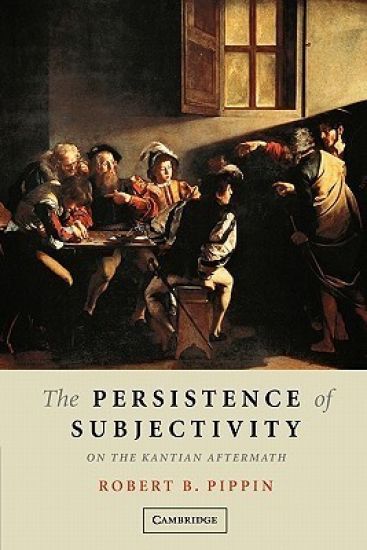
The Persistence of Subjectivity

The Persistence of Subjectivity

Robert B. Pippin

Cambridge University Press
2005
pokkari
The Persistence of Subjectivity examines several approaches to, and critiques of, the core notion in the self-understanding and legitimation of the modern, 'bourgeois' form of life: the free, reflective, self-determining subject. Since it is a relatively recent historical development that human beings think of themselves as individual centers of agency, and that one's entitlement to such a self-determining life is absolutely valuable, the issue at stake also involves the question of the historical location of philosophy. What might it mean to take seriously Hegel's claim that philosophical reflection is always reflection on the historical 'actuality' of its own age? Discussing Heidegger, Gadamer, Adorno, Leo Strauss, Manfred Frank, and John McDowell, Robert Pippin attempts to understand how subjectivity arises in contemporary institutional practices such as medicine, as well as in other contexts such as modernism in the visual arts and in the novels of Marcel Proust.