
Kirjahaku
Etsi kirjoja tekijän nimen, kirjan nimen tai ISBN:n perusteella.
1000 tulosta hakusanalla Robert Brian Dilts


At some point in our lives we have probably all felt the desire to "change the world" or to "make the world a better place." This desire usually stems from a "vision" that our lives or our world could be enriched or improved in some way. Such visions of the future often provide guidance and direction for our lives and our work, furnishing the motivation and impetus for change on many levels.This book examines some of the essential skills and tools that are required to bring about change and "create a world to which people want to belong" - the skills and tools of "visionary leadership." These skills relate to forming and clarifying one's own dreams and ideas, sharing those ideas with others, transforming those dreams into actions, and engaging the help of others to bring dreams and ideas into reality. Many of the skills presented in this book have been modeled from and were inspired by effective leaders and managers from around the world. These skills include communicating, interacting and managing relationships within an organization, network or social system in order to move towards one's highest aspirations.Some of the topics covered include: - Releasing natural leadership abilities through the identification of your vision and mission- Developing and maintaining states of personal excellence- Forming effective plans- Recognizing and addressing different thinking styles- Understanding and managing beliefs and belief systems- Enhancing personal effectiveness in communicating and in managing others- Exploring and enriching personal leadership styles- Giving useful feedback

Coaching is the process of helping people and teams to perform at the peak of their abilities. It involves drawing out people's strengths, helping them to bypass personal barriers and limits in order to achieve their personal bests, and facilitating them to function more effectively as members of a team.Historically, coaching has been focused toward achieving improvement with respect to a specific behavioral performance. This involves promoting the development of that person's behavioral competence through careful observation and feedback.In recent years, the notion of coaching has taken on a more generalized and expanded meaning. Personal coaching, executive coaching and life coaching provide support on a number of different levels: behaviors, capabilities, beliefs, values, identity and even spiritual. These new and more comprehensive forms--executive coaching and life coaching-- can be referred to as capital "C" Coaching. Large "C" Coaching involves helping people effectively achieve outcomes on a range of levels. We guide people to learn about new environments, for instance; coach them to improve specific behavioral competencies; teach them new cognitive capabilities; mentor empowering beliefs and values; sponsor growth at the identity level; and awaken people's awareness of the larger system or "field."This book defines the types of contexts and situations which require the capital "C" Coach to focus on one of these roles--caretaker, guide, coach, teacher, mentor, sponsor, awakener--and provides a specific toolbox for each role. In other words, it provides a comprehensive tool set to be used by an effective coach to manage the entire scope of large "C" Coaching activities--from caretaking to awakening.
Thomas Jefferson once said, "If two individuals get together and exchange a dollar, they each walk away with one dollar. If the same individuals get together and exchange an idea, they both walk away with two ideas." In many ways, this statement expresses the vastly generative potential or "economics" of modeling.Modeling is the process of taking a complex event or phenomenon and breaking it into small enough chunks so that it can be recapitulated or applied in some way. Behavioral modeling involves observing and mapping the successful processes which underlie an exceptional performance of some type. The purpose of behavior modeling is to create a pragmatic map or 'model' of a particular behavior which can be used to reproduce or simulate some aspect of that performance by anyone who is motivated to do so.The ability to model effectively opens the door to many possibilities that have previously been unavailable to humankind. In addition to providing a methodology which can be used to make ideas more explicit and easier to communicate, modeling can transform the way we view and perceive one another. If we see someone who does something better than ourselves, for example, instead of looking at that person and feeling inadequate, jealous, or suspicious, we can go out and model how they do what they do. Then, we too can have the capability that the other person possesses.The field of Neuro-Linguistic Programming (NLP) has developed out of the modeling of the behaviors and thinking processes of exceptional people from many fields. NLP modeling procedures involve finding out about the mental strategies ("Neuro") a person is using by analyzing that person's language patterns ("Linguistic") and non-verbal responses. The results of this analysis are then put into step-by-step strategies or procedures ("Programming") that may be used to transfer the skill to other people, and apply it to other contexts. The purpose of NLP modeling is to put what ha with which to identify and describe specific, reproducible patterns in the language and behavior of effective role models. The purpose of NLP modeling is to put what has been observed and described into action in a way that is productive and enriching. In fact, the worldwide success of NLP as a technology for creating and managing change comes from its foundation in the modeling process.This book is about the NLP modeling process and its applications. The first part of this book is devoted to defining the principles and tools necessary for effective modeling (the "epistemology," methodology and technology of NLP). The second part of the book illustrates the application of NLP modeling procedures to the study of effective leadership. It provides examples of how NLP was applied to identify specific cognitive, linguistic and behavioral skills used by leaders to address challenging situations involving problem solving, delegation and training on the job. The results define the key communication and relational skills employed by effective leaders to achieve practical results in their working reality, in order to "create a world to which people want to belong.
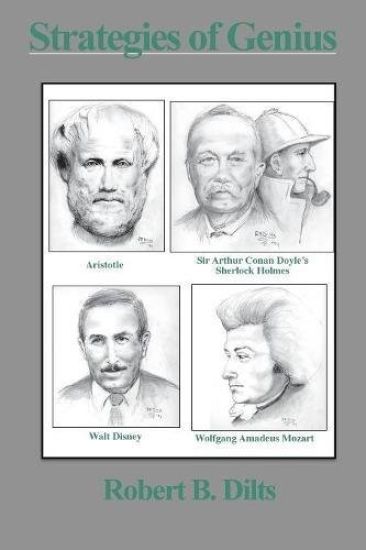
It has been said that human history is nothing more than a record of the deeds and ideas of great men and women. Ever since people began to turn their attention inward to examine their own thought processes, one of the hopes and promises of psychological inquiry has been to map out the key features of the mind that will allow our own thoughts to soar with the giants of history.Neuro-Linguistic Programming (NLP) provides a new set of tools that can allow us to take major steps toward this promising but elusive goal. The mission of NLP is to define and extend the leading edge of human knowledge-- particularly our knowledge about ourselves--by modeling the thought processes or "strategies" of effective people.The purpose of this series on Strategies of Genius is to apply the tools of NLP to analyse important historical figures in order to produce practical and effective "strategies of genius" that can be learned and applied in other contexts.This first volume analyzes the thinking processes of Aristotle, Sherlock Holmes, Walt Disney and Wolfgang Amadeus Mozart. The behavioral areas in which all of these individuals operated were quite different from one another, and one of them is actually a character from fiction. However, they all have something in common: unique and powerful strategies for analyzing, problem solving or creating, which continue to fascinate and entertain us to this day.By analyzing quotations and anecdotes, the author paints a rich picture of the thinking processes of each of these unique individuals and then shows how those thinking processes may be used by the reader to enhance his or her own creativity and problem solving ability.Other volumes include studies of Albert Einstein, Sigmund Freud, Leonardo da Vinci, Nikola Tesla and others who have helped to shape our modern world.
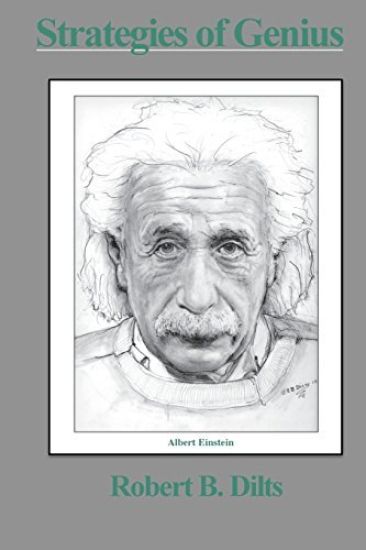
Albert Einstein is not only acknowledged around the world as a genius but has practically become the symbol for genius in this century. His ideas encompassed our spiritual and social worlds as well as scientific and physical reality. He introduced a whole new paradigm of thinking that has affected many different areas of our lives. His discoveries in the field of theoretical physics made the "atomic age" possible and his humanitarianism has served as an example for the entire scientific community. His theory of relativity changed our entire conception of the universe and such basic aspects of our reality as time, space, matter and energy.This book analyzes the thinking processes behind Einstein's unique personality and accomplishments. Using the cognitive modeling techniques of Neuro-Linguistic Programming the book explores and illuminates Einstein's mental strategies and beliefs.The purpose of the study is to look beyond the specific content and scientific details of Einstein's thoughts to the cognitive 'strategies of genius' that created them. NLP provides a structure and a language to be able to put into a set of 'chunks' or steps the relevant mental processes used by Einstein. In this form, those mental processes can be transferred to others and applied in contexts other than physics.By examining numerous quotations, excerpts from Einstein's own writings and anecdotes, the author paints a rich picture of Einstein's thinking processes and then shows how those thinking processes may be used by the reader to enhance his or her own creativity and problem solving ability.This book is the second volume of a larger study on the Strategies of Genius. Volume I explored the creative process of Aristotle, Arthur Conan Doyle's Sherlock Holmes, Walt Disney and Wolfgang Amadeus Mozart. Future volumes include studies of Sigmund Freud, Leonardo da Vinci and others who have helped to shape our modern world
Effective Presentation SkillsAt some point in our lives we are probably all called upon to make a presentation. It may be at school, a social function of form some professional purpose. The demands of the "Information Age" make it increasingly necessary and likely that we will need to make presentations as part of our normal activities.Making an effective presentation requires the ability to communicate and relate to other people. These are very basic skills, yet they are not usually taught to us as part of our traditional classroom education or professional training. The purpose of this book is to provide some of the key practical communication and relational skills necessary to make effective presentations.The great Greek philosopher Aristotle maintained that an effective speaker had to have three basic abilities: (1) to reason logically, (2) to understand human character and (3) to understand the emotions. These capabilities appear to be as relevant today as they were twenty-five hundred years ago.This book is about how to develop skills that support these abilities by applying modern developments in the psychology of learning and communication primarily drawn from the field of Neuro-Linguistic Programming.While the skills in this book are relevant for all types of presentations, the focus is on people who make presentations for professional reasons. In particular, it focuses on presentations for teaching and training purposes, i.e., those related to organizational learning. In addition to professional trainers and teachers, it includes managers, consultants and others who need to share knowledge and information.The book covers three general areas involved in making effective presentations in a learning context including (1) basic principles for forming an effective communication strategy, (2) designing and planning effective presentations and presentation materials and (3) managing issues related to motivation and interactions with a group or audience.

Intended to be an overall reference guide to all aspects of NLP theory and practice, Roots of Neuro-Linguistic Programming provides much of the important scientific background information that is not covered in the other "how-to" books written about Neuro-Linguistic Programming. This information is used to give important insights into how and why the specific NLP techniques work so effectively. Each part has been written to build on the information provided by the previous section(s) but may also be read and understood with little or no reference to the other parts. While this book is technical in many respects, it is intended to serve as a resource to the novice as well as to the experienced student of human behavior and experience.

This work presents the application of NLP to a number of important areas including business communication, sales, education, creative writing, health, family therapy and interpersonal negotiation. The book is composed of a collection of individual articles and is intended as a practical guide to using NLP skills and techniques in many different contexts. Its purpose is to show the versatility of NLP, and to help managers, salespeople, teachers, psychologists and parents to have a better understanding and command of their thinking processes and communication abilities

Changing Belief Systems with NLP describes advanced NLP techniques for identifying and influencing key beliefs. NLP provides a model of the mind and a set of behavioral tools that can allow people to unlock some of the hidden mechanisms of beliefs and belief systems. Through the processes of NLP, beliefs and the neurolinguistic and physical elements which influence beliefs, may be explored and influenced in a comprehensive and pragmatic way.This book is a result of the author's extensive exploration of the underlying processes which influence beliefs using the tools of NLP. It is primarily drawn from a manuscript of a seminar on belief change. By doing so, it presents and preserves some of the feeling and interactive insight that comes from the real life experience of working with people and their beliefs. Some of the belief change techniques covered in the book include the Failure into Feedback Strategy, Reimprinting, Integration of Conflicting Beliefs and the Meta Mirror Format.
Skills for the Future are those skills which will allow us to effectively and ecologically define, move toward and manage the future amid the challenges of uncertainty and change. The two basic goals for developing skills for the future are to 1) improve performance and 2) manage change. Reaching these objectives involves competence in such areas as learning, leadership and, perhaps most importantly, creativity. The focus of this book is on how the cognitive and behavioral technologies of Neuro-Linguistic Programming may be used to develop and apply personal and organizational learning strategies together with communication and leadership skills to manage the processes of "creating the future."Originally conceived and formulated by Robert Dilts and Gino Bonissone as part of an extensive project on leadership and creativity for the Fiat Group, the purpose of Skills for the Future is to provide models and tools for defining and managing the creative process on both a micro and macro level. The micro aspects of creativity relate to the inner thoughts and subjective experiences that are at the basis of an individual's own personal creative activities. The macro aspects of creativity deal with a) how to enhance the creative interaction between two people or a group of people, and b) the implications of the creative process in the context of an organization and organizational problem-solving.The book is composed of three basic parts: 1) Personal Creativity, 2) Co-Creativity and 3) Group Creativity.Part I focuses on the personal or individual aspects of creativity and innovation. Its purpose is to address questions such as, "What are some of your own personal creative strategies?" "How could you define and enhance some of your own creative abilities?" Part I shows how some basic NLP models and distinctions may be used to develop more mastery over your internal state and improve your own creative thinking strategies by coordinating your own inner dreamer, realist and critic.Part II explores the processes relating to co-creativity. It addresses the questions, "How can we enhance creative interactions?" "In what ways might we be able to coach the process of creativity in others or stimulate others to be more creative?" Part II emphasizes skills related to helping others be more creative and tap into unconscious creative processes through mental mapping and lateral thinking strategies.Part III explores how NLP principles and tools may be used to stimulate and manage creativity in groups of people in organizations, in particular in terms of interfunctional interactions. It addresses questions such as, "How can the creative processes of different people be coordinated?" "In what ways can we define and integrate the different kinds of creative processes necessary to promote a successful team or organization?" Part III focuses on skills related to the identification and direction of different thinking styles and the development of effective communication strategies and creative leadership abilities.
Travailler de concert avec d'autres, en groupes et quipes, constitue une part de plus en plus courante et importante des affaires et de la vie d'aujourd'hui. Le fonctionnement des quipes tr s performantes se caract risent par la mise en oeuvre de l'intelligence collective. L'intelligence collective a trait l'aptitude qu'ont les membres d'une quipe, d'un groupe ou d'une organisation penser et agir de fa on align e et coordonn e.Le fruit d'une intelligence collective efficace s'appelle collaboration g n rative. La Collaboration G n rative concerne des personnes travaillant ensemble pour cr er ou g n rer quelque chose de nouveau, surprenant et au-del des capacit s individuelles de chacun des membres du groupe. Avec la collaboration g n rative, les individus parviennent utiliser pleinement leurs aptitudes, d couvrir et mettre en oeuvre des ressources qu'ils ignoraient avoir. Ils tirent de nouvelles id es et ressources les uns des autres. Ainsi la performance, ou le r sultat, du groupe en tant que tout est tr s sup rieure ce qu'elle serait si les individus travaillaient chacun de leur cot .Cet ouvrage s'adresse aux personnes qui veulent accro tre leur capacit travailler de concert avec d'autres de fa on efficace et vivre l'enthousiasme, la satisfaction et la puissance que procure la collaboration g n rative.Collaboration G n rative est le second tome de la s rie Mod lisation des facteurs de Succ s (Success factor ModelingTM) du c l bre auteur et consultant Robert Dilts.La Mod lisation des Facteurs de Succ s est une m thodologie dont l'objectif est d'identifier les principales caract ristiques et capacit s partag es par les entrepreneurs, les quipes et les entreprises qui r ussissent. Elle les met ensuite en oeuvre pour d finir des processus et comp tences que d'autres personnes peuvent utiliser pour engendrer un impact et parvenir la r ussite.Collaboration G n rative pr sente des mod les, des outils, des exercices, des illustrations et des exemples de cas de r ussites d'entrepreneurs, d' quipes et d'organisations qui vont vous aider comprendre comment activer et lib rer la puissance cr ative de l'intelligence collective.


Dynamic Learning is about a revolutionary new approach to learning and teaching. In this book, Robert Dilts and Todd Epstein present leading edge methods and techniques that improve the ability to learn in a variety of areas. Dilts and Epstein, co-authors of Tools for Dreamers, offer stimulating exercises and step-by-step procedures that help you to make better use of the most valuable resource you have--your brain. The authors describe a multitude of ways to make learning fun, easy and effective. These exercises and strategies were drawn from their experiences of working with individuals, conducting public seminars, and consulting and training in the public school system.Dynamic Learning applies the process of learning through experience. The techniques and exercises of Dynamic Learning involve learning by doing and by exploring different strategies of thinking. In essence, Dynamic Learning is about learning how to learn. Dynamic Learning methods can be used by children or adults and have been especially effective for people who have experienced difficulties in learning.This book provides effective strategies and methods to: - Remember people's names- Strengthen your senses and mental capabilities to improve in every type of learning.- Improve your memory- Read faster and with better comprehension- Spell more easily and accurately- Learn foreign languages more quickly- Write more creatively and fluentlyDynamic Learning provides a wealth of information and activities that can be used by anyone who wants to improve his or her abilities to learn. Discover the methods that transformed an entire school district and have changed the lives of many people who thought they were 'slow', 'stupid' or incapable of learning.
Nlp II
Robert Brian Dilts; Judith Ann DeLozier; Deborah Sue Bacon Dilts
Dilts Strategy Group
2018
pokkari
NLP II: The Next Generation is about significant new developments in the field of Neuro-Linguistic Programming. Founded on the "study of the structure of subjective experience," NLP has developed some very powerful tools and skills for communication and change in a diverse assortment of professional areas including: coaching, counseling, psychotherapy, education, health, law, business, sales, and parenting. NLP processes and procedures address an impressive range of topics and issues, including the treatment of phobias, traumas and emotional disorders, techniques for accelerated learning, leadership and management skills, conflict resolution, motivation, creativity, physical healing and many others. NLP is now in its third decade as a field of study and has evolved considerably since its beginnings in the mid 1970s. It has been 30 years since the publication of NLP Volume 1. Over these years, NLP has spread around the world and has touched the lives of millions of people. NLP developers and practitioners have continued to expand the boundaries of NLP applications, creating what we consider a new generation of models and applications.This new generation of NLP works with the interaction between three different intelligences or "minds" - A cognitive mind that emerges from the brain- A somatic mind centered in the body- A "field" mind that emanates from our connection to and relationships with larger systems around us.This book describes the "neurolinguistic" basis for each of these minds and presents a variety of practices, exercises and techniques through which people may improve their lives, work more effectively with others and grow personally. Readers will learn practical and simple methods for communicating better, solving problems more quickly and easily and responding to life challenges with more creativity and flexibility.