Kirjojen hintavertailu. Mukana 11 244 527 kirjaa ja 12 kauppaa.

Kirjahaku

Etsi kirjoja tekijän nimen, kirjan nimen tai ISBN:n perusteella.

1000 tulosta hakusanalla Robert Crawford

The Bard: Robert Burns, a Biography

The Bard: Robert Burns, a Biography

Robert Crawford

PRINCETON UNIVERSITY PRESS
2009
sidottu
No writer is more charismatic than Robert Burns. Wonderfully readable, The Bard catches Burns's energy, brilliance, and radicalism as never before. To his international admirers he was a genius, a hero, a warm-hearted friend; yet to the mother of one of his lovers he was a wastrel, to a fellow poet he was "sprung . . . from raking of dung," and to his political enemies a "traitor." Drawing on a surprising number of untapped sources--from rediscovered poetry by Burns to manuscript journals, correspondence, and oratory by his contemporaries--this new biography presents the remarkable life, loves, and struggles of the great poet. Inspired by the American and French Revolutions and molded by the Scottish Enlightenment, Burns was in several senses the first of the major Romantics. With a poet's insight and a shrewd sense of human drama, Robert Crawford outlines how Burns combined a childhood steeped in the peasant song-culture of rural Scotland with a consummate linguistic artistry to become not only the world's most popular love poet but also the controversial master poet of modern democracy. Written with accessible elan and nuanced attention to Burns's poems and letters, The Bard is the story of an extraordinary man fighting to maintain a sly sense of integrity in the face of overwhelming pressures. This incisive biography startlingly demonstrates why the life and work of Scotland's greatest poet still compel the attention of the world a quarter of a millennium after his birth.
Captain Cuellar's Adventures in Connacht and Ulster, A.D. 1588. to Which Is Added an Introduction and Complete Translation of Captain Cuellar's Narrative of the Spanish Armada and His Adventures in Ireland, by R. Crawford, Etc.
Title: Captain Cuellar's Adventures in Connacht & Ulster, A.D. 1588 ... To which is added an introduction and complete translation of Captain Cuellar's Narrative of the Spanish Armada and his adventures in Ireland, by R. Crawford, etc.Publisher: British Library, Historical Print EditionsThe British Library is the national library of the United Kingdom. It is one of the world's largest research libraries holding over 150 million items in all known languages and formats: books, journals, newspapers, sound recordings, patents, maps, stamps, prints and much more. Its collections include around 14 million books, along with substantial additional collections of manuscripts and historical items dating back as far as 300 BC.The HISTORY OF BRITAIN & IRELAND collection includes books from the British Library digitised by Microsoft. As well as historical works, this collection includes geographies, travelogues, and titles covering periods of competition and cooperation among the people of Great Britain and Ireland. Works also explore the countries' relations with France, Germany, the Low Countries, Denmark, and Scandinavia. ++++The below data was compiled from various identification fields in the bibliographic record of this title. This data is provided as an additional tool in helping to insure edition identification: ++++ British Library Allingham, Hugh; Crawford, Robert; Cuellar; 1897. 70 p.; 8 . 9508.cc.2.
Young Eliot

Young Eliot

Robert Crawford

Vintage Publishing
2016
pokkari
Eliot wanted no biography written, but this book reveals him in all his vulnerable complexity as student and lover, stink-bomber, banker and philosopher, but most of all as an epoch-shaping poet struggling to make art among personal disasters.
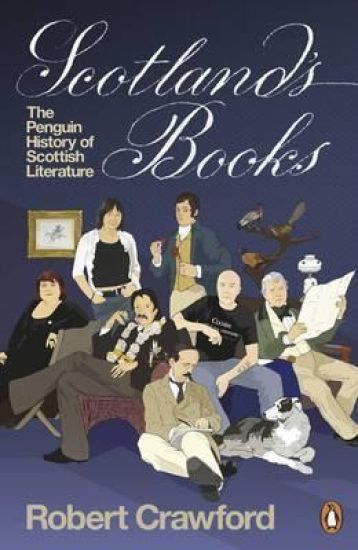
Scotland's Books

Scotland's Books

Robert Crawford

Penguin Books Ltd
2007
pokkari
From Treasure Island to Trainspotting, Scotland’s rich literary tradition has influenced writing across centuries and cultures far beyond its borders. Here, for the first time, is a single volume presenting the glories of fifteen centuries of Scottish literature. In Scotland’s Books poet Robert Crawford tells the story of Scottish writing and its relationship to the country’s history. Stretching from the medieval masterpiece of St Columba’s Iona - the earliest surviving Scottish work - to the imaginative, thriving world of twenty-first-century writing with authors such as Ali Smith and James Kelman, this outstanding collection traces the development of literature in Scotland and explores the cultural, linguistic and literary heritage of the nation. It includes extracts from the writing discussed to give a flavour of the original work, full quotations in their own language, previously unpublished works by authors and plenty of new research. Informative and readable, this is the definitive guide to the marvellous legacy of Scottish literature.
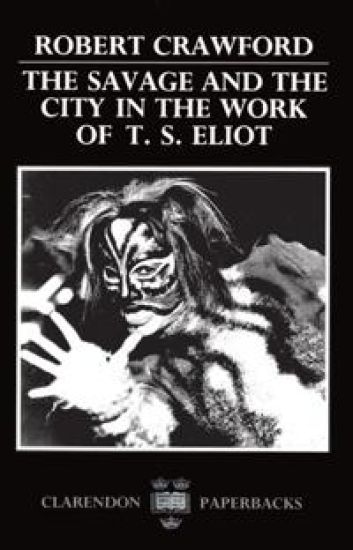
The Savage and the City in the Work of T. S. Eliot
The twin concerns of primitive and metropolitan life nourished T.S. Eliot's imagination through his childhood and student years and developed to mould and underpin his writing. Ranging from Dr Sweany of St Louis and Eliot's intense interest in anthropology to his interest in Victorian urban writing and popular American models, this book throws new light on Eliot's major works, particularly on The Waste Land and Sweeney Agonistes. In understanding how a great poet obsessively and continually brought together `savages' and the sophisticated as well as slum-dwelling members of modern urban society, we can see his work afresh as possessing remarkable and profound excitement as well as unusual integrity.
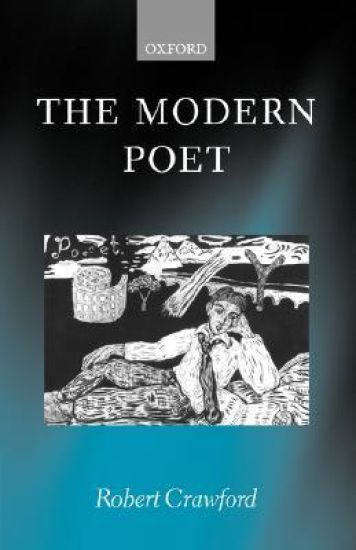
The Modern Poet

The Modern Poet

Robert Crawford

Oxford University Press
2001
sidottu
Addressed to all readers of poetry, this is a wide-ranging book about the poet's role throughout the last three centuries. It argues that a conception of the poets as both primitive and sophisticated emerged in the 1750s. Encouraged by the classroom when English literary works began to be studied in universities, this view continues to shape our own attitudes towards verse. Whether considering Ossian and the Romantics, Victorian scholar-gipsies, Modernist poetries of knowledge, or contemporary poetry in Britian, Ireland, and America, The Modern Poet shows how many successive generations of poets have needed to collaborate and to battle with academia.
The Modern Poet

The Modern Poet

Robert Crawford

Oxford University Press
2004
nidottu
Addressed to all readers of poetry, this is a wide-ranging book about the poet's role throughout the last three centuries. It argues that a conception of the poets as both primitive and sophisticated emerged in the 1750s. Ever since English literary works became the focus of university studies, classroom discussion has shaped attitudes towards verse. Whether considering Ossian and the Romantics, Victorian scholar-gipsies, Modernist poetries of knowledge, or contemporary poetry in Britain, Ireland, and America, The Modern Poet shows how many successive generations of poets have needed to collaborate and to battle with academia.
Full Volume

Full Volume

Robert Crawford

Jonathan Cape Ltd
2008
nidottu
Holding in balance the ecological and the technological, ancient and modern, Full Volume sings languages and cultures, people and habitats burgeoning on the brink of extinction. From revved-up battle-cry to nervous whisper, these lyrical poems praise intricate abundance. Assured in its rhymes and cadences, Full Volume is often attentive to poetry in other tongues, not least Gaelic. As their tones and forms shift from the spiritual to the wry, from haiku to brosnachadh, the poems' resonance and music build into a sustained sounding of what it means to live, love, and listen in a world where 'Nothing is ever single'.
Eliot After The Waste Land

Eliot After The Waste Land

Robert Crawford

Vintage Publishing
2022
sidottu
The second volume of Robert Crawford's magisterial biography of the revolutionary modernist, visionary poet and troubled man, drawing on extensive new sources.In this compelling and meticulous portrait of the twentieth century's most important poet, Robert Crawford completes the story he began in Young Eliot. Drawing on extensive new sources and letters, this is the first full-scale biography to make use of Eliot's most significant surviving correspondence, including the archive of letters (unsealed for the first time in 2020) detailing his decades-long love affair with Emily Hale. This long-awaited second volume, Eliot After 'The Waste Land', tells the story of the mature Eliot, his years as a world-renowned writer and intellectual, and his troubled interior life. From his time as an exhausted bank employee after the publication of The Waste Land, through the emotional turmoil of the 1920s and 1930s, and his years as a firewatcher in bombed wartime London, Crawford reveals the public and personal experiences that helped generate some of Eliot's masterpieces. He explores the poet's religious conversion, his editorship at Faber and Faber, his separation from Vivien Haigh-Wood and happy second marriage to Valerie Fletcher, and his great work Four Quartets. Robert Crawford presents this complex and remarkable man not as a literary monument but as a human being: as a husband, lover and widower, as a banker, editor, playwright and publisher, but most of all as an epoch-shaping poet struggling to make art among personal disasters.
Testament

Testament

Robert Crawford

Jonathan Cape Ltd
2014
nidottu
To make a testament is to attempt to pass on what matters most. In his seventh full-length collection of poems Robert Crawford writes of love, loss, belief, and commitment. Whether in intimate erotic lyrics or in a sustained engagement with the politics of Scottish independence he writes with passion, wit, and assurance about struggles to pass on values and treasures. The book opens with a sequence of love poems, and closes with ‘Testament’, a startlingly fresh gathering of deftly rhymed paraphrases based on the New Testament. Whether making versions of Cavafy or elegising fellow poet Mick Imlah, or writing how a father hands on a piece of marble to his son, Robert Crawford shows in Testament how poetry can communicate from generation to generation aspects of what makes us most vulnerably and engagingly human.
Life Cycle Assessment in the Built Environment
Life cycle assessment enables the identification of a broad range of potential environmental impacts occurring across the entire life of a product, from its design through to its eventual disposal or reuse. The need for life cycle assessment to inform environmental design within the built environment is critical, due to the complex range of materials and processes required to construct and manage our buildings and infrastructure systems.After outlining the framework for life cycle assessment, this book uses a range of case studies to demonstrate the innovative input-output-based hybrid approach for compiling a life cycle inventory. This approach enables a comprehensive analysis of a broad range of resource requirements and environmental outputs so that the potential environmental impacts of a building or infrastructure system can be ascertained. These case studies cover a range of elements that are part of the built environment, including a residential building, a commercial office building and a wind turbine, as well as individual building components such as a residential-scale photovoltaic system.Comprehensively introducing and demonstrating the uses and benefits of life cycle assessment for built environment projects, this book will show you how to assess the environmental performance of your clients’ projects, to compare design options across their entire life and to identify opportunities for improving environmental performance.
What is Religion?

What is Religion?

Robert Crawford

Routledge
2001
sidottu
We all know what religion is - or do we? Confronted with religious pluralism and cultural diversity, it manifests itself in many forms. What is Religion? serves not only as an introduction to the different belief systems flourishing throughout the modern world, but asks us to consider how the very boundaries of faith might be drawn now and in the future. How might religion interact with political ends, or permeate culture, society and everyday life? Is the post-secular world in thrall to 'religions' of its own kind - materialism, humanism, medicine, science? And what logic separates 'common-sense' or academic knowledge from the immutable but unstable boudaries of faith? Which is the more certain? What does it mean to believe?Combining clear accounts of contemporary global religious practice with an incisive philosophical interrogation of the dynamics and aims of belief, What is Religion? offers a fresh and wide-ranging introduction to the perennial human questions of ritual, faith, ethics and salvation.
What is Religion?

What is Religion?

Robert Crawford

Routledge
2001
nidottu
We all know what religion is - or do we? Confronted with religious pluralism and cultural diversity, it manifests itself in many forms. What is Religion? serves not only as an introduction to the different belief systems flourishing throughout the modern world, but asks us to consider how the very boundaries of faith might be drawn now and in the future. How might religion interact with political ends, or permeate culture, society and everyday life? Is the post-secular world in thrall to 'religions' of its own kind - materialism, humanism, medicine, science? And what logic separates 'common-sense' or academic knowledge from the immutable but unstable boudaries of faith? Which is the more certain? What does it mean to believe?Combining clear accounts of contemporary global religious practice with an incisive philosophical interrogation of the dynamics and aims of belief, What is Religion? offers a fresh and wide-ranging introduction to the perennial human questions of ritual, faith, ethics and salvation.
Life Cycle Assessment in the Built Environment
Life cycle assessment enables the identification of a broad range of potential environmental impacts occurring across the entire life of a product, from its design through to its eventual disposal or reuse. The need for life cycle assessment to inform environmental design within the built environment is critical, due to the complex range of materials and processes required to construct and manage our buildings and infrastructure systems.After outlining the framework for life cycle assessment, this book uses a range of case studies to demonstrate the innovative input-output-based hybrid approach for compiling a life cycle inventory. This approach enables a comprehensive analysis of a broad range of resource requirements and environmental outputs so that the potential environmental impacts of a building or infrastructure system can be ascertained. These case studies cover a range of elements that are part of the built environment, including a residential building, a commercial office building and a wind turbine, as well as individual building components such as a residential-scale photovoltaic system.Comprehensively introducing and demonstrating the uses and benefits of life cycle assessment for built environment projects, this book will show you how to assess the environmental performance of your clients’ projects, to compare design options across their entire life and to identify opportunities for improving environmental performance.
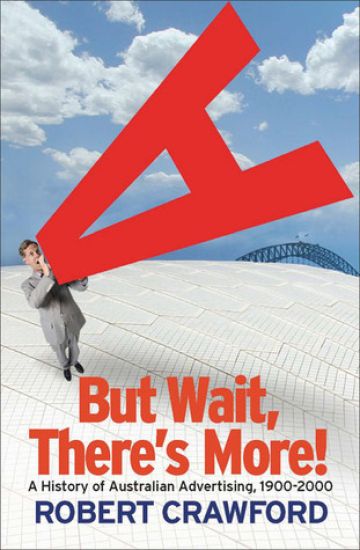
But Wait, There's More...

But Wait, There's More...

Robert Crawford

Melbourne University Press
2008
pokkari
Although such phrases as 'You oughta be congratulated' and 'Not happy, Jan' are instantly recognisable to Australian consumers, the individuals and industry responsible for them have remained largely anonymous. ""But Wait, There's More..."" is the first detailed history of the Australian advertising industry, exploring its development over the course of the twentieth century from a disorganised group of individuals selling newspaper space to a multi-billion dollar enterprise run by giant transnationals. By examining the forces and influences underpinning this rise, ""But Wait, There's More..."" provides a unique insight into the place of advertising in Australian society, and its often hidden influences on the way we live.
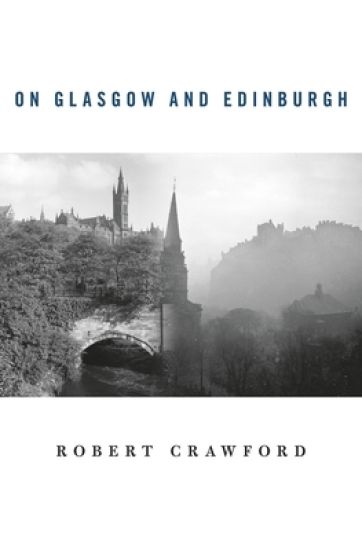
On Glasgow and Edinburgh

On Glasgow and Edinburgh

Robert Crawford

The Belknap Press
2015
nidottu
Edinburgh and Glasgow enjoy a famously scratchy relationship. Resembling other intercity rivalries throughout the world, from Madrid and Barcelona, to Moscow and St. Petersburg, to Beijing and Shanghai, Scotland’s sparring metropolises just happen to be much smaller and closer together—like twin stars orbiting a common axis. Yet their size belies their world-historical importance as cultural and commercial capitals of the British Empire, and the mere forty miles between their city centers does not diminish their stubbornly individual nature.Robert Crawford dares to bring both cities to life between the covers of one book. His story of the fluctuating fortunes of each city is animated by the one-upping that has been entrenched since the eighteenth century, when Edinburgh lost parliamentary sovereignty and took on its proud wistfulness, while Glasgow came into its industrial promise and defiance. Using landmarks and individuals as gateways to their character and past, this tale of two cities mixes novelty and familiarity just as Scotland’s capital and its largest city do. Crawford gives us Adam Smith and Walter Scott, the Scottish Enlightenment and the School of Art, but also tiny apartments, a poetry library, Spanish Civil War volunteers, and the nineteenth-century entrepreneur Maria Theresa Short. We see Glasgow’s best-known street through the eyes of a Victorian child, and Edinburgh University as it appeared to Charles Darwin.Crawford's lively account, drawing on a wealth of historical and literary sources, affirms what people from Glasgow and Edinburgh have long doubted—that it is possible to love both cities at the same time.
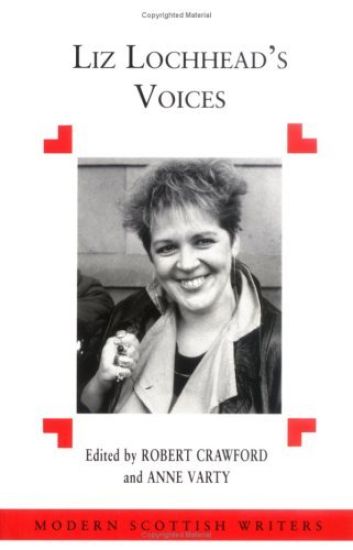
Liz Lochhead's Voices

Liz Lochhead's Voices

Robert Crawford

Edinburgh University Press
1994
nidottu
A study of the Scottish female writer and dramatist Liz Lochhead. It examines the full range of her work and supplies a variety of contexts in which her work can be read, including feminist ideology and theatre history. It also contains a full bibliography of her work and new material.
Devolving English Literature

Devolving English Literature

Robert Crawford

Edinburgh University Press
2000
nidottu
This widely-praised book looks at the rise and fall of 'Britishness' in literature over the last three centuries. Arguing that for much of its history the subject of 'English Literature' has been bound up with an assumed English cultural centre, Devolving English Literature examines the literary construction and questioning of a British (rather than simply English) literary identity. Surveying eighteenth and nineteenth-century writers, including Robert Burns, James Boswell, Walter Scott and Thomas Carlyle, Robert Crawford remaps literary history. He argues that Scottish and non-metropolitan authors left a crucial legacy to American literature, to the developing subject of anthropology, and to twentieth-century Modernism. In the work of T. S. Eliot, Ezra Pound, James Joyce, Hugh MacDiarmid and other Modernists there persist vitally 'provincial' as well as national elements. These continue to nourish the verse of sophisticated post-British 'barbarian' poets such as Seamus Heaney, Tony Harrison, Douglas Dunn, Les Murray, and Derek Walcott. More than that, they are bound up with the contemporary literature and politics of Britain after devolution. This second edition contains a substantial new chapter, 'Waving Citizens', which looks particularly at Scottish writing in the light of the political events that saw the establishment of a national Parliament in Edinburgh in 1999. Topics considered range from Walter Scott and European union to Trainspotting and right-wing politics. This new chapter argues for the need to read Scottish literature in ways that alert us not just to its political significance, but also to the breadth of its tonal spectrum, so that Muriel Spark and Kathleen Jamie are as much part of a redefined Scottish literary identity as are Irvine Welsh and James Kelman. Praise for the first edition: 'A stunning book: original, extraordinarily wide-ranging, coherent, reflective, and strongly argued.' - Susan Staves, Studies in English Literature 'Crawford's book produces a spine-icing thrill as new frontiers break open. It rethinks modern British literature with new meanings for students of history, politics, anthropology and sociology, and it does so with seminal clarity and captivating originality.' - Owen Dudley Edwards, New Statesman 'An incisive, indeed brilliant, critical investigation into Anglocentricity, nationalism and literature.' - Catherine Lockerbie, The Scotsman Key features: * Surveys the rise and fall of 'Britishness' in literature over three centuries. * New chapter (not in the first edition) surveys Scottish literature from a post-devolutionary perspective. * Includes material on US, Irish, English and Australian as well as Scottish literature. * Rave reviews for the first edition (1992).
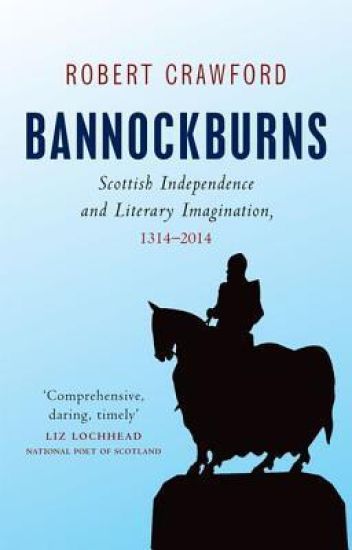
Bannockburns

Bannockburns

Robert Crawford

Edinburgh University Press
2014
sidottu
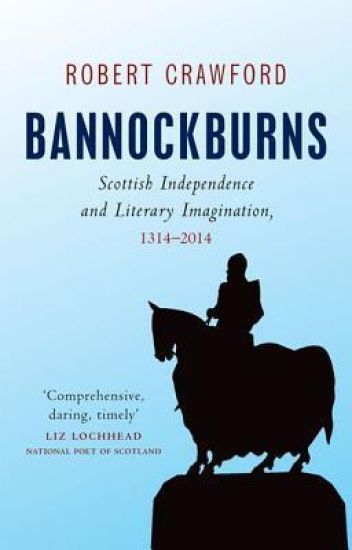
How writers have imagined the idea of Scottish independence over 700 yearsPoet and critic Robert Crawford explores in eloquent detail the literary-cultural background to Scottish nationalism in the lead-up to the referendum on independence for Scotland in September 2014. He begins with the totemic Battle of Bannockburn in 1314, in which the Scots routed the English and preserved their independence until the two nations peacefully united in 1707. Continuing up to the present day, he examines how writers have set out in poetry, fiction, plays and on film the ideal of Scottish independence. Publication coincides with the 700-year anniversary of the Battle of Bannockburn, 1314-2014.This engagingly written volume begins with an English poet-in-residence at the 1314 battle. The book then traces how that famous victory has been interpreted and reinterpreted imaginatively. It moves from vivid medieval epics in several languages through the Romantic political imagination of Robert Burns to the striking part played by twenty-first-century poets, novelists, and dramatists in creative attempts to answer the 2014 question: 'Should Scotland be an independent country?'Here are the nationalist poetry of Hugh MacDiarmid and the gore of Braveheart and Black Watch; the Surrey novelist who celebrates Scotland's political freedom in her international best-seller, and the bisexual Jewish American who develops a nuanced theory of Scottish nationalism in opposition to the oppressive rhetoric of fascism. Bannockburns concludes with a spirited discussion of literature and Scotland's 2014 referendum. From The Bruce to contemporary literature and modern-day campaigning, Bannockburns is revelatory.
Bannockburns

Bannockburns

Robert Crawford

Edinburgh University Press
2014
nidottu
Did you know the Battle of Bannockburn had its own poet-in-residence? Starting in 1314 and coming right up to the present day, poet and critic Robert Crawford examines how writers have set out in poetry, fiction, plays and on film the ideal of Scottish independence. Beginning with medieval commemorations of Bannockburn, this sweeping and ambitious book also includes the most detailed consideration of what independence meant to Robert Burns. Concentrating on Scottish writing, it considers, too, imaginative work by male and female authors from England to North America and Australia. This book is full of surprises: from the bestselling Romantic fiction from Surrey that nourished Braveheart to the subtle, Manhattan-born nationalist sparring partner of Hugh MacDiarmid. Bannockburns helps explain the intellectual formation of modern Scottish nationalism, and concludes with a detailed look at how contemporary Scottish authors have reacted in their writing to the arguments of Scotland's independence referendum. This is the only book to set out in full what Scottish independence has meant in literature. It shows how for 700 years the Battle of Bannockburn has remained a key reference point.