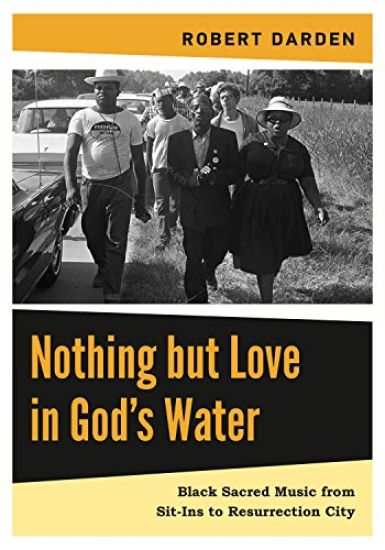
The first of two volumes chronicling the history and role of music in the African American experience, Nothing but Love in God’s Water explores how songs and singers helped African Americans challenge and overcome slavery, subjugation, and suppression. From the spirituals of southern fields and the ringing chords of black gospel to the protest songs that changed the landscape of labor and the cadences sung before dogs and water cannons in Birmingham, sacred song has stood center stage in the African American drama. Myriad interviews, one-of-a-kind sources, and rare or lost recordings are used to examine this enormously persuasive facet of the movement. Nothing but Love in God’s Water explains the historical significance of song and helps us understand how music enabled the civil rights movement to challenge the most powerful nation on the planet.
Volume 1 of Nothing but Love in God’s Water traced the music of protest spirituals from the Civil War to the American labor movement of the 1930s and 1940s, and on through the Montgomery bus boycott. This second volume continues the journey, chronicling the role this music played in energizing and sustaining those most heavily involved in the civil rights movement.Robert Darden, former gospel music editor for Billboard magazine and the founder of the Black Gospel Music Restoration Project at Baylor University, brings this vivid, vital story to life. He explains why black sacred music helped foster community within the civil rights movement and attract new adherents; shows how Martin Luther King Jr. and other leaders used music to underscore and support their message; and reveals how the songs themselves traveled and changed as the fight for freedom for African Americans continued. Darden makes an unassailable case for the importance of black sacred music not only to the civil rights era but also to present-day struggles in and beyond the United States.Taking us from the Deep South to Chicago and on to the nation’s capital, Darden’s grittily detailed, lively telling is peppered throughout with the words of those who were there, famous and forgotten alike: activists such as Rep. John Lewis, the Reverend Ralph Abernathy, and Willie Bolden, as well as musical virtuosos such as Harry Belafonte, Duke Ellington, and The Mighty Wonders. Expertly assembled from published and unpublished writing, oral histories, and rare recordings, this is the history of the soundtrack that fueled the long march toward freedom and equality for the black community in the United States and that continues to inspire and uplift people all over the world.
Agony and hilarity, said Norman MacLean, are both necessary for salvation. We Christians seem to know a lot about the agony part, but what about hilarity? Why do we have to remind ourselves so often that the Bible is full of funny and ridiculous stories and situations? Why do so few of the pictures we ve drawn of Jesus show him laughing? Because we ve forgotten the redemptive power of humor, that s why. In Jesus Laughed, Robert Darden senior editor of The Wittenburg Door, the world s oldest, largest, and pretty much only religious satire magazine draws on his years of experience deflating religious pomposity and making the faithful laugh to show why humor is so central to the faith, and how to make it a big part of your daily walk with God. Click here to listen to Terri Gross's interview with Robert Darden on NPR's Fresh Air about the Black Gospel Music Restoration Project. Darden runs the project at Baylor University where he is a journalism professor. The purpose of the project is to identify, acquire, preserve, record, and catalogue the most at-risk music from the black gospel music tradition, primarily between 1945 and 1970. Robert Darden is Associate Professor of Journalism at Baylor University in Waco, Texas. He served for 12 years as Gospel Music Editor for Billboard magazine, and since 1988 has been Senior Editor of The Wittenburg Door, the world s oldest, largest, and pretty much only religious satire magazine. He is the author of more than 25 books, including the definitive People Get Ready! A New History of Black Gospel Music, which has been featured on National Public Radio, and Reluctant Prophets and Clueless Disciples, also published by Abingdon Press."
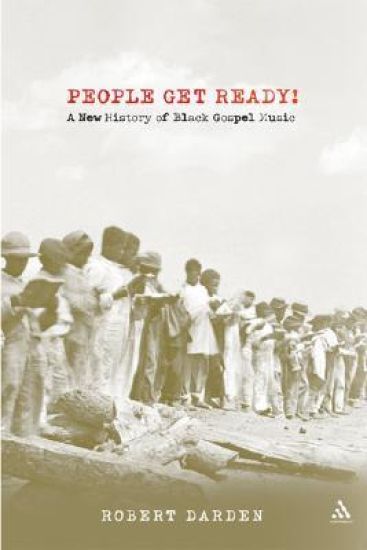
People Get Ready!: A New History of Gospel Music is a passionate, celebratory, and carefully researched chronology of one of America's greatest treasures. From Africa through the spirituals, from minstrel music through jubilee, and from traditional to contemporary gospel, People Get Ready! shows the links between styles, social patterns, and artists. The emphasis is on the stories behind the songs and musicians. From the nameless slaves of Colonial America to Donnie McClurkin, Yolanda Adams, and Kirk Franklin, People Get Ready! provides, for the first time, an accessible overview of this musical genre. In addition to the more familiar stories of Thomas A. Dorsey and Mahalia Jackson, the book offers intriguing new insights into the often forgotten era between the Civil War and the rise of jubilee-that most intriguing blend of minstrel music, barbershop harmonies, and the spiritual. Also chronicled are the connections between some of gospel's precursors (Blind Willie Johnson, Arizona Dranes, and Sister Rosetta Tharpe) and modern gospel stars, including Andrae Crouch and Clara Ward. People Get Ready! knits together a number of narratives, and combines history, musicology and spirituality into a coherent whole, stitched together by the stories of dozens of famous and forgotten musical geniuses. FROM THE INTRODUCTION "Among the richest of the lavish gifts Africa has given to the world is rhythm. The beat. The sound of wood on wood, hand on hand. That indefinable pulse that sets blood to racing and toes to tapping. It is rhythm that drives the great American musical exports, the spiritual (and, by extension, gospel), the blues, jazz and rock 'n' roll. But first you must have the spirituals-religion with rhythm. In this book, I will show the evolution of a musical style that only occasionally slows down its evolution long enough to be classified before it evolves yet again. In historical terms, spirituals emerged from African rhythm, work-songs, and field hollers in a remarkably short time-years, perhaps days-after the first African slaves landed on American shores. From the spirituals sprang not just their spiritual heir jubilee, but jazz and blues. And gospel music in its modern understanding morphed from the spirituals, the blues, jubilee and-of course-African rhythm. What today's gospel music is and what it is becoming is part of the continuing evolution of African American music. Religion with rhythm."
Draws on media's past strengths to define a more responsive role for journalism's future. This work covers many current trends: minority voices, providing interactive community forums, reconciling informational and entertainment functions, understanding bias and creating "public opinion".
Arguing in the first book-length exploration of a conversational and dialogic model for journalism that accurately reporting the news is a surprisingly limiting if not disabling mission, the authors draw optimistically on past strengths of the media, especially print journalism, to reform and redefine a more ecumenical, constructive, participative, and democratically responsive role for journalism's institutional future. The book's scope is wide, and it includes many current trends: minority voices, contextualizing the news, providing interactive community forums, reconciling informational and entertainment functions, creating public opinion, and understanding the nature of bias.
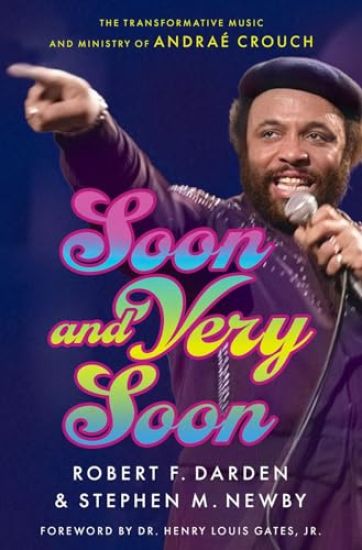
The first biography of arguably the most influential gospel artist of the 20th century, brought to life through interviews with his collaborators, friends, and family Gospel singer and seven-time Grammy winner Andraé Crouch (1942-2015) hardly needs introduction. His compositions—"The Blood Will Never Lose Its Power," "Through It All," "Jesus is the Answer," "Soon and Very Soon," and others—set the gold standard for gospel music and remain staples in modern hymnals today. He is often spoken of in the same "genius" pantheon as Mahalia Jackson, Thomas Dorsey, and the Rev. James Cleveland and was lauded as "the foremost gospel singer of his generation" by former President Barack and First Lady Michelle Obama upon his death in 2015. In Soon and Very Soon, authors Robert Darden and Stephen Newby celebrate the countless ways that Crouch indelibly changed the course of gospel and popular music. Not least among them was Crouch's progressive pursuit to address the sociopolitical issues of his time, including AIDS, prejudice, abuse, housing insecurity, and addiction. With his twin sister Sandra, Crouch served as minister of the church their father founded and ministered to individuals experiencing these issues despite ongoing criticism from some church members. Crouch's group "The Disciples" were the first bi-racial musical ensemble in gospel music and performed in a range of venues from mega-churches to Madison Square Garden and Carnegie Hall, in addition to network television programs ranging from Soul Train to The Tonight Show Starring Johnny Carson to Saturday Night Live. In doing so, Crouch and his Disciples introduced jazz, funk, classical, calypso, Latin and other musical elements into gospel. By the peak of his career, Crouch's influence was so pervasive that he recorded, performed with, and composed for some of the most powerful names in popular music, including Michael Jackson, Elvis Presley, Elton John, Bob Dylan, Paul Simon, Quincy Jones, Little Richard, Stevie Wonder, and Madonna. To illuminate the vivid world in which Crouch lived, Darden and Newby include interviews with surviving musicians, collaborators, friends, and family members, complete with musical analysis of Crouch's compositions and lyrics. As a major intervention in gospel and popular music studies, Soon and Very Soon tells the fascinating and dynamic story of one of the true giants in American popular music.
Net Worth Version 1Series: Net WorthBy Darren BrownDRBA collection of Poetry, Religious and Other Writing from DRB / Automutt's Internet and Offline Writing Activity. Over 20 Years of writing on Usenet Newsgroups and various other websites/forums and Private Offline writing compiled into an exciting book form. With more in the series to come....Darren Brown DRBArtist - Hobbyist - LiteratureWest Australian, Writer, Believer and Sinner.
Robert and Darlene, who like to be called Scruffy and Fluffy, are brother and sister bunnies who get to go on a plane for the first time to the wondrous state of Alaska. Being bunnies, they have lots of family there. Their first adventure starts in Homer, where they are staying with their uncle Doug and aunt Liz and their cousins Debbie, Don, and Sally. While digging for clams, accident-prone Scruffy gets into a bit of a mess and needs his cousins to help him out. On their halibut trip the next day, Scruffy has another mishap. As their adventures continue, they learn about nature through explanation and personal experiences and always remember to praise God for His guidance and for keeping them safe. They go on a cruise in Seward to the fjords. While waiting to see the glaciers calve, they see humpback whales, a couple of birds, and other sea life. On the Russian River, they get to go combat fishing for salmon. Amid the fun adventures, there always seems to be a little mishap, but that is usually easily righted. Scruffy, Fluffy, and their cousins will pull you right into their fun and adventures, stir your imagination, and encourage you to explore nature's wonders.
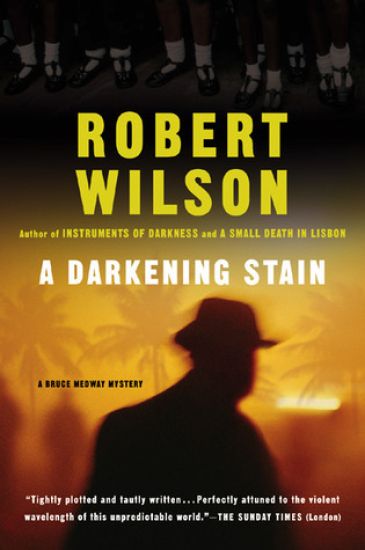
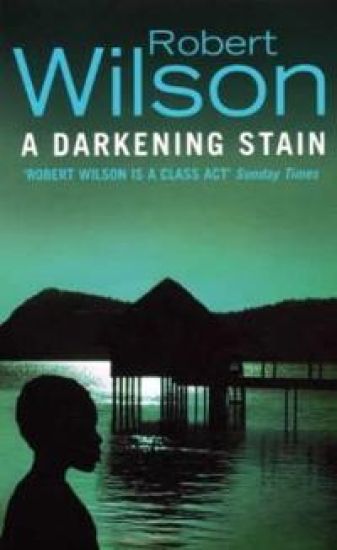
When schoolgirls begin to disappear on the West African coast, "troubleshooter" Bruce Medway tries to remain detached. Meanwhile, he reluctantly acquires a new job from former nemesis and mafia capo Franconelli. Franconelli gives Bruce forty-eight hours to find a French trader, Mariner, whom not even the mafia has been able to track. Yet as Bruce sets out on his assignment, he is unable to remain disconnected from the mysterious schoolgirl disappearances, and finds that girls, gold, and greed are all interconnected; corruption abounds everywhere. There are no safe havens for Bruce in this situation, and he must devise a scam that risks everything in order to stay alive. A brilliant follow-up to Blood is Dirt, and the fourth novel in the Bruce Medway series, A Darkening Stain takes Bruce Medway into the darkest territory of West Africa yet. A Harvest Original
Bruce Medway does not see the disappearance of schoolgirls as any of his business. That is the domain of his ex-partner. Then an eighth and very important schoolgirl goes missing and Bruce must descend into a morass of police corruption, mafia revenge, sexual depravity and illegally mined gold.
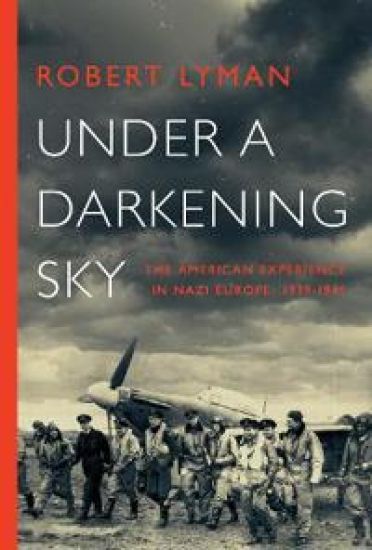
A poignant and powerful portrait of Europe in the years between 1939 and 1941—as the Nazi menace marches toward the greatest man-made catastrophe the world has ever experienced—Under A Darkening Sky focuses on a diverse group of expatriate Americans. Told through the eyes and observations of these characters caught up in these seismic events, the story unfolds alongside a war that slowly drags a reluctant United States into its violent embrace. This vibrant narrative takes these dramatic personalities and evokes the engagement between Europe and a reluctant America from the September 3rd, 1939—when Britain declares war—through the tragedy of Pearl Harbor in December 1941. In a distinctively energetic storyline, Robert Lyman brings together a wide range of encounters, conversations, and memories. It includes individuals from across the social spectrum, from Josephine Baker to the young Americans who volunteered to fight in the RAF, as part of the famous “Eagle Squadrons.” Hundreds of young Americans—like the aces James Goodison, Art Donahue, and the wealthy playboy Billy Fiske, who was the first American volunteer in the RAF to die in action during the Battle of Britain—smuggled themselves into Canada so that they could volunteer for the cockpits of Spitfires and Hurricanes, as they flew against the deadly Luftwaffe over ever-darkening skies in London.
Darien Dogs - A private commando team counters the infiltration of terrorists in league with FARC narcotic transporters in the Darien Province of Panama; one of the most dangerous jungles in the world. Follow the myriad of problems encountered by these members of HARD INTEL when they are compromised by their own Comm Center. Another action/adventure novel by Robert Hatting featuring many of the characters developed in his Jimmy Hart Panama Series.
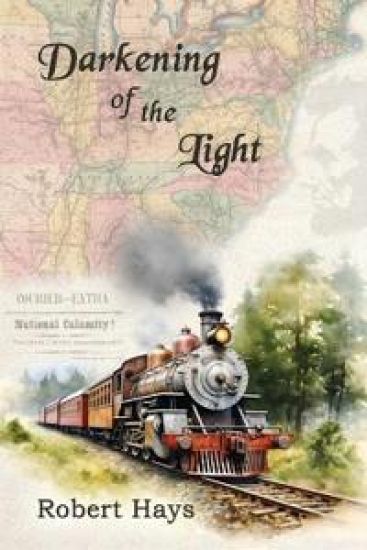
Although he misses Melinda, the girl he left behind, after his time as a homeless orphan on the streets of Paducah, Jeter thinks being a groom in the White House stables, and life in general in the nation's capital, is all he'll ever want. His friend and mentor, Shakespeare-quoting Union Army Captain Joseph Emerson, is an advisor to President Lincoln. With the President just re-elected and the war with the Confederacy won, they all see bright days ahead. But an assassin's bullet brings their world crashing down, and Jeter and the Captain see their own grief reflected in the mourning of millions of citizens as the captain commands an Honor Guard on the funeral train that bears Lincoln's remains on the long cross-country trip home to Illinois. As Jeter explores the cities where the train stops enroute, he adds his own real-life stories and comes to appreciate the cultural mix that makes America one great nation.
Although he misses Melinda, the girl he left behind, after his time as a homeless orphan on the streets of Paducah Jeter thinks being a groom in the White House stables, and life in general in the nation's capital, is all he'll ever want. His friend and mentor, Shakespeare-quoting Union Army Captain Joseph Emerson, is an advisor to President Lincoln. With the President just re-elected and the war with the Confederacy won, they all see bright days ahead. But an assassin's bullet brings their world crashing down, and Jeter and the Captain see their own grief reflected in the mourning of millions of citizens as the captain commands an Honor Guard on the funeral train that bears Lincoln's remains on the long cross-country trip home to Illinois. As Jeter explores the cities where the train stops enroute, he adds his own real-life stories and comes to appreciate the cultural mix that makes America one great nation.