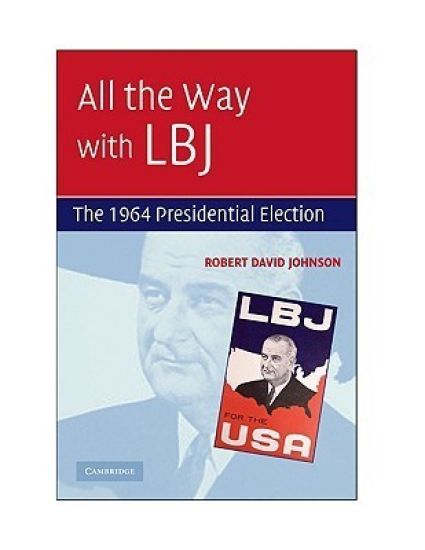
All the Way with LBJ mines an extraordinarily rich but underutilized source – the full range of LBJ tapes – to analyze the 1964 presidential campaign and the political culture of the mid-1960s. The president achieved a smashing victory over a divided Republican Party, which initially considered Henry Cabot Lodge II, then US ambassador to South Vietnam, before nominating Barry Goldwater, who used many of the themes that later worked for Republicans – a Southern strategy, portraying the Democrats as soft on defence, raising issues such as crime and personal ethics. Johnson countered with what he called a 'frontlash' strategy, appealing to moderate and liberal GOP suburbanites, but he failed to create a new, permanent Democratic majority for the post–civil rights era. The work's themes – the impact of race on the political process, the question of politicians' personal and political ethics, and the tensions between politics and public policy – continue to resonate.
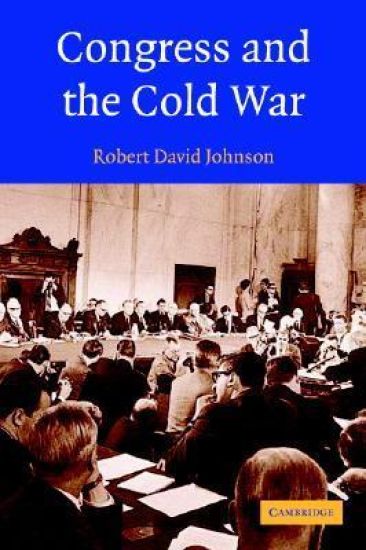
The first historical interpretation of the congressional response to the entire Cold War. Using a wide variety of sources, including several manuscript collections opened specifically for this study, the book challenges the popular and scholarly image of a weak Cold War Congress, in which the unbalanced relationship between the legislative and executive branches culminated in the escalation of the US commitment in Vietnam, which in turn paved the way for a congressional resurgence best symbolized by the passage of the War Powers Act in 1973. Instead, understanding the congressional response to the Cold War requires a more flexible conception of the congressional role in foreign policy, focused on three facets of legislative power: the use of spending measures; the internal workings of a Congress increasingly dominated by subcommittees; and the ability of individual legislators to affect foreign affairs by changing the way that policymakers and the public considered international questions.
All the Way with LBJ mines an extraordinarily rich but underutilized source – the full range of LBJ tapes – to analyze the 1964 presidential campaign and the political culture of the mid-1960s. The president achieved a smashing victory over a divided Republican Party, which initially considered Henry Cabot Lodge II, then US ambassador to South Vietnam, before nominating Barry Goldwater, who used many of the themes that later worked for Republicans – a Southern strategy, portraying the Democrats as soft on defence, raising issues such as crime and personal ethics. Johnson countered with what he called a 'frontlash' strategy, appealing to moderate and liberal GOP suburbanites, but he failed to create a new, permanent Democratic majority for the post–civil rights era. The work's themes – the impact of race on the political process, the question of politicians' personal and political ethics, and the tensions between politics and public policy – continue to resonate.
Ernest Gruening is perhaps best known for his vehement fight against U.S. military involvement in Vietnam, where he set himself apart by casting one of two votes against the Tonkin Gulf Resolution in 1964. However, as Robert Johnson shows in this political biography, it's Gruening's sixty-year public career in its entirety that provides an opportunity for historians to explore continuity and change in dissenting thought, on both domestic and international affairs, in twentieth-century America.Gruening's outlook on domestic affairs took shape in the intellectual milieu of Progressive-era Boston, where he first devoted attention to foreign affairs in crusades against aggressive U.S. policies toward Haiti and Mexico. In the late 1920s, he was appointed editor of a reform newspaper in Portland, Maine, and moved from there to The Nation. By the early 1930s he had built a national reputation as an expert on Latin American affairs, prompting Franklin Roosevelt to appoint him chief U.S. policymaker for Puerto Rico. In 1939, Roosevelt named Gruening governor of Alaska, where for fourteen years he played a key role in the political development of the territory. In 1958 Alaskan voters elected him to the U.S. Senate, where he articulated a dissenting outlook in inter-American affairs, foreign aid policy, and the relationship between the federal government, the economy, and the issue of monopoly.Throughout his life, Gruening struggled to reconcile his ideological perspective, which drew on dissenting ideas long embedded in American history, with a desire for political effectiveness.
This intensively researched volume covers a previously neglected aspect of American history: the foreign policy perspective of the peace progressives, a bloc of dissenters in the U.S. Senate, between 1913 and 1935. The Peace Progressives and American Foreign Relations is the first full-length work to focus on these senators during the peak of their collective influence. Robert David Johnson shows that in formulating an anti-imperialist policy, the peace progressives advanced the left-wing alternative to the Wilsonian agenda.The experience of World War I, and in particular Wilson’s postwar peace settlement, unified the group behind the idea that the United States should play an active world role as the champion of weaker states. Senators Asle Gronna of North Dakota, Robert La Follette and John Blaine of Wisconsin, and William Borah of Idaho, among others, argued that this anti-imperialist vision would reconcile American ideals not only with the country’s foreign policy obligations but also with American economic interests. In applying this ideology to both inter-American and European affairs, the peace progressives emerged as the most powerful opposition to the business-oriented internationalism of the decade’s Republican administrations, while formulating one of the most comprehensive critiques of American foreign policy ever to emerge from Congress.
This book documents the rich and spectacular heritage of the Australian continent over the last 4400 million years. Now in its third edition, The Geology of Australia provides a comprehensive overview of Australia's geology, landscapes and Earth resources. Beginning with the Precambrian rocks that hold clues to the origins of life and the development of an oxygenated atmosphere, it goes on to cover the warm seas, volcanism and episodes of mountain building that formed the eastern third of the Australian continent. This illuminating history details the breakup of the supercontinents Rodinia and Gondwana, the times of previous glaciations, the development of climates and landscapes in modern Australia, and the creation of the continental shelves and coastlines. This third edition features two new chapters on geological time and Paleozoic orogenic rock systems and mountain building, and new and updated illustrations and full-colour images.
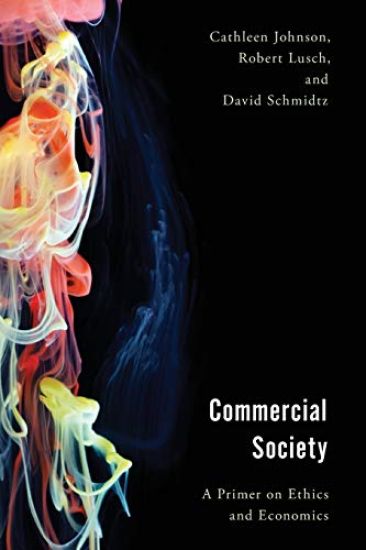
One of the greatest and most joyful challenges of adult life is to develop skills that make the people around us better off with us than without us. Integrity is a key part of that challenge. We are social animals, aiming not simply to trade but to make a place for ourselves in a community. You don't want to have to pretend that you feel proud of fooling your customers into believing you could be trusted. The ethical question is: how do people have to live in order to make the world a better place with them than without them? The economic question is: what kind of society makes people willing and able to use their talents in a way that is good for them and for the people around them? The entrepreneurial question is: what does it take to show up in the marketplace with something that can take your community to a different level? In this book, the authors discuss the connections between the ethical, economic, and entrepreneurial dimensions of a life well-lived.
One of the greatest and most joyful challenges of adult life is to develop skills that make the people around us better off with us than without us. Integrity is a key part of that challenge. We are social animals, aiming not simply to trade but to make a place for ourselves in a community. You don’t want to have to pretend that you feel proud of fooling your customers into believing you could be trusted. The ethical question is: how do people have to live in order to make the world a better place with them than without them? The economic question is: what kind of society makes people willing and able to use their talents in a way that is good for them and for the people around them? The entrepreneurial question is: what does it take to show up in the marketplace with something that can take your community to a different level? In this book, the authors discuss the connections between the ethical, economic, and entrepreneurial dimensions of a life well-lived.
More than a million patient safety incidents occur every year, and medical error is the third leading cause of death in the United States. Illuminating the experiences of those affected by medical error-patients, their loved ones, and physicians and other medical professionals- Talking with Patients and Families about Medical Error delves deeply into the challenges of communicating honestly and openly about mistakes in medical practice. Based on guidelines from the Institute for Professional and Ethical Practice and the authors' own experiences, the practice-based approaches outlined here offer concrete guidance on * initiating discussions * dealing professionally and compassionately with patients' reactions * who should be included in the conversation* what information should be documented in the medical record* how to respond to questions about financial compensation Aimed at promoting resolution and healing, this book stresses the importance of clear, empathetic communication that will improve clinical and organizational responses to medical missteps and mismanagement. It emphasizes five features of the physician-patient relationship deserving of special attention: transparency, respect, accountability, continuity, and kindness (TRACK). Narrative examples of common situations demonstrate how conversations about medical error can lead to healing.
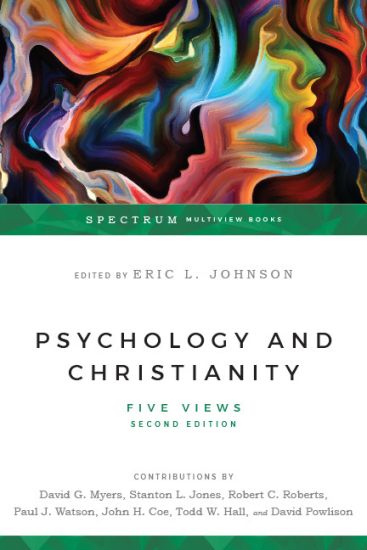
How are Christians to understand and undertake the discipline of psychology? This question has been of keen interest (and sometimes concern) to Christians because of the importance we place on a correct understanding of human nature. Psychology can sometimes seem disconnected from, if not antithetical to, Christian perspectives on life. How are we to understand our Christian beliefs about persons in relation to secular psychological beliefs? This revised edition of a widely appreciated Spectrum volume now presents five models for understanding the relationship between psychology and Christianity. All the essays and responses have been reworked and updated with some new contributors including the addition of a new perspective, the transformative view from John Coe and Todd Hall (Biola University). Also found here is David Powlison (Westminster Theological Seminary) who offers the biblical counseling model. The levels-of-explanation model is advanced by David G. Myers (Hope College), while Stanton L. Jones (Wheaton College) offers an entirely new chapter presenting the integration model. The Christian psychology model is put forth by Robert C. Roberts (Baylor University) now joined by Paul J. Watson (University of Tennesee, Chattanooga). Each of the contributors responds to the other essayists, noting points of agreement as well as problems they see. Eric L. Johnson provides a revised introduction that describes the history of Christians and psychology, as well as a conclusion that considers what might unite the five views and how a reader might evaluate the relative strengths and weaknesses of each view. Psychology and Christianity: Five Views has become a standard introductory textbook for students and professors of Christian psychology. This revision promises to keep it so. Spectrum Multiview Books offer a range of viewpoints on contested topics within Christianity, giving contributors the opportunity to present their position and also respond to others in this dynamic publishing format.
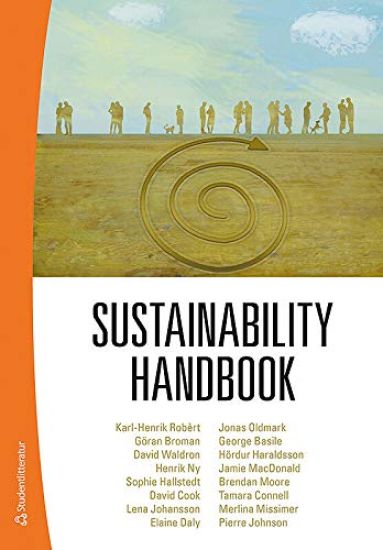
Karl-Henrik Robèrt; Göran Broman; David Waldron; Henrik Ny; Sophie Hallstedt; David Cook; Lena Johansson; Elaine Daly; Jonas Oldmark; George Basile; Hördur Haraldsson; Jamie MacDonald; Brendan Moore; Tamara Connell; Merlina Missimer; Pierre Johnson
Today’s society is faced with a multitude of compounding and inter-related socio-ecological challenges. In order to adequately navigate this ‘sustainability challenge’ and to capture the innovation opportunities that come with it, we need professionals from all sectors of society who can help plan and act strategically towards sustainability.Sustainability handbook first outlines a structured, strategic approach to handling this complex reality known as the Framework for Strategic Sustainable Development (FSSD), including an operational definition of sustainability derived from foundational knowledge about the social and ecological systems. From there, the book shares examples of how the FSSD can be applied in a variety of situations, sectors, and scales and points to the self-benefit for companies, municipalities and other organizations of working strategically for sustainability. The readers are left with a solid understanding of how to define sustainability and how to plan and act towards it, including how to select from the vast array of sustainability-related concepts, methods and tools in the field today.Sustainability handbook combines the academic and practical experience from a collection of authors. The content has been used, tested and refined over many iterations, and now serves as a resource for academic courses and programmes as well as work in practice around the world. Any student or practitioner looking for more clarity on how to strategically plan and act towards sustainability in a structured, scientific, and collaborative manner will find value inside. Because of the generic nature of the FSSD, it can be useful for any discipline, from engineering, to product-service innovation, to business management, to urban and regional planning, and beyond.Second Edition - with revised and new content, for example, a new definition of social sustainability and a chapter on questions and answers about the FSSD.
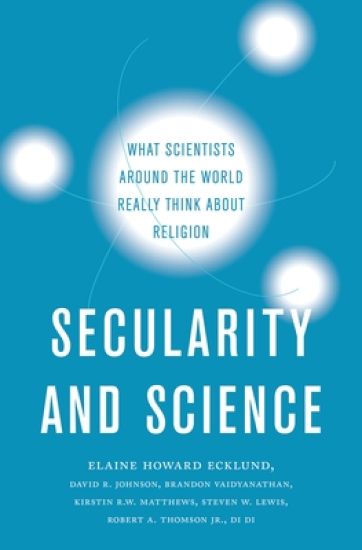
Do scientists see conflict between science and faith? Which cultural factors shape the attitudes of scientists toward religion? Can scientists help show us a way to build collaboration between scientific and religious communities, if such collaborations are even possible? To answer these questions and more, the authors of Secularity and Science: What Scientists Around the World Really Think About Religion completed the most comprehensive international study of scientists' attitudes toward religion ever undertaken, surveying more than 20,000 scientists and conducting in-depth interviews with over 600 of them. From this wealth of data, the authors extract the real story of the relationship between science and religion in the lives of scientists around the world. The book makes four key claims: there are more religious scientists than we might think; religion and science overlap in scientific work; scientists - even atheist scientists - see spirituality in science; and finally, the idea that religion and science must conflict is primarily an invention of the West. Throughout, the book couples nationally representative survey data with captivating stories of individual scientists, whose experiences highlight these important themes in the data. Secularity and Science leaves inaccurate assumptions about science and religion behind, offering a new, more nuanced understanding of how science and religion interact and how they can be integrated for the common good.
**Selected for Doody’s Core Titles® 2024 in Veterinary Medicine** Designed for the mixed practice large animal veterinarian, veterinary students, and camelid caretakers alike, Llama and Alpaca Care covers all major body systems, herd health, physical examination, nutrition, reproduction, surgery, anesthesia, and multisystem diseases of llamas and alpacas. Written by world-renowned camelid specialists and experts in the field, this comprehensive and uniquely global text offers quick access to the most current knowledge in this area. With coverage ranging from basic maintenance such as restraint and handling to more complex topics including anesthesia and surgery, this text provides the full range of knowledge required for the management of llamas and alpacas. "..an essential text for anyone working with South American camelids." Reviewed by Claire E. Whitehead on behalf of Veterinary Record, July 2015 Over 500 full-color images provide detailed, highly illustrated coverage of all major body systems, physical examination, nutrition, anesthesia, fluid therapy, multisystem diseases, and surgical disorders. World-renowned camelid experts and specialists in the field each bring a specific area of expertise for a uniquely global text. Comprehensive herd health content includes handling techniques, vaccinations, biosecurity, and protecting the herd from predators. Coverage of anesthesia and analgesia includes the latest information on pharmacokinetics of anesthetic drugs, chemical restraint, injectable and inhalation anesthesia, neuroanesthesia, and pain management. Reproduction section contains information on breeding management, lactation, infertility, and embryo transfer. Nutrition information offers detailed nutritional requirements and discusses feeding management systems and feeding behavior.
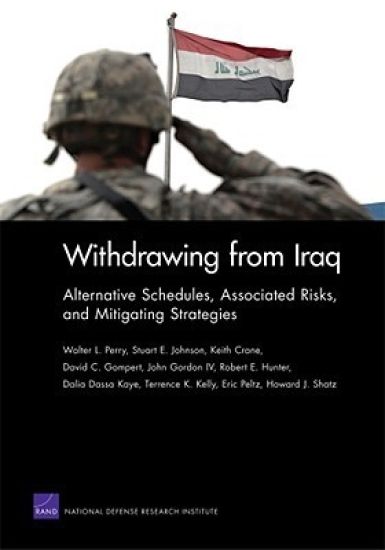
Walter L. Perry; Stuart E. Johnson; Keith Crane; David C. Gompert; John Gordon; Robert E. Hunter; Dalia Dassa Kaye; Terrence K. Kelly; Eric Peltz; Howard J. Shatz
Since 2007, security has improved dramatically in Iraq. The U.S. and Iraqi governments - and most Iraqis - want to see both the U.S. presence there reduced and the Iraqi government and security forces assuming a greater role in providing for public security. The challenge is to effect this drawdown while preserving security and stability in the country and in the region. In response to tasking from the U.S. Congress, RAND researchers conducted an independent study to examine drawdown schedules, risks, and mitigating strategies. They identified logistical constraints on moving equipment out of the country, assessed trends in insurgent activity and the ability of Iraqi security forces to counter it, and examined the implications for the size of the residual U.S. force and for security in Iraq and the region. This book presents alternative drawdown schedules - one consistent with the Obama administration's stated intentions and two others, one somewhat slower and another faster - that are responsive to these factors.It also recommends steps that the United States can take to alleviate anticipated constraints, overcome likely resistance, and reduce the potential risks associated with a drawdown. For more than 60 years, decisionmakers in the public and private sectors have turned to the RAND Corporation for objective analysis and effective solutions that address the challenges facing the nation and the world.
Kristin Andrews; Gary Comstock; Crozier G.K.D.; Sue Donaldson; Andrew Fenton; Tyler John; L. Syd M Johnson; Robert Jones; Will Kymlicka; Letitia Meynell; Nathan Nobis; David Pena-Guzman; Jeff Sebo
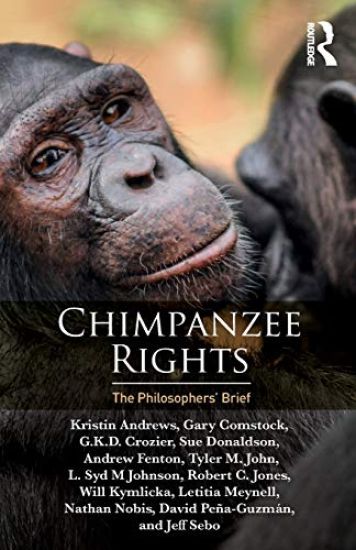
Since 2013, an organization called the Nonhuman Rights Project has brought before the New York State courts an unusual request—asking for habeas corpus hearings to determine whether Kiko and Tommy, two captive chimpanzees, should be considered legal persons with the fundamental right to bodily liberty.While the courts have agreed that chimpanzees share emotional, behavioural, and cognitive similarities with humans, they have denied that chimpanzees are persons on superficial and sometimes conflicting grounds. Consequently, Kiko and Tommy remain confined as legal "things" with no rights. The major moral and legal question remains unanswered: are chimpanzees mere "things", as the law currently sees them, or can they be "persons" possessing fundamental rights?In Chimpanzee Rights: The Philosophers’ Brief, a group of renowned philosophers considers these questions. Carefully and clearly, they examine the four lines of reasoning the courts have used to deny chimpanzee personhood: species, contract, community, and capacities. None of these, they argue, merits disqualifying chimpanzees from personhood. The authors conclude that when judges face the choice between seeing Kiko and Tommy as things and seeing them as persons—the only options under current law—they should conclude that Kiko and Tommy are persons who should therefore be protected from unlawful confinement "in keeping with the best philosophical standards of rational judgment and ethical standards of justice."Chimpanzee Rights: The Philosophers’ Brief—an extended version of the amicus brief submitted to the New York Court of Appeals in Kiko’s and Tommy’s cases—goes to the heart of fundamental issues concerning animal rights, personhood, and the question of human and nonhuman nature. It is essential reading for anyone interested in these issues.
Kristin Andrews; Gary Comstock; Crozier G.K.D.; Sue Donaldson; Andrew Fenton; Tyler John; L. Syd M Johnson; Robert Jones; Will Kymlicka; Letitia Meynell; Nathan Nobis; David Pena-Guzman; Jeff Sebo
Since 2013, an organization called the Nonhuman Rights Project has brought before the New York State courts an unusual request—asking for habeas corpus hearings to determine whether Kiko and Tommy, two captive chimpanzees, should be considered legal persons with the fundamental right to bodily liberty.While the courts have agreed that chimpanzees share emotional, behavioural, and cognitive similarities with humans, they have denied that chimpanzees are persons on superficial and sometimes conflicting grounds. Consequently, Kiko and Tommy remain confined as legal "things" with no rights. The major moral and legal question remains unanswered: are chimpanzees mere "things", as the law currently sees them, or can they be "persons" possessing fundamental rights?In Chimpanzee Rights: The Philosophers’ Brief, a group of renowned philosophers considers these questions. Carefully and clearly, they examine the four lines of reasoning the courts have used to deny chimpanzee personhood: species, contract, community, and capacities. None of these, they argue, merits disqualifying chimpanzees from personhood. The authors conclude that when judges face the choice between seeing Kiko and Tommy as things and seeing them as persons—the only options under current law—they should conclude that Kiko and Tommy are persons who should therefore be protected from unlawful confinement "in keeping with the best philosophical standards of rational judgment and ethical standards of justice."Chimpanzee Rights: The Philosophers’ Brief—an extended version of the amicus brief submitted to the New York Court of Appeals in Kiko’s and Tommy’s cases—goes to the heart of fundamental issues concerning animal rights, personhood, and the question of human and nonhuman nature. It is essential reading for anyone interested in these issues.