
Kirjahaku
Etsi kirjoja tekijän nimen, kirjan nimen tai ISBN:n perusteella.
1000 tulosta hakusanalla Robert E Reed

Air Force Nonrated Technical Training
Kathleen Reedy; Lisa M Harrington; Bart E Bennett; Barbara Bicksler; James R Broyles; Robert Corsi; Paul Emslie; Charles A Goldman; Daniel Ibarra; Darrell D Jones; Rita Karam; Matthew Walsh
RAND
2020
nidottu
The authors identify insights and best practices upon which the Air Force could draw to improve its nonrated technical training pipeline. The researchers examined three topics of interest identified by the Air Force: (1) how colleges and universities right-size their instructor corps, (2) best practices associated with supply chain management, and (3) approaches for developing a flexible instructor pool.

One of the most popular series ever published for young Americans, these classics of childhood have been praised alike by parents, teachers, and librarians. These lively, inspiring, believing biographies sweep today's young readers right into history.

A "witty, lively and wholly fascinating" (The New York Times) portrait of an iconic Southern hero With lively storytelling and full-hearted Southern directness, Roy Blount, Jr., presents a unique portrait of Robert E. Lee. Fascinated by the qualities that made Lee such a charismatic, though reluctant, leader, Blount vividly conveys Lee's audacity and uncanny successes in battle, as well as his humility, his quirky sense of humor, and the sorrowful sense of responsibility he felt for his outnumbered, half-starved army. The first concise biography of this American legend, Robert E. Lee will appeal to history and military buffs, students of Southern culture, and every reader curious about the makeup of a man who has become an American icon.
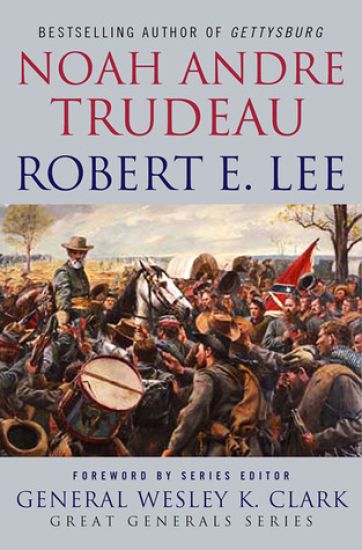
General Robert E. Lee was a complicated man and military figure. In Robert E. Lee, the 11th book in the critically acclaimed Great Generals Series, Noah Andre Trudeau follows the general's Civil War path with a special emphasis on Lee's changing set of personal values as the conflict wended through four bloody years and by exploring his famous skills as a crafty and daring tactician. Trudeau adds a fresh perspective toward understanding a major figure in American history who remains decidedly an enigma.

General Robert E. Lee was a complicated man and military figure. In Lee, the 11th book in the critically acclaimed Great Generals Series, Noah Andre Trudeau follows the general's Civil War path with a special emphasis on Lee's changing set of personal values as the conflict wended through four bloody years and by exploring his famous skills as a crafty and daring tactician. Trudeau adds a fresh perspective toward understanding a major figure in American history who remains decidedly an enigma.

This biography provides a concise, accurate, and lively account of one of the best known yet least understood figures of the Civil War, Robert E. Lee, depicting him as a human being instead of a legend, making him accessible as a person.Robert E. Lee: A Biography takes one of the best known and least understood figures of the American Civic War down from his pedestal as an iconic, legendary hero and transforms him into a human being that 21st-century readers can easily relate to. Author Brian Melton clearly separates fact from the idealized lore and fiction created after the Civil War by members of what has been termed "the Lee cult." Through the book's thorough, clear, and accessible presentation, and its inclusion of accurate historical details—for example, Lee's status as an incurable flirt—General Lee becomes a fascinating and compelling mortal man.Intended for both high school students and the general public, this biography will offer a thorough and unbiased examination of Lee's life and military career. Readers will be able to clearly trace the steps that led Lee to prominence—both before and during the Civil War—and discover how his actions helped shape the American military.


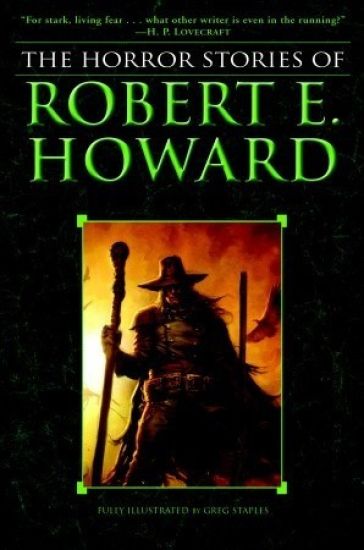
Here are Howard's greatest horror tales, all in their original, definitive versions. Some of Howard's best-known characters-Solomon Kane, Bran Mak Morn, and sailor Steve Costigan among them-roam the forbidding locales of the author's fevered imagination, from the swamps and bayous of the Deep South to the fiend-haunted woods outside Paris to remote jungles in Africa. The collection includes Howard's masterpiece "Pigeons from Hell,"""which Stephen King calls "one of the finest horror stories of the twentieth] century," a tale of two travelers who stumble upon the ruins of a Southern plantation-and into the maw of its fatal secret. In "Black Canaan" even the best warrior has little chance of taking down the evil voodoo man with unholy powers-and none at all against his wily mistress, the diabolical High Priestess of Damballah. In these and other lavishly illustrated classics, such as the revenge nightmare "Worms of the Earth" and"""The Cairn on the Headland,"""Howard spins tales of unrelenting terror, the legacy of one of the world's great masters of the macabre.
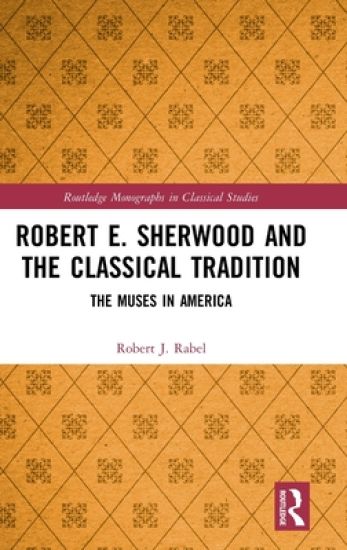
This volume explores the reception of the classical past in the works of twentieth-century American dramatist Robert E. Sherwood and his use of the ancient world to critique key events and trends in American history. It explores his comedies and the influence of both Greek Old and New Comedy, as well as his mediation of his experiences in World War I through Livy’s account of the war with Carthage. During the 1930s, Sherwood used the Peloponnesian War as a template for bringing to the attention of an unaware public the danger of an impending war between the forces of democracy and the totalitarianism represented by Nazi Germany, and post-war he raised awareness of the dangers of nuclear war through the lens of the Greek gods. As well as looking at his use of the classical past in his work, since Sherwood wrote drama deeply concerned with the major social and political events of his day, his plays open windows onto the major social and political challenges facing the United States and the world from the outbreak of World War I until the beginning of the nuclear age. This volume will be of interest to anyone working on the Classical Tradition and Classical Reception, as well as to students of twentieth-century American literature, drama, history, and politics.

This volume explores the reception of the classical past in the works of twentieth-century American dramatist Robert E. Sherwood and his use of the ancient world to critique key events and trends in American history. It explores his comedies and the influence of both Greek Old and New Comedy, as well as his mediation of his experiences in World War I through Livy’s account of the war with Carthage. During the 1930s, Sherwood used the Peloponnesian War as a template for bringing to the attention of an unaware public the danger of an impending war between the forces of democracy and the totalitarianism represented by Nazi Germany, and post-war he raised awareness of the dangers of nuclear war through the lens of the Greek gods. As well as looking at his use of the classical past in his work, since Sherwood wrote drama deeply concerned with the major social and political events of his day, his plays open windows onto the major social and political challenges facing the United States and the world from the outbreak of World War I until the beginning of the nuclear age. This volume will be of interest to anyone working on the Classical Tradition and Classical Reception, as well as to students of twentieth-century American literature, drama, history, and politics.

The life of Robert E. Lee is a story not of defeat but of triumph—triumph in clearing his family name, triumph in marrying properly, triumph over the mighty Mississippi in his work as an engineer, and triumph over all other military men to become the towering figure who commanded the Confederate army in the American Civil War. But late in life Lee confessed that he "was always wanting something." In this probing and personal biography, Emory Thomas reveals more than the man himself did. Robert E. Lee has been, and continues to be, a symbol and hero in the American story. But in life, Thomas writes, Lee was both more and less than his legend. Here is the man behind the legend.

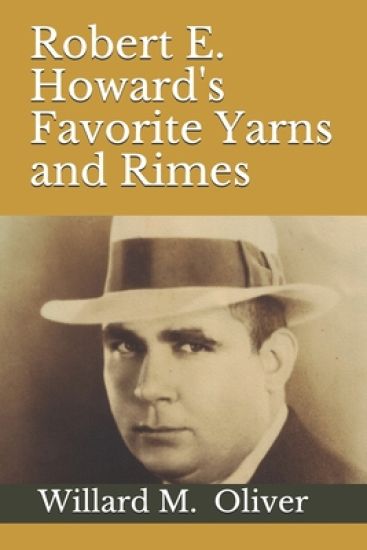
This edited collection compiles the stories and poems (yarns and rimes) that pulp author Robert E. Howard identified as being among his favorites.

Robert Ervin Howard, author of hundreds of stories and poems, spent his days in what he perceived to be literary obscurity. He took his life on June 11, 1936 with little inkling that his works would establish a vibrant new genre and become equal to the likes of JRR Tolkien. Now you are invited to share in this bold and perceptive retelling of a life made more remarkable by its brilliant spell of self-imposed brevity. The Supreme Moment presents compelling new theories and is packed with over 70 relevant period photos, including such gems as the 1927 Pageant of Pulchritude which Howard attended in Galveston (and what seems to be Howard himself in the background), as well as stories and images from Howard's haunt of Brownwood, TX in the 1930s. Author of over 20 books, DiPietro's earlier Howard credentials include 1995's "The Orange Phoenix," a parody to the REH Conan tale "The Hour of the Dragon," and its sequel "The Death Scrolls," both available today in one volume as "The Phoenix & The Scrolls."


New Chapters: History Lessons In Black & WhiteThe Mystical Black Confederates Meaningful ContactA Black & White Letter to the Church Al Arnold is a descendent of a slave, Turner Hall, Jr. "Uncle Turner," as he was known in his later years, served in the Confederate army as a body servant for two Confederate soldiers and an orderly for RobertE. Lee. As a slave, Turner Hall, Jr. was owned by another prominent Civil War general, Nathan Bedford Forrest.Al began researching his ancestor's life in 2008. At a family reunion, he saw a newspaper caption indicating his ancestor, Turner Hall, Jr. served RobertE. Lee as an orderly in the Civil War. To Al's amaze- ment, his research found a proud Black Confederate who held both Civil War generals in high esteem, even well after the war. At the age of ninety-five, Turner Hall, Jr. cherished a gift from Nathan Bedford Forrest as one of his most treasured possessions.Al was further intrigued that his great-great- grandfather was a celebrated man in his community of Hugo, Oklahoma. Blacks and Whites commemorated him as Hugo's "most distinguished citizen" as a result of his Civil War service. Turner Hall, Jr. lived to be a hundred and four years old. He attended the last Civil War reunion in 1938 at Gettysburg, Pennsylvania. Newsreel cameramen captured him displaying his reunion medals as an example of the typical Black Confederate. viii In 1940, he was interviewed as a Black Con- federate by a nationwide talk radio show in New York City. Turner Hall, Jr. left a trail for his family that Al has uncovered. Al shares his personal journey into his Confederate heritage as a modern Black man. He makes a connection through the life of his ancestor and embraces the premises that history should unite us instead of divide us. He argues that African Americans dishonor their ancestors by attempting to destroy Confederate heritage and by neglecting the historical impact that slaves had on both sides of the Civil War. These are the honest thoughts of a modern Black man who has wrestled with his Confederate heritage while being a Black Christian man in America and who is connected to two famous Civil War generals.

A descendant of a slave, Al Arnold, tells his journey of embracing his Confederate heritage. His ancestor, Turner Hall, Jr., a Black Confederate, served as a body servant for two Confederate soldiers and an orderly for General Robert E. Lee. Turner Hall, Jr. returned to Okolona, Mississippi after the Civil War. Hall served a prominent family in that community for five generations. His life's journey eventually led him to Hugo, Oklahoma where he established himself as the town's most distinguished citizen receiving acclaim from Black and White citizens alike for his service. In 1938, his journey continued to Pennsylvania as the last Civil War veteran from his community to attend the final Civil War veteran reunion, as a Black Confederate. He also traveled to New York City and was interviewed by the national talk radio show, "We, The People" in 1940.One hundred and three years after the Civil War, Hall's great-great grandson, Al Arnold, was born in Okolona, Mississippi. Raised in North Mississippi, Al would later discover the history of his ancestor and began an eight year journey of why, how and for what reasons his ancestor served the Confederate armies? To his amazement, Al discovered that seventy two years after the Civil war, his ancestor was a proud Confederate and held in his possession a cherished gift from the Confederate Civil War general, Nathan Bedford Forrest. Al's personal research discovered that his ancestor was owned by Forrest and was enthusiastically warm toward the general and his service to the Confederate armies. This amazing connection to two famous Confederate generals awakened a new perception of curiosity about Confederate heritage in Al and challenged his traditional thoughts. He grew to accept his heritage and now embraces it with a desire to see African Americans embrace Confederate heritage instead of rejecting it on the notion of modern ideology. This is a deep personal journey of faith, heritage, race and family wrapped around the grace of God through the eyes and honest thoughts of a modern black man. Al tells the story of Turner Hall, Jr., his personal Confederate journey and how family and faith has brought harmony to his new found heritage. Arnold argues for the revitalization of the lost Black history of the Civil War era. He bestows dignity and honor on his Confederate ancestor and challenges the traditional thoughts of modern African Americans. Arnold rests in his faith as the uniting force that reconciles our colorful past to our bright future.