Kirjojen hintavertailu. Mukana 11 244 527 kirjaa ja 12 kauppaa.

Kirjahaku

Etsi kirjoja tekijän nimen, kirjan nimen tai ISBN:n perusteella.

1000 tulosta hakusanalla Robert E. Innis

Wilbur Schramm and Noam Chomsky Meet Harold Innis
Wilbur Schramm and Noam Chomsky Meet Harold Innis is an original, critical, in-depth analysis of the media and communication thought of Canada’s most highly acclaimed scholar, Harold Adams Innis. Even in Canada, however, Innis’s writings until now have been only partially cited and interpreted: Innis is usually stereotyped as being merely an economic historian fixated on previous civilizations, whereas in fact he was an astute analyst whose main concerns were with present problems and future trajectories. In the United States, meanwhile, Innis’s media and communication writings have been quite neglected and even denigrated. Drawing on Innis’s less frequently cited work, including his long neglected Political Economy in the Modern State, Robert Babe opens up Innis’s media scholarship as a whole, unfolding it in startling critical, yet ultimately appreciative ways. By comparing Innis’s media scholarship with Wilbur Schramm's and Noam Chomsky's, moreover, Babe tests the claims, positions, and modes of analysis not only of Innis, but also of the other two celebrated scholars as well, casting new light on their works and allowing the reader to imagine what sort of discourses might have been possible had the three been in conversation together. Wilbur Schramm and Noam Chomsky Meet Harold Innis provides comparative insight into foundational media scholarship in the United States and Canada, and explores in some detail the relevance of Innis for twenty-first century digitized society.
Wilbur Schramm and Noam Chomsky Meet Harold Innis
Wilbur Schramm and Noam Chomsky Meet Harold Innis is an original, critical, in-depth analysis of the media and communication thought of Canada’s most highly acclaimed scholar, Harold Adams Innis. Even in Canada, however, Innis’s writings until now have been only partially cited and interpreted: Innis is usually stereotyped as being merely an economic historian fixated on previous civilizations, whereas in fact he was an astute analyst whose main concerns were with present problems and future trajectories. In the United States, meanwhile, Innis’s media and communication writings have been quite neglected and even denigrated. Drawing on Innis’s less frequently cited work, including his long neglected Political Economy in the Modern State, Robert Babe opens up Innis’s media scholarship as a whole, unfolding it in startling critical, yet ultimately appreciative ways. By comparing Innis’s media scholarship with Wilbur Schramm's and Noam Chomsky's, moreover, Babe tests the claims, positions, and modes of analysis not only of Innis, but also of the other two celebrated scholars as well, casting new light on their works and allowing the reader to imagine what sort of discourses might have been possible had the three been in conversation together. Wilbur Schramm and Noam Chomsky Meet Harold Innis provides comparative insight into foundational media scholarship in the United States and Canada, and explores in some detail the relevance of Innis for twenty-first century digitized society.
Susanne Langer in Focus

Susanne Langer in Focus

Robert E. Innis

Indiana University Press
2009
pokkari
Susanne Langer (1895—1985) was one of American philosophy's most distinctive thinkers. Her philosophy was a deep exploration of human life as a continuous process of meaning-making through symbolic forms. Here, Robert E. Innis brings readers closer to Langer's precise and nuanced account of the symbolic mind. Innis shows how Langer's thought spans the sciences, aesthetics, psychology, religion, education, and music, and where it touches on concerns that were brought forward by American pragmatists such as John Dewey and William James. Innis reveals Langer's intense focus on making meaning clear as he covers her entire philosophical career. Highlighting what is of permanent value to American philosophy in Langer's work, he determines exactly what her positions were and why she proposed them. Readers will find a keen appreciation for and critical appraisal of Langer's unique philosophical vision.
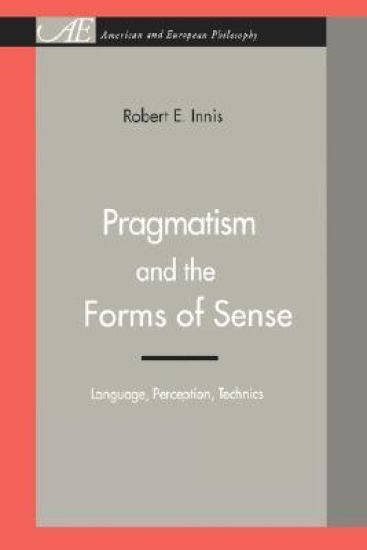
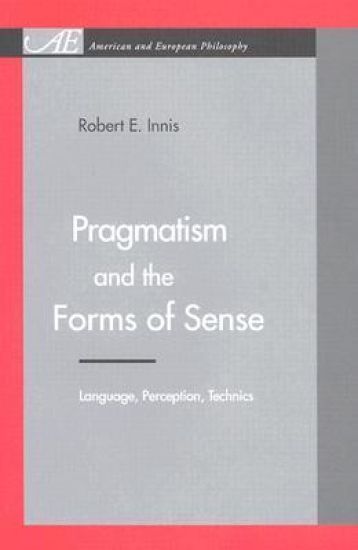
Pragmatism and the Forms of Sense

Pragmatism and the Forms of Sense

Robert E. Innis

Pennsylvania State University Press
2002
pokkari
Making sense of the world around us is a process involving both semiotic and material mediation—the use of signs and sign systems (preeminently language) and various kinds of tools (technics). As we use them, we experience them subjectively as extensions of our bodily selves and objectively as instruments for accessing the world with which we interact. Emphasizing this bipolar nature of language and technics, understood as intertwined "forms of sense," Robert Innis studies the multiple ways in which they are rooted in and transform human perceptual structures in both their individual and social dimensions. The book foregrounds and is organized around the notion of "semiotic embodiment." Language and technics are viewed as "probes" upon which we rely, in which we are embodied, and that themselves embody and structure our primary modes of encountering the world. While making an important substantive contribution to present debates about the "biasing" of perception by language and technics, Innis also seeks to provide a methodological model of how complementary analytical resources from American pragmatist and various European traditions can be deployed fruitfully in the pursuit of new insights into the phenomenon of meaning-making.
Dimensions of Aesthetic Encounters

Dimensions of Aesthetic Encounters

Robert E. Innis

STATE UNIVERSITY OF NEW YORK PRESS
2022
pokkari
A novel fusing of multiple approaches and range of examples exploring the dimensions, objects, and import of aesthetic encounters.We encounter in our lives things and situations that elicit from us special forms of attention. They affect and inform us in various ways, drawing us in and holding us in their grasp or turning us away. Works of art of all sorts, and nature in its myriad manifestations, exemplify these luring and repelling qualities and potencies. Dimensions of Aesthetic Encounters explores central perceptual, interpretative, and semiotic dimensions of these encounters, combining a wide range of examples and intellectual resources from pragmatist, hermeneutical, and semiotic frameworks. Practicing a kind of "method of rotation" Robert E. Innis breaks down barriers in aesthetic theory and shows their complementary powers. Recurring themes link each chapter, throwing a powerful light on aesthetic encounters by foregrounding such pivotal notions as play, fundedness and the role of memory, the defining quality of an artwork, energies of objects, potencies, rhythm, form, presentational abstraction, medium, symbolization, intuition, role of the body, and the non-argumentative nature of art.
Dimensions of Aesthetic Encounters

Dimensions of Aesthetic Encounters

Robert E. Innis

STATE UNIVERSITY OF NEW YORK PRESS
2022
sidottu
A novel fusing of multiple approaches and range of examples exploring the dimensions, objects, and import of aesthetic encounters.We encounter in our lives things and situations that elicit from us special forms of attention. They affect and inform us in various ways, drawing us in and holding us in their grasp or turning us away. Works of art of all sorts, and nature in its myriad manifestations, exemplify these luring and repelling qualities and potencies. Dimensions of Aesthetic Encounters explores central perceptual, interpretative, and semiotic dimensions of these encounters, combining a wide range of examples and intellectual resources from pragmatist, hermeneutical, and semiotic frameworks. Practicing a kind of "method of rotation" Robert E. Innis breaks down barriers in aesthetic theory and shows their complementary powers. Recurring themes link each chapter, throwing a powerful light on aesthetic encounters by foregrounding such pivotal notions as play, fundedness and the role of memory, the defining quality of an artwork, energies of objects, potencies, rhythm, form, presentational abstraction, medium, symbolization, intuition, role of the body, and the non-argumentative nature of art.
Between Philosophy and Cultural Psychology

Between Philosophy and Cultural Psychology

Robert E. Innis

Springer Nature Switzerland AG
2020
nidottu
This Brief provides an in-depth discussion of five major points of intersection between philosophy and cultural psychology. The first chapter frames central analytical and normative threads, foregrounding the focal notion of thresholds of sense. The second chapter explores the nature of contexts, situations, and backgrounds of meaning-making following the lead of John Dewey, Ben-Ami Scharfstein, and Gernot Böhme. Chapter three examines the complementary analytical power of the semiotic resources developed in the work of Peirce, Bühler, and Cassirer. Chapter four shows the heuristic fertility and psychological bearing of Susanne Langer's feeling-based aesthetic model of minding. The final chapter establishes affectivation as the inescapable consequence of human beings giving life to themselves by giving life to signs. The Brief concludes with three commentaries from leading researchers in the area. The chapters weave together interlocking themes: thenature of embodied perception, the variety of contexts and semiotic frameworks and their schematization of thresholds of meaning-making, the role of art and theories of imagination both in cultural psychology and in philosophy, and the centrality of feeling in all forms of meaning-making. Between Philosophy and Cultural Psychology will be of interest to cognitive and cultural psychologists as well as researchers and upper-graduate students in philosophy and related psychology fields.
Pragmatism and the Forms of Sense

Pragmatism and the Forms of Sense

Innis Robert E.

Pennsylvania State University Press
2002
sidottu
Making sense of the world around us is a process involving both semiotic and material mediation—the use of signs and sign systems (preeminently language) and various kinds of tools (technics). As we use them, we experience them subjectively as extensions of our bodily selves and objectively as instruments for accessing the world with which we interact. Emphasizing this bipolar nature of language and technics, understood as intertwined "forms of sense," Robert Innis studies the multiple ways in which they are rooted in and transform human perceptual structures in both their individual and social dimensions. The book foregrounds and is organized around the notion of "semiotic embodiment." Language and technics are viewed as "probes" upon which we rely, in which we are embodied, and that themselves embody and structure our primary modes of encountering the world. While making an important substantive contribution to present debates about the "biasing" of perception by language and technics, Innis also seeks to provide a methodological model of how complementary analytical resources from American pragmatist and various European traditions can be deployed fruitfully in the pursuit of new insights into the phenomenon of meaning-making.
Robert E. Lee, Young Confederate

Robert E. Lee, Young Confederate

Helen Albee Monsell

Prentice Hall IBD
1986
nidottu
One of the most popular series ever published for young Americans, these classics of childhood have been praised alike by parents, teachers, and librarians. These lively, inspiring, believing biographies sweep today's young readers right into history.
Robert E. Lee: A Life

Robert E. Lee: A Life

Roy Blount

PENGUIN BOOKS
2007
nidottu
A "witty, lively and wholly fascinating" (The New York Times) portrait of an iconic Southern hero With lively storytelling and full-hearted Southern directness, Roy Blount, Jr., presents a unique portrait of Robert E. Lee. Fascinated by the qualities that made Lee such a charismatic, though reluctant, leader, Blount vividly conveys Lee's audacity and uncanny successes in battle, as well as his humility, his quirky sense of humor, and the sorrowful sense of responsibility he felt for his outnumbered, half-starved army. The first concise biography of this American legend, Robert E. Lee will appeal to history and military buffs, students of Southern culture, and every reader curious about the makeup of a man who has become an American icon.
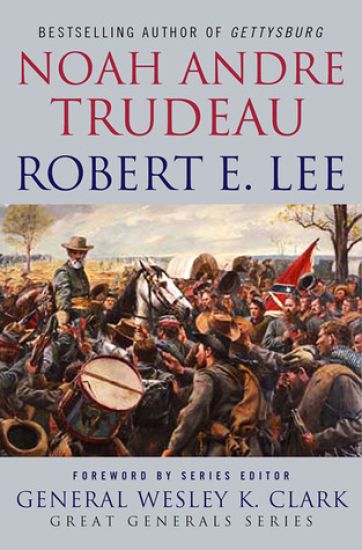
Robert E. Lee

Robert E. Lee

Noah Andre Trudeau

Palgrave Macmillan
2010
nidottu
General Robert E. Lee was a complicated man and military figure. In Robert E. Lee, the 11th book in the critically acclaimed Great Generals Series, Noah Andre Trudeau follows the general's Civil War path with a special emphasis on Lee's changing set of personal values as the conflict wended through four bloody years and by exploring his famous skills as a crafty and daring tactician. Trudeau adds a fresh perspective toward understanding a major figure in American history who remains decidedly an enigma.
Robert E. Lee

Robert E. Lee

Noah Andre Trudeau

Palgrave Macmillan
2009
sidottu
General Robert E. Lee was a complicated man and military figure. In Lee, the 11th book in the critically acclaimed Great Generals Series, Noah Andre Trudeau follows the general's Civil War path with a special emphasis on Lee's changing set of personal values as the conflict wended through four bloody years and by exploring his famous skills as a crafty and daring tactician. Trudeau adds a fresh perspective toward understanding a major figure in American history who remains decidedly an enigma.
Robert E. Lee

Robert E. Lee

Brian C. Melton

Greenwood Press
2012
sidottu
This biography provides a concise, accurate, and lively account of one of the best known yet least understood figures of the Civil War, Robert E. Lee, depicting him as a human being instead of a legend, making him accessible as a person.Robert E. Lee: A Biography takes one of the best known and least understood figures of the American Civic War down from his pedestal as an iconic, legendary hero and transforms him into a human being that 21st-century readers can easily relate to. Author Brian Melton clearly separates fact from the idealized lore and fiction created after the Civil War by members of what has been termed "the Lee cult." Through the book's thorough, clear, and accessible presentation, and its inclusion of accurate historical details—for example, Lee's status as an incurable flirt—General Lee becomes a fascinating and compelling mortal man.Intended for both high school students and the general public, this biography will offer a thorough and unbiased examination of Lee's life and military career. Readers will be able to clearly trace the steps that led Lee to prominence—both before and during the Civil War—and discover how his actions helped shape the American military.
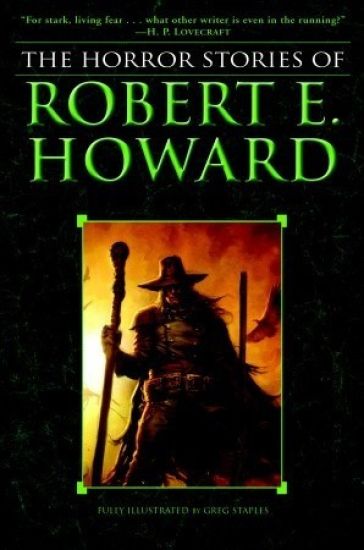
The Horror Stories of Robert E. Howard

The Horror Stories of Robert E. Howard

Robert E. Howard

Del Rey Books
2008
pokkari
Here are Howard's greatest horror tales, all in their original, definitive versions. Some of Howard's best-known characters-Solomon Kane, Bran Mak Morn, and sailor Steve Costigan among them-roam the forbidding locales of the author's fevered imagination, from the swamps and bayous of the Deep South to the fiend-haunted woods outside Paris to remote jungles in Africa. The collection includes Howard's masterpiece "Pigeons from Hell,"""which Stephen King calls "one of the finest horror stories of the twentieth] century," a tale of two travelers who stumble upon the ruins of a Southern plantation-and into the maw of its fatal secret. In "Black Canaan" even the best warrior has little chance of taking down the evil voodoo man with unholy powers-and none at all against his wily mistress, the diabolical High Priestess of Damballah. In these and other lavishly illustrated classics, such as the revenge nightmare "Worms of the Earth" and"""The Cairn on the Headland,"""Howard spins tales of unrelenting terror, the legacy of one of the world's great masters of the macabre.
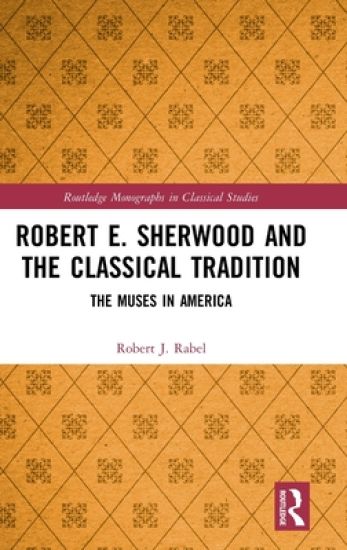
Robert E. Sherwood and the Classical Tradition
This volume explores the reception of the classical past in the works of twentieth-century American dramatist Robert E. Sherwood and his use of the ancient world to critique key events and trends in American history. It explores his comedies and the influence of both Greek Old and New Comedy, as well as his mediation of his experiences in World War I through Livy’s account of the war with Carthage. During the 1930s, Sherwood used the Peloponnesian War as a template for bringing to the attention of an unaware public the danger of an impending war between the forces of democracy and the totalitarianism represented by Nazi Germany, and post-war he raised awareness of the dangers of nuclear war through the lens of the Greek gods. As well as looking at his use of the classical past in his work, since Sherwood wrote drama deeply concerned with the major social and political events of his day, his plays open windows onto the major social and political challenges facing the United States and the world from the outbreak of World War I until the beginning of the nuclear age. This volume will be of interest to anyone working on the Classical Tradition and Classical Reception, as well as to students of twentieth-century American literature, drama, history, and politics.
Robert E. Sherwood and the Classical Tradition

Robert E. Sherwood and the Classical Tradition

Robert J. Rabel

TAYLOR FRANCIS LTD
2023
nidottu
This volume explores the reception of the classical past in the works of twentieth-century American dramatist Robert E. Sherwood and his use of the ancient world to critique key events and trends in American history. It explores his comedies and the influence of both Greek Old and New Comedy, as well as his mediation of his experiences in World War I through Livy’s account of the war with Carthage. During the 1930s, Sherwood used the Peloponnesian War as a template for bringing to the attention of an unaware public the danger of an impending war between the forces of democracy and the totalitarianism represented by Nazi Germany, and post-war he raised awareness of the dangers of nuclear war through the lens of the Greek gods. As well as looking at his use of the classical past in his work, since Sherwood wrote drama deeply concerned with the major social and political events of his day, his plays open windows onto the major social and political challenges facing the United States and the world from the outbreak of World War I until the beginning of the nuclear age. This volume will be of interest to anyone working on the Classical Tradition and Classical Reception, as well as to students of twentieth-century American literature, drama, history, and politics.
Robert E. Lee

Robert E. Lee

Emory M. Thomas

WW Norton Co
1997
nidottu
The life of Robert E. Lee is a story not of defeat but of triumph—triumph in clearing his family name, triumph in marrying properly, triumph over the mighty Mississippi in his work as an engineer, and triumph over all other military men to become the towering figure who commanded the Confederate army in the American Civil War. But late in life Lee confessed that he "was always wanting something." In this probing and personal biography, Emory Thomas reveals more than the man himself did. Robert E. Lee has been, and continues to be, a symbol and hero in the American story. But in life, Thomas writes, Lee was both more and less than his legend. Here is the man behind the legend.