Kirjojen hintavertailu. Mukana 11 244 527 kirjaa ja 12 kauppaa.

Kirjahaku

Etsi kirjoja tekijän nimen, kirjan nimen tai ISBN:n perusteella.

1000 tulosta hakusanalla Robert E. May

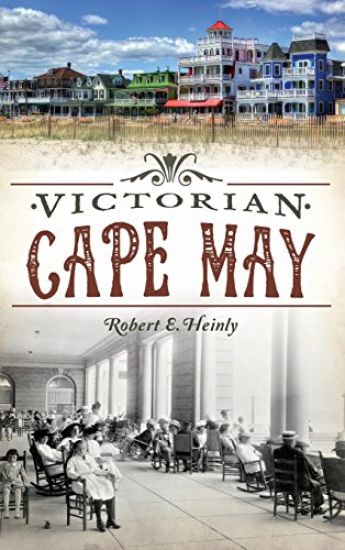
Victorian Cape May

Victorian Cape May

Robert E. Heinly

History Press Library Editions
2015
sidottu
Elegant remnants of the Victorian era grace almost every corner of Cape May. Wealthy locals built opulent homes like the Emlen Physick Estate and the George Allen House, while grand hotels like Congress Hall and the Chalfonte welcomed visitors from around the country. Even presidents came for the healthful sea air and distinguished venues. Yet the gaieties of these well-heeled patrons were shadowed by strictly defined social roles. Men and women--upper class, as well as cooks and servants--had vastly different experiences in this resort town. Local historian Robert Heinly explores all aspects of this world. Peer into the upstairs and downstairs of these majestic homes to discover what life was like in Victorian Cape May.
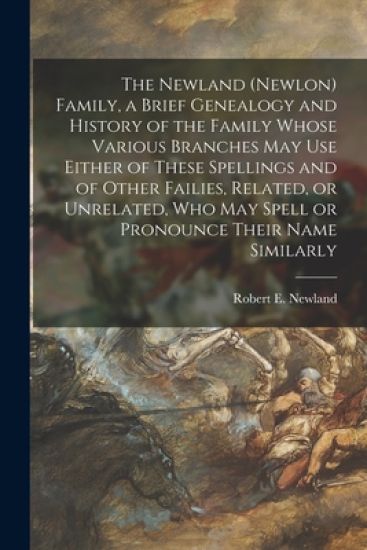
The Newland (Newlon) Family, a Brief Genealogy and History of the Family Whose Various Branches May Use Either of These Spellings and of Other Failies
A fascinating genealogical study tracing the history of the Newland Newlon family and related branches, including a wide range of unique and often surprising family stories. Author Robert E. Newland draws on a wealth of historical resources to present a detailed and engaging account of this prominent family.This work has been selected by scholars as being culturally important, and is part of the knowledge base of civilization as we know it.This work is in the "public domain in the United States of America, and possibly other nations. Within the United States, you may freely copy and distribute this work, as no entity (individual or corporate) has a copyright on the body of the work.Scholars believe, and we concur, that this work is important enough to be preserved, reproduced, and made generally available to the public. We appreciate your support of the preservation process, and thank you for being an important part of keeping this knowledge alive and relevant.
Bones of the Maya

Bones of the Maya

Carl Armstrong; Jane E. Buikstra; Diane Z. Chase; Mark N. Cohen; Della Collins Cook; Marie Elaine Danforth; Andres del Angel; Robert E. Ferrell

The University of Alabama Press
2005
sidottu
During the last 20 years new techniques in osteology have yielded findings on Maya diet and health that challenge the ecological model of collapse. This volume, which includes an index bibliography of the first 150 years of Maya osteology, brings together for the first time a broad spectrum of bioarchaeologists and reveals remarkable data on Maya genetic relationship, demography, and diseases.
Slavery, Race, and Conquest in the Tropics

Slavery, Race, and Conquest in the Tropics

Robert E. May

Cambridge University Press
2013
pokkari
Slavery, Race, and Conquest in the Tropics challenges the way historians interpret the causes of the American Civil War. Using Abraham Lincoln and Stephen Douglas's famed rivalry as a prism, Robert E. May shows that when Lincoln and fellow Republicans opposed slavery in the West, they did so partly from evidence that slaveholders, with Douglas's assistance, planned to follow up successes in Kansas by bringing Cuba, Mexico, and Central America into the Union as slave states. A skeptic about 'Manifest Destiny', Lincoln opposed the war with Mexico, condemned Americans invading Latin America, and warned that Douglas's 'popular sovereignty' doctrine would unleash US slaveholders throughout Latin America. This book internationalizes America's showdown over slavery, shedding new light on the Lincoln-Douglas rivalry and Lincoln's Civil War scheme to resettle freed slaves in the tropics.
Slavery, Race, and Conquest in the Tropics

Slavery, Race, and Conquest in the Tropics

Robert E. May

Cambridge University Press
2013
sidottu
Slavery, Race, and Conquest in the Tropics challenges the way historians interpret the causes of the American Civil War. Using Abraham Lincoln and Stephen Douglas's famed rivalry as a prism, Robert E. May shows that when Lincoln and fellow Republicans opposed slavery in the West, they did so partly from evidence that slaveholders, with Douglas's assistance, planned to follow up successes in Kansas by bringing Cuba, Mexico, and Central America into the Union as slave states. A skeptic about 'Manifest Destiny', Lincoln opposed the war with Mexico, condemned Americans invading Latin America, and warned that Douglas's 'popular sovereignty' doctrine would unleash US slaveholders throughout Latin America. This book internationalizes America's showdown over slavery, shedding new light on the Lincoln-Douglas rivalry and Lincoln's Civil War scheme to resettle freed slaves in the tropics.
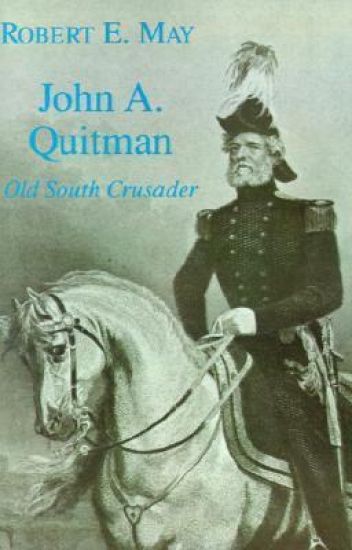
John A. Quitman

John A. Quitman

Robert E. May

Louisiana State University Press
1985
nidottu
The premier secessionist of antebellum Mississippi, John A. Quitman was one of the half-dozen or so most prominent radicals in the entire South. In this full-length biography, Robert E. May takes issue with the recent tendency to portray secessionists as rabble-rousing, maladjusted outsiders bent on the glories of separate nationhood. May reveals Quitman to have been an ambitious but relatively stable insider who reluctantly advocated secession because of a despondency over slavery's long-range future in the Union and a related conviction that northerners no longer respected southern claims to equality as American citizens.A fervent disciple of South Carolina ""radical"" John C. Calhoun's nullification theories, Quitman also gained notoriety as his region's most strident slavery imperialist. He articulated the case for new slaver territory, participated in the Texas Revolution, won national acclaim as a volunteer general in the Mexican War, and organised a private military, or ""filibustering"", expedition with the intent of liberating Cuba from Spanish rule and making the island a new slave state. In 1850, while governor of Mississippi during the California crisis, Quitman wielded his influence in a vain attempt to induce Mississippi secession. Later, in Congress, he marked out an extreme southern position on Kansas. Mississippi's most vehement ""fire-eater,"" Quitman played a significant role in the North-South estrangement that led to the American Civil War.The first critical biography of this important figure, May's study sheds light on such current historical controversies as whether antebellum southerners were peculiarly militaristic or ""antibourgeois"" and helps illuminate the slave-master relations, mobility, intraregional class and geographic friction, partisan politics, and family customs of the Old South.
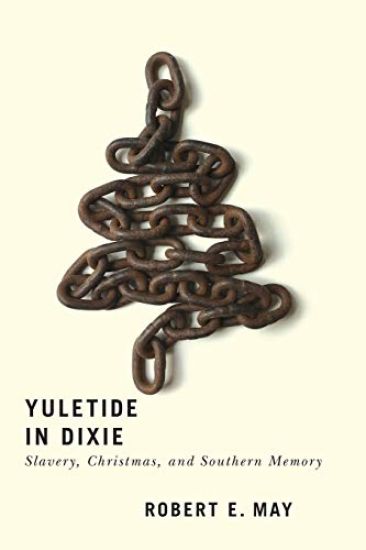
Yuletide in Dixie

Yuletide in Dixie

Robert E. May

University of Virginia Press
2019
sidottu
How did enslaved African Americans in the Old South really experience Christmas? Did Christmastime provide slaves with a lengthy and jubilant respite from labor and the whip, as is generally assumed, or is the story far more complex and troubling? In this provocative, revisionist, and sometimes chilling account, Robert E. May chides the conventional wisdom for simplifying black perspectives, uncritically accepting southern white literary tropes about the holiday, and overlooking evidence not only that countless southern whites passed Christmases fearful that their slaves would revolt but also that slavery’s most punitive features persisted at holiday time.In Yuletide in Dixie, May uncovers a dark reality that not only alters our understanding of that history but also sheds new light on the breakdown of slavery in the Civil War and how false assumptions about slave Christmases afterward became harnessed to myths undergirding white supremacy in the United States. By exposing the underside of slave Christmases, May helps us better understand the problematic stereotypes of modern southern historical tourism and why disputes over Confederate memory retain such staying power today. A major reinterpretation of human bondage, Yuletide in Dixie challenges disturbing myths embedded deeply in our culture.
Yuletide in Dixie

Yuletide in Dixie

Robert E. May

University of Virginia Press
2020
pokkari
How did enslaved African Americans in the Old South really experience Christmas? Did Christmastime provide slaves with a lengthy and jubilant respite from labor and the whip, as is generally assumed, or is the story far more complex and troubling? In this provocative, revisionist, and sometimes chilling account, Robert E. May chides the conventional wisdom for simplifying black perspectives, uncritically accepting southern white literary tropes about the holiday, and overlooking evidence not only that countless southern whites passed Christmases fearful that their slaves would revolt but also that slavery's most punitive features persisted at holiday time.In Yuletide in Dixie, May uncovers a dark reality that not only alters our understanding of that history but also sheds new light on the breakdown of slavery in the Civil War and how false assumptions about slave Christmases afterward became harnessed to myths undergirding white supremacy in the United States. By exposing the underside of slave Christmases, May helps us better understand the problematic stereotypes of modern southern historical tourism and why disputes over Confederate memory retain such staying power today. A major reinterpretation of human bondage, Yuletide in Dixie challenges disturbing myths embedded deeply in our culture.
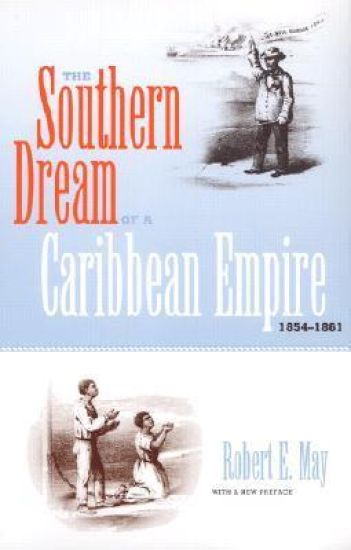
The Southern Dream of a Caribbean Empire, 1854-1861

The Southern Dream of a Caribbean Empire, 1854-1861

Robert E. May; John David Smith

University Press of Florida
2002
nidottu
A path-breaking work when first published in 1973, The Southern Dream remains the standard work on attempts by the South to spread American slavery into the tropics - Cuba, Mexico, and Central America in particular - before the Civil War. Robert May shows that the South's expansionists had no more success than when they tried to extend slavery westward. As one after another of their plots failed, southern imperialists lost hope that their labor system might survive in the Union. Blaming northern Democrats and antislavery Republicans alike for their disappointed dreams, alienated southerners embraced secession as an alternative means to achieving a tropical slave empire. Had war not erupted at Fort Sumter, Confederates might have attempted to conquer the Caribbean basin. May's book serves as an important reminder that foreign policy cannot be divorced from the writing of American history, even in regard to seemingly domestic matters like the causes of the Civil War. Contending that America's Manifest Destiny became ""sectionalized"" in the 1850s, he explains why southerners considered Caribbean expansion so important and shows how southerners used their clout in Washington to initiate diplomatic schemes like the notorious Ostend Manifesto and presidential attempts to buy the slaveholding island of Cuba from Spain. He also relates how Caribbean plots affected American public opinion and ignited sectional friction in congressional debates. May argues that President-elect Abraham Lincoln might have saved the Union in the winter of 1860-61, had he agreed to last minute concessions facilitating slavery's future expansion towards the tropics.
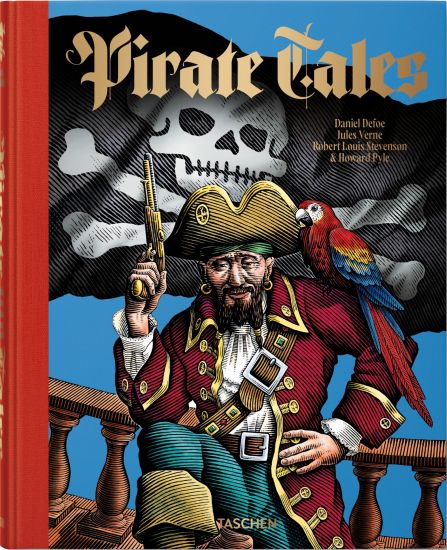
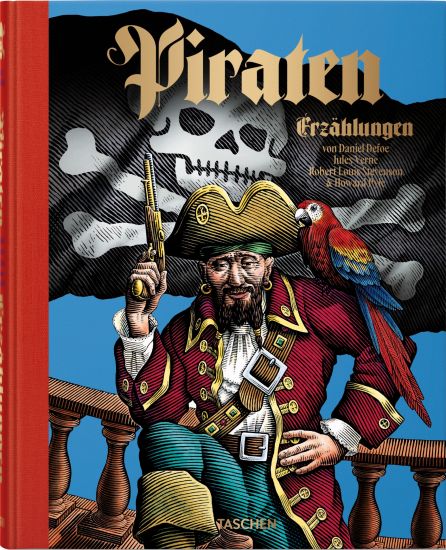
Pirate Tales

Pirate Tales

Robert E. and Jill P. May; TASCHEN

TASCHEN GMBH
2024
sidottu
In the imaginations of young and old alike, the word “pirate” resonates with spine-tingling fear and swashbuckling adventure. Over centuries, our cultural landscape has been populated by a host of famous real and fictional figures immortalized in literature and art: Edward Teach, also known as Blackbeard, with his fearsome reputation for cruelty; Henry ‘Bloody’ Morgan, whose treasure is still sought today; and of course Long John Silver, the archetypal anti-hero of Robert Louis Stevenson’s Treasure Island (1885).Pirate Tales gathers a treasure trove of excerpts from literary works inspired by the historical pirates of the 16th and 17th centuries. The edition begins with Daniel Defoe’s Robinson Crusoe (1719), a book containing all the trappings of pirate lore – shipwrecks, mutineers, undiscovered islands, and talking parrots – and one which influenced hundreds of works of adventure fiction, not least Jules Verne’s The Mysterious Island (1871). The third nerve-jangling novel is Treasure Island, without which no book on pirates would be complete, thanks to its unforgettable additions to the pirate canon: Blind Pew, Billy Bones, the black spot, wooden legs and Long John Silver. Extracts from Howard Pyle’s posthumously published Book of Pirates (1921) round off the edition. The tales are enlivened by arresting illustrations at every turn, including those by artists from the Brandywine School such as Pyle, the undisputed father of pirate illustration, and his students N. C. Wyeth and Frank Schoonover. This edition features a number of original artworks by these illustrators, drawn from private collections, as well as contributions by other artists from illustration’s so-called “Golden Age” of the late 19th and early 20th century. Scene-setting vignettes for each story were executed by the illustrator Michael Custode.A comprehensive introduction on historical pirates and their influence on these literary texts is provided by Robert E. and Jill P. May, in addition to authoritative commentaries on each text and biographies of the featured authors and illustrators. Evoking high seas, flashing blades, and maritime crime, Pirate Tales offers a tantalizing blend of fiction, history, and illustration.
Piratenerzahlungen

Piratenerzahlungen

Robert E. and Jill P. May; TASCHEN

TASCHEN GMBH
2024
sidottu
This literary anthology recalls the exploits of Long John Silver, Henry Morgan, and those inspired by piracyâ??s Golden Age. Retelling classics of adventure literature, from Robinson Crusoe to The Mysterious Island, with captivating illustrations from artists such as Howard Pyle and N. C. Wyeth, this visual delight is also a pleasure to read.
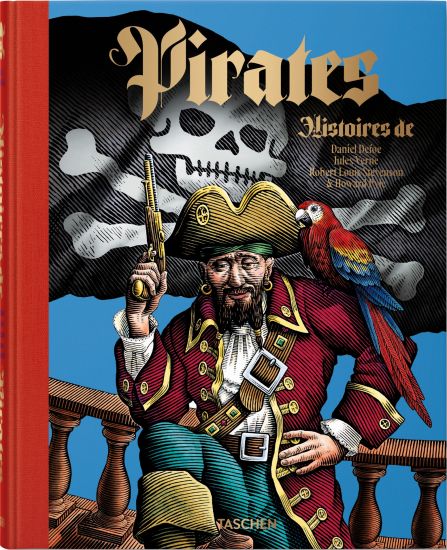
Histoires de Pirates

Histoires de Pirates

Robert E. and Jill P. May; TASCHEN

TASCHEN GMBH
2024
sidottu
In the imaginations of young and old alike, the word “pirate” resonates with spine-tingling fear and swashbuckling adventure. Over centuries, our cultural landscape has been populated by a host of famous real and fictional figures immortalized in literature and art: Edward Teach, also known as Blackbeard, with his fearsome reputation for cruelty; Henry ‘Bloody’ Morgan, whose treasure is still sought today; and of course Long John Silver, the archetypal anti-hero of Robert Louis Stevenson’s Treasure Island (1885).Pirate Tales gathers a treasure trove of excerpts from literary works inspired by the historical pirates of the 16th and 17th centuries. The edition begins with Daniel Defoe’s Robinson Crusoe (1719), a book containing all the trappings of pirate lore – shipwrecks, mutineers, undiscovered islands, and talking parrots – and one which influenced hundreds of works of adventure fiction, not least Jules Verne’s The Mysterious Island (1871). The third nerve-jangling novel is Treasure Island, without which no book on pirates would be complete, thanks to its unforgettable additions to the pirate canon: Blind Pew, Billy Bones, the black spot, wooden legs and Long John Silver. Extracts from Howard Pyle’s posthumously published Book of Pirates (1921) round off the edition. The tales are enlivened by arresting illustrations at every turn, including those by artists from the Brandywine School such as Pyle, the undisputed father of pirate illustration, and his students N. C. Wyeth and Frank Schoonover. This edition features a number of original artworks by these illustrators, drawn from private collections, as well as contributions by other artists from illustration’s so-called “Golden Age” of the late 19th and early 20th century. Scene-setting vignettes for each story were executed by the illustrator Michael Custode.A comprehensive introduction on historical pirates and their influence on these literary texts is provided by Robert E. and Jill P. May, in addition to authoritative commentaries on each text and biographies of the featured authors and illustrators. Evoking high seas, flashing blades, and maritime crime, Pirate Tales offers a tantalizing blend of fiction, history, and illustration.
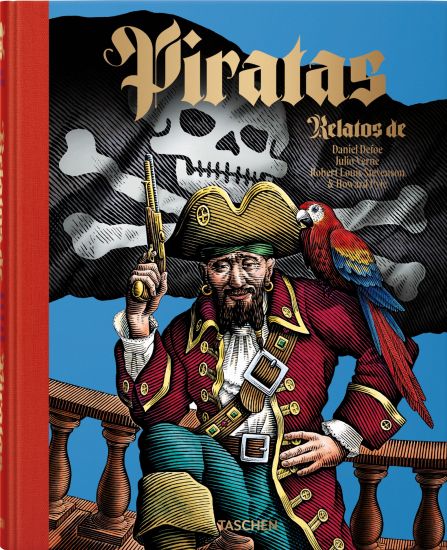
Relatos de Piratas

Relatos de Piratas

Robert E. and Jill P. May; TASCHEN

TASCHEN GMBH
2024
sidottu
In the imaginations of young and old alike, the word “pirate” resonates with spine-tingling fear and swashbuckling adventure. Over centuries, our cultural landscape has been populated by a host of famous real and fictional figures immortalized in literature and art: Edward Teach, also known as Blackbeard, with his fearsome reputation for cruelty; Henry ‘Bloody’ Morgan, whose treasure is still sought today; and of course Long John Silver, the archetypal anti-hero of Robert Louis Stevenson’s Treasure Island (1885).Pirate Tales gathers a treasure trove of excerpts from literary works inspired by the historical pirates of the 16th and 17th centuries. The edition begins with Daniel Defoe’s Robinson Crusoe (1719), a book containing all the trappings of pirate lore – shipwrecks, mutineers, undiscovered islands, and talking parrots – and one which influenced hundreds of works of adventure fiction, not least Jules Verne’s The Mysterious Island (1871). The third nerve-jangling novel is Treasure Island, without which no book on pirates would be complete, thanks to its unforgettable additions to the pirate canon: Blind Pew, Billy Bones, the black spot, wooden legs and Long John Silver. Extracts from Howard Pyle’s posthumously published Book of Pirates (1921) round off the edition. The tales are enlivened by arresting illustrations at every turn, including those by artists from the Brandywine School such as Pyle, the undisputed father of pirate illustration, and his students N. C. Wyeth and Frank Schoonover. This edition features a number of original artworks by these illustrators, drawn from private collections, as well as contributions by other artists from illustration’s so-called “Golden Age” of the late 19th and early 20th century. Scene-setting vignettes for each story were executed by the illustrator Michael Custode.A comprehensive introduction on historical pirates and their influence on these literary texts is provided by Robert E. and Jill P. May, in addition to authoritative commentaries on each text and biographies of the featured authors and illustrators. Evoking high seas, flashing blades, and maritime crime, Pirate Tales offers a tantalizing blend of fiction, history, and illustration.
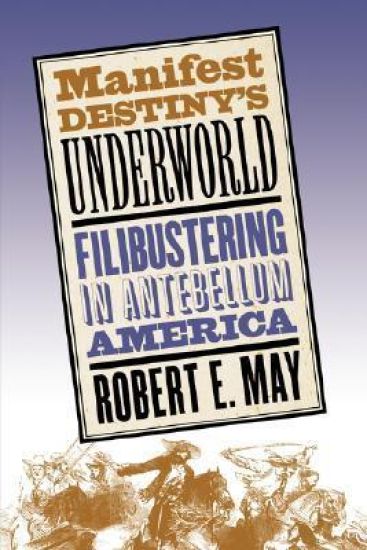
Manifest Destiny's Underworld

Manifest Destiny's Underworld

May Robert E.

The University of North Carolina Press
2004
nidottu
Robert May offers an imaginative new approach to antebellum America's notorious ""filibusters"" - the adventurers who organized or participated in private military attacks on nations with which the United States was formally at peace. Condemned abroad as pirates, the filibusters were often celebrated at home as heroes who epitomized the spirit of Manifest Destiny. Many explains the romantic, mercenary, ideological, and psychological desires that drove thousands of men to join filibustering expeditions; how they were financed; and why the U.S. government had little success in curtailing them. He also reveals the legacy of anti-Americanism that filibustering generated in Latin America, where people regarded the attackers much the way we look upon international terrorists today.
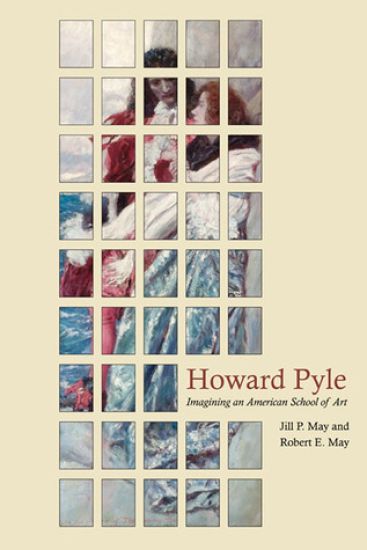
Howard Pyle

Howard Pyle

Jill P. May; Robert E. May

University of Illinois Press
2011
sidottu
Best remembered as an influential illustrator and teacher, Howard Pyle (1853–1911) produced magnificent artwork and engrossing books and magazine stories about King Arthur, Robin Hood, swashbuckling pirates, and the American Revolution. He also completed public murals and trained many famous artists and illustrators at the turn of the twentieth century, including N. C. Wyeth and Jessie Willcox Smith. This engaging portrait of the influential American artist, teacher, author, and muralist is the first fully documented treatment of Pyle's life and career.Drawing on numerous archival sources including Pyle's own letters to provide new perspectives on his life, Jill P. May and Robert E. May reveal Pyle to be a passionate believer that art should be understood and appreciated by the general public. His genteel values and artistic tastes shaped not only his own creative output but his influential work as a teacher, first at the Drexel Institute of Art, Science and Industry in Philadelphia and later at his own school in Delaware's Brandywine River Valley. May and May also show him to be far more supportive of women artists than is generally believed, explaining how he deployed club memberships and relationships with publishers and politicians to advance the prospects of his students. Duly measuring his influence on later artists, May and May detail his quest to lead a distinctively American school of art freed from European models.Amply illustrated with evocative photographs and color reproductions of his own and his students' work, this exceptional volume presents Howard Pyle's creative career and legacy for American popular culture as it has never been seen before.
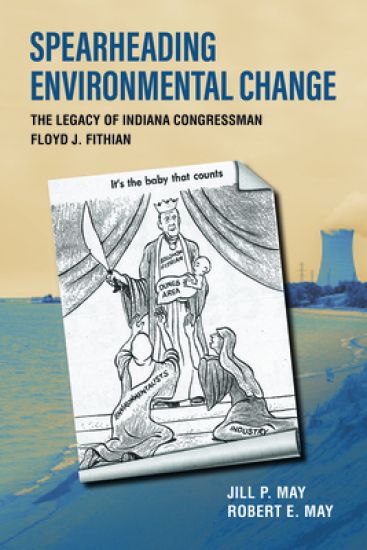
Spearheading Environmental Change

Spearheading Environmental Change

Jill P. May; Robert E. May

PURDUE UNIVERSITY PRESS
2022
sidottu
Spearheading Environmental Change: The Legacy of Indiana Congressman Floyd J. Fithian describes the life of a four-term United States congressman, focusing on his role in the emerging environmental movement in late twentieth-century America. Spearheading Environmental Change highlights Fithian's legislative efforts regarding three water-related issues that profoundly concerned Hoosier and midwestern voters: creating a national park on the Indiana shoreline of Lake Michigan; canceling dam construction near Purdue University; and mitigating flooding in the Kankakee River Basin. The book also covers Fithian's positions on ecologically sensitive issues such as pesticides, noise pollution, fossil fuels, and nuclear power. Largely remembered for his participation in the Democratic reform wave that took over Congress in 1975 post-Watergate (the so-called Class of '74) and as an advocate for Hoosier farmers, Fithian has been overlooked for his role as a force to be reckoned with on the House floor when it came to the nation's environmental challenges. Fithian was a highly ethical, pragmatic reformer bent on preserving his country's natural resources. Spearheading Environmental Change gives Fithian the credit he deserves as an environmental warrior on the national stage.
Spearheading Environmental Change

Spearheading Environmental Change

Jill P. May; Robert E. May

PURDUE UNIVERSITY PRESS
2022
nidottu
Spearheading Environmental Change: The Legacy of Indiana Congressman Floyd J. Fithian describes the life of a four-term United States congressman, focusing on his role in the emerging environmental movement in late twentieth-century America. Spearheading Environmental Change highlights Fithian's legislative efforts regarding three water-related issues that profoundly concerned Hoosier and midwestern voters: creating a national park on the Indiana shoreline of Lake Michigan; canceling dam construction near Purdue University; and mitigating flooding in the Kankakee River Basin. The book also covers Fithian's positions on ecologically sensitive issues such as pesticides, noise pollution, fossil fuels, and nuclear power. Largely remembered for his participation in the Democratic reform wave that took over Congress in 1975 post-Watergate (the so-called Class of '74) and as an advocate for Hoosier farmers, Fithian has been overlooked for his role as a force to be reckoned with on the House floor when it came to the nation's environmental challenges. Fithian was a highly ethical, pragmatic reformer bent on preserving his country's natural resources. Spearheading Environmental Change gives Fithian the credit he deserves as an environmental warrior on the national stage.
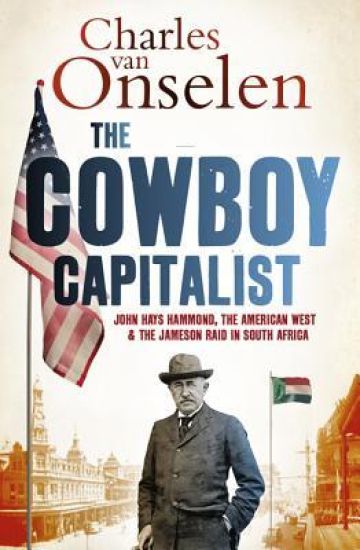
The Cowboy Capitalist

The Cowboy Capitalist

Charles Van Onselen; Robert E. May

University of Virginia Press
2018
nidottu
The Jameson Raid was a pivotal moment in the history of South Africa, linking events from the Anglo-Boer War to the declaration of the Union of South Africa in 1910. For more than a century, the failed revolution has been interpreted through the lens of British imperialism, with responsibility laid at the feet of Cecil Rhodes. Yet, the raid was less a serious attempt to overthrow a Boer government than a wild adventure with transnational roots in American filibustering.In The Cowboy Capitalist, renowned South African historian Charles van Onselen challenges a historiography of over 120 years, locating the raid in American rather than British history and forcing us to rethink the histories of at least three nations. Through a close look at the little-remembered figure of John Hays Hammond, a confidant of both Rhodes and Jameson, he discovers the American Old West on the South African Highveld. This radical reinterpretation challenges the commonly held belief that the Jameson Raid was quintessentially British and, in doing so, drives splinters into our understanding of events as far forward as South Africa’s critical 1948 general election, with which the foundations of Grand Apartheid were laid.