Kirjojen hintavertailu. Mukana 11 244 527 kirjaa ja 12 kauppaa.

Kirjahaku

Etsi kirjoja tekijän nimen, kirjan nimen tai ISBN:n perusteella.

1000 tulosta hakusanalla Robert F Stedman

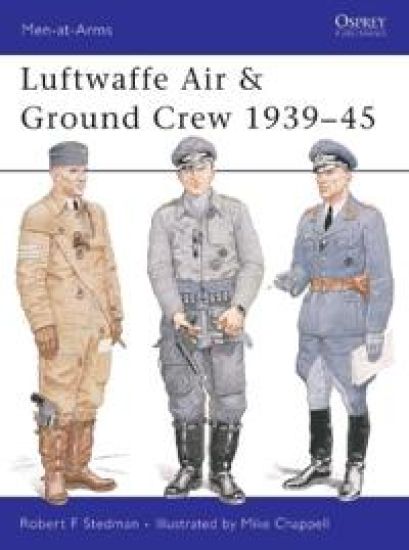
Luftwaffe Air & Ground Crew 1939–45

Luftwaffe Air & Ground Crew 1939–45

Robert F Stedman

Osprey Publishing
2002
nidottu
From the Blitzkrieg to the defence of the Reich, the Luftwaffe saw action in many skies, from the Battle of Britain to the North African desert and the steppes of Russia. In this title Stedman provides a study of the uniforms, insignia and flying equipment of the German air force of World War II, covering both air and ground crew. A systematic survey of the whole range of orders of dress including flying clothing, flight equipment and survival aids - parachutes, life jackets and so forth - is also provided.
Kampfflieger

Kampfflieger

Robert F Stedman

Osprey Publishing
2005
nidottu
The Kampfflieger are relatively unknown within aviation circles, although many of them had careers as distinguished as those of their fighter-pilot counterparts. The men of the bomber crews did not enjoy the luxury of combat tours – they flew until they died or became unfit for combat duty. This book studies the attitudes, beliefs and motivation of the average crewman, following him through recruitment and training to experience on campaign in western Europe, Africa and the Russian front, detailing the exploits and trials of the famous Ju 87 'Stuka' dive-bomber crews and their own crucial part in Germany's war effort.
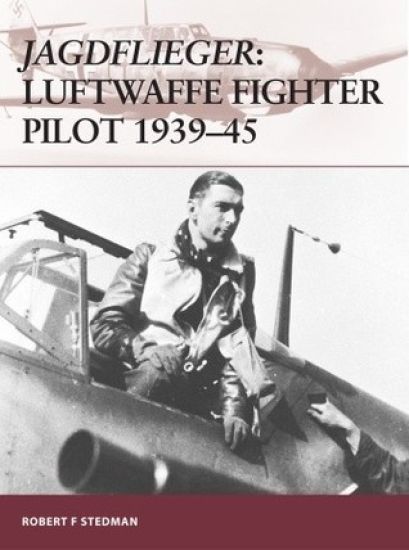
Jagdflieger

Jagdflieger

Robert F Stedman

Osprey Publishing
2008
nidottu
Over the years much has been written about Luftwaffe aces, but this book seeks to examine the lives of the ordinary men who took to the skies. These men all shared the same aggressive spirit, joy of action and the passion of a hunter. Rich with fascinating first-hand accounts exploring every step of the fighter pilot's career from his enlistment and intensive training to his exploits in the Battle of Britain and on the Eastern Front, this book is an invaluable insight into the life of a Luftwaffe fighter pilot.
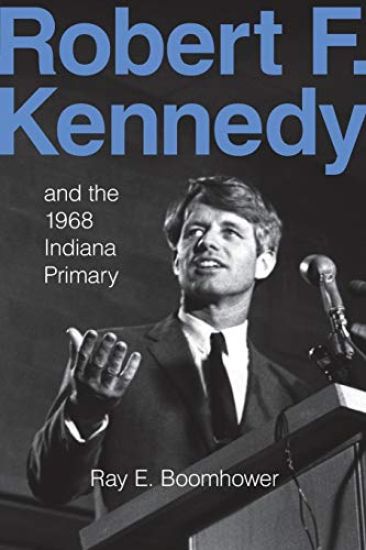
Robert F. Kennedy and the 1968 Indiana Primary

Robert F. Kennedy and the 1968 Indiana Primary

Ray E. Boomhower

Indiana University Press
2017
pokkari
On April 4, 1968, Senator Robert F. Kennedy, Jr., arrived in Indiana to campaign for the Indiana Democratic presidential primary. As Kennedy prepared to fly from an appearance in Muncie to Indianapolis, he learned that civil rights leader Dr. Martin Luther King, Jr., had been shot outside his hotel in Memphis, Tennessee. Before his plane landed in Indianapolis, Kennedy heard the news that King had died. Despite warnings from Indianapolis police that they could not guarantee his safety, and brushing off concerns from his own staff, Kennedy decided to proceed with plans to address an outdoor rally to be held in the heart of the city's African American community. On that cold and windy evening, Kennedy broke the news of King's death in an impassioned, extemporaneous speech on the need for compassion in the face of violence. It has proven to be one of the great speeches in American political history. Marking the 40th anniversary of Kennedy's Indianapolis speech, this book explains what brought the politician to Indiana that day, and explores the characters and events of the 1968 Indiana Democratic presidential primary in which Kennedy, who was an underdog, had a decisive victory.
Robert F. Kennedy and the 1968 Indiana Primary

Robert F. Kennedy and the 1968 Indiana Primary

Ray E. Boomhower

Indiana University Press
2008
sidottu
On April 4, 1968, Senator Robert F. Kennedy, Jr., arrived in Indiana to campaign for the Indiana Democratic presidential primary. As Kennedy prepared to fly from an appearance in Muncie to Indianapolis, he learned that civil rights leader Dr. Martin Luther King, Jr., had been shot outside his hotel in Memphis, Tennessee. Before his plane landed in Indianapolis, Kennedy heard the news that King had died. Despite warnings from Indianapolis police that they could not guarantee his safety, and brushing off concerns from his own staff, Kennedy decided to proceed with plans to address an outdoor rally to be held in the heart of the city's African American community. On that cold and windy evening, Kennedy broke the news of King's death in an impassioned, extemporaneous speech on the need for compassion in the face of violence. It has proven to be one of the great speeches in American political history. Marking the 40th anniversary of Kennedy's Indianapolis speech, this book explains what brought the politician to Indiana that day, and explores the characters and events of the 1968 Indiana Democratic presidential primary in which Kennedy, who was an underdog, had a decisive victory.
Robert F. Kennedy and the Shaping of Civil Rights, 1960-1964
From the 1960 John F. Kennedy presidential campaign to the signing of the Civil Rights Act of 1964, Attorney General Robert F. Kennedy and the Department of Justice worked tirelessly to change the climate of civil rights in the nation. This book explores how the Kennedy brothers and leaders such as Martin Luther King, Jr., John Lewis and James Meredith, among others, pushed for change at a critical time. Through an analysis of White House memoranda, speeches, telephone conversations and recorded discussions as well as secondary sources, this study explores Robert Kennedy's role in key events of the civil rights movement, which include the Freedom Rides in 1961, the Ole Miss crisis in 1962 and the Birmingham campaign and March on Washington in 1963. The combined efforts of the Kennedys and these leaders helped change the atmosphere in the nation to one of acceptance and opportunity for African Americans and other minorities.
Robert F. Kennedy in the Stream of History

Robert F. Kennedy in the Stream of History

Terrence Edward Paupp

Routledge
2017
nidottu
This assessment of the statesmanship, principles, and policies of Robert F. Kennedy places him "in the stream of history," to assess what came before his time in political life, what happened during that time, and what happened to his legacy after his assassination. Terrence Edward Paupp evaluates the themes and issues RFK confronted, responded to, and for which he provided visionary solutions.Paupp first chronicles the influence of Franklin D. Roosevelt's legacy as a prologue to the New Frontier and Great Society. During Robert F. Kennedy's time in power both in his brother's administration and on his own in the US Senate he struggled with striking a balance between power and purpose. In the years after John F. Kennedy's assassination, RFK emphasized the need to unite power and purpose, national and international concerns, ideals and practice. Much of this has been ignored, Paupp argues, by what C. Wright Mills called "the power elite."In assessing RFK's statesmanship, Paupp examines his commitments to human and civil rights, which linked themes and ideals within the US to those struggles taking place outside the country. Robert F. Kennedy brought zeal and passion to these problems by discussing the moral necessity of honouring human dignity while articulating practical solutions, policies, and programs to structural injustice. His legacy remains a beacon of light, intelligence, and hope in today's world.