
Kirjahaku
Etsi kirjoja tekijän nimen, kirjan nimen tai ISBN:n perusteella.
1000 tulosta hakusanalla Robert Franklin Jackson
"The Case of the Connected Palindromes" In the second episode, the PPD officers are joined by additional regular characters, which give a broader stage of interaction outside the station house: Hon. Judge Robert McLiams, who demands the officer follow the probable-cause rule; ADA Susan George, who insists the officers follow the book; Betty and Lou Wilkins, who operate a breakfast restaurant, where the officers start their day; and Rufus Malone, who provides the officers their favorite watering hole at the end of their shift. The adversaries are a quartet of sadists who are torturing and killing anyone who knows their identity.


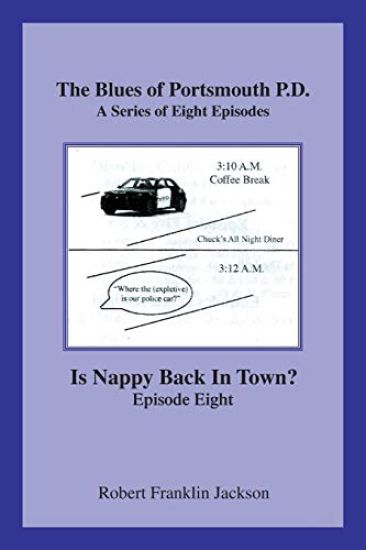
Your author would like to make three points. First, he believes if he can visualize the exciting climax occurring in the last chapter of a book, he can write the chapters leading up to that ending. Not so with The Last House on the Left. You author thought that the title could lead to an exciting plot he started writing without an ending in sight-a different approach. We will let you decide if it worked. Second, the plot did develop. The series of murders occurred when the leader of a Russian mafia heroin connection was trying to eliminate anyone implicating him. The Portsmouth cop prevailed, and this success in episode 6 led to the unexpected ending in the last chapter of episode 8, The New Guy in Town. This led to episode 8, Is Nappy Back in Town, and a new plot development. Instead of one police squad trying to solve one crime, partners of an experienced officer and a rookie are trying to solve one of several crimes all happening at once. Third, your author added a new character, Madison "Madi" March, a rookie who was hired for her forensic skills. If the title The Last House on the Left was not so important to the plot of episode 6, Introducing Madison "Madi" March would a better title.

WeWillFindYouaMatch.com, a computer romance, was written by your author when his son started looking for a mate and found a wife. As you might expect, computer dates often don't work out. Your author thought it might be interesting if Angus Morgan, our computer dater, had five dates that were disasters before he found success. Their romance started in Oroville, California, and continued in the British Isles and, eventually, in Paris. In 1992, your author and his editor wife, Bobbi, spent twenty-one days driving in Ireland, Northern Ireland, Wales, England, and Scotland. Angus Morgan and his lady will follow the 1992 path taken by your author and Bobbi. Scenes at the Red Lion in Skeffington and England were memories your author relived through Angus. Your author always wanted to travel to Paris, but it was not to be, but the scenes Angus experienced in France were what your author envisioned Paris might be.
The Truth Book In 1995, the author was invited to attend the fiftieth reunion of the eighth grade class of School No. 54 Indianapolis, Indiana, located at Tenth and Dearborn streets. It was a marvelous evening filled with connecting name badges with faces (and bodies) that have changed greatly during that period of fifty years, remembering long, almost-forgotten experiences, laughter, and dancing, but all came to an end too quickly. The author, a writer of murder mysteries and is in need of a plot, decided to use the 1995 fiftieth reunion of School No. 54 and Arsenal Technical High School as the setting. That is where similarities end. The author has created a fictional cast of classmates who will have entirely different appearances, relationships, interests, and personalities than those of the author's 1945 friends. The reunion will start out as a fun evening but will end in murder.

Gone, But Where? Episode Four Case of the Puzzling Similes Noble Alan Palmer was a resident of Portsmouth during the "asked and answered" serial murder case. He followed the case in the newspaper and on TV. He was envious of the notoriety that media gave the killer. He wanted that fame for himself. But the thought of killing someone sickened him. He thought of his name, Noble Alan Palmer (NAP), then it hit him-Napper. He would become a serial kidnapper. He would be known as Nappy. When following the "asked and answered" case, Nappy became familiar with all the officers at the Portsmouth PD. He admired Chief Masterson and Tim Slone and Skiv Van Dyke and Keegan O'Regan. He looked forward to staying ahead of them in investigating his abductions. Nappy left a signature note at the scene of each kidnapping. The first note contained a cryptic phrase and three letters with a comma separating the first from the last two, "Warning, no house is like a home. -G, BW." A next note included a different phrase, but there were two letters before the comma. The conclusion was made that Nappy was planning quite a few abductions.

It is predawn as a young boy and girl sit on a hillside, awaiting the sun's first rays to expose an outcrop of granite that, from a distance, resembles the profile of a man. The outcrop has been called for centuries the Old Man of the Mountain, or the Great Stone Face. (Note: For centuries, it has been a prophecy by local Indian tribes that a great man would appear some day with the same profile.) The young girl, Becky, believes the prophecy to be that if a young girl first sees the profile at dawn on the first day of summer, she will, in time, marry the Great Man when he arrives. Along for support, the little boy, Ernest, is pulling for himself as the eventual person whom Becky weds. Five years pass, and the first of three possible candidates to fulfill Becky's prophecy appears. It is Mr. Midas Gathergold, the world's richest man, but unscrupulous business deals send him running. Becky is disappointed. Another five years pass, and the second of three possible candidates to fulfill Becky's prophecy appears. It is Gen. B. T. "Blood 'n Thunder" Beauxcamp, the nation's greatest military man, but prejudice and bigotry send him running too. Becky is, again, disappointed. Five more years pass, and the third of three possible candidates to fulfill Becky's prophecy appears. It is Stonham "Stony" Phiz, the nation's most popular politician, but waffling on issues and womanizing sends him running too. Becky is, once more, disappointed. By the time yet another five years pass, Ernest, through his reading and wisdom becomes widely known as a noted philosopher. Among his favorite authors is Walden Wordsworth, a sagacious poet. Since Wordsworth has an equal appreciation of Ernest's beliefs, he decides to visit Ernest. The two meet, share ideas, and their mutual admiration of each other grows. Ernest informs Becky that her prophecy will no doubt come true tonight as he intends to make the announcement to the town that the poet is indeed the Great Man. Becky smiles knowingly. At the meeting, as he introduces the poet as the Great Man, the poet says, "Townspeople, can't you all see? I am not the Great Man. Ernest is." The town explodes into shock.
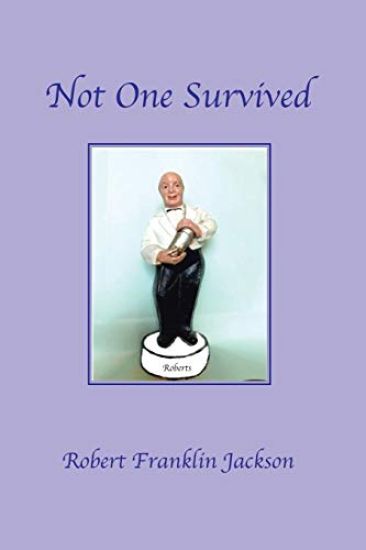
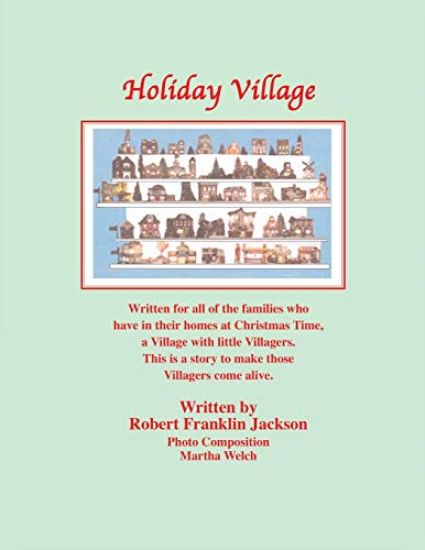
There is no available information at this time. Author will provide once available.
Robert Franklin Williams Speaks: A Documentary History
ANTHEM PRESS
2024
sidottu
Williams was a compassionate man. He was an intelligent American citizen and Korean war veteran, who claimed his right of American citizenship. Acutely aware of the broken promises of the US government, he remained fully invested in the rights, privileges, and responsibilities the Constitution guaranteed all of its citizens. As many of his contemporaries now confess, Williams’s strength and appeal, as explained by his second son, John Williams, was his uncompromising stance and determination to act on the American dream he imagined for social, economic, and political equality for African Americans. The skills he acquired as a journalist and propaganda specialist were key to his political development, evolution, and transnational collaborations with Cuba and China, which he used to challenge domestic policies in the United States, were way beyond the imagination of his supporters in the United States. Williams ultimately used these strengths, strategies, and collaborations to deliver liberting messages of freedom, resistance, and social and economic equality on behalf of the rights of African Americans. Williams significantly contributed to the Black freedom struggle and should not be forgotten. Robert Franklin Williams Speaks: A Documentary History includes a collection of interviews, speeches, and writings by and about Williams as an internationalist, pragmatist, and civil and human rights champion.
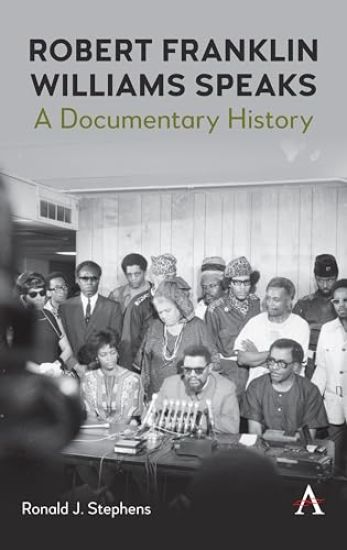
Robert Franklin Williams Speaks: A Documentary History
ANTHEM PRESS
2026
nidottu
Williams was a compassionate man. He was an intelligent American citizen and Korean war veteran, who claimed his right of American citizenship. Acutely aware of the broken promises of the US government, he remained fully invested in the rights, privileges, and responsibilities the Constitution guaranteed all of its citizens. As many of his contemporaries now confess, Williams’s strength and appeal, as explained by his second son, John Williams, was his uncompromising stance and determination to act on the American dream he imagined for social, economic, and political equality for African Americans. The skills he acquired as a journalist and propaganda specialist were key to his political development, evolution, and transnational collaborations with Cuba and China, which he used to challenge domestic policies in the United States, were way beyond the imagination of his supporters in the United States. Williams ultimately used these strengths, strategies, and collaborations to deliver liberting messages of freedom, resistance, and social and economic equality on behalf of the rights of African Americans. Williams significantly contributed to the Black freedom struggle and should not be forgotten. Robert Franklin Williams Speaks: A Documentary History includes a collection of interviews, speeches, and writings by and about Williams as an internationalist, pragmatist, and civil and human rights champion.

The Koenig Album; Biographies, Photographs, Genealogy Charts and Impressions From Here and There. The History of the Robert F. Koenig Family Through t
Robert F. (Robert Franklin) Koenig
Hassell Street Press
2021
nidottu
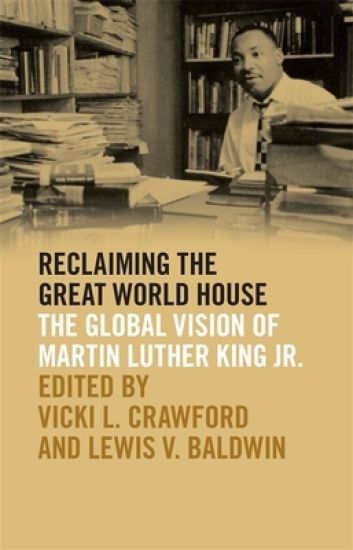
The burgeoning terrain of Martin Luther King Jr. studies is leading to a new appreciation of his thought and its meaningfulness for the emergence and shaping of the twenty-first-century world. This volume brings together an impressive array of scholars from various backgrounds and disciplines to explore the global significance of King—then, now, and in the future.Employing King’s metaphor of “the great world house,” the major focus is on King’s appraisal of the global-human struggle in the 1950s and 1960s, his relevance for today’s world, and how future generations might constructively apply or appropriate his key ideas and values in addressing racism, poverty and economic injustice, militarism, sexism, homophobia, the environmental crisis, globalization, and other challenges confronting humanity today. The contributors treat King in context and beyond context, taking seriously the historical King while also exploring how his name, activities, contributions, and legacy are still associated with a globalized rights culture.
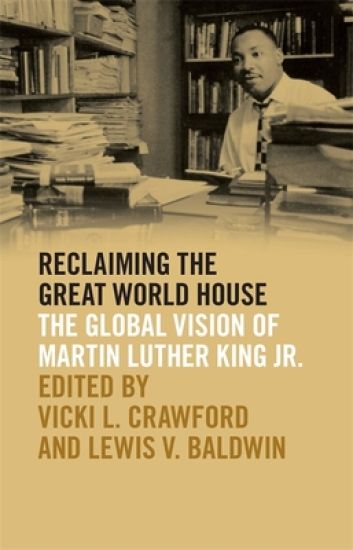
The burgeoning terrain of Martin Luther King Jr. studies is leading to a new appreciation of his thought and its meaningfulness for the emergence and shaping of the twenty-first-century world. This volume brings together an impressive array of scholars from various backgrounds and disciplines to explore the global significance of King—then, now, and in the future.Employing King’s metaphor of “the great world house,” the major focus is on King’s appraisal of the global-human struggle in the 1950s and 1960s, his relevance for today’s world, and how future generations might constructively apply or appropriate his key ideas and values in addressing racism, poverty and economic injustice, militarism, sexism, homophobia, the environmental crisis, globalization, and other challenges confronting humanity today. The contributors treat King in context and beyond context, taking seriously the historical King while also exploring how his name, activities, contributions, and legacy are still associated with a globalized rights culture.