Kirjojen hintavertailu. Mukana 12 390 323 kirjaa ja 12 kauppaa.

Kirjahaku

Etsi kirjoja tekijän nimen, kirjan nimen tai ISBN:n perusteella.

1000 tulosta hakusanalla Robert G. Kaufman

Henry M. Jackson

Henry M. Jackson

Robert G. Kaufman

University of Washington Press
2015
pokkari
Henry M. Jackson ranks as one of the great legislators in American history. With a Congressional career spanning the tenure of nine Presidents, Jackson had an enormous impact on the most crucial foreign policy and defense issues of the Cold War era, as well as a marked impact on energy policy, civil rights, and other watershed issues in domestic politics.Jackson first arrived in Washington, D.C., in January 1941 as the Democratic representative of the Second District of Washington State, at the age of 28 the youngest member of Congress. “Scoop” Jackson won reelection time and again by wide margins, moving to the Senate in 1953 and serving there until his death in 1983. He became a powerful voice in U.S. foreign policy and a leading influence in major domestic legislation, especially concerning natural resources, energy, and the environment, working effectively with Senator Warren Magnuson to bring considerable federal investment to Washington State.A standard bearer for the New Deal-Fair Deal tradition of Roosevelt and Truman, Jackson advocated a strong role for the federal government in the economy, health care, and civil rights. He was a firm believer in public control of electric and nuclear power, and leveled stern criticism at the oil industry’s “obscene profits” during the energy crisis of the 1970s. He ran for the presidency twice, in 1972 and 1976, but was defeated for the nomination first by George McGovern and then by Jimmy Carter, marking the beginning of a split between dovish and hawkish liberal Democrats that would not be mended until the ascendance of Bill Clinton.Jackson’s vision concerning America’s Cold War objectives owed much to Harry Truman’s approach to world affairs but, ironically, found its best manifestation in the actions taken by the Republican administration of Ronald Reagan. An early and strong supporter of Israel and of Soviet dissidents, he strongly opposed the Nixon/Kissinger policy of detente as well as many of Carter’s methods of dealing with the Soviet Union.Robert Kaufman has immersed himself in the life and times of Jackson, poring over the more than 1,500 boxes of written materials and tapes that make up the Jackson Papers housed at the University of Washington, as well as the collections of every presidential library from Kennedy through Reagan. He interviewed many people who knew Jackson, both friends and rivals, and consulted other archival materials and published sources dealing with Jackson, relevant U.S. political history and commentary, arms negotiation documents, and congressional reports. He uses this wealth of material to present a thoughtful and encompassing picture of the ideas and policies that shaped America’s Cold War philosophy and actions.
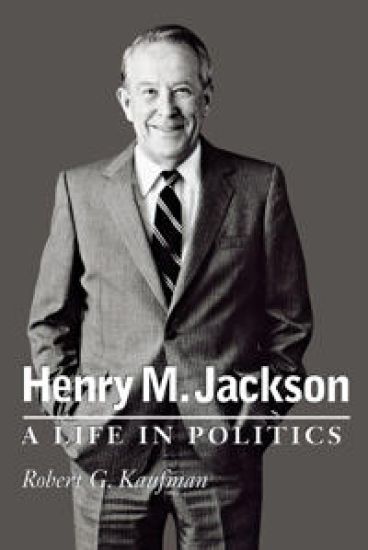
Henry M. Jackson

Henry M. Jackson

Robert G. Kaufman

University of Washington Press
2015
sidottu
Henry M. Jackson ranks as one of the great legislators in American history. With a Congressional career spanning the tenure of nine Presidents, Jackson had an enormous impact on the most crucial foreign policy and defense issues of the Cold War era, as well as a marked impact on energy policy, civil rights, and other watershed issues in domestic politics.Jackson first arrived in Washington, D.C., in January 1941 as the Democratic representative of the Second District of Washington State, at the age of 28 the youngest member of Congress. "Scoop" Jackson won reelection time and again by wide margins, moving to the Senate in 1953 and serving there until his death in 1983. He became a powerful voice in U.S. foreign policy and a leading influence in major domestic legislation, especially concerning natural resources, energy, and the environment, working effectively with Senator Warren Magnuson to bring considerable federal investment to Washington State.A standard bearer for the New Deal-Fair Deal tradition of Roosevelt and Truman, Jackson advocated a strong role for the federal government in the economy, health care, and civil rights. He was a firm believer in public control of electric and nuclear power, and leveled stern criticism at the oil industry's "obscene profits" during the energy crisis of the 1970s. He ran for the presidency twice, in 1972 and 1976, but was defeated for the nomination first by George McGovern and then by Jimmy Carter, marking the beginning of a split between dovish and hawkish liberal Democrats that would not be mended until the ascendance of Bill Clinton.Jackson's vision concerning America's Cold War objectives owed much to Harry Truman's approach to world affairs but, ironically, found its best manifestation in the actions taken by the Republican administration of Ronald Reagan. An early and strong supporter of Israel and of Soviet dissidents, he strongly opposed the Nixon/Kissinger policy of detente as well as many of Carter's methods of dealing with the Soviet Union.Robert Kaufman has immersed himself in the life and times of Jackson, poring over the more than 1,500 boxes of written materials and tapes that make up the Jackson Papers housed at the University of Washington, as well as the collections of every presidential library from Kennedy through Reagan. He interviewed many people who knew Jackson, both friends and rivals, and consulted other archival materials and published sources dealing with Jackson, relevant U.S. political history and commentary, arms negotiation documents, and congressional reports. He uses this wealth of material to present a thoughtful and encompassing picture of the ideas and policies that shaped America's Cold War philosophy and actions.
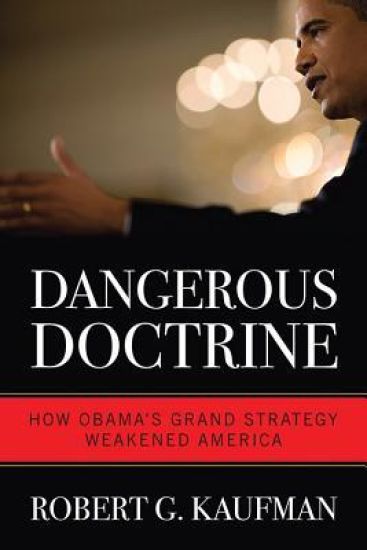
Dangerous Doctrine

Dangerous Doctrine

Robert G. Kaufman

The University Press of Kentucky
2016
sidottu
Much like Margaret Thatcher and Ronald Reagan, President Barack Obama came to office as a politician who emphasized conviction rather than consensus. During his 2008 presidential campaign, he pledged to transform the role of the United States abroad. His ambitious foreign policy goals included a global climate treaty, the peaceful withdrawal of American military forces from Iraq and Afghanistan, and a new relationship with Iran. Throughout Obama's tenure, pundits and scholars have offered competing interpretations of his "grand strategy," while others have maintained that his policies were incoherent or, at best, ad hoc. In Dangerous Doctrine, political scientist Robert G. Kaufman argues that the forty-fourth president has indeed articulated a clear, consistent national security policy and has pursued it with remarkable fidelity. Yet Kaufman contends that President Obama has imprudently abandoned the muscular internationalism that has marked US foreign policy since the end of World War II. Drawing on international relations theory and American diplomatic history, Kaufman presents a robust critique of the Obama doctrine as he situates the president's use of power within the traditions of American strategic practice. Focusing on the pivotal regions of Europe, the Middle East, and Asia, this provocative study demonstrates how current executive branch leadership threatens America's role as a superpower, weakening its ability to spread democracy and counter threats to geopolitical order in increasingly unstable times. Kaufman proposes a return to the grand strategy of moral democratic realism, as practiced by presidents such as Harry S. Truman, Ronald Reagan, and George W. Bush, with the hope of reestablishing the United States as the world's dominant power.
Ovine Myology; bulletin No. 698

Ovine Myology; bulletin No. 698

Robert G. Kauffman; Robert J. Reber; L. E. (Lorenz Edward) St Clair

Hassell Street Press
2021
nidottu
This work has been selected by scholars as being culturally important and is part of the knowledge base of civilization as we know it.This work is in the public domain in the United States of America, and possibly other nations. Within the United States, you may freely copy and distribute this work, as no entity (individual or corporate) has a copyright on the body of the work.Scholars believe, and we concur, that this work is important enough to be preserved, reproduced, and made generally available to the public. To ensure a quality reading experience, this work has been proofread and republished using a format that seamlessly blends the original graphical elements with text in an easy-to-read typeface.We appreciate your support of the preservation process, and thank you for being an important part of keeping this knowledge alive and relevant.
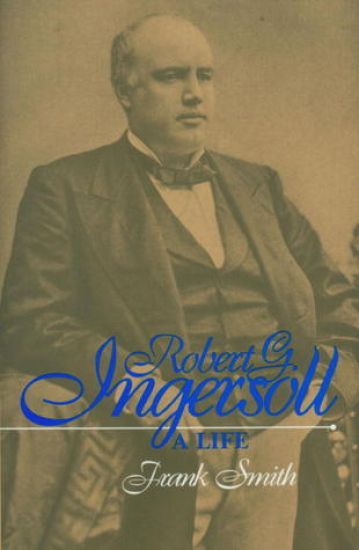
Robert G. Ingersoll

Robert G. Ingersoll

Frank Smith

Prometheus Books
1991
sidottu
Robert G Ingersoll (1833-1899) was a complex figure - a brilliant lawyer and orator who courageously advanced the concept of free-thought; a magnetic extrovert whose public esteem, eagerly sought, never earned him the private favours he so generously bestowed on others. Ingersoll was a staunch republican in the great tradition of Abraham Lincoln, and he vigorously championed such progressive causes as equal rights for blacks, women, and children; liberal divorce laws; and better wages and conditions for workers. Perhaps Ingersoll's greatest legacy derives from his daring rejection of religious superstition (during an era which saw a tremendous revival of spiritualism and religious fundamentalism) and his ardent belief in humanity.Ingersoll is considered one of the most prominent figures of the 19th century. From about 1880 to his death in 1899, he probably spoke to more Americans in person than anyone before or since; he had daily audiences of as many as three thousand people while he was on tour, several months a year for many years. Despite this, Ingersoll's career has not yet received the attention it clearly merits. In this comprehensive work, Frank Smith explores the life and thought of this charismatic figure, using newspaper accounts of the time and extensive quotations from Ingersoll's correspondence. Ingersoll's words provide a vivid portrait of 19th-century America from the stormy antebellum period to the beginnings of modern industrialism. His life reflects the great current of his age and speaks forcefully to the problems of our own.
Robert G. Ingersoll, Benevolent Agnostic; 1215

Robert G. Ingersoll, Benevolent Agnostic; 1215

Joseph 1867-1955 McCabe

Hassell Street Press
2021
sidottu
This work has been selected by scholars as being culturally important and is part of the knowledge base of civilization as we know it.This work is in the public domain in the United States of America, and possibly other nations. Within the United States, you may freely copy and distribute this work, as no entity (individual or corporate) has a copyright on the body of the work.Scholars believe, and we concur, that this work is important enough to be preserved, reproduced, and made generally available to the public. To ensure a quality reading experience, this work has been proofread and republished using a format that seamlessly blends the original graphical elements with text in an easy-to-read typeface.We appreciate your support of the preservation process, and thank you for being an important part of keeping this knowledge alive and relevant.