
Kirjahaku
Etsi kirjoja tekijän nimen, kirjan nimen tai ISBN:n perusteella.
1000 tulosta hakusanalla Robert Hay Coats

Catalogue Of The Collection Of Egyptian Antiquities Belonging To The Late Robert Hay, Of Linplum (1869)
James Hay
KESSINGER PUBLISHING, LLC
2008
nidottu
Catalogue Of The Collection Of Egyptian Antiquities Belonging To The Late Robert Hay, Of Linplum (1869)
James Hay
KESSINGER PUBLISHING, LLC
2008
sidottu
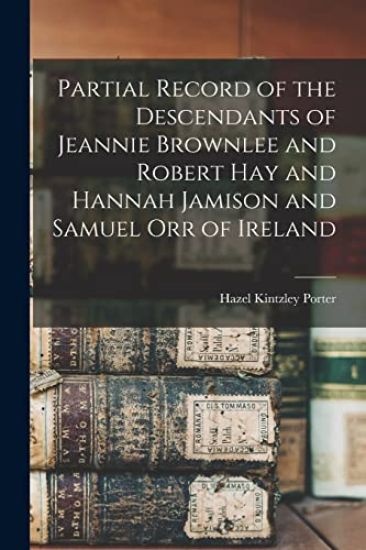
Partial Record of the Descendants of Jeannie Brownlee and Robert Hay and Hannah Jamison and Samuel Orr of Ireland
Hazel Kintzley 1898- Porter
Hassell Street Press
2021
nidottu

A Sermon Preached at the Coronation of King George III. and Queen Charlotte, in the Abbey Church of Westminster. September 22, 1761. by Robert, Lord Bishop of Sarum. ... the Fifth Edition.
Robert Hay Drummond
Gale Ecco, Print Editions
2010
pokkari
Answers for Dr. Robert Drummond of Cromlix, Lord Archbishop of York, Francis Earl of Moray, Sir James Campbell of Aberuchill, Baronet, Sir William Stirling of Ardoch, Baronet
Robert Hay Drummond
Gale Ecco, Print Editions
2010
pokkari
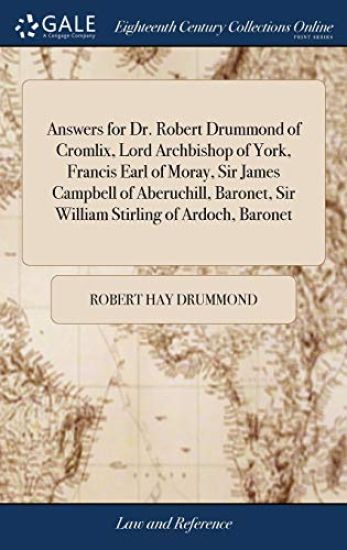
Answers for Dr. Robert Drummond of Cromlix, Lord Archbishop of York, Francis Earl of Moray, Sir James Campbell of Aberuchill, Baronet, Sir William Stirling of Ardoch, Baronet
Robert Hay Drummond
Gale Ecco, Print Editions
2018
sidottu
The 18th century was a wealth of knowledge, exploration and rapidly growing technology and expanding record-keeping made possible by advances in the printing press. In its determination to preserve the century of revolution, Gale initiated a revolution of its own: digitization of epic proportions to preserve these invaluable works in the largest archive of its kind. Now for the first time these high-quality digital copies of original 18th century manuscripts are available in print, making them highly accessible to libraries, undergraduate students, and independent scholars.This collection reveals the history of English common law and Empire law in a vastly changing world of British expansion. Dominating the legal field is the Commentaries of the Law of England by Sir William Blackstone, which first appeared in 1765. Reference works such as almanacs and catalogues continue to educate us by revealing the day-to-day workings of society.++++The below data was compiled from various identification fields in the bibliographic record of this title. This data is provided as an additional tool in helping to insure edition identification: ++++Bodleian Library (Oxford)T212534Dated at head of the drop-head title: October 25, 1770. Edinburgh, 1770]. 49, 1]p.; 4
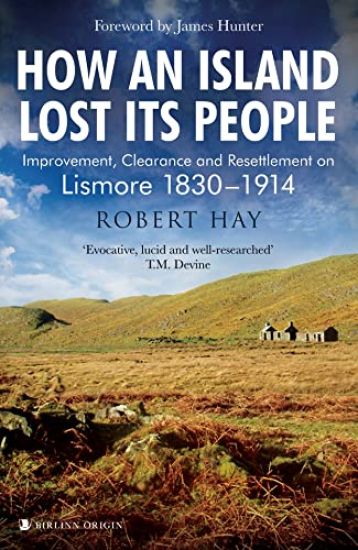
This book documents a century of emigration, migration and clearance and paints an intimate portrait of the island community of Lismore during a period of profound change. At the same time, it also celebrates the achievements of the many tenants who grasped the opportunities involved in agricultural improvement.
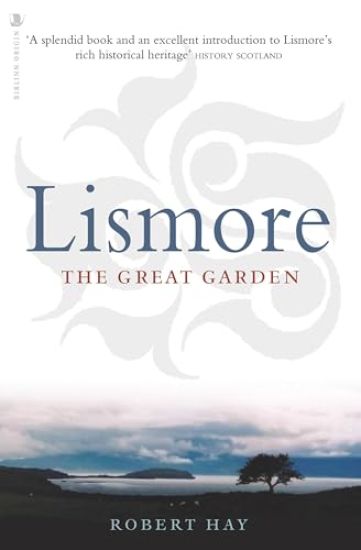
This island of Lismore boasts a remarkably rich heritage, both in terms of historic monuments and of an unbroken tradition of Gaelic culture. From their first sight of Tirefour Broch, dominating approaches from the mainland, visitors to the Isle of Lismore can explore an outstanding heritage of monuments to the past - Bronze Age cairns, medieval castles, the Cathedral of Argyll, carved graveslabs, deserted townships and watermills, not to mention a Stevenson lighthouse. Because of its strategic position at the mouth of the Great Glen and its fertility, the island played an important part in the prehistory and early history of the West Highlands and Islands. In this book, Robert Hay tells the story of Lismore from earliest times to the present day, providing fascinating insights into the island's history, as well as that of the whole area.
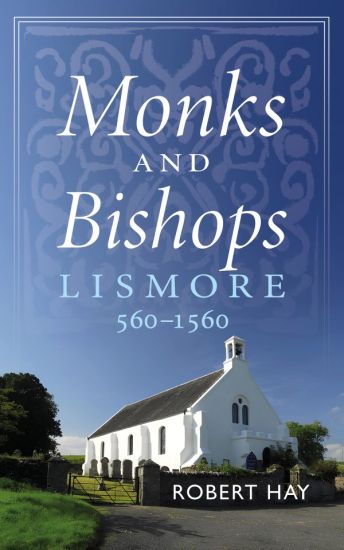
The Isle of Lismore has a long reputation as a holy island, beginning with the foundation of a monastery by St Moluag in the sixth century, when it became a major centre of Christianity. The Roman Catholic Bishopric of Argyll was founded on Lismore in 1200, and the medieval Cathedral Church of St Moluag was completed in 1400, the choir of which forms the basis of the present-day parish church. Robert Hay tells the story of Moluag’s monastery, recently rediscovered by community archaeology, before exploring the rise and fall of the Bishopric of Argyll: the roles of the bishops; the years of prestige when leading families invested in elaborately carved graveslabs; the lean years when finances were strained; the struggles through decades of war, civil unrest, despoliation, famine and plague; and the final withdrawal of the bishop from Lismore to Dunoon in the mid fifteenth century. Even at the physical fringes of Scotland and Europe, the diocese was deeply affected by events on the national and international scene, with a major impact on this site of an unbroken tradition of Christian worship.
A Treatise on Deeds
Robert Frederick Norton; Robert Hay (CON) Dun; Digby Latimer Francis (CON) Koe
Kessinger Pub
2008
pokkari
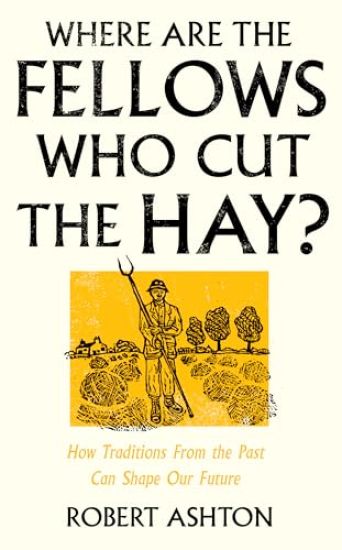
LONGLISTED FOR THE NEW ANGLE PRIZE 2025LONGLISTED FOR THE WAINWRIGHT PRIZE 2024'Essential reading for anybody who wants to understand rural life' Patrick Galbraith, author of In Search of One Last Song'This is a book of life and why we should celebrate our roots before it is too late' John Connell, author of The Cow BookWhere Are the Fellows Who Cut the Hay? is an ode to rural life, charting traditions of the past, how they were lost and why we need to reconnect.Exploring the relationship between everyday items and the communities that make them, Robert Ashton provides a snapshot of twenty-first century England. Where are the people who grow barley, milk cows and produce wool? How have their farming methods become less ethical, sustainable and natural over time? And what are we doing today to reverse that change?Inspired by George Ewart Evans’s Ask the Fellows Who Cut the Hay, Ashton gives voice to local people and travels rural Suffolk in search for innovation, interweaving his own personal connection to Evans and to the land. Part memoir, part social history, Ashton’s thought-provoking book is a manifesto for why, against all odds, we need to step back in order to progress.
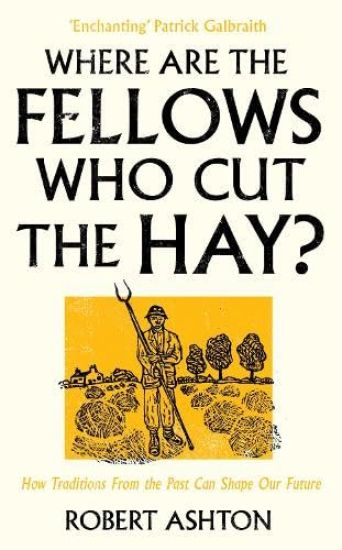
SHORTLISTED FOR THE NEW ANGLE PRIZE 2025 LONGLISTED FOR THE WAINWRIGHT PRIZE 2024 ‘Essential reading for anybody who wants to understand rural life’ Patrick Galbraith, author of In Search of One Last Song ‘This is a book of life and why we should celebrate our roots before it is too late’ John Connell, author of The Cow Book Where Are the Fellows Who Cut the Hay? is an ode to rural life, charting traditions of the past, how they were lost and why we need to reconnect. Exploring the relationship between everyday items and the communities that make them, Robert Ashton provides a snapshot of twenty-first century England. Where are the people who grow barley, milk cows and produce wool? How have their farming methods become less ethical, sustainable and natural over time? And what are we doing today to reverse that change? Inspired by George Ewart Evans’ Ask the Fellows Who Cut the Hay, Ashton gives voice to local people and travels rural Suffolk in search for innovation, interweaving his own personal connection to Evans and to the land. Part memoir, part social history, Ashton’s thought-provoking book is a manifesto for why, against all odds, we need to step back in order to progress.