Kirjojen hintavertailu. Mukana 11 244 527 kirjaa ja 12 kauppaa.

Kirjahaku

Etsi kirjoja tekijän nimen, kirjan nimen tai ISBN:n perusteella.

1000 tulosta hakusanalla Robert Hooke

Robert Hooke

Robert Hooke

Michael Hunter

Ashgate Publishing Limited
2006
sidottu
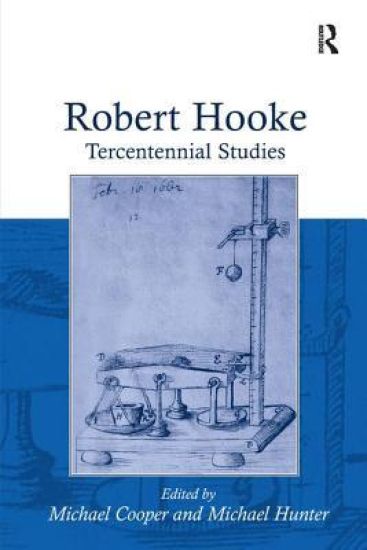
Robert Hooke (1635-1703) was a genius whose wide-ranging achievements are at last receiving the recognition that they deserve. Long overshadowed by such eminent contemporaries as Sir Isaac Newton and Sir Christopher Wren, Hooke's own seminal contributions to science, architecture and technology are now being acclaimed in their own right. Curator of Experiments to the Royal Society when it was chartered in 1662 and author of the famous Micrographia (1665), Hooke also showed unparalleled ingenuity in designing machines and instruments, and played a crucial role as Surveyor to the City of London after the Great Fire. This volume represents a benchmark in the study of Hooke, bringing together a comprehensive set of studies of different aspects of his life, thought and artistry. Its sections deal with Hooke's life and reputation; his contributions to celestial mechanics and astronomy, and to speculative natural philosophy; the instruments that he designed; and his work in architecture and construction. The introduction places the studies in the context of our current understanding of Hooke and his milieu, while the book also contains a comprehensive bibliography. In all, it will be an invaluable resource for all those interested in a figure whose complexity and importance are becoming clear after centuries of neglect.
Robert Hooke

Robert Hooke

The Boydell Press
1989
sidottu
`Individually excellent and scholarly essays... most illuminating and thought-provoking. A conspicuous feature of the collection is the heterogeneity of the scientific topics discussed.' ENGLISH HISTORICAL REVIEW `Essentialreading for all students of Hooke and of the context of Restoration science.' Stephen Pumfrey BRITISH JNL FOR HISTORY OF SCIENCERobert Hooke (1635-1703) is best known for his Micrographia, which combined an exposition of the findings of the microscopewith speculations on a variety of scientific topics. He also made major contributions to an astonishing range of subjects, from pneumatics to geology. Equally important was his ingenuity and skill in inventing and refining scientific instruments, clocks and other technological devices.
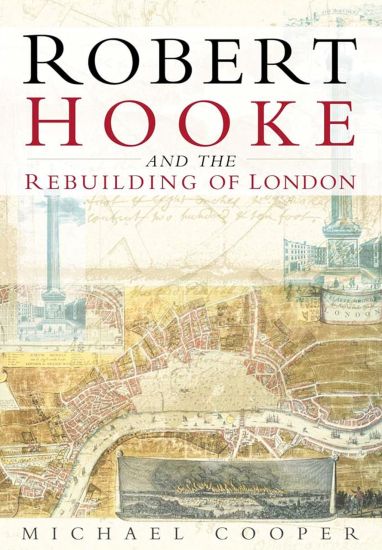
Robert Hooke and the Rebuilding of London

Robert Hooke and the Rebuilding of London

Michael Cooper

The History Press Ltd
1998
nidottu
Robert Hooke was one of the most gifted men of his age, but it was his great misfortune to work in the sphere of two remarkable men - Isaac Newton and Christopher Wren. While they gained the recognition of a monument in Westminster Abbey, Hooke died unloved, alone and in poverty. This title recognizes the great contribution that he made.
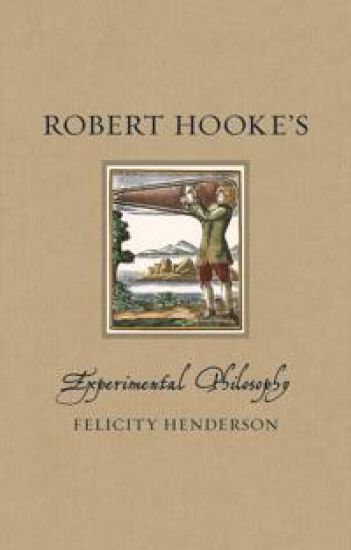
Robert Hooke’s Experimental Philosophy

Robert Hooke’s Experimental Philosophy

Felicity Henderson

REAKTION BOOKS
2024
sidottu
Robert Hooke was England’s first professional scientist, and a pioneer in the field of science communication. He was also one of the few early scientists to leave a detailed manual describing how others could follow his lead and become ‘experimental philosophers’ themselves. This new biography takes Hooke’s scientific method as its starting point, exploring what Hooke himself saw as the key aspects of a scientific life. It follows Hooke through the shops of instrument makers and craftsmen, into coffee-houses and bookshops, onto building sites and into the king’s audience chamber at Whitehall Palace. It uses new evidence to explain how Hooke’s observations and conversations with workmen, philosophical colleagues, craftsmen and London’s wealthy elite underpinned his scientific research in unexpected but significant ways. Hooke emerges as a champion of the mundane, whose greatest gift was to see the potential for new knowledge in the least promising aspects of everyday life.
Robert Hooke’s Contributions to Mechanics
In the history of science and philosophy and the philosophy of nature the name Robert Hooke has been largely ignored. If he is occasionally men­ tioned, it is usually in one of two ways: either he is briefly referred to in passing, or, he is viewed through the eyes of some later giant in the history of science and philosophy such as Sir Isaac Newton. Both approaches, however, do Hooke an injustice. Tn the academic world of today, there is no scholarly study available of Hooke's actual place in the history of science and philosophy with respect to his doctrines and accomplishments within the area of mechanics. Such a situation constitutes an unfortunate lacuna in the academic life of the world in our time. It is the more unfortunate because, in his time, Robert Hooke played an important role in the intellectual life of his world. Hooke, a contemporary of Boyle and Newton, lived from 1635 to 1703. For most of his active intellectual life he held the position of Curator of Experiments to the Royal Society of London. As a result of his own initi­ ative and of directives given him by other members of the Society, Hooke performed hundreds of experiments designed to explore the secrets of na­ ture so that men might better understand God's creation. In this treatise I will disengage from the large disorganized welter of monographs and trea­ tises left by Hooke all the material pertinent to the science of mechanics.
Robert Hooke’s Contributions to Mechanics
In the history of science and philosophy and the philosophy of nature the name Robert Hooke has been largely ignored. H he is occasionally men­ tioned. it is usually in one of two ways: either he is briefly referred to in passing. or. he is viewed through the eyes of some later giant in the history of science and philosophy such as Sir Isaac Newton. Both approaches. however, do Hooke an injustice. In the academic world of today. there is no scholarly study available of Hooke's actual place in the history of science and philosophy with respect to his doctrines and accomplishments within the area of mechanics. Such a situation constitutes an unfortunate lacuna in the academic life of the world in our time. It is the more unfortunate because. in his time. Robert Hooke played an important role in the intellectual life of his world. Hooke. a contemporary of Boyle and Newton. lived from 1635 to 1703. For most of his active intellectual life he held the position of Curator of Experiments to the Royal Society of London. As a result of his own initi­ ative and of directives given him by other members of the Society. Hooke performed hundreds of experiments designed to explore the secrets of na­ ture so that men might better understand God's creation. In this treatise I will disengage from the large disorganized welter of monographs and trea­ tises left by Hooke all the material pertinent to the science of mechanics.
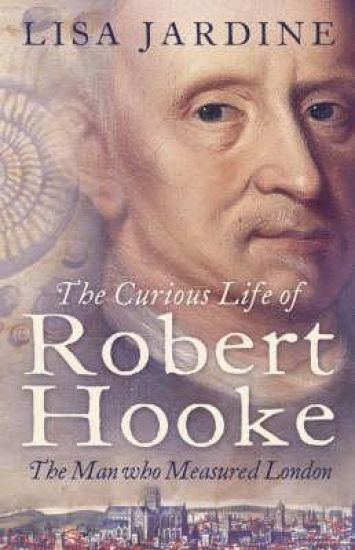
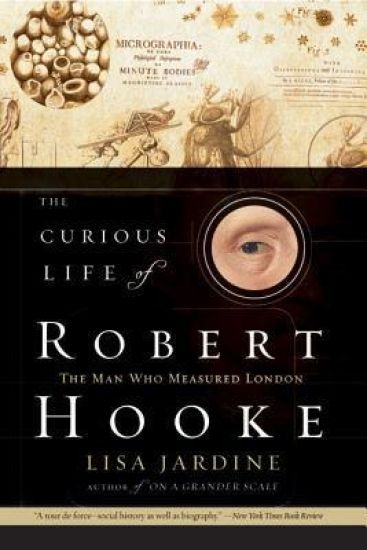
The Curious Life of Robert Hooke

The Curious Life of Robert Hooke

Lisa Jardine

HARPER PERENNIAL
2020
nidottu
"Fascinating. . . . Jardine takes a complex view, according Hooke with the respect and dignity that eluded him for so long. . . and] with this compelling and empathetic portrait, she succeeds in making a convincing case for his place in history. . . as] a founding father in Europe's scientific revolution." -- Los Angeles TimesThe brilliant, largely forgotten maverick Robert Hooke was an engineer, surveyor, architect, and inventor who worked tirelessly with his intimate friend Christopher Wren to rebuild London after the Great Fire of 1666. He was the first Curator of Experiments at the Royal Society, and his engravings of natural phenomena seen under the new microscope appeared in his masterpiece, the acclaimed Micrographia, one of the most influential volumes of the day.But Hooke's irascible temper and his passionate idealism proved fatal for his relationships with important political figures, most notably Sir Isaac Newton: their quarrel is legendary. As a result, historical greatness eluded Robert Hooke. Eminent historian Lisa Jardine does this original thinker of indefatigable curiosity and imagination justice and allows him to take his place as a major figure in the seventeenth century intellectual and scientific revolution.
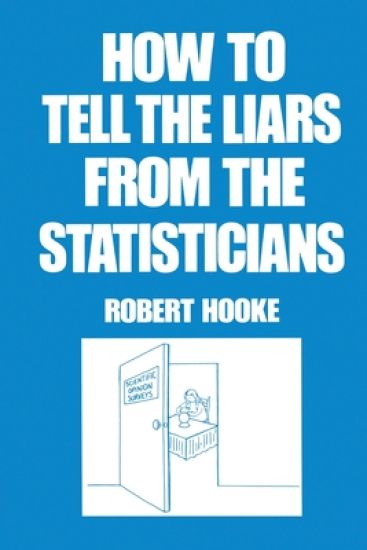
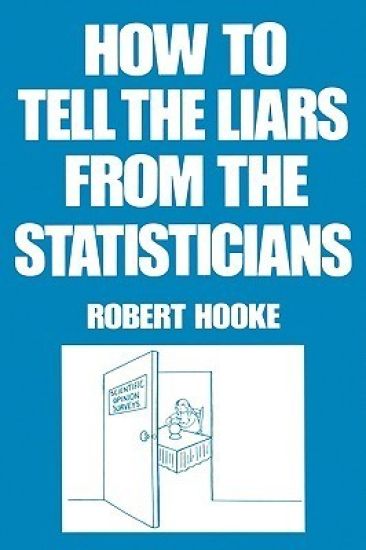
How to Tell the Liars from the Statisticians
This book shows how statistical reasoning affects all aspects of our lives. It touches on drug testing, discrimination, sports, political polls, compulsive gambling, gun detectors, cancer research, crime and punishment, opinion surveys, advertising, mass production, and doctors' waiting rooms.
How to Tell the Liars from the Statisticians
This book shows how statistical reasoning affects all aspects of our lives. It touches on drug testing, discrimination, sports, political polls, compulsive gambling, gun detectors, cancer research, crime and punishment, opinion surveys, advertising, mass production, and doctors' waiting rooms.