

Kirjahaku
Etsi kirjoja tekijän nimen, kirjan nimen tai ISBN:n perusteella.
1000 tulosta hakusanalla Robert J Daley

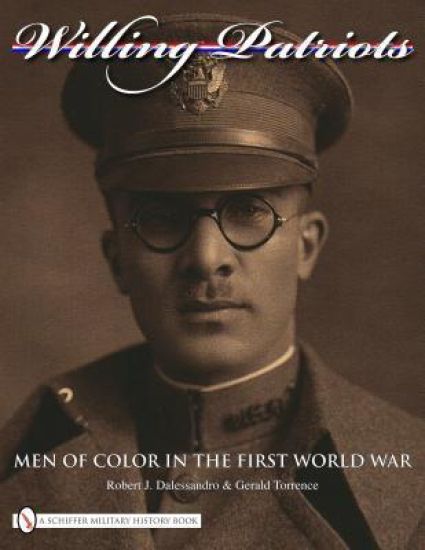
“Willing Patriots” tells the story of Black Americans who served in the U.S. Army in the First World War. The book provides the reader deeply researched treatment of the organization, combat history/battle participation of all black troops including the two infantry divisions, supporting organizations of the Services Of Supply, and the special troops. Additionally, the work contains an exhaustive bibliography of primary and secondary references for each unit informing the reader of sources for further study; lavishly illustrated with nearly 300 detailed color and war-era photographs of these valorous men. These rare and previously unpublished photographs are drawn from public and private collections nationwide providing a lens into this long forgotten aspect of World War I.

Told here is the riveting story of the 332nd U.S. Infantry Regiment in the Army in World War I. As Pershing’s “Propaganda Regiment” they were the only American regiment assigned to Italy, where they formed a phantom army that helped defeat the Austro-Hungarian Empire. The 332nd fought in the Vittorio-Veneto Campaign and following the armistice, served in the occupation of Austria, Dalmatia, and Montenegro. Includes the uniforms, insignia, and ephemera, of the 332nd; lavishly illustrated with over 300 rare and previously unpublished color and sepia photographs, which are drawn from public and private collections. This detailed work illuminates the compelling story of the courageous “Lions of St. Mark.”

More than 400 photographs detail the American military experience in World War I on the ground, in the air, and at sea, from recruitment to the Armistice. This is the premier visual history of the United States in the Great War to be published during these centennial years. * Features not only the infamous Doughboys and Devil Dogs, but also flying aces, doctors and nurses, seamen, and the German enemy * Color photos of weapons and equipment, uniforms, insignia, medals, and posters * Richly informative text and captions by an expert on World War I and battlefield interpretation.

PROBLEMS and SOLUTIONS for STATICS+++
Robert J Bonenberger; James W Dally
College House Enterprises, LLC
2017
pokkari
Mechanics II
James W Dally; Robert J Bonenberger; William F Fourney
College House Enterprises, LLC
2015
pokkari
Mechanics I Statics+++
James W Dally; Robert J Bonenberger; William L Fourney
College House Enterprises, LLC
2016
pokkari
Statics and Mechanics of Materials
James W Dally; Robert J Bonenberger
College House Enterprises, LLC
2017
pokkari

Mechanics of Materials
James W Dally; Robert J Bonenberger
College House Enterprises, LLC
2017
pokkari

Instant Insights: Genetic Modification of Crops
James Dale; W. K. Tushemereirwe; Robert Harding; Adrian Dubock; Wensheng Hou; Pooja Bhatnagar-Mathur; Kiran Kumar Sharma; Denis J. Murphy; P. Zhang; Q. Ma; M. Naconsie; X. Wu; W. Zhou; J. Yang
Burleigh Dodds Science Publishing Limited
2021
pokkari
This specially curated collection features six reviews of current and key research on genetic modification of crops.The first chapter reviews key challenges facing banana production, primarily the risk of species decimation by diseases such as Fusarium wilt, and considers how genetic modification may be a solution to this.The second chapter discusses the development and establishment of ‘Golden Rice’ - a biofortified variety designed as a health intervention to help alleviate the problem of vitamin A deficiency.The third chapter details recent advances in the genetic modification of important agronomic traits of soybean crops, such as herbicide tolerance and insect resistance. The fourth chapter addresses progress in and prospects for transgenic interventions in the improvement of grain legumes, concentrating on chickpea, pigeonpea, cowpea and more.The fifth chapter reviews recent research efforts in the production of genetically modified (GM) oil palm plants and looks towards establishing stable lines of commercially viable GM varieties.The final chapter describes recent progress relating to transgenic modification of cassava and how future research can strengthen food security and commercialization of the crop.

Hypoxia in the Northern Gulf of Mexico
Virginia H. Dale; Catherine L. Kling; Judith L. Meyer; James Sanders; Holly Stallworth; Thomas Armitage; David Wangsness; Thomas Bianchi; Alan Blumberg; Walter Boynton; Daniel J. Conley; William Crumpton; Mark David; Denis Gilbert; Robert W. Howarth; Richard Lowrance; Kyle Mankin; James Opaluch; Hans Paerl; Kenneth Reckhow; Andrew N. Sharpley; Thomas W. Simpson; Clifford S. Snyder; Donelson Wright
Springer-Verlag New York Inc.
2010
sidottu
Since 1985, scientists have been documenting a hypoxic zone in the Gulf of Mexico each year. The hypoxic zone, an area of low dissolved oxygen that cannot s- port marine life, generally manifests itself in the spring. Since marine species either die or ee the hypoxic zone, the spread of hypoxia reduces the available habitat for marine species, which are important for the ecosystem as well as commercial and recreational shing in the Gulf. Since 2001, the hypoxic zone has averaged 2 1 16,500 km during its peak summer months , an area slightly larger than the state 2 2 of Connecticut, and ranged from a low of 8,500 km to a high of 22,000 km . To address the hypoxia problem, the Mississippi River/Gulf of Mexico Watershed Nutrient Task Force (or Task Force) was formed to bring together represen- tives from federal agencies, states, and tribes to consider options for responding to hypoxia. The Task Force asked the White House Of ce of Science and Technology Policy to conduct a scienti c assessment of the causes and consequences of Gulf hypoxia through its Committee on Environment and Natural Resources (CENR).

Hypoxia in the Northern Gulf of Mexico
Virginia H. Dale; Catherine L. Kling; Judith L. Meyer; James Sanders; Holly Stallworth; Thomas Armitage; David Wangsness; Thomas Bianchi; Alan Blumberg; Walter Boynton; Daniel J. Conley; William Crumpton; Mark David; Denis Gilbert; Robert W. Howarth; Richard Lowrance; Kyle Mankin; James Opaluch; Hans Paerl; Kenneth Reckhow; Andrew N. Sharpley; Thomas W. Simpson; Clifford S. Snyder; Donelson Wright
Springer-Verlag New York Inc.
2012
nidottu
Since 1985, scientists have been documenting a hypoxic zone in the Gulf of Mexico each year. The hypoxic zone, an area of low dissolved oxygen that cannot s- port marine life, generally manifests itself in the spring. Since marine species either die or ee the hypoxic zone, the spread of hypoxia reduces the available habitat for marine species, which are important for the ecosystem as well as commercial and recreational shing in the Gulf. Since 2001, the hypoxic zone has averaged 2 1 16,500 km during its peak summer months , an area slightly larger than the state 2 2 of Connecticut, and ranged from a low of 8,500 km to a high of 22,000 km . To address the hypoxia problem, the Mississippi River/Gulf of Mexico Watershed Nutrient Task Force (or Task Force) was formed to bring together represen- tives from federal agencies, states, and tribes to consider options for responding to hypoxia. The Task Force asked the White House Of ce of Science and Technology Policy to conduct a scienti c assessment of the causes and consequences of Gulf hypoxia through its Committee on Environment and Natural Resources (CENR).

The Microeconomic Foundations of Employment and Inflation Theory
Edmund S. Phelps; Armen A. Alchian; Charles C. Holt; Dale T. Mortensen; G.C. Archibald; Robert E. Lucas; Leonard A. Rapping; Sidney G. Winter; John P. Gould; Donald F. Gordon; Allan Hynes; Donald A. Nichols; Paul J. Taubman; Maurice Wilkinson
WW Norton Co
1973
nidottu

Producer of Nanook of the North, Moana, Man of Aran, and other pioneering documentaries between 1920 and 1940, Robert J. Flaherty was America's first independent film artist. Popular conceptions of Flaherty have led many either to worship his work and regard him in mythical terms or to debunk him as a fraud and castigate him for lack of a social consciousness. Rarely has the attempt been made to understand him in the context of his times. This captivating study presents Flaherty through the eyes of someone who knew him personally-the brilliant British filmmaker and scholar Paul Rotha. A colleague and close friend of Flaherty, Rotha gives us s a powerfully written biography that is a balanced and intimate look at the life and work of an American genius. Editor Jay Ruby has restored the Rotha biography, including a wealth of anecdotes, letters, and memoirs that begin to bring Robert Flaherty the man into focus. An especially valuable dimension of this work is the appraisal of Flaherty the filmmaker from the viewpoint of a major figure of the British industry. He summarizes in detail the critical response to Flaherty of his contemporaries, about which only sketchy information has previously been available. Flaherty regarded himself as an explorer as well as a filmmaker. The exciting story of this biography takes us from the Arctic, where Flaherty spent years filming Nanook, to the South Pacific, England, the Aran Islands, and finally the United States. his courage and overarching vision resulted in an unprecedented recording of the human struggle and in documentary films that reached a wider audience than ever before.
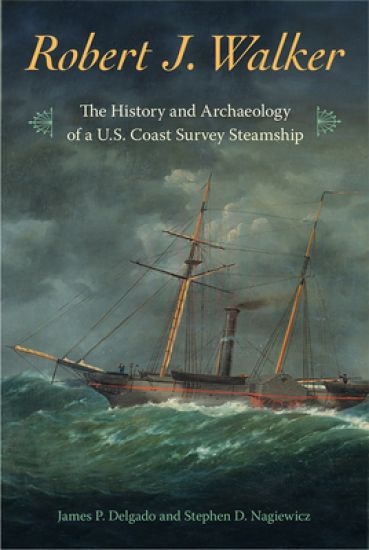
This book tells the story of the steamship Robert J. Walker, an early coastal survey ship for the agency that would later become the National Oceanic and Atmospheric Administration (NOAA), that sank with loss of 21 crew off the coast of New Jersey in 1860. The wreck was a frequent stop for divers and anglers before it was identified by a team of researchers in 2013. Here, leaders in the documentation efforts describe the history of the ship and the archaeology of the shipwreck, emphasizing the collaborative community participation that made the project successful.James Delgado and Stephen Nagiewicz highlight the contributions of government archaeologists from NOAA as well as local divers from varying backgrounds. Although such groups are not typically known for working together, they united to achieve the shared goal of mapping and interpreting this historically significant shipwreck. Delgado and Nagiewicz show how incorporating local knowledge both improves archaeological work and empowers community members as stakeholders, inspiring residents to promote their maritime heritage.With Contributions from Vincent J. Capone, Matthew S. Lawrence, Dan Lieb, Deborah E. Marx, Lisa J. Stansbury, Peter F. Straub, and Albert E. Theberge.


Robert J. Heller, Petitioner, V. District of Columbia Court of Appeals Committee on Admissions. U.S. Supreme Court Transcript of Record with Supporting Pleadings
Reber Boult
Gale, U.S. Supreme Court Records
2011
pokkari