Kirjojen hintavertailu. Mukana 12 390 323 kirjaa ja 12 kauppaa.

Kirjahaku

Etsi kirjoja tekijän nimen, kirjan nimen tai ISBN:n perusteella.

1000 tulosta hakusanalla Robert L Park

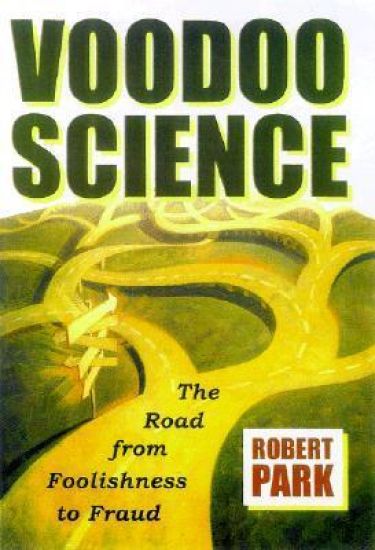
Voodoo Science

Voodoo Science

Robert L Park

Oxford University Press Inc
2001
pokkari
In a time of dazzling scientific progress, how can we separate genuine breakthroughs from the noisy gaggle of false claims? From Deepak Chopra's "quantum alternative to growing old" to unwarranted hype surrounding the International Space Station, Robert Park leads us down the back alleys of fringe science, through the gleaming corridors of Washington power and even into our evolutionary past to search out the origins of voodoo science. Along the way, he offers simple and engaging science lessons, proving that you don't have to be a scientist to spot the fraudulent science that swirls around us. While remaining highly humorous, this hard-hitting account also tallies the cost: the billions spent on worthless therapies, the tax dollars squandered on government projects that are doomed to fail, the investors bilked by schemes that violate the most fundamental laws of nature. But the greatest cost is human: fear of imaginary dangers, reliance on magical cures, and above all, a mistaken view of how the world works. To expose the forces that sustain voodoo science, Park examines the role of the media, the courts, bureaucrats and politicians, as well as the scientific community. Scientists argue that the cure is to raise general scientific literacy. But what exactly should a scientifically literate society know? Park argues that the public does not need a specific knowledge of science so much as a scientific world view--an understanding that we live in an orderly universe governed by natural laws that cannot be circumvented.
Murder in Meadowcreek Park, A Novel

Murder in Meadowcreek Park, A Novel

Robert L Bailey

Peppertree Press
2020
pokkari
An insurance company actuary was murdered in a remote area of Meadowcreek Park, a huge park in the outskirts of a major city. The victim had provoked many people throughout his life, so the suspect list is long. Detective Barry Alexander and Christine Curtis take on the task of checking out the suspects and finding the murderer.
Superstition

Superstition

Robert L. Park

Princeton University Press
2010
pokkari
From uttering a prayer before boarding a plane, to exploring past lives through hypnosis, has superstition become pervasive in contemporary culture? Robert Park, the best-selling author of Voodoo Science, argues that it has. In Superstition, Park asks why people persist in superstitious convictions long after science has shown them to be ill-founded. He takes on supernatural beliefs from religion and the afterlife to New Age spiritualism and faith-based medical claims. He examines recent controversies and concludes that science is the only way we have of understanding the world. Park sides with the forces of reason in a world of continuing and, he fears, increasing superstition. Chapter by chapter, he explains how people too easily mistake pseudoscience for science. He discusses parapsychology, homeopathy, and acupuncture; he questions the existence of souls, the foundations of intelligent design, and the power of prayer; he asks for evidence of reincarnation and astral projections; and he challenges the idea of heaven. Throughout, he demonstrates how people's blind faith, and their confidence in suspect phenomena and remedies, are manipulated for political ends. Park shows that science prevails when people stop fooling themselves. Compelling and precise, Superstition takes no hostages in its quest to provoke. In shedding light on some very sensitive--and Park would say scientifically dubious--issues, the book is sure to spark discussion and controversy.
Geophysical Inverse Theory

Geophysical Inverse Theory

Robert L. Parker

Princeton University Press
1994
sidottu
In many physical sciences, the most natural description of a system is with a function of position or time. In principle, infinitely many numbers are needed to specify that function, but in practice only finitely many measurements can be made. Inverse theory concerns the mathematical techniques that enable researchers to use the available information to build a model of the unknown system or to determine its essential properties. In Geophysical Inverse Theory, Robert Parker provides a systematic development of inverse theory at the graduate and professional level that emphasizes a rigorous yet practical solution of inverse problems, with examples from experimental observations in geomagnetism, seismology, gravity, electromagnetic sounding, and interpolation. Although illustrated with examples from geophysics, this book has broad implications for researchers in applied disciplines from materials science and engineering to astrophysics, oceanography, and meteorology. Parker's approach is to avoid artificial statistical constructs and to emphasize instead the reasonable assumptions researchers must make to reduce the ambiguity that inevitably arises in complex problems. The structure of the book follows a natural division in the subject into linear theory, in which the measured quantities are linear functionals of the unknown models, and nonlinear theory, which covers all other systems but is not nearly so well understood. The book covers model selection as well as techniques for drawing firm conclusions about the earth independent of any particular model.
Carlos Chavez

Carlos Chavez

Robert L. Parker

CRC Press Inc
1998
sidottu
This book is the first extensive guide to the life, music, and writings of Carlos Ch vez (1899-1978), Mexico's most influential musician of the 20th century. The chapter on biography also presents a characterization of his compositional styles. This work provides a comprehensive listing of Ch vez's compositions and arrangements by genre and performance medium, and reviews the composer's own abundant writings on a broad range of musical subjects. Subsequent chapters address other authors' writings about his multi-faceted career as composer, conductor, teacher, and arts administrator that contributed to his international reputation. A chapter on Research Aids includes annotations of pertinent general reference works, catalogs, and collections of letters that will assist both the general reader and the music specialist.Introductory narratives illuminate the bibliographic entries in each section, and cross references facilitate access to literature that extends beyond a single relevant topic. The book includes three indexes, which cover compositions and arrangements, authors and titles, and subjects.
Carlos Chavez

Carlos Chavez

Robert L. Parker

Routledge
2017
nidottu
This book is the first extensive guide to the life, music, and writings of Carlos Ch vez (1899-1978), Mexico's most influential musician of the 20th century. The chapter on biography also presents a characterization of his compositional styles. This work provides a comprehensive listing of Ch vez's compositions and arrangements by genre and performance medium, and reviews the composer's own abundant writings on a broad range of musical subjects. Subsequent chapters address other authors' writings about his multi-faceted career as composer, conductor, teacher, and arts administrator that contributed to his international reputation. A chapter on Research Aids includes annotations of pertinent general reference works, catalogs, and collections of letters that will assist both the general reader and the music specialist.Introductory narratives illuminate the bibliographic entries in each section, and cross references facilitate access to literature that extends beyond a single relevant topic. The book includes three indexes, which cover compositions and arrangements, authors and titles, and subjects.
The Hidden Power of Social Networks

The Hidden Power of Social Networks

Robert L. Cross; Andrew Parker

Harvard Business Review Press
2004
sidottu
A powerful, visual framework helps managers discover how employees really communicate and collaborate to get work done - and helps them identify ways they can influence these social networks to improve performance and innovation. In The Hidden Power of Social Networks, Cross and Parker, experts in "social network analysis"--a technique that visually maps relationships between people in large, distributed groups - apply this powerful tool to management for the first time. Based on their in-depth study of sixty informal employee networks in well-known companies around the world, Cross and Parker show managers how to conduct a social network analysis of their organization.
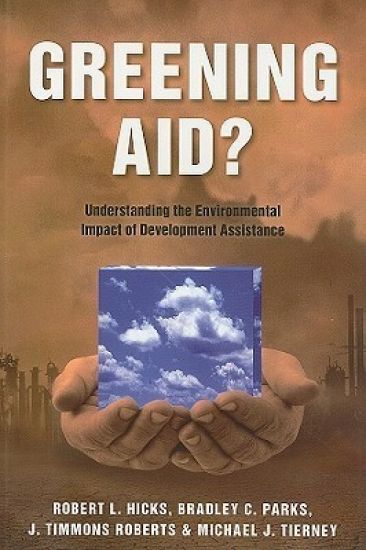
Greening Aid?

Greening Aid?

Robert L. Hicks; Bradley C. Parks; J. Timmons Roberts; Michael J. Tierney

Oxford University Press
2010
nidottu
Every year, billions of dollars of environmental aid flow from the rich governments of the North to the poor governments of the South. Why do donors provide this aid? What do they seek to achieve? How effective is the aid given? And does it always go to the places of greatest environmental need? From the first Earth Summit in Stockholm in 1972 to the G8 Gleneagles meeting in 2005, the issue of the impact of aid on the global environment has been the subject of vigorous protest and debate. How much progress has there been in improving environmental protection and clean-up in the developing world? What explains the patterns of environmental aid spending and distribution - is it designed to address real problems, achieve geopolitical or commercial gains abroad, or buy political mileage at home? And what are the consequences for the estimated 4 million people that die each year from air pollution, unsafe drinking water, and lack of sanitation? All of these questions and many more are addressed in this groundbreaking text, which is based on the authors' work compiling the most comprehensive dataset of foreign aid ever assembled. By evaluating the likely environment impact of over 400,000 development projects by more than 50 donors to over 170 recipient nations between 1970 and 2001, Greening Aid represents a unique, state of the art picture of what is happening in foreign assistance, and its impact on the environment. Greening Aid explains major trends and shifts over the last three decades, ranks donors according to their performance, and offers case studies which compare and contrast donors and types of environmental aid.
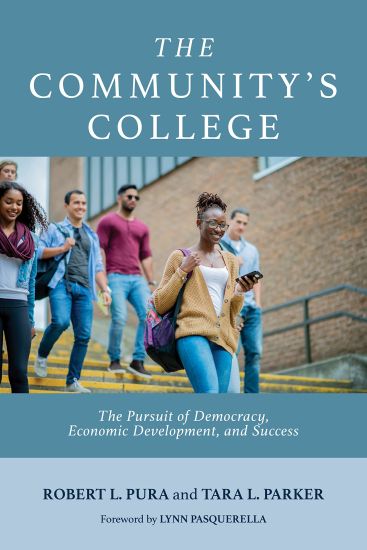
The Community's College

The Community's College

Robert L. Pura; Tara L. Parker

TAYLOR FRANCIS INC
2022
sidottu
While community colleges promote American ideals of democracy, opportunity, and social mobility; they provide a vital, accessible, and affordable education for nearly 12 million first-generation, economically-disadvantaged, and minoritized students; are engines of local workforce and economic development; and enroll nearly half of all students who go on to complete a four-year degree; they remain the least resourced and the least funded institutions in the United States.Offering the insights of the former president of Greenfield Community College—located in Massachusetts’s poorest rural county—who was a national leader in community college and higher education organizations as well as closely involved with local businesses and organizations; and commentary and background data provided by Professor of Higher Education and Chair of the Department of Leadership in Education at the University of Massachusetts Boston, this book addresses the challenges that community colleges face as they strive to achieve their complex missions in a changing world. By providing vivid accounts of the diversity of students that community colleges serve, the complexity of their missions—from dual enrollment with high schools, to vocational training, adult education, and transfer to four-year colleges—and the role they play in supporting and responding to the needs of local business, as well in regional economic development, the authors make the case for increased investment, while at the same time making apparent to all stakeholders—from policy makers and trustees to college leaders, faculty and staff—how they can contribute to the vital development of human capacities.Community colleges are open-access, train nearly 80% of all first responders, graduate more than half of new nurses and health-care workers, and have a history of nimbleness and responsiveness to community needs, and can play a vital role in training for tomorrow’s jobs, over 60% of which will, in the next decade, require some college education. The first four chapters set the scene, demonstrating the key foundational linkage between education, community, and democracy, presenting a history of the community college movement, illustrating what’s involved in building strong and reciprocal community relationships, and covering a whole panoply of leadership issues such as governance, institutional culture, facilities planning, resource development, accreditation, and crisis management. The second part of the book presents Bob Pura’s accounts of his visits to five community colleges, each representing different geographic regions, institutional size, urban and rural locations, and how they respond to the varied racial and ethnic populations from they draw their students and establish themselves as anchors in their communities.As well as offering an important message to state and federal policy makers, this book serves as a roadmap for aspiring leaders of community colleges as well as a text for leadership and higher education courses. College leaders may find it useful for internal training and learning community groups.A Co-Publication with AAC&U
The Community's College

The Community's College

Robert L. Pura; Tara L. Parker

TAYLOR FRANCIS INC
2022
nidottu
While community colleges promote American ideals of democracy, opportunity, and social mobility; they provide a vital, accessible, and affordable education for nearly 12 million first-generation, economically-disadvantaged, and minoritized students; are engines of local workforce and economic development; and enroll nearly half of all students who go on to complete a four-year degree; they remain the least resourced and the least funded institutions in the United States.Offering the insights of the former president of Greenfield Community College—located in Massachusetts’s poorest rural county—who was a national leader in community college and higher education organizations as well as closely involved with local businesses and organizations; and commentary and background data provided by Professor of Higher Education and Chair of the Department of Leadership in Education at the University of Massachusetts Boston, this book addresses the challenges that community colleges face as they strive to achieve their complex missions in a changing world. By providing vivid accounts of the diversity of students that community colleges serve, the complexity of their missions—from dual enrollment with high schools, to vocational training, adult education, and transfer to four-year colleges—and the role they play in supporting and responding to the needs of local business, as well in regional economic development, the authors make the case for increased investment, while at the same time making apparent to all stakeholders—from policy makers and trustees to college leaders, faculty and staff—how they can contribute to the vital development of human capacities.Community colleges are open-access, train nearly 80% of all first responders, graduate more than half of new nurses and health-care workers, and have a history of nimbleness and responsiveness to community needs, and can play a vital role in training for tomorrow’s jobs, over 60% of which will, in the next decade, require some college education. The first four chapters set the scene, demonstrating the key foundational linkage between education, community, and democracy, presenting a history of the community college movement, illustrating what’s involved in building strong and reciprocal community relationships, and covering a whole panoply of leadership issues such as governance, institutional culture, facilities planning, resource development, accreditation, and crisis management. The second part of the book presents Bob Pura’s accounts of his visits to five community colleges, each representing different geographic regions, institutional size, urban and rural locations, and how they respond to the varied racial and ethnic populations from they draw their students and establish themselves as anchors in their communities.As well as offering an important message to state and federal policy makers, this book serves as a roadmap for aspiring leaders of community colleges as well as a text for leadership and higher education courses. College leaders may find it useful for internal training and learning community groups.A Co-Publication with AAC&U
Adaptive Engagement for Undergoverned Spaces

Adaptive Engagement for Undergoverned Spaces

Aaron B Frank; Elizabeth M Bartels; Adam R Grissom; Jonathan S Blake; Gabrielle Tarini; Kelly Elizabeth Eusebi; Joseph N Mait; Elisa Jayne Bienenstock; Andrew M Parker; Steven W Popper; Paul K Davis; Edward Geist; Ben Connable; Zev Winkelman; Robert L Axtell; Justin Grana; Robert J Lempert; Kelly Klima; Sara Turner; James R Watson; Michael J Gaines; Yuna Huh Wong; Jasmin Léveillé; Timothy Marler

RAND Corporation
2022
pokkari