Kirjojen hintavertailu. Mukana 12 363 183 kirjaa ja 12 kauppaa.

Kirjahaku

Etsi kirjoja tekijän nimen, kirjan nimen tai ISBN:n perusteella.

1000 tulosta hakusanalla Robert L. O'Connell

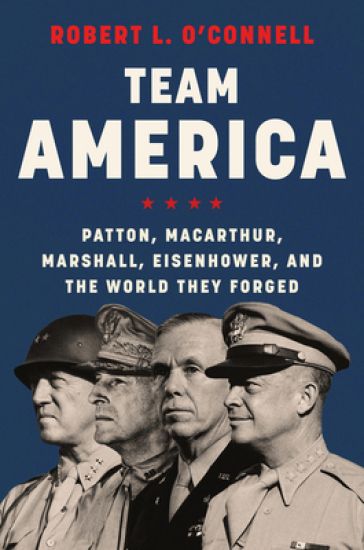
Team America

Team America

Robert L. O'Connell

HARPERCOLLINS PUBLISHERS INC
2023
nidottu
“A delicious blend of insight, wit and history, Team America is a punch-packed introduction to four great military minds and the zeitgeist that produced them.” —Wall Street Journal“Robert O’Connell has written a rollicking, insightful story of some particularly American heroes.” —Evan Thomas, author of Ike’s Bluff: President Eisenhower’s Secret Battle to Save the WorldFrom national bestselling author and acclaimed military historian Robert L. O’Connell, a dynamic history of four military leaders whose extraordinary leadership and strategy led the United States to success during World War I and beyond.By the first half of the twentieth century, technology had transformed warfare into a series of intense bloodbaths in which the line between soldiers and civilians was obliterated, resulting in the deaths of one hundred million people. During this period, four men exhibited unparalleled military leadership that led the United States victoriously through two World Wars: Douglas MacArthur, George Patton, George Marshall, and Dwight “Ike” Eisenhower; or, as bestselling author Robert O’Connell calls them, Team America.O’Connell captures these men’s unique charisma as he chronicles the path each forged—from their upbringings to their educational experiences to their storied military careers—experiences that shaped them into majestic leaders who would play major roles in saving the free world and preserving the security of the United States in times of unparalleled danger. O’Connell shows how the lives of these men—all born within the span of a decade—twisted around each other like a giant braid in time. Throughout their careers, they would use each other brilliantly in a series of symbiotic relationships that would hold increasingly greater consequences.At the end of their star-studded careers (twenty-four out of a possible twenty-five), O’Connell concludes that what set Team America apart was not their ability to wield the proverbial sword, but rather their ability to plot strategy, give orders, and inspire others. The key ingredients to their success was mental agility, a gravitas that masked their intensity, and an almost intuitive understanding of how armies in the millions actually functioned and fought. Without the leadership of these men, O’Connell makes clear, the world we know would be vastly different.
Team America

Team America

Robert L. O'Connell

HARPERCOLLINS PUBLISHERS INC
2022
sidottu
Now in paperback, from national bestselling author and acclaimed military historian Robert L. O’Connell, a dynamic history of four military leaders whose extraordinary leadership and strategy led the United States to success during World War I and beyond.By the first half of the twentieth century, technology had transformed warfare into a series of intense bloodbaths in which the line between soldiers and civilians was obliterated, resulting in the deaths of one hundred million people. During this period, four men exhibited unparalleled military leadership that led the United States victoriously through two World Wars: Douglas MacArthur, George Patton, George Marshall, and Dwight “Ike” Eisenhower; or, as bestselling author Robert O’Connell calls them, Team America.O’Connell captures these men’s unique charisma as he chronicles the path each forged—from their upbringings to their educational experiences to their storied military careers—experiences that shaped them into majestic leaders who would play major roles in saving the free world and preserving the security of the United States in times of unparalleled danger. O’Connell shows how the lives of these men—all born within the span of a decade—twisted around each other like a giant braid in time. Throughout their careers, they would use each other brilliantly in a series of symbiotic relationships that would hold increasingly greater consequences.At the end of their star-studded careers (twenty-four out of a possible twenty-five), O’Connell concludes that what set Team America apart was not their ability to wield the proverbial sword, but rather their ability to plot strategy, give orders, and inspire others. The key ingredients to their success was mental agility, a gravitas that masked their intensity, and an almost intuitive understanding of how armies in the millions actually functioned and fought. Without the leadership of these men, O’Connell makes clear, the world we know would be vastly different.
Of Arms and Men

Of Arms and Men

Robert L. O'Connell

Oxford University Press Inc
1989
sidottu
In this provocative book, Robert O'Connell examines the role and significance of weapons from the dawn of human history to the present, and the attempts of western civilization to come to terms with the grim results of its own inventiveness. This is not simply a history of the technology of weapons. It integrates the evolution of human society with the development of weapons and strategy into a single, coherent story. While primarily historical in his approach, O'Connell also draws upon anthropology, sociology, biology, and literature in his effort to explain certain recurring phenomena of warfare: the human need to dehumanize the enemy; arms races involving weapons which have developed beyond the point of utility; or the ideal of heroism rendered obsolete by deadly new technologies.
Of Arms and Men

Of Arms and Men

Robert L. O'Connell

Oxford University Press Inc
1991
nidottu
In this provocative book, Robert O'Connell examines the role and significance of weapons from the dawn of human history to the present, and the attempts of western civilization to come to terms with the grim results of its own inventiveness. This is not simply a history of the technology of weapons. It integrates the evolution of human society with the development of weapons and strategy into a single, coherent story. While primarily historical in his approach, O'Connell also draws upon anthropology, sociology, biology, and literature in his effort to explain certain recurring phenomena of warfare: the human need to dehumanize the enemy; arms races involving weapons which have developed beyond the point of utility; or the ideal of heroism rendered obsolete by deadly new technologies.
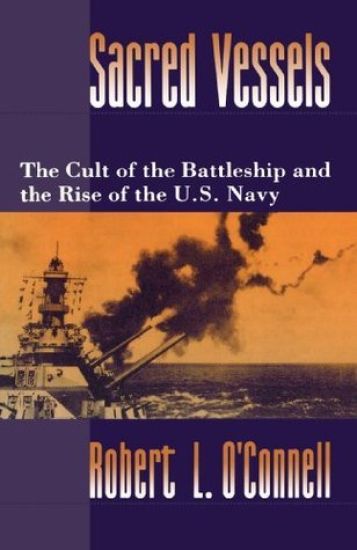
Sacred Vessels

Sacred Vessels

Robert L. O'Connell

Oxford University Press Inc
1993
nidottu
Awesome in size, immensely powerful and ingrained in the socio-economic and psychological structure of the U.S. Navy, the battleship served as chief guardsman of territory, reigning as monarch of the sea. For two hundred years it played an essential role in U.S. military affairs, yet as Robert L O'Connell demonstrates, the battleship was never actually an effective weapon of war - even before advances in submarine and aircraft technology rendered it impractical. Battleships have never played an actively important role in the outcome of any modern war but they have continued to be resurrected and refurbished, capturing the hearts of the public with their awesome beauty and size, and the myopic devotion of the military with their patently inefficient presence. Sacred Vessels tells the story of the evolution of the battleship. It is a cautionary tale about the often unacknowledged influence of human faith, culture and tradition and of the exceedingly important, costly and, supposedly rational, process, of nations arming themselves for war.
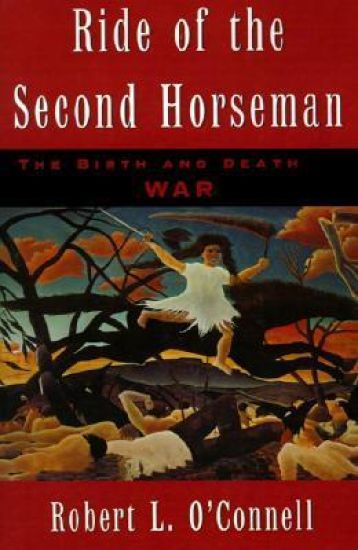
Ride of the Second Horseman

Ride of the Second Horseman

Robert L. O'Connell

Oxford University Press Inc
1999
nidottu
`Accurst be he that first invented war', wrote Christopher Marlowe - a declaration that most of us would take as a literary, not literal, construction. But in this sweeping overview of the rise of civilization, Robert O'Connell finds that war is indeed an invention - an institution that arose due to very specific historical circumstances, an institution that now verges on extinction. In Ride of the Second Horseman, O'Connell probes the distant human past to show how and why war arose. He begins with a definition that distinguishes between war and mere feuding: war involves group rather than individual issues, political or economic goals, and direction by some governmental structure, carried out with the intention of lasting results. With this definition, he finds that ants are the only other creatures that conduct it - battling other colonies for territory and slaves. But ants, unlike humans, are driven by their genes; in humans, changes in our culture and subsistence patterns, not our genetic hardware, brought the rise of organized warfare. O'Connell draws on anthropology and archeology to locate the rise of war sometime after the human transition from nomadic hunting and gathering to agriculture, when society split between farmers and pastoralists. Around 5500 BC, these pastoralists initiated the birth of war with raids on Middle Eastern agricultural settlements. The farmers responded by ringing their villages with walls, setting off a process of further social development, intensified combat, and ultimately the rise of complex urban societies dependent upon warfare to help stabilize what amounted to highly volatile population structures, beset by frequent bouts of famine and epidemic disease. In times of overpopulation, the armies either conquered new lands or self-destructed, leaving fewer mouths to feed. In times of underpopulation, slaves were taken to provide labor. O'Connell explores the histories of the civilizations of ancient Sumeria, Egypt, Assyria, China, and the New World, showing how war came to each and how it adapted to varying circumstances. On the other hand, societies based on trade employed war much more selectively and pragmatically. Thus, Minoan Crete, long protected from marauding pastoralists, developed a wealthy mercantile society marked by unmilitaristic attitudes, equality between men and women, and a relative absence of class distinctions. In Assyria, by contrast, war came to be an end in itself, in a culture dominated by male warriors. Despite the violence in the world today, O'Connell finds reason for hope. The industrial revolution broke the old patterns of subsistence: war no longer serves the demographic purpose it once did. Fascinating and provocative, Ride of the Second Horseman offers a far-reaching tour of human history that suggests the age-old cycle of war may now be near its end.
Fierce Patriot

Fierce Patriot

Robert L. O'Connell

Presidio Press
2015
nidottu
With a unique, witty, and conversational voice historian Robert O'Connell breaks down the often paradoxical, easily caricatured character of General William T. Sherman for the most well-rounded portrait of the man yet written. There were many Shermans, according to O'Connell. Most prominently was Sherman the military strategist, who gained an appreciation of geography from early campaigns out west and applied it to his famed Civil War march. Then there was "Uncle Billy," Sherman's popular persona, the charismatic and beloved leader of the Army of the West, who was instrumental in the achievement of the transcontinental railroad in his post-war years. This Sherman, as O'Connell writes, was "the human embodiment of manifest destiny." From north to south and east to west, Sherman dedicated his life to keeping the United States united. Finally, there was Sherman the family man, whose tempestuous relationship with his wife (and stepsister!) Ellen is out of a Dickens novel. Throughout, O'Connell breaks down the misperceptions about Sherman. O'Connell makes a compelling case that Sherman's march through the south was not a campaign of unmitigated destruction, but a necessary piece of strategy and the perceived chaos has been overblown. O'Connell's Sherman is ultimately a complicated and quintessential nineteenth-century American.
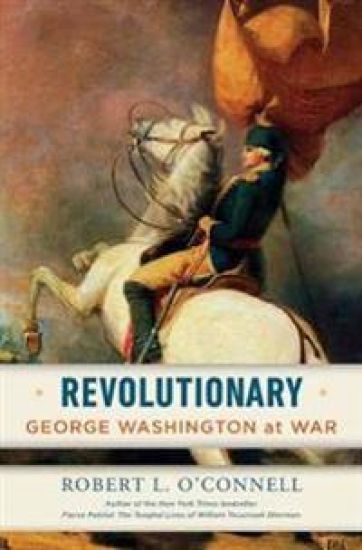
Revolutionary

Revolutionary

Robert L. O'Connell

Ballantine Books Inc.
2019
sidottu
In a bold reappraisal of Washington as a young soldier destined to be a legendary general, an acclaimed military historian brings to life the man who took on the British and through his leadership came to define the American character. How did George Washington become an American icon? Robert O'Connell, bestselling author of Fierce Patriot: The Tangled Lives of William Tecumseh Sherman, introduces us to Washington before he was Washington: a young soldier, champing at the bit for a commission in the British army, frustrated by his position as a minor Virginia aristocrat. Fueled by ego, he led a disastrous expedition in the Seven Years War, but then the commander grew up. We witness George Washington take up politics and join Virginia's colonial governing body, the House of Burgesses, where he became ever more attuned to the injustices of life under the British Empire and the paranoid, revolutionary atmosphere of the colonies. When war seemed inevitable, he was the right man--the only man--to lead the nascent American army. We would not be here without George Washington, and O'Connell proves that General Washington was at least as significant to the founding of the United States as Washington the president. He emerges here as cunning and manipulative, a subtle puppeteer among intimates and a master cajoler--but all in the cause of rectitude and moderation. Washington became the embodiment of the Revolution itself. He draped himself over the Revolutionary process and tamped down its fires. As O'Connell writes, the war was decisive because Washington managed to stop a cycle of violence with the force of personality and personal restraint. In his trademark conversational, witty style, Robert O'Connell has written a compelling reexamination of General Washington and his revolutionary world. He cuts through enigma surrounding Washington to show how the general made all the difference and became a new archetype of revolutionary leader in the process.
Sacred Vessels

Sacred Vessels

Robert L O'connell

Routledge
2019
sidottu
Writing critically about something you have come to regard with affection must provoke mixed emotions. As I learned more and more about the modern battleship's shortcomings, I found myself, like so many before me, falling under its spell. I have traveled hundreds of miles to visit these wonderful ships, reverently preserved like a necklace of talismans around our nation's coasts. I have stood in awe under the great guns, wondering what it must have been like to hear them fire. Perhaps it is true that their sound and fury signified very little in terms of actual destructive power. But most people thought they did, and that was and still is important. Besides, for the most part, we were proud of those ships. Now we live in a time of weapons so terrible that we must actually hide them-beneath the ground and below the surface of the sea. But, like battleships, they keep the peace precisely because of what others think they can do. All things being equal, who would not prefer the dreadnoughts?
Sacred Vessels

Sacred Vessels

Robert L O'connell

Routledge
2020
nidottu
Sacred Vessels is an irreverent account of the modern battleship and its place in American naval history from the sinking of the coal-fired Maine in Havana Harbor in 1898 to the deployment of the cruise missile-armed Missouri in the Persian Gulf in 1991. With provocative insight and wit, Robert O'Connell conclusively demonstrates that the vaunted battleship was in fact never an effective weapon of war, even before developments in aircraft and submarine technology sealed its doom. The worlds navies failed to recognize the full implications of rapid technological change at the turn of the century but were enthralled by the revolutionary design of the HMS Dreadnought, launched in 1903. Nations raced to build and deploy the biggest, the fastest, and the greatest possible number of battleships, usually at the expense of much more effective forms of naval force. Dreadnoughts became the international currency of great power status, subject to the same anxious accountancy as nuclear weapons today. Their awesome beauty captured the public s imagination and won the unquestioning devotion of naval officers everywhere. When war came in 1914, the world held its breath in anticipation of a modern-day Trafalgar, but dreadnoughts everywhere avoided battle, and when they were forced to fight, the results were inconclusive or irrelevant. In spite of this display of impotence, the world's shipyards continued to turn out the great vessels. The sinking of the heart of the U.S. battlefleet at Pearl Harbor–an event that finally forced the United States into World War II–ironically also began to shake the U.S. Navy free from its infatuation with the dreadnought in favor of the more practical charms of the aircraft carrier. Still, sheer faith in the battleship ensured that it would live to fight again, this time with even more questionable results. In fact, says O'Connell, battleships have never played an important role in the outcome of any modern war, but they have continued to be resurrected and refurbished–even garnished with nuclear weapons–right up to the present day. Television images of the Missouri and the Wisconsin firing on the shores of Iraq in 1991 were not just a glimpse of an anachronism: We were witnessing, with a lingering sense of awe, the last gasp of a fire-breathing behemoth that in actuality was all but toothless from the moment of its conception. Sacred Vessels is more than the unmasking of a false idol of naval history. It is a cautionary tale about the often unacknowledged influence of human faith, culture, and tradition on the exceedingly important, costly, and supposedly rational process of nations arming themselves for war.
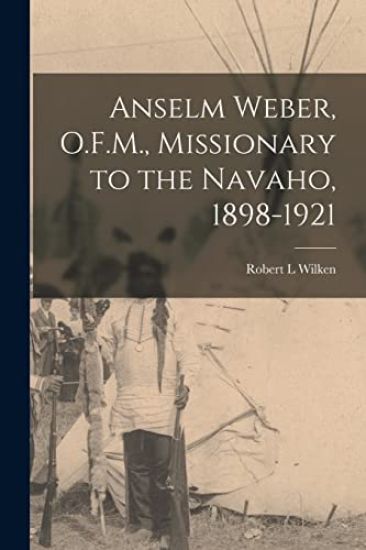
Anselm Weber, O.F.M., Missionary to the Navaho, 1898-1921
This work has been selected by scholars as being culturally important and is part of the knowledge base of civilization as we know it.This work is in the public domain in the United States of America, and possibly other nations. Within the United States, you may freely copy and distribute this work, as no entity (individual or corporate) has a copyright on the body of the work.Scholars believe, and we concur, that this work is important enough to be preserved, reproduced, and made generally available to the public. To ensure a quality reading experience, this work has been proofread and republished using a format that seamlessly blends the original graphical elements with text in an easy-to-read typeface.We appreciate your support of the preservation process, and thank you for being an important part of keeping this knowledge alive and relevant.
Anselm Weber, O.F.M., Missionary to the Navaho, 1898-1921
This work has been selected by scholars as being culturally important and is part of the knowledge base of civilization as we know it.This work is in the public domain in the United States of America, and possibly other nations. Within the United States, you may freely copy and distribute this work, as no entity (individual or corporate) has a copyright on the body of the work.Scholars believe, and we concur, that this work is important enough to be preserved, reproduced, and made generally available to the public. To ensure a quality reading experience, this work has been proofread and republished using a format that seamlessly blends the original graphical elements with text in an easy-to-read typeface.We appreciate your support of the preservation process, and thank you for being an important part of keeping this knowledge alive and relevant.
We Have Heard, O Lord

We Have Heard, O Lord

Robert L. Foster

Lexington Books/Fortress Academic
2019
sidottu
The Book of Psalms includes some of the most impassioned language about God in the Old Testament. At the same time, the psalms as a collection constitute one of the most impassioned debates about the nature and activity of God on behalf of individuals, Israel, and the created order. In this learned yet accessible volume, Robert Foster offers the first major introduction to this debate about the person and work of God as it unfolds in the Book of Psalms. If God is the Just King, why does this King delay vindicating the oppressed and saving them from wicked oppressors? What happens when God turns in divine judgment against the people of Israel? Does God keep the promise God made to king of Zion and the covenant made with the people of Israel? Do the psalmists find God faithful and so worthy of the final commands in the Psalter to “Praise the LORD”? These powerful questions drive the debate within the Book of Psalms. By attending to the rhetoric of the psalmists’, Foster shows how the individual psalmists appeal to God in prayer and proclamation and how these contrasting voices give life to the Psalter and to its presentation of the living God.
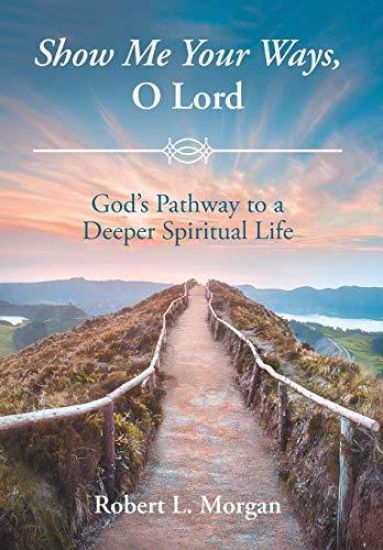
Show Me Your Ways, O Lord

Show Me Your Ways, O Lord

Robert L Morgan

Christian Faith Publishing, Inc
2018
pokkari
DO YOU DESIRE A DEEPER WALK WITH GOD? Is your heart truly hungry for A more intimate fellowship with Christ? A deeper experience of God's presence and power? A life lived that is more pleasing and more spiritually fruitful for the glory of God? In this book of messages by a humble servant of Christ, you will learn some of the secrets of that intimate walk with God for which you have longed. God has provided the way not only for forgiveness of your sins, but for a real, dynamic, fruitful, God-glorifying walk with Him. "You were created for a deep spiritual life with Christ where you fulfill God's eternal plan and your highest purpose..." In this book you will learn God's pathway to this life. You will learn that God's ways are not your ways, but His ways always lead you to the deeper spiritual life for which you were created.
Show Me Your Ways, O Lord

Show Me Your Ways, O Lord

Robert L Morgan

Christian Faith Publishing, Inc
2018
sidottu
DO YOU DESIRE A DEEPER WALK WITH GOD? Is your heart truly hungry for A more intimate fellowship with Christ? A deeper experience of God's presence and power? A life lived that is more pleasing and more spiritually fruitful for the glory of God? In this book of messages by a humble servant of Christ, you will learn some of the secrets of that intimate walk with God for which you have longed. God has provided the way not only for forgiveness of your sins, but for a real, dynamic, fruitful, God-glorifying walk with Him. "You were created for a deep spiritual life with Christ where you fulfill God's eternal plan and your highest purpose..." In this book you will learn God's pathway to this life. You will learn that God's ways are not your ways, but His ways always lead you to the deeper spiritual life for which you were created.
Marse Joe and Me: Recalling Baseball's Greatest Manager

Marse Joe and Me: Recalling Baseball's Greatest Manager

Robert L. O'Brian

Createspace Independent Publishing Platform
2017
nidottu
Marse Joe McCarthy managed the New York Yankees from 1931 to 1946, steering them to eight American League pennants and to seven world championships. He also won a pennant for the Chicago Cubs in 1929, becoming the first manager to win pennants for teams in both leagues, a distinction that would hold for nearly sixty years. There are those who argue that McCarthy was baseball's greatest manager and for fifty years, he made Western New York his home. I became friends with Marse Joe as a boy when I delivered THE BUFFALO EVENING NEWS to the McCarthy home at 52 Gates Circle in Buffalo during those grim early days of the Great Depression.
Sammy The Flying Purple Baby Elephant: Remembering The Old Ways Of The Elephant
Sammy the flying purple baby elephant is sad that his Mommy and Daddy are on their smartphones all day long. He knows smartphones have lots and lots of good things about them, but why do they have to be on them all day long? He is determined to find a way to get them off their smartphones and back to remembering the way of the elephant. Will he succeed? Written for adults and children alike, read this delightful children's book and find out. (10% of profits from all online sales will be donated to Save Elephant Foundation (saveelephant.org), an organization dedicated to protecting the Asian elephant)