Kirjojen hintavertailu. Mukana 12 369 723 kirjaa ja 12 kauppaa.

Kirjahaku

Etsi kirjoja tekijän nimen, kirjan nimen tai ISBN:n perusteella.

1000 tulosta hakusanalla Robert Lance Snyder

The Art of Indirection in British Espionage Fiction

The Art of Indirection in British Espionage Fiction

Robert Lance Snyder

McFarland Co Inc
2011
pokkari
In contrast to the classical detective story, the spy novel tends to be considered a suspect, somewhat subversive genre. While previous studies have focused on its historical, thematic, and ideological dimensions, this critical work examines British espionage fiction's unique narrative form, which is typically elliptical, oblique, and recursive. Featured works include eighteen novels by Eric Ambler, Graham Greene, Len Deighton, John le Carre, Stella Rimington, and Charles Cumming, most of which exemplify the existential or serious spy thriller. Half of these texts pertain to the Cold War era and the other half to its aftermath in the so-called "Age of Terrorism."

John le Carre's Post-Cold War Fiction

John le Carre's Post-Cold War Fiction

Robert Lance Snyder

University of Missouri Press
2017
sidottu
This book challenges distinctions between “popular” and “serious” literature by recognizing le Carré as one of the most significant ethicists in contemporary fiction, contributing to an overdue reassessment of his literary stature. Le Carré’s ten post–Cold War novels constitute a distinctive subset of his espionage fiction in their response to the momentous changes in geopolitics that began in the 1990s. Through a close reading of these novels, Snyder traces how—amid the “War on Terror” and transnationalism—le Carré weighes what is at stake in this conflict of deeply invested ideologies.
Eric Ambler’s Novels

Eric Ambler’s Novels

Robert Lance Snyder

Lexington Books
2019
sidottu
Eric Ambler's first six novels released between 1936 and 1940 quickly established his reputation as a master craftsman of intrigue and espionage narratives. Far less often discussed are the twelve Cold War novels he published, after an eleven-year hiatus as a screenwriter, between 1951 and 1981. This study argues that his entire corpus manifests late modernism's impulse toward a broadly social, political, and cultural critique of the times. Ambler's fiction from the mid-1950s onward is also remarkable for its ludic turn as he assesses the self-deceptions of an increasingly bureaucratized and media-focused world blind to its own follies. In these later works can be seen elements of what has come to be known as postmodernism, though in his commitment to chronicling the juggernaut of modernity he remains a uniquely independent witness of what is now being called the long twentieth century.
Angels in the Crosshairs

Angels in the Crosshairs

Robert Lance

Createspace Independent Publishing Platform
2017
nidottu
Author Robert Lance takes us beyond today's headlines into the dynamics of the complicated war against ISIS. Thought provoking and prophetic, he puts a human face on a journey of rescue, survival, and a vigorous will of women to fight back against institutional terror. Evan Blackthorn's private protection team is tasked to escort a Turkish intelligence agent to a secret summit with ISIS and other belligerents. The purpose is to entice ISIS into a fight it cannot win. The bait is a safe transit zone to deliver oil into the global market. When the ISIS delegation arrives with one hundred women hostages for trade, the Turk double-crosses everyone. The operation is abandoned leaving Evan's team stranded. To avoid a massacre and war crimes, Evan's team rescues the women. The survivors are witnesses to secret events and the women know the real truth behind their captivity. Their story must be buried at all cost. Among the women are a freedom fighter and a mysterious doctor to lead Evan's team and the hostages to a safe haven. In this tense international adventure, the personal courage of women fiercely willing to fight for freedom unfolds in one heart thumping encounter after another.
Lottery Rage

Lottery Rage

Robert Lance

Createspace Independent Publishing Platform
2018
nidottu
Owen Fletcher went to Nashville as a promising young musician pursuing fame, but missed by an inch and is a handyman getting by. He lives in an RV parked next to a trailer park sewer lid, thinking every morning he'll fire up the RV and leave the music scene behind. The highlight of Owen's day is going to the Waffle House, ordering the same meal, served by the same surly waitress. When he discovers he's won the lottery, he can't collect because of back issues-taxes; an overdue library fine; a paternity suit; and an ex-wife who forgot to file the decree. When he does collect, he's besieged by the sultry waitress, the Iranian liquor store owner who sold the ticket, and a sting by murderous conspirators willing to kill anyone but Owen. If Owen is going to be a tycoon he must rediscover himself, and that path leads to shocking discoveries. The lies in his past fire up the rage inside. When you think Owen cleared the last hurdle, he trips into the next mess as he is seduced, lied to, tricked, and scammed. Owen's fix for his lottery rage is to run or hide- but neither is going to work.
Stronger than Custom

Stronger than Custom

Robert Lance Janda

Praeger Publishers Inc
2001
sidottu
The gender barrier that stood for nearly two centuries at the United States Military Academy was toppled in 1976. Based on more than one hundred interviews, thousands of pages of Academy documents, and a wide array of secondary sources, this is the first comprehensive history of what the admission of women at West Point meant for the Academy, for the Army, and for the United States. The story of how West Point prepared for the precedent-setting arrival of women has never before been thoroughly told. Given the current interest in the role of women in the armed forces, and the attention focused on The Citadel and VMI when they admitted women, this is a topical story that will appeal to a general audience.Janda explains how and why female cadets were admitted to West Point and how they responded to the challenge of confronting 175 years of all-male Academy tradition. He argues that neither feminists nor Congress forced the Academy to change standards for women, and that Academy leaders were pioneers in exploring the implications of bringing women into formerly all-male military academies. Stronger than Custom also examines the sacrifices made by the first women cadets at the Academy, each of whom confronted an array of personal and professional hurdles on the road to graduation. When 62 of the original 119 women who entered the Academy in 1976 graduated four years later, they did so in triumph.
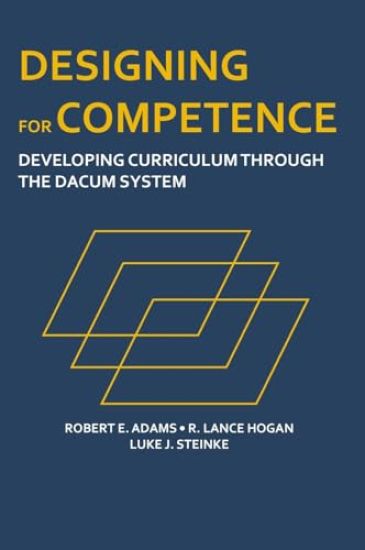
Designing for Competence

Designing for Competence

Robert E Adams; R Lance Hogan; Luke J Steinke

Edwin Associates
2026
sidottu
Designing for Competence: Developing Curriculum through the DACUM System focuses on the most critical-and often misunderstood-phase of effective training: design. While many instructional approaches emphasize content delivery or teaching technique, this book demonstrates that competence is developed through deliberate, performance-based design decisions made long before instruction begins. Grounded in the DACUM system, the book explains how training needs assessment is translated into structured learning that mirrors real occupational performance. It shows how skills identified through DACUM analysis are sequenced, rated, and organized to form the foundation of curriculum design. Central tools such as the Program Development Grid (PDG) and Learning Activity Batteries (LABs) are introduced as mechanisms for converting analysis into coherent learning environments that support repeated practice, meaningful feedback, and observable performance. Rather than treating design as a creative or abstract exercise, this book presents it as a disciplined process with clear responsibilities and limits. Design is positioned as the bridge between analysis and facilitation-ensuring that instruction, learning activities, and evaluation remain aligned with the demands of work. When design is coherent, facilitation becomes guidance rather than control, and evaluation becomes confirmation of competence rather than academic judgment. Written for coordinators, instructional designers, instructors, and program leaders, Designing for Competence emphasizes performance over content, competence over time spent, and system integrity over instructional habit. It is an essential guide for those responsible for building training systems that prepare learners not just to know, but to perform competently in real work settings.
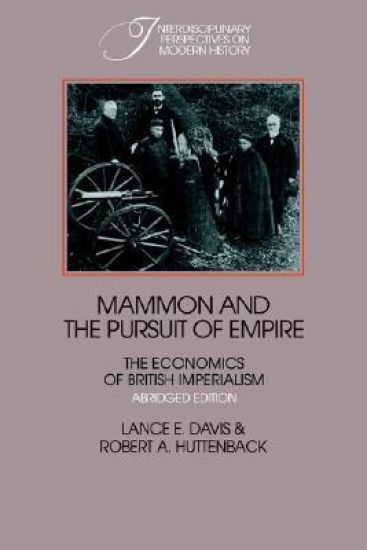
Mammon and the Pursuit of Empire Abridged Edition

Mammon and the Pursuit of Empire Abridged Edition

Lance Edwin Davis; Robert A. Huttenback

Cambridge University Press
1988
pokkari
Historians have so far made few attempts to assess directly the costs and benefits of Britain's investment in empire. This book presents answers to some of the key questions about the economics of imperialism: how large was the flow of finance to the empire? How great were the profits on empire investment? What were the social costs of maintaining the empire? Who received the profits, and who bore the costs? The authors show that colonial finance did not dominate British capital markets; returns from empire investment were not high in comparison to earnings in the domestic and foreign sectors; there is no evidence of continued exploitative profits; and empire profits were earned at a substantial cost to the taxpayer. They depict British imperialism as a mechanism to effect an income transfer from the tax-paying middle class to the elites in which the ownership of imperial enterprise was heavily concentrated, with some slight net transfer to the colonies in the process.
Mastering Autodesk Revit 2020

Mastering Autodesk Revit 2020

Robert Yori; Marcus Kim; Lance Kirby

Sybex Inc.,U.S.
2020
nidottu
The best-selling Revit guide, now more complete than ever with all-new coverage on the 2020 release Mastering Autodesk Revit 2020 is packed with focused discussions, detailed exercises, and real-world examples to help you get up to speed quickly on the latest version of Autodesk Revit. Organized according to how you learn and implement the software, this book provides expert guidance for all skill levels. Hands-on tutorials allow you to dive right in and start accomplishing vital tasks, while compelling examples illustrate how Revit for Architecture is used in every project. Available online downloads include before-and-after tutorial files and additional advanced content to help you quickly master this powerful software. From basic interface topics to advanced visualization techniques and documentation, this invaluable guide is your ideal companion through the Revit workflow. Whether you're preparing for Autodesk certification exams or just want to become more productive with the architectural design software, practical exercises and expert instruction will get you where you need to be. Understand key BIM and Revit concepts and master the Revit interfaceDelve into templates, work-sharing, and managing Revit projectsMaster modeling and massing, the Family Editor, and visualization techniquesExplore documentation, including annotation, detailing, and complex structures BIM software has become a mandatory asset in today's architecture field; automated documentation updates reduce errors while saving time and money, and Autodesk's Revit is the industry leader in the BIM software space.
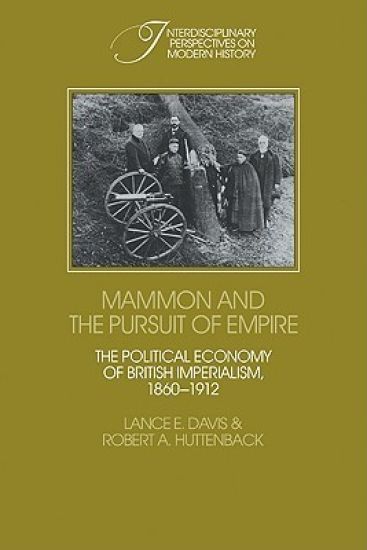
Mammon and the Pursuit of Empire

Mammon and the Pursuit of Empire

Lance E. Davis; Robert A. Huttenback

Cambridge University Press
2009
pokkari
Historians have so far made few attempts to assess directly the costs and benefits of Britain's investment in empire. This book presents answers to some of the key questions about the economics of imperialism: how large was the flow of finance to the empire? How great were the profits on empire investment? What were the social costs of maintaining the empire? Who received the profits, and who bore the costs? The authors show that colonial finance did not dominate British capital markets; returns from empire investment were not high in comparison to earnings in the domestic and foreign sectors; there is no evidence of continued exploitative profits; and empire profits were earned at a substantial cost to the taxpayer. They depict British imperialism as a mechanism to effect an income transfer from the tax-paying middle class to the elites in which the ownership of imperial enterprise was heavily concentrated, with some slight net transfer to the colonies in the process.
Evolving Financial Markets and International Capital Flows

Evolving Financial Markets and International Capital Flows

Lance E. Davis; Robert E. Gallman

Cambridge University Press
2011
pokkari
This study examines the impact of British capital flows on the evolution of capital markets in four countries - Argentina, Australia, Canada, and the United States - over the years 1870 to 1914. In substantive chapters on each country it offers parallel histories of the evolution of their financial infrastructures - commercial banks, non-bank intermediaries, primary security markets, formal secondary security markets, and the institutions that provide the international financial links connecting the frontier country with the British capital market. At one level, the work constitutes a quantitative history of the development of the capital markets of five countries in the late nineteenth century. At a second level, it provides the basis for a useable taxonomy for the study of institutional invention and innovation. At a third, it suggests some lessons from the past about modern policy issues.
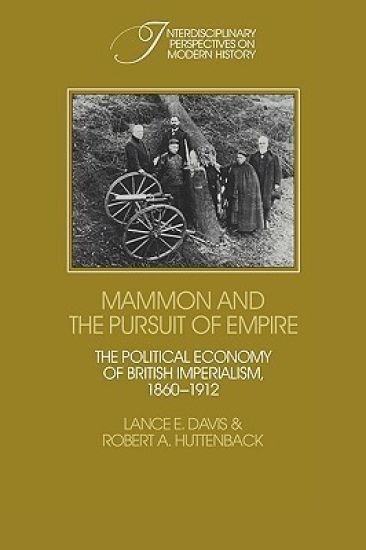
Mammon and the Pursuit of Empire

Mammon and the Pursuit of Empire

Lance E. Davis; Robert A. Huttenback

Cambridge University Press
1987
sidottu
Historians have so far made few attempts to assess directly the costs and benefits of Britain's investment in empire. This book presents answers to some of the key questions about the economics of imperialism: how large was the flow of finance to the empire? How great were the profits on empire investment? What were the social costs of maintaining the empire? Who received the profits, and who bore the costs? The authors show that colonial finance did not dominate British capital markets; returns from empire investment were not high in comparison to earnings in the domestic and foreign sectors; there is no evidence of continued exploitative profits; and empire profits were earned at a substantial cost to the taxpayer. They depict British imperialism as a mechanism to effect an income transfer from the tax-paying middle class to the elites in which the ownership of imperial enterprise was heavily concentrated, with some slight net transfer to the colonies in the process.
International Capital Markets and American Economic Growth, 1820–1914

International Capital Markets and American Economic Growth, 1820–1914

Lance E. Davis; Robert J. Cull

Cambridge University Press
1994
sidottu
This book is a study of the capital transfers to the United States in the nineteenth and twentieth centuries and, for the latter decades of that period, of the transfers from the United States to the rest of the world - particularly Canada, the Caribbean, Mexico, and Central and South America. It provides a quantitative estimate of the level and industrial composition of those transfers, and qualitative descriptions of the sources and uses of those funds; and it attempts to assess the role of those foreign transfers in the economic development of the recipient economies. In the process, it describes the evolution of the American domestic capital market. Finally, it explores the issue of domestic political response to foreign investment, attempting to explain why the political reaction was so negative and so intense in Latin America and in the American West, but so positive in Canada and the eastern United States.
International Capital Markets and American Economic Growth, 1820–1914

International Capital Markets and American Economic Growth, 1820–1914

Lance E. Davis; Robert J. Cull

Cambridge University Press
2002
pokkari
This book is a study of the capital transfers to the United States in the nineteenth and twentieth centuries and, for the latter decades of that period, of the transfers from the United States to the rest of the world - particularly Canada, the Caribbean, Mexico, and Central and South America. It provides a quantitative estimate of the level and industrial composition of those transfers, and qualitative descriptions of the sources and uses of those funds; and it attempts to assess the role of those foreign transfers in the economic development of the recipient economies. In the process, it describes the evolution of the American domestic capital market. Finally, it explores the issue of domestic political response to foreign investment, attempting to explain why the political reaction was so negative and so intense in Latin America and in the American West, but so positive in Canada and the eastern United States.
Evolving Financial Markets and International Capital Flows

Evolving Financial Markets and International Capital Flows

Lance E. Davis; Robert E. Gallman

Cambridge University Press
2001
sidottu
This study examines the impact of British capital flows on the evolution of capital markets in four countries - Argentina, Australia, Canada, and the United States - over the years 1870 to 1914. In substantive chapters on each country it offers parallel histories of the evolution of their financial infrastructures - commercial banks, non-bank intermediaries, primary security markets, formal secondary security markets, and the institutions that provide the international financial links connecting the frontier country with the British capital market. At one level, the work constitutes a quantitative history of the development of the capital markets of five countries in the late nineteenth century. At a second level, it provides the basis for a useable taxonomy for the study of institutional invention and innovation. At a third, it suggests some lessons from the past about modern policy issues.